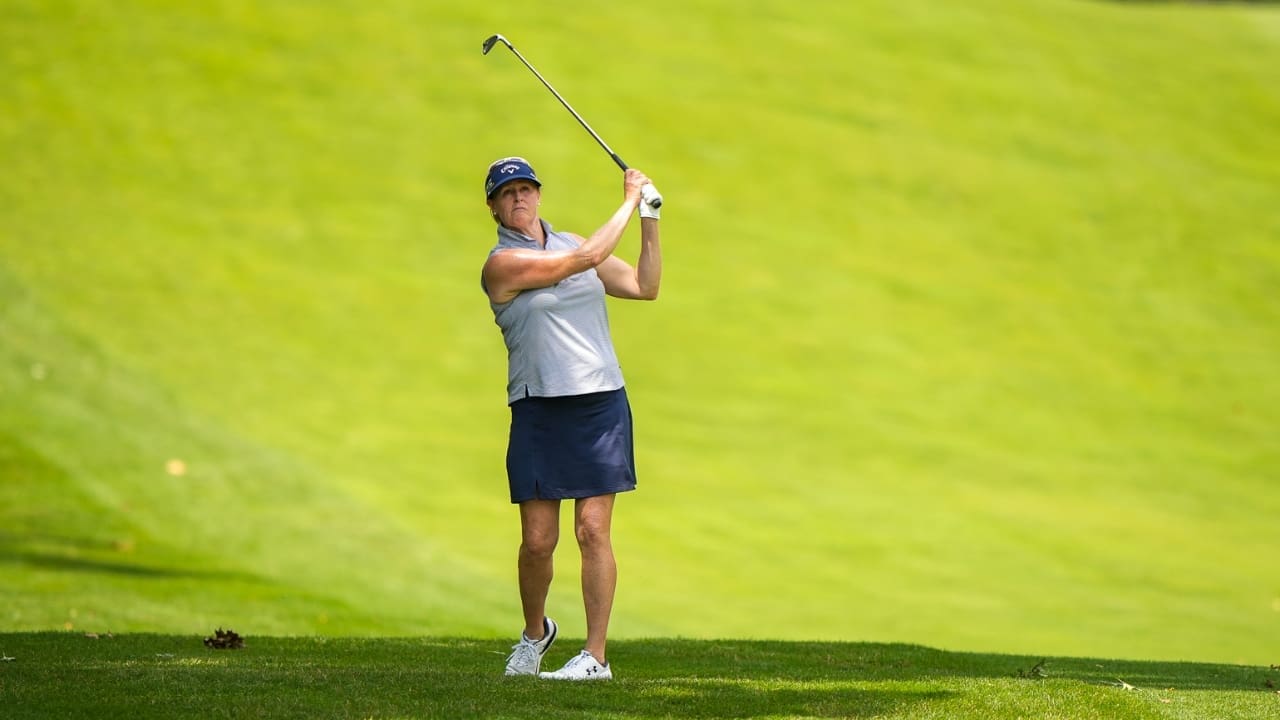
Kim Williams stands as one of golf’s most resilient and accomplished professionals, having spent over two decades competing at the highest levels of women’s golf. The 62-year-old Maryland native has transformed from a late-starting amateur champion to a respected LPGA Tour veteran and now successful teaching professional.
Her remarkable journey includes surviving a life-threatening shooting incident in 1994 and continuing to compete well into her 60s on both the LPGA Tour and Legends Tour.
In this article, you will know Kim Williams’s net worth, career earnings, career overview, stats, relationship status, and more details about her extraordinary golf journey from Curtis Cup team member to LPGA Tour veteran and current teaching professional.
Kim Williams’s Biography
| Category | Details |
|---|---|
| Full Name | Kim Williams |
| Date of Birth | 1963 |
| Age | 62 years old |
| Education | Mississippi State University |
| Nationality | United States |
| Height | 6’0″ (183 cm) |
| Birthplace | Bethesda, Maryland |
| Started Golf | Age 16 |
| Turned Professional | 1987 |
| Net Worth | $1.2 million |
| Career Earnings | $992,400 |
| Relationship Status |
Early Career
Kim Williams began her golf journey remarkably late compared to most professional golfers, starting at age 16 rather than the typical childhood introduction to the sport. Despite this late start, she quickly demonstrated exceptional talent and dedication that would define her entire career.
Her father Doug Williams played a crucial role in her development, along with influential coaches Dave King and Bill Strausbaugh, who would become legendary figures in golf instruction.
Williams’s amateur career was nothing short of spectacular, particularly considering her late entry into competitive golf. She captured victories at prestigious events including the 1984 and 1985 Canadian Amateur Championships, establishing herself as one of North America’s premier amateur golfers.
Her success continued with wins at the 1985 and 1986 Southern Amateur Championships, the 1985 Doherty Challenge Cup, and the 1985 Eastern Amateur, creating an impressive collection of amateur titles.
The pinnacle of her amateur achievements came in 1984 when she reached the finals of the U.S. Women’s Amateur, finishing as runner-up in one of golf’s most prestigious amateur events.
This performance, combined with her other amateur successes, earned her selection to the 1986 U.S. Curtis Cup Team, where she represented the United States in international competition. Her amateur career also included being low amateur at the Nabisco Dinah Shore, demonstrating her ability to compete against professional players even before turning professional.
Williams’s rapid rise through amateur golf despite starting at 16 showcased her natural talent and work ethic. Her success in winning almost every amateur event she entered created momentum that would carry into her professional career.
The foundation built during these amateur years, particularly her mental toughness and competitive drive, would prove essential during her lengthy professional career.
RELATED ARTICLES


Professional Career
Williams turned professional in 1987 and qualified for the LPGA Tour on her first attempt in 1986, an impressive feat that demonstrated her readiness for professional competition. She embarked on a full-time LPGA Tour career that would span 22 years, competing not only throughout the United States and Canada but also internationally in events across England, Scotland, Japan, Australia, and Mexico.
Her professional career was marked by consistency and longevity rather than spectacular individual victories. Williams recorded 15 career top-10 finishes and 45 top-25 finishes during her LPGA Tour career, demonstrating her ability to contend regularly in professional tournaments.
Her career-low rounds of 63 came at both the 2004 Kingsmill Championship and the 1994 Rail Classic, showcasing her ability to produce exceptional scoring when conditions aligned.
One of the most remarkable aspects of Williams’s career was her resilience in overcoming a life-threatening incident in 1994. While entering a drug store during an LPGA Tour event near Youngstown, Ohio, she was struck in the neck by a stray bullet that missed a major artery by inches.
The bullet remained in her neck for a full year before being surgically removed, yet Williams refused to let this traumatic experience end her career. Her determination to continue competing after such a frightening incident exemplified the mental toughness that characterized her entire professional journey.
Williams’s career included several near-misses at major championships, particularly at the U.S. Women’s Open where she led multiple times during early rounds but struggled to maintain those positions through the final day.
In 1996, she was tied for first place with Beth Daniel after the first round but finished T-25. The following year, she held fourth place after 54 holes but ended up T-19.
Her most promising major championship performance came in 1998 when she opened with a 68 to tie for the lead with Laura Davies, though she ultimately finished T-31.
Caddie
Information about Kim Williams’s regular caddie during her LPGA Tour career is not extensively documented in available sources. Like many professional golfers, particularly those competing over multiple decades, Williams likely worked with different caddies throughout her career depending on various factors including availability, budget considerations, and personal preferences.
During her 22-year career on the LPGA Tour, Williams would have required consistent caddie support to navigate the complexities of professional tournament golf. The caddie-player relationship is crucial in professional golf, providing course management expertise, yardage calculations, emotional support, and strategic guidance during competitive rounds.
As Williams continues to compete in senior tournaments and maintains her teaching career, her caddie arrangements likely vary based on the specific events she chooses to play. Many veteran players at her level often work with local caddies at tournament sites or have flexible arrangements with experienced caddies who understand their games and preferences.
Kim Williams’s Net Worth Details
As of 2026, Kim Williams’s estimated net worth stands at approximately $1.2 million.
Career Earnings
| Period | Tour | Earnings | Notable Achievements |
|---|---|---|---|
| 1987-1995 | LPGA Tour | $200,000+ | Early career establishment |
| 1996-2000 | LPGA Tour | $250,000+ | Multiple major contention |
| 2001-2005 | LPGA Tour | $300,000+ | Career peak years |
| 2006-2009 | LPGA Tour | $242,400+ | Led tour in sand saves (2006) |
| 2010-2015 | LPGA Tour | Limited | Reduced schedule |
| 2016-2025 | Teaching/Legends | $150,000+ | Teaching and senior events |
| Total | $992,400+ | Official LPGA earnings |
Career Stats
| Category | LPGA Tour | Amateur | Current |
|---|---|---|---|
| Professional Years | 22 (1987-2009) | N/A | Teaching |
| Career Earnings | $992,400 | N/A | Ongoing |
| Top 10 Finishes | 15 | Multiple | N/A |
| Top 25 Finishes | 45 | Numerous | N/A |
| Career Low Round | 63 (twice) | Various | N/A |
| Best Major Finish | Multiple early leads | Runner-up U.S. Amateur | N/A |
| International Events | Multiple | Curtis Cup 1986 | Senior events |
| Sand Save Percentage | Led tour (2006) | N/A | N/A |
| Years Active | 1987-present | 1980-1986 | 2025 |
| Teaching Experience | N/A | N/A | 15+ years |
FAQs
1. At what age did Kim Williams start playing golf and when did she turn professional?
Kim Williams started playing golf at the remarkably late age of 16 and turned professional in 1987 after qualifying for the LPGA Tour on her first attempt in 1986.
2. What was the most traumatic incident during Williams’s professional career?
In 1994, Williams was struck in the neck by a stray bullet while entering a drug store during an LPGA Tour event near Youngstown, Ohio, with the bullet missing a major artery by inches and remaining in her neck for a year.
3. How many times did Williams lead the U.S. Women’s Open during her career?
Williams led the U.S. Women’s Open multiple times during early rounds, including being tied for first after the opening round in 1996 and 1998, though she never maintained those positions through the final day.
4. What was Williams’s most notable statistical achievement on the LPGA Tour?
Williams led the LPGA Tour in sand saves percentage in 2006, demonstrating exceptional short game skills that helped her remain competitive throughout her lengthy professional career.
5. Where does Williams currently teach golf and what is her teaching philosophy?
Williams teaches at The Golf Performance Center at Westhaven Golf Club in Franklin, Tennessee, where she works with golfers of all ages and skill levels, focusing on passing on knowledge gained from her extensive playing career.
RELATED ARTICLES