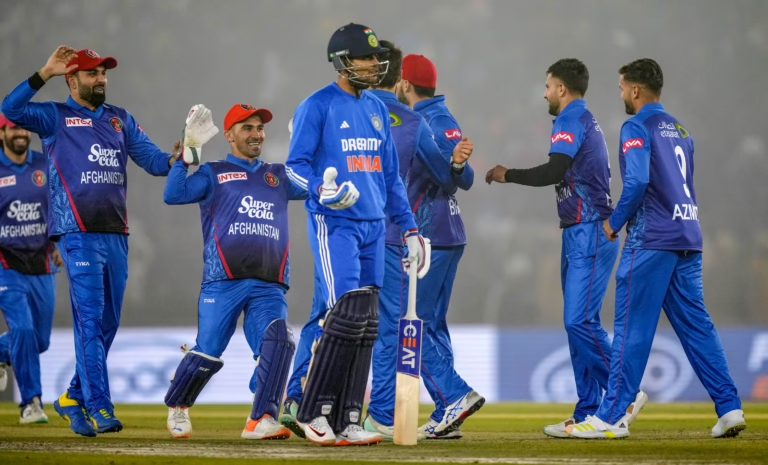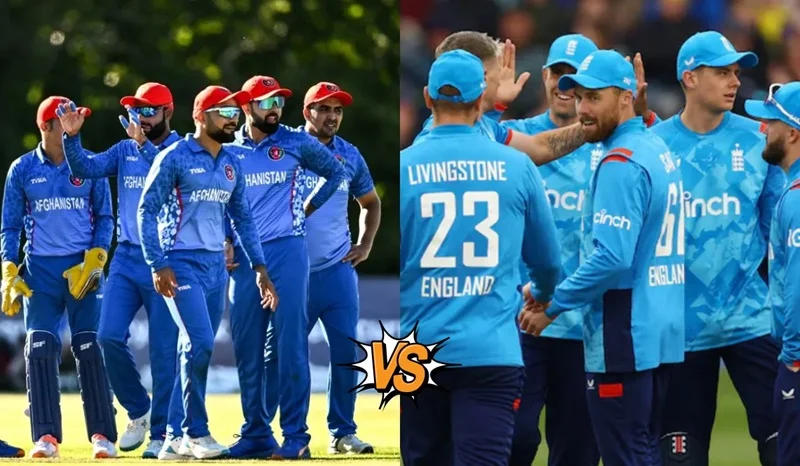
When Afghanistan played their first Test match in June 2018 against India, most cricket analysts expected a mismatch. Yet what unfolded across the next seven years would rewrite the narrative of international cricket.
Afghanistan’s journey from refugee camps in Pakistan to the World Cup stage represents cricket’s most remarkable transformation.
England, a traditional powerhouse established in cricket’s earliest days, would become the unlikely opponent in one of cricket’s greatest upsets.
| Format | England Wins | AFG Wins | Total Matches | First Match |
| ODI | 2 | 2 | 4 | March 2015 |
| T20I | 0 | 0 | 0 | None Yet |
| Test | 0 | 0 | 0 | None Yet |
| Combined | 2 | 2 | 4 | March 2015 |
The Afghanistan vs England cricket timeline tells a story of rapid international ascension, tactical brilliance, and a nation finding hope through sport amid challenging circumstances.
2001-2015: The Refugee Camp to ICC Recognition
Cricket began reshaping Afghan lives in the 1990s when Afghan refugees gathered in Pakistan’s camps. They played cricket with limited equipment and boundless passion.
In 1995, the Afghanistan Cricket Federation was established by these refugees who’d fallen in love with the game. By 2001, the ICC granted Afghanistan affiliate membership, a monumental moment.
Afghanistan spent the next 14 years climbing the international cricket ladder steadily. In 2009, they gained official ODI status after beating Namibia by 21 runs in a historic qualifier match.
The real breakthrough came in 2015. Afghanistan qualified for their first-ever Cricket World Cup by beating Ireland in the final of the 2014 qualifier tournament.
When they arrived in Australia for the 2015 World Cup, Afghanistan had played fewer than 60 international matches total. England fielded a team with centuries of cricketing tradition and established infrastructure.
2015: Afghanistan’s First Meeting with England
March 13, 2015, at Sydney marked the first Afghanistan vs England cricket encounter. England proved too strong, winning by nine wickets using the Duckworth-Lewis Method after rain affected the match.
Afghanistan’s 111 all out showed they weren’t ready yet. England’s 101 for 1 reflected their superior experience and resources.
Yet something remarkable happened: Afghanistan beat Scotland in that same World Cup, recording their first-ever World Cup victory. The tournament proved they belonged on cricket’s biggest stage.
That loss to England stung, but it also motivated the Afghan players to keep improving their craft.
2017-2019: Gaining Full Member Status and Test Cricket
On June 22, 2017, the ICC awarded Afghanistan full membership status, alongside Ireland. This meant Afghanistan could now play Test cricket against the world’s elite.
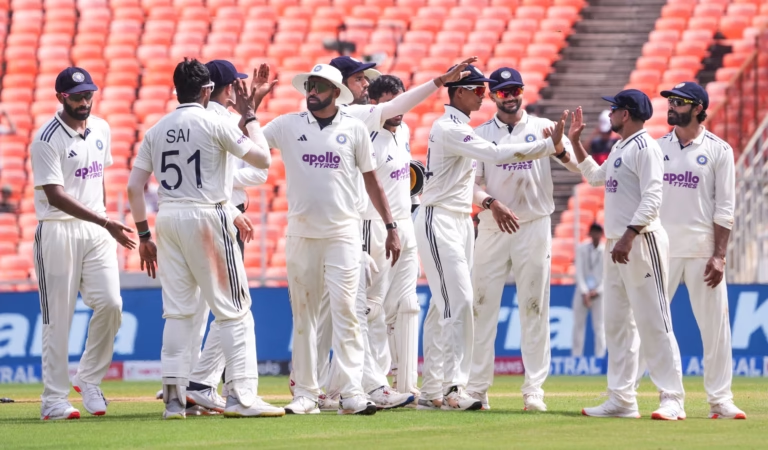
On June 14, 2018, Afghanistan played their inaugural Test against India. They lost heavily, but the symbolic significance was profound: a nation once considered cricket-less now played the sport’s oldest format.
Afghanistan’s first Test victory came against Ireland in March 2019. The team proved they could compete in all three formats against established nations.
The 2019 World Cup saw Afghanistan vs England cricket clash again in Manchester. England dominated with 397 runs. Afghanistan’s 247 saw them defeated by 150 runs.
Rashid Khan emerged as a phenomenon during this period. The leg-spinner, who started playing at age 12 in refugee camps, became Afghanistan’s superstar talent by 2019.
RELATED ARTICLES

2019-2023: The Rashid Khan Era and Rapid Development
Between 2019 and 2023, Afghanistan transformed from tournament participants into tournament competitors. The team’s ODI ranking rose steadily as spinners like Rashid Khan, Mujeeb Ur Rahman, and Mohammad Nabi perfected their craft.
Rashid Khan was named ICC T20I Player of the Decade in 2020. His impact on Afghanistan cricket cannot be overstated, inspiring younger players and elevating the entire nation’s cricketing profile.
Afghanistan reached the T20 World Cup semi-finals in 2024, proving their growth across all formats. The team developed a distinct identity: brilliant spin bowling, explosive limited-overs batting, and mental toughness born from overcoming adversity.
2023: Afghanistan’s Historic Victory Over England
October 15, 2023, at the Arun Jaitley Stadium in Delhi marked Afghanistan vs England cricket’s greatest moment in history. Afghanistan defeated England by 69 runs in a shock upset that reverberated through the cricket world.
England chose to bowl first strategically. Afghanistan’s opening powerhouse Rahmanullah Gurbaz smashed 80 runs with aggressive brilliance and confidence. Lower-order contributions from Ikram Alikhil (58), Rashid Khan (23), and Mujeeb Ur Rahman (28) pushed Afghanistan’s total to 284.
England’s chase collapsed spectacularly under Afghan bowling pressure. Fast bowler Fazalhaq Farooqi removed Jonny Bairstow early with left-arm pace. Mujeeb took Joe Root’s wicket inside the powerplay, rattling England’s established top order.
Harry Brook managed 66 runs but lacked support from teammates. Rashid Khan and Mujeeb combined to take six wickets total. England folded for just 215 all out.
This wasn’t a one-off upset result. It represented Afghanistan’s legitimate emergence as a competitive force. The spin trio’s precision bowling suffocated England’s batting completely.
Rashid Khan’s post-match comments revealed the match’s deeper significance: “This victory will give them a little bit of smile on their faces back home, they could little bit forget those tough days.”
Afghanistan had endured recent earthquakes, political turmoil, and Taliban takeover. Cricket became a source of national pride and hope.
Format-Specific Performance Analysis
The Afghanistan vs England cricket timeline shows interesting format-specific patterns across all competitions. In ODI cricket, both teams are perfectly matched at 2 wins each from their four meetings.
Afghanistan’s success comes from specialized T20 and ODI skills: aggressive opening partnerships, brilliant spin bowling strategies, and tactical adaptability. England excels in Test cricket where traditional batting structures and domestic experience provide significant advantage.
Neither team has played against each other in Test cricket or T20 Internationals officially yet. Afghanistan’s T20 capabilities suggest they’d be competitive in future T20 encounters.
The ODI head-to-head reflects Afghanistan’s rapid improvement remarkably. Their 2-2 record against England represents genuine parity, a transformation from their 2015 humiliation completely.
Rashid Khan: The Game-Changer
Rashid Khan transformed Afghanistan cricket single-handedly. Born in 1998 in Nangarhar, he grew up playing cricket in refugee camps before being discovered by Pakistan cricket academy scouts.
At age 17, he made his ODI debut for Afghanistan against Zimbabwe. By 2015, he was competing in the World Cup. By 2018, he’d been named Associate Cricketer of the Year.
His bowling action, modeled after Shahid Afridi, became one of cricket’s most distinctive. His economy rate in T20 cricket has been exceptional, showing figures like 5/3 against Ireland.
Against England in the 2023 World Cup, Rashid took 3 for 37, proving Afghanistan’s spinners could outsmart England’s batsmen.
Iconic Afghanistan Players
Rashid Khan emerged as the star player, but other talented players shaped the Afghanistan vs England cricket rivalry equally well.
Mujeeb Ur Rahman, born in 2002, became Afghanistan’s second spin ace with brilliant technique. His left-arm orthodoxy complemented Rashid’s leg-spin perfectly on all pitches. Against England, Mujeeb took 3 for 51 and scored 28 vital runs.
Mohammad Nabi served as the experienced all-rounder throughout. The former captain provided leadership and wisdom to younger players, helping them navigate international cricket.
Rahmanullah Gurbaz represented the new generation of aggressive batsmen. His brilliant batting destroyed England’s pace bowling in the 2023 World Cup, setting the tone for Afghanistan’s victory.
FAQs
When did Afghanistan first play England in cricket?
March 13, 2015, in Sydney during the World Cup. England won by 9 wickets. Afghanistan had much to learn at the international level.
Has Afghanistan ever beaten England in cricket?
Yes, Afghanistan defeated England by 69 runs on October 15, 2023, at the World Cup in Delhi. One of history’s greatest cricket upsets.
Why is Afghanistan’s cricket rise so significant?
Afghanistan rose from refugee camps to full ICC membership in just 16 years. Their story symbolizes hope and resilience for a war-torn nation.
Who is Rashid Khan?
Rashid Khan is Afghanistan’s star leg-spinner and one of the world’s best T20 bowlers. He was named ICC T20I Player of the Decade in 2020.
What was Afghanistan’s 2023 World Cup victory significance?
It was Afghanistan’s second-ever World Cup win after beating Scotland in 2015. Victory came against defending champions England.
How many times have Afghanistan and England played?
Four ODI matches between 2015 and 2023. England won twice, Afghanistan won once. Fourth match scheduled for 2025 Champions Trophy.
Why does Afghanistan excel in limited-overs cricket?
Afghan spinners like Rashid Khan and Mujeeb perfected their craft in T20. Limited-overs format suits their aggressive batting and spin bowling better.
What are Afghanistan’s Test cricket records?
Afghanistan earned Test status in 2017. First Test was against India (loss). First Test victory came against Ireland in 2019.
RELATED ARTICLES