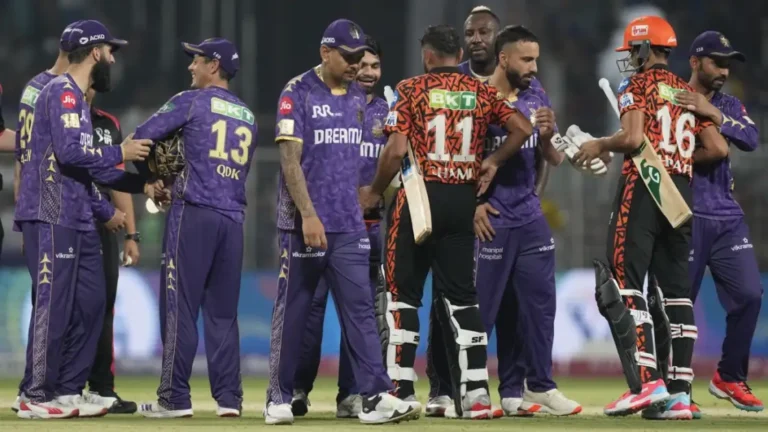
The Chennai Super Kings vs Sunrisers Hyderabad Timeline spans 22 IPL matches (2013-2025) with CSK leading 15-7.
CSK dominates at home with a 5-0 record at Chepauk Stadium due to pitch advantage and MS Dhoni’s experienced captaincy, while SRH wins at Rajiv Gandhi Stadium where responsive pitch conditions favor their bowling-heavy strategy.
The Chennai Super Kings vs Sunrisers Hyderabad Timeline shows clear venue-based patterns rather than skill gaps.
Year-by-Year Results: Chennai Super Kings vs Sunrisers Hyderabad Timeline
| Year | CSK Wins | SRH Wins | Total | Match Type | Key Context |
| 2013 | 2 | 0 | 2 | League | SRH debut season, inexperience |
| 2014 | 1 | 1 | 2 | League | David Warner emergence, competition begins |
| 2015 | 1 | 1 | 2 | League | Williamson arrival, competitive balance |
| 2016 | 0 | 1 | 1 | League | SRH’s IPL championship year |
| 2017 | 1 | 0 | 1 | League | CSK consolidates dominance |
| 2018 | 4 | 0 | 4 | League + Playoff + Final | CSK sweeps all matches including final |
| 2019 | 1 | 1 | 2 | League | Teams share season equally |
| 2021 | 1 | 0 | 1 | League | CSK returns after suspension |
| 2022-23 | 1 | 0 | 1 | League | Gaikwad vs Williamson era |
| 2024 | 1 | 1 | 2 | League | Split: CSK home win, SRH away win |
| 2025 | 0 | 1 | 1 | League | SRH victory in April at Chepauk |
Head-to-Head Record Breakdown: Why CSK’s Dominance Is Structural
The Chennai Super Kings vs Sunrisers Hyderabad Timeline reveals CSK’s 15-7 lead isn’t coincidental. Three structural factors explain this dominance pattern throughout the 22-match rivalry history.
Experience Gap Creates Pressure Management Advantage
CSK has won 5 IPL titles. SRH has won 1. Winning multiple times teaches players how to finish games under pressure.
CSK batters have muscle memory of scoring in death overs. CSK bowlers know how to execute yorkers when stakes are highest.
SRH executes tactical plans brilliantly during the first 15 overs. But when final overs arrive and chases tighten, SRH lacks the experienced decision-making CSK possesses.
Dhoni played finals. Gaikwad inherited a winning system. SRH cycled captains—each change interrupted their tactical continuity.
Home Fortress Phenomenon at Chepauk
CSK plays at M.A. Chidambaram Stadium (Chepauk) and has never lost to SRH there (5-0 record). The pitch is flat. Spinners become predictable.
Fast bowlers lose pace. This ground suits aggressive batting lineups perfectly.
CSK’s Ruturaj Gaikwad, Daryl Mitchell, and Shivam Dube thrive on flat pitches. SRH’s Bhuvneshwar Kumar and fast bowlers suffer.
Walking into Chepauk with zero wins in five attempts affects SRH’s psychology. CSK knows Chepauk is theirs. This belief compounds their dominance.
Captaincy Consistency vs Player Cycling
MS Dhoni led CSK for years. His tactical approach became the blueprint. Ruturaj Gaikwad inherited not just a job but an established winning culture. Every new player learns the system, not creates it.
SRH changed captains frequently (Warner to Williamson to Cummins). Each change brought new tactical approaches. No captain stayed long enough to establish a permanent winning culture. This inconsistency costs matches in tight situations.
2013-2017: CSK’s Early Dominance and SRH’s Learning Curve in the Timeline
The Chennai Super Kings vs Sunrisers Hyderabad Timeline began with SRH entering the IPL in 2013 without experience. CSK won both encounters easily in that debut season.
In 2014, SRH won one match, showing improvement. David Warner emerged as their aggressive force. But CSK’s MS Dhoni’s experienced middle-order consistently prevailed in close matches.
2015-2017 saw genuine competition arise. Kane Williamson arrived and began accumulating runs across the rivalry (eventually 417 total). CSK defeated SRH by 45 runs in Chennai. SRH claimed a memorable 22-run victory in Hyderabad.
Yet CSK still maintained control. Their death-over bowling and pressure-tested batters won the crucial moments. SRH showed they could compete but couldn’t crack CSK’s tactical code regularly enough to shift the overall record.
Result: CSK 5-3 across this five-year period. Experience still dominated structure.
2018: Why Experience Beats Structure Under Pressure
CSK swept all four matches against SRH in 2018, including the IPL final. Shane Watson’s unbeaten 117 in the final symbolized their dominance.
This wasn’t luck. It exposed the core difference between these teams.
RELATED ARTICLES

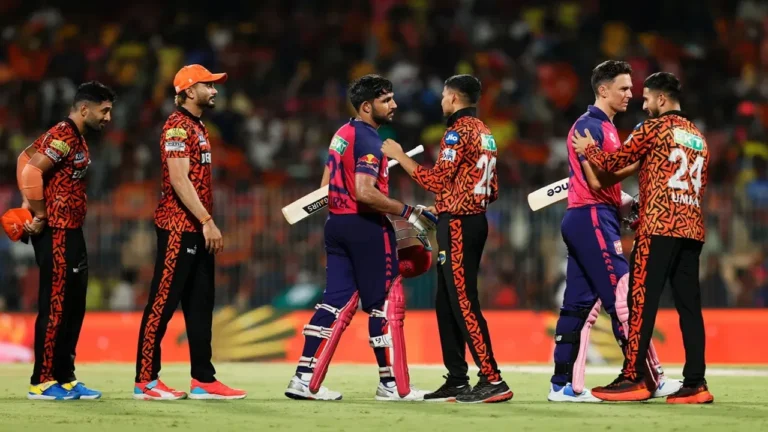
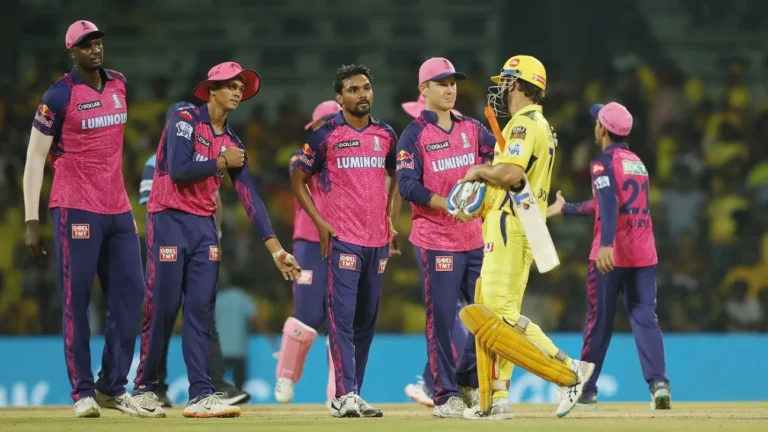

CSK’s Pressure Response: MS Dhoni made clutch decisions. Bowlers executed yorkers flawlessly in final overs. Batters accumulated runs calmly during chases. This is what winning five IPL titles teaches you: composure when stakes rise.
SRH’s Weakness Under Pressure: Their bowling structure works brilliantly for 15 overs. But when chases tighten in final overs, SRH lacks the captain with pressure-tested credibility. No muscle memory of finishing tight matches. No automatic execution of high-pressure plays.
The 4-0 sweep proved one principle: experienced teams outperform tactical teams when pressure peaks.
Venue Analysis: How Ground Conditions Drive Match Outcomes
| Venue | CSK Record | SRH Record | Status | Why |
| Chepauk Stadium | 5-0 | 0 | CSK Fortress | Flat pitch favors aggressive batting, weakens fast bowling |
| Rajiv Gandhi Stadium | 1-4 | 4-1 | SRH Advantage | Responsive pitch enables seam movement, suits bowling discipline |
| Neutral Venues | 9-2 | 3-2 | CSK Leads | Experience advantage balances out pitch differences |
At Chepauk: Pitch Favors CSK’s Batting Lineup
The flat pitch creates predictable bounce. Spinners become readable. Fast bowlers lose pace. CSK’s aggressive batters (Gaikwad, Conway, Dube) exploit this systematically.
Match Example: April 28, 2024. CSK set 212/3. SRH all out for 134. Tushar Deshpande took 4/27. The flat pitch allowed CSK’s batters to accumulate freely. SRH’s bowling structure had no movement to work with. Result: 78-run defeat.
At Rajiv Gandhi Stadium: Pitch Enables SRH’s Bowling Discipline
The responsive pitch creates seam movement. Fast bowlers extract pace. Spinners get grip. SRH’s structured bowling approach dominates.
CSK’s batters struggle to accumulate in powerplay. The pitch doesn’t allow aggressive batting. SRH’s discipline-based strategy matches the ground conditions perfectly.
Match Example: April 5, 2024. CSK set 165. SRH chased by 6 wickets. Pitch movement gave SRH’s bowlers control. CSK’s batters couldn’t adjust to conditions. Result: Easy chase.
To understand how T20 tactical patterns and pitch conditions influence match outcomes, ESPNcricinfo’s Analysis offers expert commentary on ground-specific strategy and captaincy decisions.
Player Performances: Individual Stars and Their Match Impact
| Player | Team | Runs | Matches | Average | Role in Rivalry |
| Kane Williamson | SRH | 417 | 13 | 32.07 | Consistent scorer, lacks support |
| MS Dhoni | CSK | 361 | 14 | 51.57 | Match finisher, pressure performer |
| David Warner | SRH | 405 | 11 | 36.81 | Momentum builder, early aggression |
| Ruturaj Gaikwad | CSK | 394 | 12 | 32.83 | Modern era batsman, home fortress |
Kane Williamson (417 runs, SRH): Highest run-scorer despite team losses. His consistency proves you can score against CSK individually. Problem: Williamson’s solo efforts can’t overcome CSK’s team strategy. When Williamson bats well, SRH still loses because supporting batters fail. His 417 runs show individual talent but team weaknesses.
MS Dhoni (361 runs, CSK, 51.57 average): Fewer runs than Williamson but highest average. Dhoni finishes games. He arrives at crucial moments and plays match-winning knocks. His 51.57 average means: every time Dhoni bats, CSK likely wins. This is why his 361 runs matter more strategically than Williamson’s 417.
David Warner (405 runs, SRH): SRH’s momentum builder. When Warner scores 40+, SRH momentum builds. When he fails early, SRH collapses. His aggressive approach gives SRH confidence in powerplay. But without Warner continuing into middle overs, SRH loses structure.
Dwayne Bravo (18 wickets, CSK): Death-over specialist. His ability to execute yorkers when CSK leads defines their wins. No bowler in this rivalry has taken more wickets for one team. His 18 wickets represent CSK’s pressure bowling dominance.
Bhuvneshwar Kumar (11 wickets, SRH): Discipline-based bowler. His consistent line and length trouble CSK batters. But his role is containment, not match-winning. CSK’s Bravo took more wickets because he wins matches. Bhuvneshwar restricts but doesn’t finish.
For deeper IPL statistics and complete match records, the IPL Official Website maintains comprehensive seasonal data and head-to-head records across all teams and players.
Why CSK’s 15-7 Dominance Is Structural, Not Coincidental
CSK’s lead stems from four compounding advantages:
1. Experience Compounds Under Pressure:
CSK’s five IPL titles mean every player has finished matches under pressure. SRH’s one title means fewer players know how to react when stakes are highest. Winning multiple times teaches automatic decision-making. CSK plays with muscle memory. SRH plays with tactical planning. Under pressure, muscle memory wins.
2. Chepauk Creates Home Psychological Advantage:
CSK plays 5 of 22 matches at Chepauk (23% of rivalry). They’ve never lost there (5-0). That’s psychological dominance. SRH walks into Chepauk knowing they’ve never won. This belief affects batting mentality and creates pressure before the match starts.
3. Captaincy Consistency Creates Winning Culture:
MS Dhoni led CSK for years and set the blueprint. Ruturaj Gaikwad inherited this established system. Every new player learns the culture, not creates it. SRH cycled captains (Warner, Williamson, Cummins). Each change brought new approaches. No consistent decision-making philosophy survived long enough to create permanent culture.
4. Player Retention Breeds Automatic Execution:
CSK kept MS Dhoni, Deepak Chahar, core batters. Continuity bred understanding. Teammates know how each player responds under pressure. SRH traded players frequently. Each new player is learning the culture while executing plays. This creates delays in pressure situations.
Pattern Breaks: Is CSK’s Dominance in the Timeline Ending?
The Chennai Super Kings vs Sunrisers Hyderabad Timeline shows a potential shift in 2024-2025 after 12 years of predictable patterns.
2024 Split: Venue-Determined Outcomes Confirm Historical Pattern
April 5, 2024 (Rajiv Gandhi Stadium): SRH defeated CSK by 6 wickets. CSK set 165. SRH chased easily. The pitch had responsive conditions favoring bowling. SRH’s discipline worked perfectly.
April 28, 2024 (Chepauk): CSK crushed SRH by 78 runs. Ruturaj Gaikwad’s 98 off 54 balls dominated. Tushar Deshpande took 4/27. The flat pitch allowed CSK batters to score freely. SRH’s bowlers had no movement.
Pattern confirmed: Venue determines outcome, not overall strength.
April 25, 2025: The Chepauk Shock
For the first time, SRH restricted CSK to 154 at Chepauk and chased successfully. This is unprecedented. CSK’s fortress showed cracks.
Interpretation: Not CSK weakness, but SRH’s structural growth. Newer SRH players (Heinrich Klaasen, young spinners) adapted to Chepauk conditions. CSK’s aging squad (Dhoni aging, Chahar aging) showed fatigue. The structural advantage is narrowing.
If SRH’s growth continues, the 15-7 record could shift toward 15-10 or closer. But one match doesn’t reverse 12 years of experience dominance.
FAQs
Why does CSK always win at Chepauk against SRH?
Chepauk’s flat pitch neutralizes SRH’s bowling-heavy strategy. Fast bowlers lose pace. CSK’s aggressive batters exploit predictable conditions. CSK’s 5-0 record there reflects pitch advantage plus experienced batting against inexperienced bowlers.
Why does SRH dominate at Rajiv Gandhi Stadium?
The responsive pitch enables seam movement favoring SRH’s structured bowling discipline. Fast bowlers extract pace. CSK’s batters struggle accumulating in unpredictable conditions. SRH’s 4-1 advantage reflects pitch-strategy alignment.
Who is the top run-scorer in CSK vs SRH matches?
Kane Williamson holds the record with 417 runs across 13 matches. His consistency despite team losses shows individual talent outweighs team strategy sometimes in accumulating runs.
Why does MS Dhoni’s 361 runs matter more than Williamson’s 417?
Dhoni’s 51.57 average means he finishes games CSK wins. Williamson’s 32.07 average means he bats well but SRH often loses. Finishing matches, not just scoring runs, determines dominance.
Did CSK really beat SRH 4-0 in 2018?
Yes, CSK swept all four encounters with SRH in 2018, including the IPL final. Shane Watson’s unbeaten 117 in the final symbolized CSK’s pressure-handling advantage over SRH’s tactical approach.
Why did CSK’s 2018 dominance prove experience beats tactics?
CSK’s bowlers executed yorkers under pressure. Batters remained calm during chases. This automatic execution comes from winning five IPL titles. SRH’s structured approach works in controlled situations but fails under pressure.
Will CSK’s dominance continue if SRH keeps improving?
SRH’s 2025 Chepauk victory shows growth. If newer players continue adapting to venue conditions and CSK’s aging squad fatigues, the record could narrow from 15-7 to closer margins.
What changed between 2024 and 2025 in the rivalry?
SRH broke Chepauk’s curse for the first time in 2025. CSK’s fortress weakness plus SRH’s tactical adaptation suggests the dominance era may be ending. But one victory doesn’t reverse 12 years of structural superiority.
RELATED ARTICLES