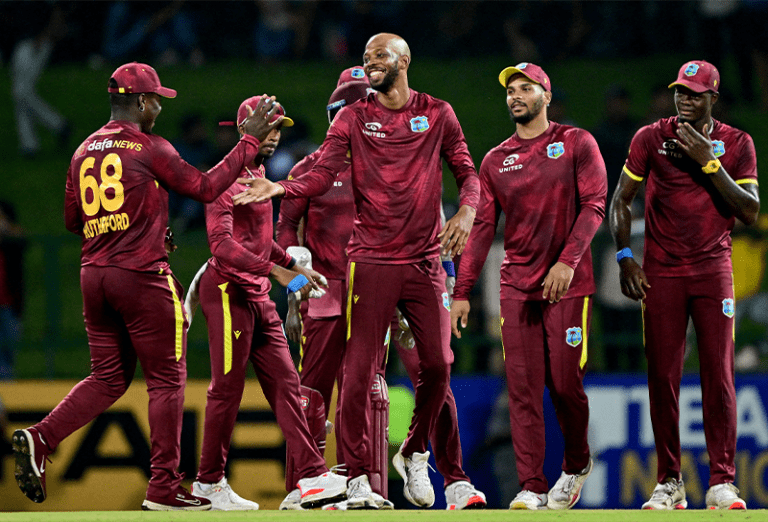
If you’ve been following cricket for the last two decades, you know the Champions Trophy held a special place in ODI cricket. It wasn’t quite the World Cup, but it packed intensity like nothing else.
The ICC Champions Trophy ran for 9 editions over 27 years (1998-2025), with a eight-year hiatus between 2017 and 2025. Three nations have dominated the tournament: India with 3 titles, Pakistan and Australia with 2 each.
The tournament produced unforgettable moments, launched cricket careers, and provided the world’s best ODI teams with a high-pressure platform to prove themselves.
After being retired in 2017, the Champions Trophy made a triumphant return in 2025, proving cricket fans still crave this format.
Here’s everything you need to know about who won it, when, and why some of those victories still matter.
The Tournament That Made Teams Prove Themselves
The Champions Trophy started back in 1998. Early editions felt experimental, like cricket was still figuring out what the tournament should be.
The format changed almost every time it happened; sometimes it was a 16-team affair, sometimes just eight nations. That inconsistency actually made it interesting. You’d see different styles of cricket, different conditions, different pressure points.
By 2006, the tournament found its rhythm with eight teams competing in a knockout format. Teams couldn’t hide. Every match felt like it mattered because the field was strong and the margin for error was nonexistent.
South Africa could be favorites and still go home early. Australia could build a dynasty and then lose when they weren’t perfect.
Then came 2017, what everyone thought would be the last edition. Pakistan lifted that trophy in England, and it seemed like the curtain was closing on a great tournament. But cricket’s appetite for this format never really went away.
In 2021, the ICC announced the Champions Trophy would return as a quadrennial event, matching the World Cup cycle. When it came back in 2025, it proved that some formats are just too good to stay retired.
ICC Champions Trophy Winners (1998-2025)
| Year | Winner | Host Country | Final Opponent | Venue (Final) | Winning Margin | Tournament MVP | Top Run-Scorer | Best Bowler |
| 1998 | South Africa | Bangladesh | Kenya | Mirpur | 4 wickets | Hansie Cronje | Jonty Rhodes (237 runs) | Shaun Pollock |
| 2000 | New Zealand | Kenya | India | Delhi (Feroz Shah Kotla) | 4 wickets | Stephen Fleming | Alistair Campbell (355 runs) | Maurice Odumbe |
| 2002 | India/Sri Lanka | Sri Lanka | India/Sri Lanka | Colombo | Shared (rain) | Kumar Sangakkara | Kumar Sangakkara (461 runs) | Chaminda Vaas |
| 2004 | West Indies | England | England | London (The Oval) | 2 runs | Brian Lara | Brian Lara (400 runs) | Jermaine Lawson |
| 2006 | Australia | India | West Indies | Mumbai | 34 runs | Ricky Ponting | Ricky Ponting (359 runs) | Glenn McGrath |
| 2008 | Pakistan | Pakistan | Australia | Lahore (Gaddafi Stadium) | 8 wickets | Younis Khan | Younis Khan (379 runs) | Shoaib Akhtar |
| 2010 | Australia | South Africa | Pakistan | Johannesburg | 2 wickets | David Hussey | Michael Hussey (402 runs) | Mitchell Johnson |
| 2013 | India | South Africa | West Indies | Mumbai (Arun Jaitley Stadium) | 5 runs | Virat Kohli | Virat Kohli (224 runs) | Bhuvneshwar Kumar |
| 2017 | Pakistan | England | India | Birmingham (Edgbaston) | 180 runs | Fakhar Zaman | Fakhar Zaman (575 runs) | Hassan Ali |
| 2025 | India | Pakistan/UAE | New Zealand | Dubai (ICC Stadium) | 4 wickets | Rachin Ravindra | Rachin Ravindra (263 runs) | Matt Henry |
Champions Trophy All-Time Records & Statistics
Team Performance Summary
- Most Titles: India (3), Pakistan (2), Australia (2)
- Single Champions: South Africa (1), New Zealand (1), West Indies (1)
- Most Finals Appearances: India (5), Pakistan (3), Australia (2)
- Best Win Percentage: Australia (100% in finals – 2 wins in 2 finals)
Tournament Winning Percentage Across All Teams:
- India: 60% (3 wins, 5 finals)
- Pakistan: 67% (2 wins, 3 finals)
- Australia: 100% (2 wins, 2 finals)
- New Zealand: 100% (1 win, 3 finals)
Individual Records (Career)
- Most Runs: Kumar Sangakkara (Sri Lanka) – 461 runs in 2002 tournament
- Most Wickets: Chaminda Vaas (Sri Lanka) – 18 wickets across tournaments
- Highest Individual Score: Ibrahim Zadran (Afghanistan) – 177 vs England, 2025
- Best Bowling Figures: Chaminda Vaas (Sri Lanka) – 5/17 vs Kenya, 2000
- Tournament MVPs: 10 (one per tournament, 1998-2025)
Tournament Competitive Analysis
- Most Dominant Tournament: 2006 (Australia’s average winning margin: 34 runs in final)
- Most Dominant Modern Performance: 2025 (India won all five matches undefeated, including the final)
- Largest Victory Margin: Pakistan vs India (2017) – 180 runs
- Closest Finals: Multiple 2-run victories (2004, 2010)
- Record-Breaking Viewership: 2025 Final (India vs New Zealand) – 206 million TV viewers, 61 million concurrent OTT viewers
Year-by-Year Tournament Breakdown
1998 Champions Trophy (South Africa Win)
Tournament Details:
- Winner: South Africa
- Host: Bangladesh
- Tournament Dates: May 28 – June 3, 1998
- Format: 4 teams, round-robin + final
- Final: South Africa vs Kenya
- Final Venue: Mirpur, Bangladesh
- Winning Margin: 4 wickets
- Tournament MVP: Hansie Cronje
South Africa took home the first trophy, establishing themselves as a global cricket power two years after apartheid-era isolation ended. This victory proved they belonged on the world stage.
Hansie Cronje’s leadership was instrumental, and the team demonstrated the discipline and skill that would define South African cricket for decades. They beat Kenya in the final with a clinical performance that showed early Champions Trophy cricket had elite-level quality.
2000 Champions Trophy (New Zealand Win)
Tournament Details:
- Winner: New Zealand
- Host: Kenya
- Tournament Dates: October 21-28, 2000
- Format: 4 teams, round-robin + final
- Final: New Zealand vs India
- Final Venue: Feroz Shah Kotla, Delhi (moved from Kenya due to political reasons)
- Winning Margin: 4 wickets
- Tournament MVP: Stephen Fleming
New Zealand won in what remains one of cricket’s most underrated triumphs. They defeated India in the final in a contest that showed the world cricket wasn’t just about traditional powerhouses.
Stephen Fleming’s captaincy was assured, and the Kiwis proved a nation could compete with and beat the biggest names in ODI cricket.
This victory elevated New Zealand’s status in the international game. However, it also remains their only ICC ODI trophy; a stat that haunts the Blackcaps to this day despite all their subsequent success at the international level.
2002 Champions Trophy (India/Sri Lanka Joint Winners)
Tournament Details:
- Winner: India & Sri Lanka (Joint)
- Host: Sri Lanka
- Tournament Dates: September 8-15, 2002
- Format: 4 teams, group stage + knockout
- Final: India vs Sri Lanka
- Final Venue: Colombo, Sri Lanka
- Winning Margin: Shared title (rain-affected final)
- Tournament MVP: Kumar Sangakkara
Sri Lanka hosted, but the weather had other plans. The final between India and Sri Lanka was washed out twice, forcing the ICC to declare both teams champions; a rare outcome that still generates debate.
Kumar Sangakkara’s brilliance shone through with 461 runs in the tournament, still one of the highest run-totals in Champions Trophy history. Chaminda Vaas led the bowling with 18 wickets across the tournament, establishing himself as one of the format’s premier bowlers.
This tournament showcased the depth of Sri Lankan cricket in the early 2000s. Though sharing the trophy felt anticlimactic, it remains a significant achievement for both nations.
2004 Champions Trophy (West Indies Win)
Tournament Details:
- Winner: West Indies
- Host: England
- Tournament Dates: September 12-19, 2004
- Format: 8 teams, group stage + knockout
- Final: West Indies vs England
- Final Venue: The Oval, London
- Winning Margin: 2 runs
- Tournament MVP: Brian Lara
The West Indies won in England, and it was one of their final moments of glory on a world stage. They beat the host nation in the final by just 2 runs, which made it even sweeter. By 2004, West Indies cricket wasn’t what it used to be in the 1980s, but this showed they still had fight left.
Brian Lara, one of cricket’s greatest batsmen ever (and then world record holder for highest Test score with 400 runs), led the charge with 400 runs in the tournament. This victory represented a last hurrah for West Indies cricket before their gradual decline from elite international status.
2006 Champions Trophy (Australia Win)
Tournament Details:
- Winner: Australia
- Host: India
- Tournament Dates: October 31 – November 5, 2006
- Format: 8 teams, group stage + knockout
- Final: Australia vs West Indies
- Final Venue: Mumbai
- Winning Margin: 34 runs
- Tournament MVP: Ricky Ponting
Australia won in India, which shouldn’t surprise anyone who watched cricket that era. Australia was just different then.
They had Glenn McGrath bowling at his peak (pace, control, accuracy), Adam Gilchrist keeping at the highest level, and a batting lineup that could chase down anything.
India hosted the tournament, but Australia’s cricket just overpowered everyone. Ricky Ponting scored 359 runs in the tournament, demonstrating why he was considered the best batsman of his generation.
They beat West Indies in the final by 34 runs; a convincing margin that showcased Australia’s dominance. This tournament cemented Australia’s status as the world’s best ODI team.
RELATED ARTICLES


2008 Champions Trophy (Pakistan Win)
Tournament Details:
- Winner: Pakistan
- Host: Pakistan
- Tournament Dates: April 21 – May 30, 2008
- Format: 8 teams, group stage + knockout
- Final: Pakistan vs Australia
- Final Venue: Gaddafi Stadium, Lahore
- Winning Margin: 8 wickets
- Tournament MVP: Younis Khan
Pakistan won in Pakistan, and they did it with pure pace bowling. This was Shoaib Akhtar’s final significant international contribution.
Akhtar, holder of the official fastest ODI bowling record (161.3 km/h, set during 2003 World Cup), took 13 wickets at an average of 23.6 runs per wicket. His pace bowling proved decisive; he made the ball move at speeds Australian batsmen struggled to handle.
Younis Khan scored 379 runs and was named MVP. Pakistan beat Australia in the final by 8 wickets on their home ground, in front of their home crowd. This victory felt like a statement: Pakistan could dominate the world’s best team in their own backyard.
2010 Champions Trophy (Australia Win)
Tournament Details:
- Winner: Australia
- Host: South Africa
- Tournament Dates: September 8-26, 2010
- Format: 8 teams, group stage + knockout
- Final: Australia vs Pakistan
- Final Venue: Johannesburg, South Africa
- Winning Margin: 2 wickets
- Tournament MVP: David Hussey
Australia won again, this time in South Africa. They were becoming like that friend who just keeps winning. Ricky Ponting was captain, and the team had that machine-like quality where every player knew their role.
Michael Hussey scored 402 runs, the second-highest in Champions Trophy history at that time. Mitchell Johnson emerged as a powerhouse bowler, taking crucial wickets in the knockout stages.
They beat Pakistan in the final by 2 wickets; a close contest that showed Pakistan remained competitive, but Australia’s experience and depth proved decisive. This back-to-back Champions Trophy victory (2006, 2010) confirmed Australia’s four-year dominance of ODI cricket.
2013 Champions Trophy (India Win)
Tournament Details:
- Winner: India
- Host: South Africa
- Tournament Dates: September 12-25, 2013
- Format: 8 teams, group stage + knockout
- Final: India vs West Indies
- Final Venue: Mumbai (Arun Jaitley Stadium)
- Winning Margin: 5 runs
- Tournament MVP: Virat Kohli
India won in South Africa, and this is when Virat Kohli announced himself to the world stage. Kohli, who’d just become captain, scored 224 runs at an average of 56, including several match-winning performances.
His tactical acumen and batting prowess showed India had a leader who could deliver under pressure in high-stakes tournaments.
Bhuvneshwar Kumar’s bowling was precise and consistent. The batting was clinical. India beat West Indies in the final by 5 runs in a tense contest.
This tournament established Kohli’s credentials as a world-class player capable of performing when it mattered most; a trajectory that would define the next decade of Indian cricket.
2017 Champions Trophy (Pakistan Win – Final Edition… or So We Thought)
Tournament Details:
- Winner: Pakistan
- Host: England
- Tournament Dates: June 1-18, 2017
- Format: 8 teams, group stage + knockout
- Final: Pakistan vs India
- Final Venue: Birmingham (Edgbaston)
- Winning Margin: 180 runs
- Tournament MVP: Fakhar Zaman
Pakistan won the Champions Trophy in England, and it was fitting that the tournament went out on such a high note. Sarfraz Ahmed was captain, and they played cricket that reminded everyone why this tournament mattered.
Fakhar Zaman emerged as a superstar, scoring 575 runs in the tournament; the highest in Champions Trophy history; and was named MVP.
Hassan Ali’s fast bowling was devastating, taking crucial wickets in the knockout stages. They beat India in the final by 180 runs; India’s largest defeat in Champions Trophy history; in one of the most dominant performances in the tournament’s final edition.
Pakistan’s victory was their second Champions Trophy title. At the time, nobody knew this would be the tournament’s last edition before an eight-year hiatus.
2025 Champions Trophy (India Win – Tournament Returns)
Tournament Details:
- Winner: India
- Host: Pakistan/UAE (hybrid model)
- Tournament Dates: February 19 – March 9, 2025
- Format: 8 teams, two groups, group stage + knockout
- Final: India vs New Zealand
- Final Venue: Dubai International Cricket Stadium, UAE
- Winning Margin: 4 wickets
- Tournament MVP: Rachin Ravindra
The Champions Trophy made its triumphant return in 2025 after eight years away, and it reminded everyone why cricket fans love this format.
India was supposed to play in Pakistan, but due to bilateral tensions, the tournament ran on a hybrid model with India’s matches (and the final) held in Dubai while other matches took place in Pakistan.
This setup didn’t dampen the spirit. Afghanistan made their Champions Trophy debut, showing how the sport had grown globally.
Pakistan, the defending champions from 2017, was eliminated in the group stage; a shock that proved the tournament’s competitive nature hadn’t diminished.
India came into the tournament red-hot after winning the T20 World Cup in 2024, and they proved it was no fluke. Rachin Ravindra’s all-around excellence earned him player of the tournament honors.
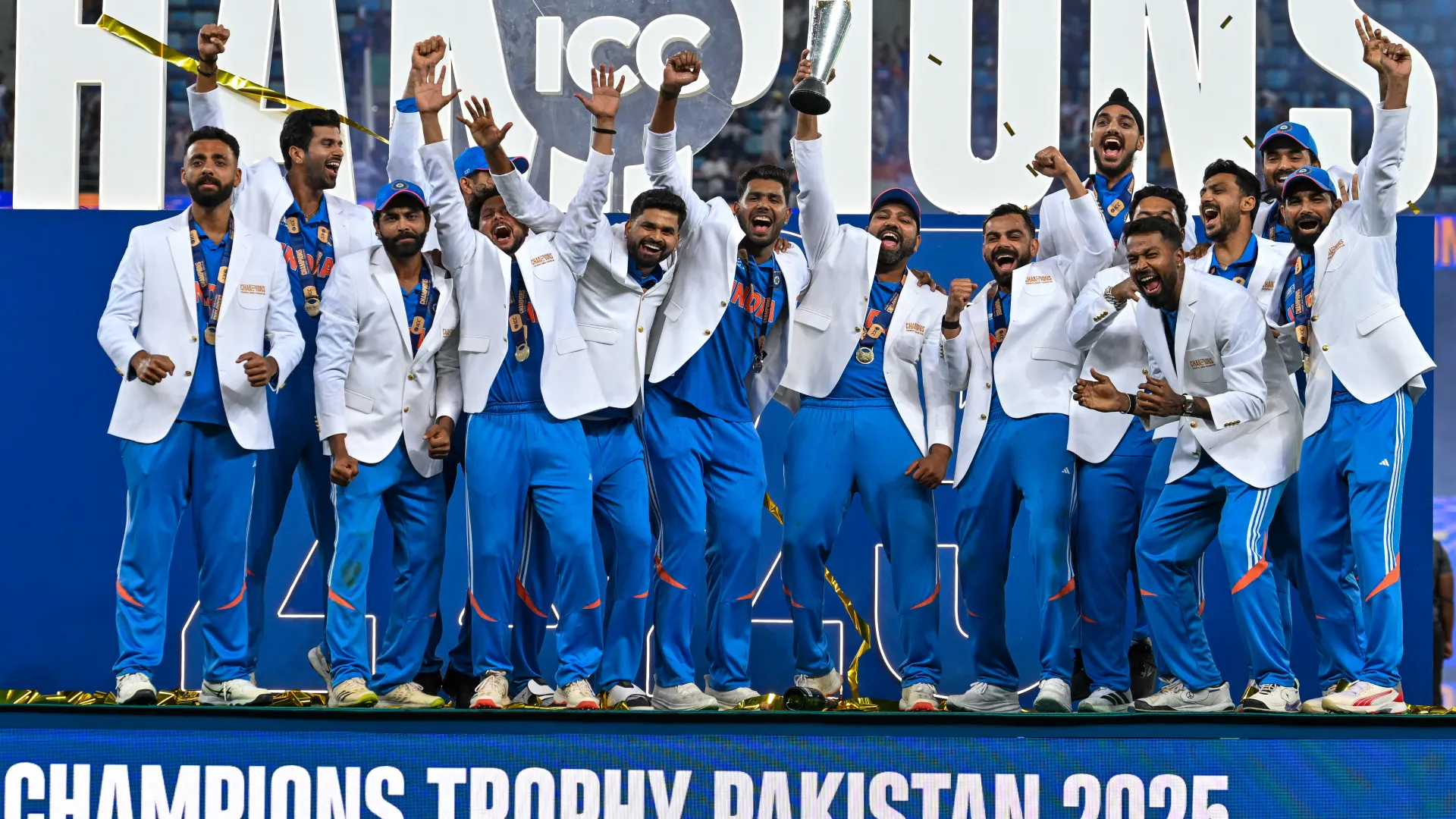
India went undefeated throughout the entire competition, winning all five matches. Their run included high-pressure victories over Pakistan and New Zealand in the group stage, before dismissing Australia in the semi-finals and then chasing down New Zealand’s 251 runs in the final.
Rohit Sharma, India’s captain, scored 76 off 83 balls in the final and became the first captain to win player of the match in a Champions Trophy final. With KL Rahul scoring an unbeaten 34, India reached 254/6 in 49 overs to seal a four-wicket victory.
This was India’s third Champions Trophy title, making them the tournament’s most successful team.
The final shattered viewership records. Over 206 million TV viewers tuned in across India, and Disney+ Hotstar recorded 61 million concurrent viewers; the highest for any live sporting event on an OTT platform, breaking the 2023 Cricket World Cup final record.
The match accumulated over 26 billion minutes of watch-time in India alone, proving the Champions Trophy’s commercial and cultural appeal remained as strong as ever.
Gautam Gambhir, who’d just taken over as India’s head coach in July 2024, won his first major title. Rohit Sharma became the second Indian captain after MS Dhoni to win multiple ICC trophies.
India received $2.365 million in prize money, with the ICC allocating a 53% increase in the prize pool compared to the 2017 edition.
Why the Champions Trophy Mattered (And Still Does)
Here’s the thing about the Champions Trophy: it was the tournament where form mattered more than reputation. You couldn’t coast through it.
Every match felt consequential because the format was compact, the field was strong, and there was nowhere to hide. Unlike the World Cup, which happens every four years and sometimes feels like a slog with too many teams, the Champions Trophy was ruthless.
You had the best ODI teams in the world, playing against each other in a short tournament where momentum could shift in one game.
The tournament has been won by India, Pakistan, Australia, Sri Lanka, West Indies, South Africa, and New Zealand across its nine editions.
That diversity shows something cricket fans understand: the game’s best moments come when the pressure’s highest and the margin for error is smallest. Every team that won earned it. Every team that lost learned something.
The 2025 return proved something crucial: sometimes retirement isn’t permanent in cricket. The ICC discontinued the Champions Trophy in 2017 because the scheduling was complex; fitting it alongside World Cups, bilateral tours, and domestic T20 leagues proved challenging.
But cricket’s appetite for this format never really went away. The 2025 tournament proved that the Champions Trophy found its place, and its future looks secure with India already confirmed to host in 2029.
Why Was Champions Trophy Discontinued (And Then Brought Back)?
In 2017, when Pakistan lifted that trophy for the second time, the ICC announced a major decision: the Champions Trophy was being retired. The official reasoning made sense on paper.
Scheduling had become complex; fitting the Champions Trophy alongside World Cups (every 4 years), bilateral tours, and domestic T20 leagues proved challenging across the international cricket calendar.
The ICC prioritized the ICC World Cup as cricket’s flagship ODI event, determining that a separate Champions Trophy created confusion for broadcasters, sponsors, and audiences.
Additionally, bilateral cricket generated more revenue for individual boards than ICC tournaments, so some countries preferred playing bilateral series over Champions Trophy commitments.
But something happened over the next four years. Cricket fans and the sport’s stakeholders realized what they were missing. The 2017 final between India and Pakistan remained one of cricket’s most-watched matches, proving the format’s commercial and cultural appeal.
The compact nature of the tournament meant every match mattered. There was no dead rubber. There was no coasting.
In November 2021, the ICC reversed course and announced the Champions Trophy would return. It would be a quadrennial event, matching the World Cup cycle. The 2025 return in Pakistan (with India playing in Dubai) proved the decision correct.
The viewership numbers shattered records. The competitive intensity matched what fans remembered from the glory days.
The Champions Trophy is now part of cricket’s permanent calendar. India will host in 2029, continuing the quadrennial cycle. The tournament proved that retirement, sometimes, is just an intermission.
FAQs
Who won the most Champions Trophy titles?
India leads with 3 Champions Trophy titles (2002 shared with Sri Lanka, 2013, and 2025). Pakistan has 2 titles (2008, 2017), and Australia also won twice (2006, 2010). South Africa, New Zealand, West Indies, and Sri Lanka each won once.
When was the last Champions Trophy held?
The most recent Champions Trophy was held in Pakistan and the UAE from February 19 to March 9, 2025. India defeated New Zealand in the final by 4 wickets at the Dubai International Cricket Stadium. Rachin Ravindra was named player of the tournament.
Is the Champions Trophy coming back?
Yes, the Champions Trophy has returned as a quadrennial tournament. After being retired in 2017, the ICC brought it back in 2025 as part of the new ICC events cycle. India will host the next edition in 2029. The tournament will continue on a four-year cycle alongside the ODI World Cup.
Who scored the most runs in a single Champions Trophy tournament?
Fakhar Zaman of Pakistan holds the record with 575 runs in the 2017 Champions Trophy. Rachin Ravindra of New Zealand scored 263 runs in the 2025 edition. Michael Hussey (402 runs in 2010) and Kumar Sangakkara (461 runs in 2002) also hold significant tournament run-scoring records.
Which country hosted the most Champions Trophy tournaments?
No country has hosted more than once. The ICC rotated host nations throughout the tournament’s history. Pakistan hosted in 2008 and 2025 (though 2025 was a hybrid arrangement with Dubai). England hosted in 2004 and 2017. South Africa hosted in 2010 and 2013. Sri Lanka hosted in 2002. India hosted in 2006. Kenya hosted in 2000. Bangladesh hosted in 1998.
What made the 2025 Champions Trophy final so special?
The 2025 final between India and New Zealand broke multiple viewership records. Over 206 million TV viewers watched in India, and Disney+ Hotstar recorded 61 million concurrent viewers; the highest for any live sporting event on an OTT platform, surpassing the 2023 Cricket World Cup final. India chased down New Zealand’s 251 runs to win by 4 wickets in what was hailed as a masterclass in pressure cricket.
Has any team won the Champions Trophy undefeated?
Yes, India in 2025 became the first team to win the Champions Trophy undefeated, winning all five group and knockout matches to claim the trophy.
RELATED ARTICLES