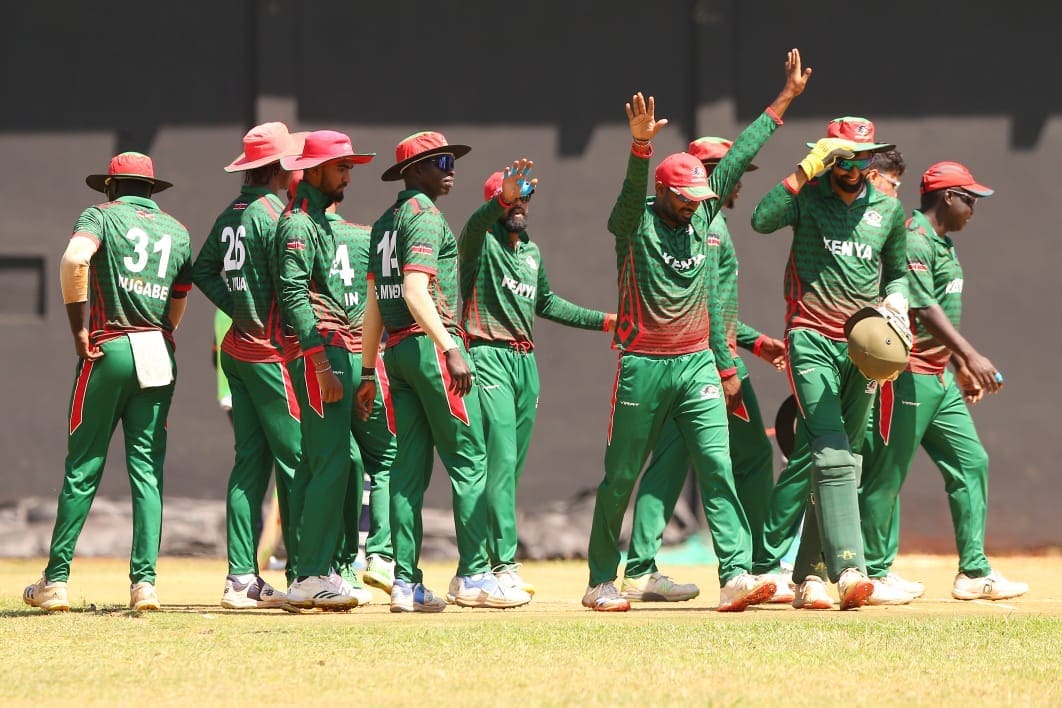
Cricket Kenya suspended player contracts and salary payments in 2025 amid Sh26.7 million financial scandal and governance crisis placing the nation on ICC’s high-risk watch list.
Historical central contracts paid $700-$2,000 monthly (2011-2012 data) before administrative collapse ended regular disbursements creating exodus of talent to Uganda, Tanzania, and overseas leagues.
The board owes Sh30 million in historical debts including delayed salaries and rent arrears with ICC maintaining tight funding control.
Collins Obuya retired in 2024 after 23-year international career earning estimated $700-$1,000 monthly during Kenya’s 2003 World Cup semi-final glory days before financial deterioration eliminated professional cricket sustainability.
Access detailed player biography and net worth data for Kenya’s cricket roster.
| Player Name | Positions Name |
| Rakep Patel | All-rounder |
| Nelson Odhiambo | All-rounder |
| Shem Ngoche | All-rounder |
| Sachin Bhudia | All-rounder |
| Pushkar Sharma | All-rounder |
| Rushab Patel | Batsman |
| Neil Mugabe | Batsman |
| Jasraj Kundi | Batsman |
| Alex Obanda | Batsman |
| Collins Obuya | Batsman |
| Sukhdeep Singh | Wicket-keeper |
| Irfan Karim | Wicket-keeper |
| Vishil Patel | Bowler |
| Vraj Patel | Bowler |
| Lucas Oluoch | Bowler |
| Gerard Mwendwa | Bowler |
| Emmanuel Bundi | Bowler |
| Peter Kipkoech | Bowler |
| Francis Mutua | Bowler |
| Shem Ngoche | Bowler |
Top 10 Historical Kenya Cricket Salaries
Kenya’s 2011-2012 central contract system paid 13 players $700-$2,000 monthly before administrative wrangles eliminated stable funding. Current players receive irregular match fees when government intervention releases ICC grants.
| Player | Role | Status | Historical Monthly Salary | Current Situation |
| Collins Obuya (retired 2024) | All-rounder | Retired | $700-$1,200 | Coaching/commentary |
| Alex Obanda | Batsman | Active | $800-$1,500 | Irregular payments |
| Shem Ngoche | All-rounder | Active | $700-$1,200 | Part-time cricket |
| Irfan Karim | Wicketkeeper | Active | $500-$1,000 | Day job + cricket |
| Nehemiah Odhiambo | Fast bowler | Active | $500-$1,000 | Suspended contracts |
| Rushab Patel | Batsman | Active | $400-$800 | Educational support |
| Rakep Patel | Wicketkeeper | Active | $400-$800 | Part-year only |
| Vraj Patel | Bowler | Active | $300-$600 | Casual contract |
| Emmanuel Bundi | Bowler | Active | $300-$600 | Match fees only |
| Elijah Otieno | Bowler | Active | $300-$600 | No current contract |
Obuya earned $700 monthly in 2003 during Kenya’s World Cup semi-final run, supplemented by match fees totaling $15,000-$25,000 annually before contract disputes began 2011.
His unbeaten 98 against Australia (2011 World Cup) represented peak performance despite deteriorating financial support creating estimated $180,000 career earnings across 23 years.
Current players receive sporadic match fees of $200-$500 per game when Cricket Kenya secures government or ICC funding releases.
Most maintain day jobs as teachers, accountants, or small business owners treating cricket as part-time pursuit rather than professional career.
Richest Kenya Cricketers by Net Worth
Limited professional infrastructure restricted Kenyan wealth accumulation to 2003-2011 golden era players. Collins Obuya and Steve Tikolo lead career earnings through international longevity and brief county cricket opportunities.
| Player | Role | Estimated Net Worth | Age | Career Earnings Source |
| Collins Obuya (retired) | All-rounder | $250K-$400K | 44 | Cricket Kenya + Match fees |
| Steve Tikolo (retired) | Batsman | $300K-$500K | 53 | CK + County cricket |
| Thomas Odoyo (retired) | All-rounder | $150K-$250K | 48 | CK career + Coaching |
| Maurice Odumbe (retired) | All-rounder | $100K-$200K | 55 | CK + Commentary |
Obuya accumulated $250K-$400K through Cricket Kenya contracts averaging $700-$1,200 monthly over 18 professional years ($151,200-$259,200 total), World Cup prize money distributions ($45,000 estimated 2003 semi-final run), match fees totaling $80,000+ across 200+ internationals, and post-retirement coaching income.
RELATED ARTICLES

His brothers Kennedy and David also represented Kenya generating combined family cricket earnings exceeding $500,000.
Tikolo built $300K-$500K through longer international career (1996-2011), county cricket stints at Middlesex and Durham earning £40,000-£60,000 total, Cricket Kenya contracts generating $200,000+ over 15 years, and current business ventures including sports academies.
His 2003 World Cup captaincy created commercial opportunities unavailable to current players amid administrative chaos.
Cricket Kenya Contract Collapse
Kenya’s central contract system disintegrated 2011-2025 through governance failures, board disputes, and financial mismanagement. ICC placed Kenya on high-risk watch list September 2025 threatening suspension from international cricket and funding freeze.
Historical Structure (2011-2012): 13 central contracts paying $700-$2,000 monthly, 7 part-year agreements offering $300-$600, match fees $200-$500 per game.
Current Crisis: Sh30 million debt, Sh26.7 million scandal involving undeclared accounts, delayed salary payments suspended indefinitely, DCI criminal investigation into chairman and acting treasurer.
ICC Intervention: Tight funding control, high-risk status threatening sanctions, government Ministry of Sports mediation required to resolve board wrangles.
Bangladesh’s BCB pays Tk 96 lakh ($9,056) Grade A annually while Kenya offers zero guaranteed contracts in 2025, demonstrating complete financial collapse. Afghanistan’s $12,000 ACB maximum exceeds Kenya’s suspended payments creating exodus toward East African neighbors and overseas opportunities.
Limited Franchise and Tournament Earnings
Kenyan players compete in regional African tournaments earning $500-$2,000 per competition when Cricket Kenya funding permits participation.
African Regional Leagues: East African Premier League ($1,000-$2,500), African Games ($500-$1,500 per tournament), ICC Africa qualifiers (match fees only).
Attempted Franchise: CKT20 League launched August 2025 without board approval, Cricket Kenya terminated Arena of Sports contract citing governance breaches, tournament cancelled amid administrative chaos.
Overseas Migration: Talented players switching to Uganda, Tanzania, UAE, Oman seeking stable contracts unavailable in Kenya.
Players earn $500-$3,000 annually from cricket-related activities supplemented by full-time day jobs. Collins Obuya’s $8,000-$12,000 annual peak earnings (2003-2011) represented Kenya’s professional ceiling before systemic collapse eliminated sustainable cricket careers.
FAQs
Do Kenyan cricketers currently receive salaries?
Cricket Kenya suspended regular contract payments in 2025 amid Sh30 million debt and governance crisis. Players receive irregular match fees of $200-$500 per game when government releases ICC funding, creating unsustainable part-time cricket forcing most into full-time alternative employment.
What happened to Kenya cricket’s finances?
Administrative wrangles, board disputes, Sh26.7 million financial scandal involving undeclared accounts, and governance failures eliminated contract stability. ICC placed Kenya on high-risk watch list threatening sanctions while DCI investigates chairman and treasurer for financial irregularities totaling Sh30 million in debts.
How much did Kenyan players earn during their 2003 World Cup run?
Players received $700-$1,200 monthly contracts plus $200-$500 match fees and estimated $30,000-$50,000 World Cup prize money distribution. Collins Obuya earned approximately $20,000-$25,000 total for the tournament representing peak compensation before financial deterioration.
Why did Kenya cricket collapse after reaching World Cup semi-finals?
Governance failures, board infighting, contract disputes (five players rejected offers 2011), administrative corruption, delayed salary payments, and ICC funding restrictions created unsustainable system. Kenya lost ODI status 2014, declined from 2003 glory creating talent exodus and professional infrastructure collapse.
Can Kenyan cricketers survive on cricket income?
No. Current players maintain teaching, accounting, or business careers treating cricket as part-time activity earning $500-$3,000 annually from sporadic match fees. Historical peak earnings of $15,000-$25,000 annually (2003-2012) proved unsustainable creating complete professionalization failure.
RELATED ARTICLES