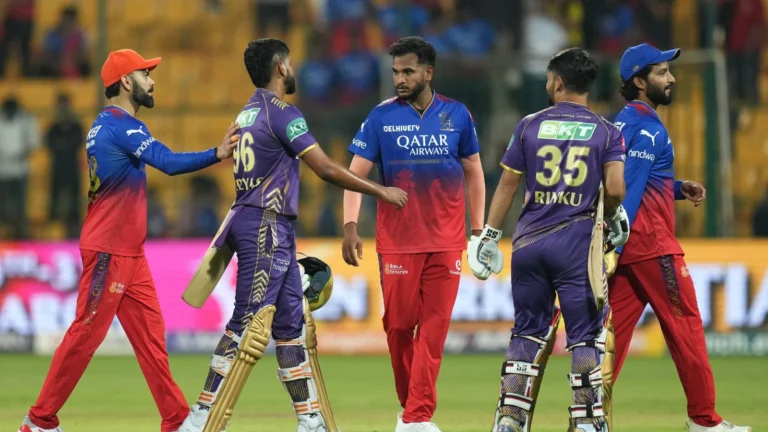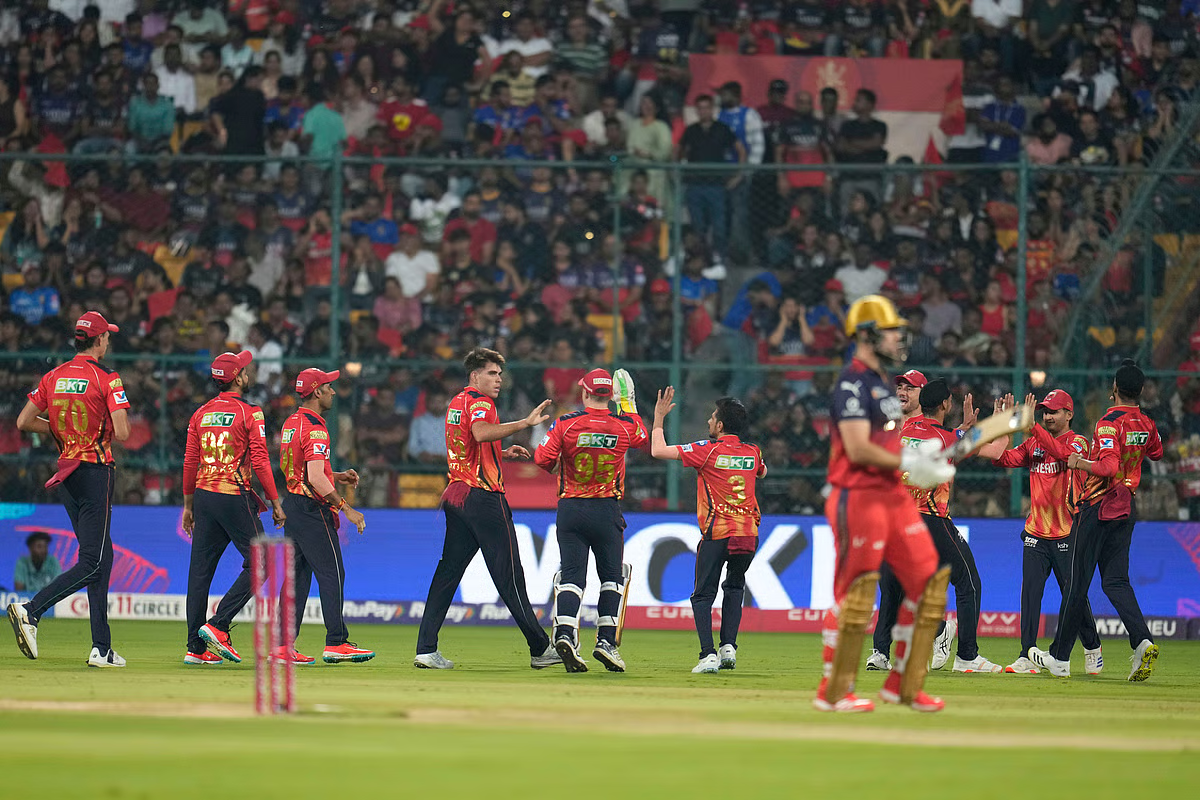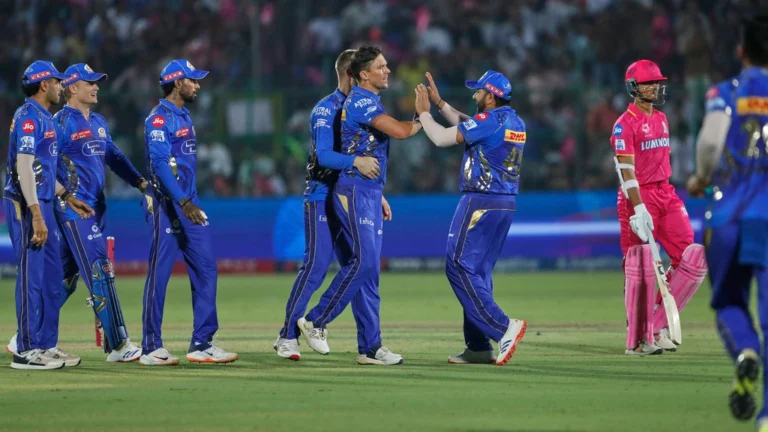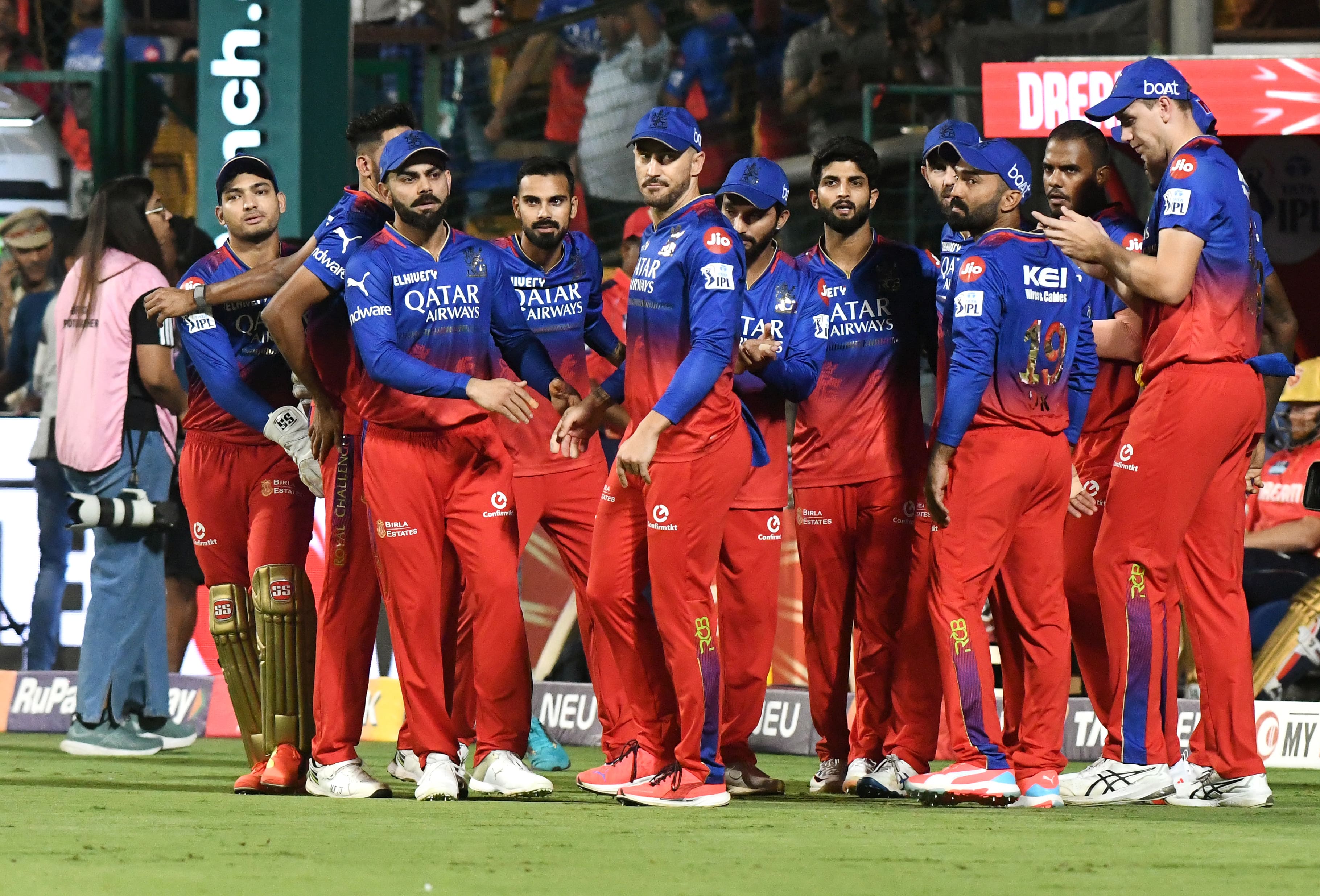
Royal Challengers Bengaluru and Mumbai Indians have created IPL’s most star-studded rivalry. From Chris Gayle’s explosive centuries to Rohit Sharma’s tactical masterclasses, this matchup showcases T20 cricket at its finest.
MI leads the head-to-head 19-13 from 32 matches. Their five IPL titles versus RCB’s zero championships define this rivalry. MI’s clinical execution in big moments contrasts sharply with RCB’s title heartbreak despite having cricket’s biggest names.
This timeline covers every memorable encounter from 2008 to 2025. Gayle’s record-breaking knocks, Malinga’s yorker masterclasses, and the psychological battle between cricket’s most successful franchise and its most passionate fanbase.
Quick Overview
| Stat | Details |
| Total Matches | 32 matches (2008-2025) |
| Head-to-Head | MI won 19, RCB won 13 |
| Title Count | MI: 5 championships, RCB: 0 |
| Highest Score | RCB 263/5 vs MI (2013) |
| Best Individual | Gayle 175*, Rohit 94* |
| Recent Form | MI won last 3 meetings |
The Title Tale: 5 vs 0
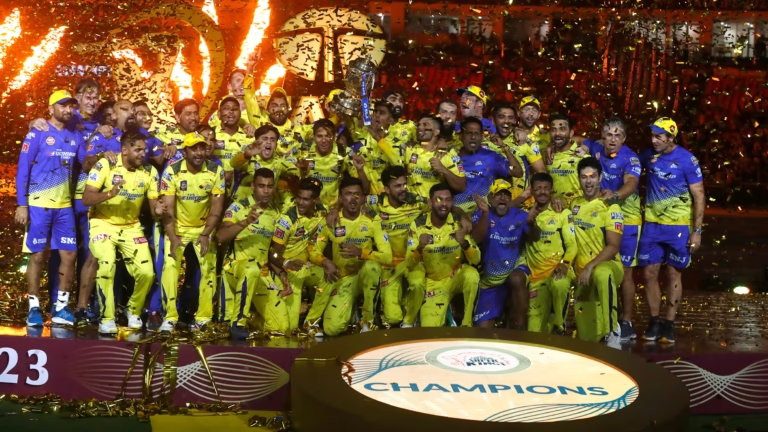
The biggest story in this rivalry isn’t individual matches – it’s championship success. Mumbai Indians have won five IPL titles (2013, 2015, 2017, 2019, 2020). Royal Challengers Bengaluru have reached three finals but never crossed the finish line.
This psychological difference shows in crucial moments. MI players know how to close out tight games because they’ve done it repeatedly. RCB carries the weight of repeated near-misses, sometimes affecting performance when pressure peaks.
According to ESPNCricinfo records, MI have won 67% of matches between these teams since 2013 – the year they won their first title. Before that, RCB held a slight edge. Championship experience changes everything in knockout cricket.
Chris Gayle’s Destruction: The Record-Breaking Era
Chris Gayle turned RCB vs MI matches into personal highlight reels. His most famous knock came on April 23, 2013, at Chinnaswamy Stadium – the same ground where he’d later score 175* against PWI.
Against MI, Gayle scored 92* off just 58 balls, smashing 7 sixes and 6 fours. RCB posted 235/1, with Virat Kohli contributing an unbeaten 73*. The partnership was devastating – MI had no answers to Gayle’s power hitting on the small Bangalore ground.
Gayle’s overall record against MI reads impressively: 567 runs at an average of 40.5 with a strike rate of 156.8. His ability to clear the boundaries consistently made him MI’s biggest threat during RCB’s golden batting years.
Rohit Sharma often captained against Gayle and learned valuable lessons about managing destructive batsmen. These experiences helped shape his own captaincy philosophy at MI.
Venue Breakdown: Home Advantage Matters
| Venue | Matches | MI Wins | RCB Wins | Key Features |
| Wankhede Stadium | 10 | 7 | 3 | MI fortress, sea breeze factor |
| M. Chinnaswamy Stadium | 12 | 5 | 7 | RCB’s batting paradise |
| Neutral Venues | 10 | 7 | 3 | IPL outside India |
- Wankhede dominance: MI’s home advantage at Wankhede is significant. The sea breeze, familiar conditions, and crowd support create a fortress mentality. RCB have struggled with Mumbai’s bowling attack on this ground.
- Chinnaswamy contests: RCB performs better at home with smaller boundaries suiting their power hitters. Gayle, de Villiers, and Kohli have all scored heavily here against MI. The fast outfield and short boundaries create run-fests.
- Neutral ground battles: When IPL moved to UAE or South Africa, MI adapted better. Their superior team balance and strategic depth showed in overseas conditions.
Key Player Battles That Shaped the Rivalry
Rohit Sharma vs RCB Bowlers
Rohit Sharma averages 42.8 against RCB with two centuries. His 94* in Mumbai (2015) showcased his ability to pace T20 innings perfectly. He often targeted RCB’s death bowling, scoring 67% of his runs in the final 10 overs.
Rohit’s captaincy record against RCB is equally impressive: 12 wins from 18 matches as MI captain. His tactical acumen and calm decision-making under pressure often frustrated RCB’s aggressive approach.
Lasith Malinga vs RCB Batsmen
Lasith Malinga’s yorkers troubled even RCB’s best batsmen. He dismissed Virat Kohli four times and AB de Villiers thrice in this rivalry. His slower ball variations and death-over expertise gave MI crucial advantages.
Malinga’s best figures against RCB: 4/23 in Mumbai (2011). He defended totals below 150 twice, showcasing how quality death bowling beats power hitting on any ground.
Virat Kohli’s Consistency
Virat Kohli leads all run-scorers in this rivalry with 734 runs from 25 matches. His average of 36.7 includes three half-centuries and countless crucial contributions. Unlike other RCB batsmen, Kohli adapted his game to counter MI’s bowling plans.
His best knock: 92* in Bangalore (2016) during RCB’s run to the finals. Kohli’s partnership with de Villiers took RCB to 235/1, proving that consistent accumulation works alongside explosive power hitting.
The 2016 Final Connection
Though RCB and MI didn’t meet in the 2016 final, their league encounters that season shaped both teams’ playoff runs. RCB’s explosive batting lineup peaked during this period, while MI missed the playoffs despite having quality personnel.
RCB’s batting philosophy in 2016 – maximizing powerplays and death overs – worked perfectly against MI’s bowling attack. Kohli and AB de Villiers scored heavily, setting templates for successful chases that year.
RELATED ARTICLES
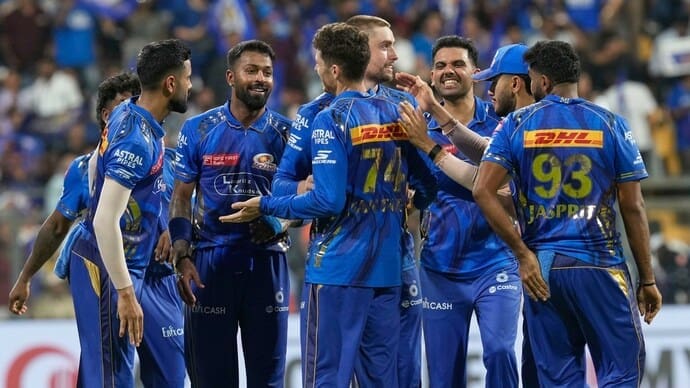
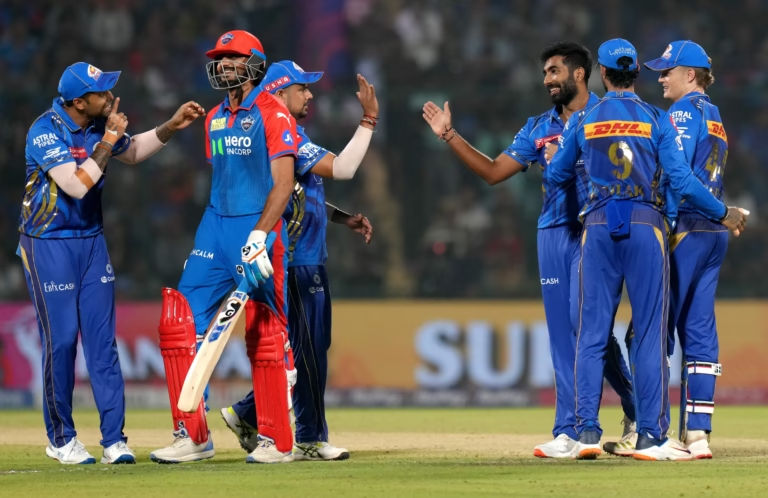
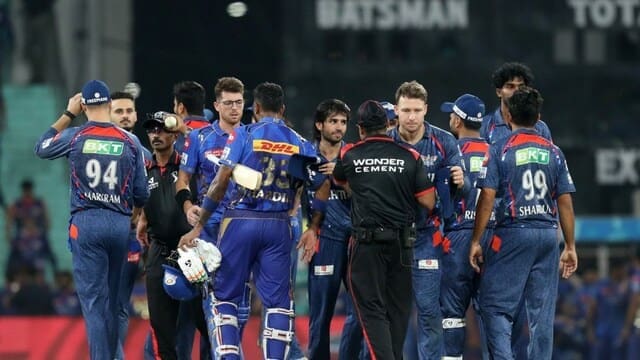
MI learned from these losses and restructured their bowling approach. The addition of Jasprit Bumrah and improved death bowling strategies came partly from analyzing how RCB dismantled their attacks.
Recent Years: MI’s Growing Dominance
Since 2020, MI have won all completed matches between these teams. This recent superiority coincides with their title wins in 2019 and 2020, showing sustained excellence while RCB rebuilt their squad.
Key factors in MI’s recent success:
- Jasprit Bumrah’s death bowling mastery neutralizing RCB’s power hitters
- Better middle-order depth handling pressure situations
- Strategic bowling changes disrupting RCB’s batting rhythm
- Clinical fielding in crucial moments
RCB’s struggles include over-reliance on top-order performers and inconsistent death bowling. When Kohli and de Villiers failed, the middle order couldn’t compensate against MI’s quality bowling.
Memorable Match: The 263 Run Chase
April 14, 2013, at Chinnaswamy Stadium produced the highest total in this rivalry. RCB scored 263/5 with Chris Gayle (92*), Virat Kohli (73*), and AB de Villiers (33* off 10 balls) destroying MI’s bowling.
MI’s chase never got going. They managed only 192/10 despite Dinesh Karthik’s fighting 69*. The 71-run victory margin was RCB’s biggest against MI and showcased their batting depth during peak years.
This match highlighted the contrasts: RCB’s explosive batting versus MI’s systematic approach. While entertaining, such high-scoring games often favored the team batting second – something RCB learned the hard way in close encounters.
The Psychology of Success
MI’s five titles create confidence that shows against RCB. Their players have experienced championship pressure and know how to execute under stress. Rohit Sharma’s calm captaincy contrasts with RCB’s emotional highs and lows.
RCB’s passionate fanbase creates incredible atmosphere but also pressure. “Ee Sala Cup Namde” (This year, the cup is ours) becomes a burden when repeated disappointments pile up. MI players feel less external pressure and play with greater freedom.
The head-to-head record reflects this psychological difference. In close games, MI often find ways to win while RCB make crucial errors. Experience matters in T20 cricket’s tight margins.
Current Status: The 2025 Perspective
Heading into IPL 2025, both teams have undergone significant changes. MI retained core leadership while refreshing their squad. RCB continued their search for the perfect combination to deliver their maiden title.
The rivalry remains as compelling as ever. New players like Phil Salt and Will Jacks bring fresh dynamics for RCB, while MI’s proven system continues producing results.
Recent auction strategies show different philosophies: MI building around proven performers, RCB seeking breakthrough talents. These approaches will define future encounters in this storied rivalry.
Records Summary
| Category | Record Holder | Details |
| Highest Individual | Chris Gayle (RCB) | 92* vs MI (2013) |
| Best Bowling | Lasith Malinga (MI) | 4/23 vs RCB (2011) |
| Highest Total | RCB | 263/5 (2013) |
| Most Runs | Virat Kohli (RCB) | 734 runs in 25 matches |
| Most Wickets | Lasith Malinga (MI) | 15 wickets |
| Biggest Victory | RCB | 71 runs (2013) |
FAQs
Who has won more matches between RCB and MI?
MI leads 19-13 from 32 matches with superior recent form.
Which ground favors which team in RCB vs MI?
MI dominates at Wankhede (7-3), RCB leads at Chinnaswamy (7-5).
How many IPL titles have RCB and MI won?
MI have 5 titles (2013, 2015, 2017, 2019, 2020), RCB have 0.
Who scored the most runs in RCB vs MI matches?
Virat Kohli leads with 734 runs from 25 matches.
What is the highest score in RCB vs MI matches?
RCB’s 263/5 in 2013 remains the highest team total.
Who is the leading wicket-taker?
Lasith Malinga tops with 15 wickets against RCB.
The Bottom Line
RCB vs MI represents cricket’s ultimate contrast: passionate chaos meets clinical precision. MI’s five titles versus RCB’s zero championships tells the story of execution under pressure.
Individual brilliance from Gayle, Kohli, and de Villiers has lit up this rivalry. But MI’s systematic approach and championship experience often prevails when stakes are highest.
Every encounter promises entertainment, but the psychological edge remains with Mumbai’s proven winners.
RELATED ARTICLES