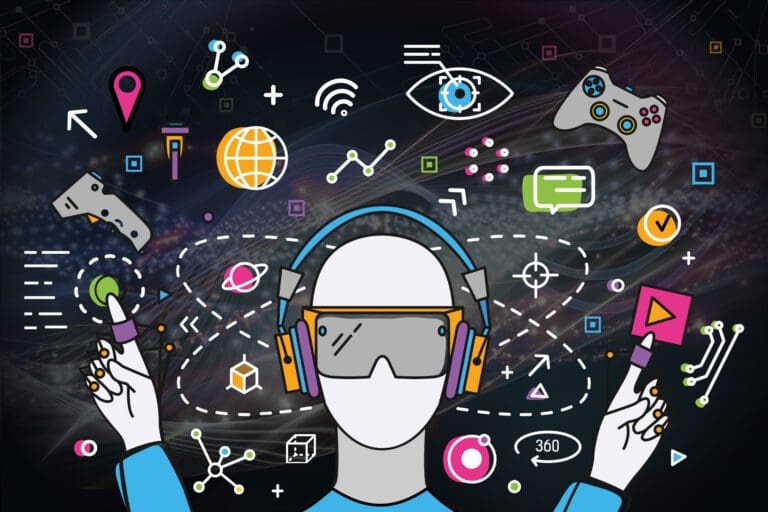
The concept of the metaverse has promised to reshape how people play, socialize, and interact online. In theory, it’s a connected digital universe — a seamless blend of gaming, social media, commerce, and creativity.
But while major companies have poured billions into developing metaverse platforms, questions remain: is this the next evolution of gaming, or simply an overhyped buzzword?
Even entertainment brands like Bison Casino are exploring the idea, experimenting with 3D interactive lobbies and community events inspired by metaverse principles, where gameplay meets virtual social experience.
What the Metaverse Really Means for Gaming
At its core, the metaverse is about immersion — virtual spaces that blur the line between player and world. Unlike traditional games, these environments don’t end when you log out. They evolve, persist, and connect players in real time.
The Origins of the Concept
The idea of the metaverse didn’t start with Silicon Valley. It originated from science fiction — notably Neal Stephenson’s Snow Crash and later Ready Player One. However, gaming has become the testing ground for these digital realities.
Why Gaming Is the Metaverse’s Foundation
Before examining examples, it’s important to understand why games have become the ideal environment for the metaverse to thrive:
- real-time interaction between millions of users
- strong social ecosystems built through multiplayer design
- established economies using in-game currencies and assets
- immersive graphics and physics simulations that mimic real life
These qualities make gaming the natural prototype for a metaverse that feels alive and participatory.
Major Players Building the Virtual Future
Big tech and gaming giants are competing to define what the metaverse will become. Some envision interconnected worlds, others prefer self-contained ecosystems.
Key Companies Investing in the Metaverse
Before listing the leaders, it’s worth noting that investment in this field continues to grow despite mixed financial outcomes. Among the most active players:
- Epic Games — expanding Fortnite into a social platform with concerts, film screenings, and creative worlds.
- Meta — focusing on VR environments and cross-platform integration through Horizon Worlds.
- Roblox — evolving from a kids’ sandbox into a full creative economy where users develop and monetize experiences.
- Microsoft/Xbox — investing in cross-device metaverse solutions through cloud infrastructure and Minecraft.
- Tencent — building interconnected virtual spaces blending gaming and e-commerce.
According to Reuters, global spending on metaverse gaming technologies exceeded $22 billion in 2024, led by partnerships between Meta, Microsoft, and Sony to develop interoperable virtual environments.
RELATED ARTICLES

The Promise: Infinite Worlds and Creative Freedom
The vision of the metaverse excites both developers and players. Imagine virtual concerts, shared adventures, and entire worlds built collaboratively without physical limits.
Opportunities for Players and Creators
Before exploring its impact, it’s important to highlight what makes the concept so appealing:
- shared social spaces that replace traditional lobbies
- player-driven economies using tokens or digital ownership
- infinite customization for avatars and worlds
- integration of work, play, and creativity into one environment
For many, the metaverse represents liberation — a place where imagination defines identity and community replaces geography.
The Reality Check: Technical and Ethical Barriers
Despite its promise, the metaverse faces serious challenges — from technical constraints to ethical dilemmas about ownership, privacy, and sustainability.
The Practical Limitations
Even as VR and AR technologies advance, most users still lack access to hardware powerful enough for full immersion. High costs, latency issues, and fragmented standards remain significant barriers.
The Business Problem
Before listing key risks, it’s worth noting that not all metaverse platforms are sustainable. The biggest issues include:
- dependence on speculative NFT and crypto economies
- unclear profit models for developers and users
- lack of regulation for digital property and moderation
- potential user fatigue due to overwhelming hype
As GESIS noted in a 2025 report, many corporate metaverse projects have “pivoted quietly” after failing to attract consistent engagement, highlighting that community value — not branding — drives long-term success.
How Games Already Function as Mini-Metaverses
In practice, some of today’s most successful games already embody metaverse principles — without the label.
Gaming Worlds That Became Social Ecosystems
Before looking at examples, note that these games thrive because of user creativity and connection:
- Fortnite – a live virtual stage for global cultural events.
- Roblox – an economy built entirely on player creations.
- Second Life – an early virtual world that continues to host art, business, and education.
- GTA Online – a persistent universe where players craft their own roles and stories.
Each of these titles proves that the metaverse’s essence isn’t new — it’s the natural evolution of multiplayer gaming.
The Future: Between Innovation and Illusion
The next step for metaverse gaming depends on balancing ambition with realism. The focus must shift from buzzwords to player experience and meaningful connectivity.
What the Next Decade Might Bring
Before summarizing, it’s clear that the metaverse will evolve alongside AI, blockchain, and spatial computing. Possible developments include:
- hyper-realistic avatars powered by AI emotion mapping
- cross-platform ownership verified through secure blockchain systems
- AR integration merging physical and digital gaming worlds
- decentralized governance giving players creative control
Whether this becomes a revolution or a rebrand will depend on execution, not marketing.
Conclusion
The metaverse has captured the imagination of gamers, creators, and corporations alike. Its potential to merge entertainment, economy, and community is undeniable — but so are its risks.
For now, metaverse gaming sits between two realities: one of visionary innovation and another of inflated promises. What will define its future isn’t hype, but whether developers can create worlds worth returning to — not just exploring once.