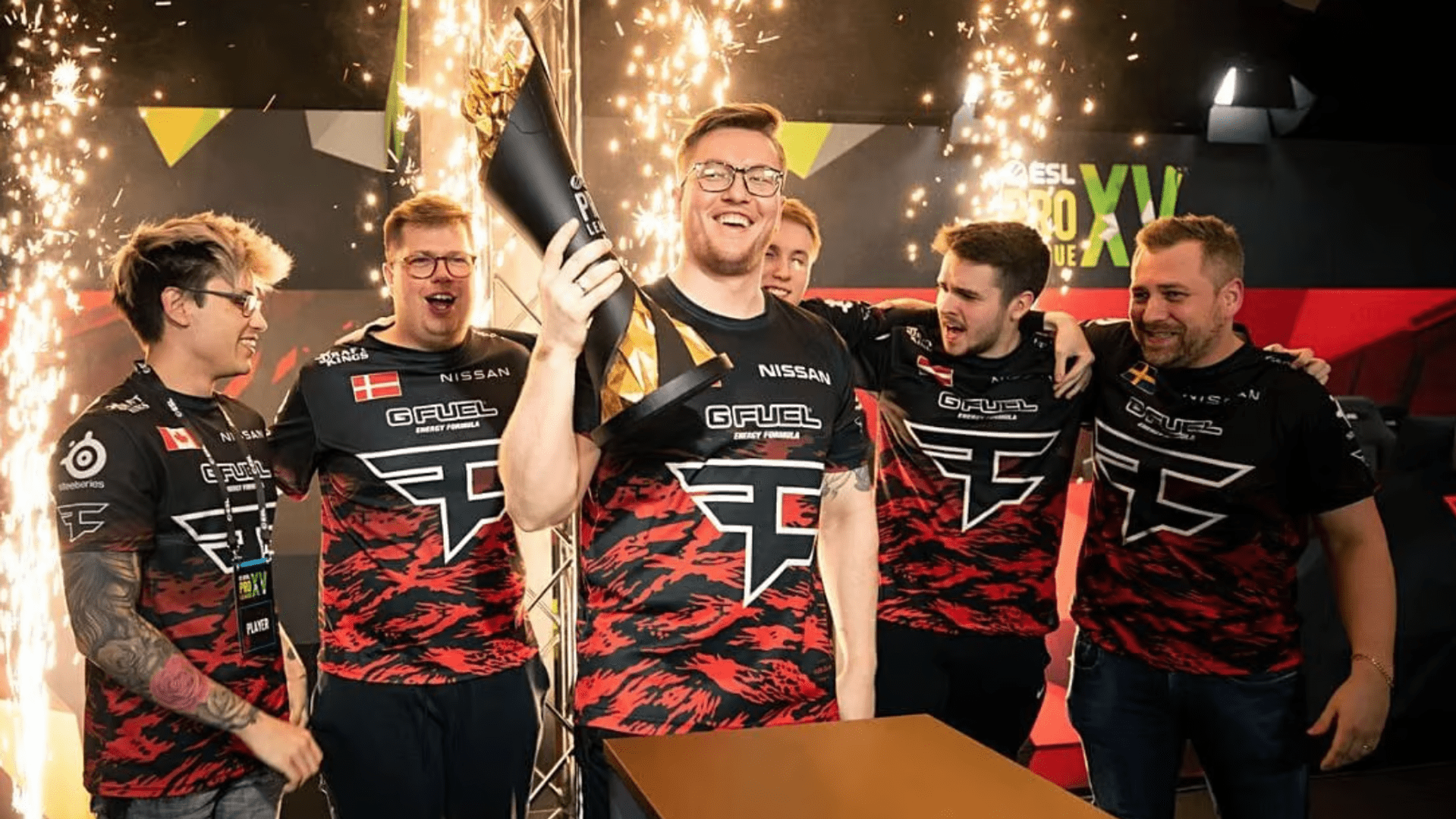
Once considered a niche hobby confined to dimly lit internet cafés, esports has transformed into one of the most lucrative branches of modern entertainment.
The best players today aren’t just competing for trophies; they’re building empires with million-dollar prize pools, sponsorships from global brands, and fan bases that rival those of traditional athletes.
The numbers involved are staggering: Dota 2’s The International 2021 had a prize pool exceeding US$40 million, and even mid-tier tournaments can offer six-figure rewards.
Probably the best recognition of the positions esports has achieved was its inclusion in the list of sports covered by bookmakers. If you visit this site, you’ll see that digital incentives of bookmakers worldwide can be applied to various sports, including esports.
Yet the financial reality of being a top-tier professional gamer isn’t as simple as “play, win, earn.” Behind every glamorous paycheck lies years of practice, constant travel, and an industry still learning to balance passion with profit.
While the elite few earn life-changing sums, most professionals live in a far more volatile ecosystem — one where a bad season or a lost sponsor can turn fortune into uncertainty overnight.
The most successful esports players now navigate a landscape that combines skill, strategy, and financial acumen.
Their income often comes from multiple streams, among which are tournament winnings, brand endorsements, streaming deals, and personal merchandise lines. Some even invest in crypto, real estate, or startup ventures related to gaming technology.
Esports is no longer a subculture; it’s an economy. And at its centre stand players who’ve turned reaction time into revenue and reflex into legacy.
The Rise of the Millionaire Gamer
When esports began gaining traction in the early 2000s, the idea of a “professional gamer” seemed almost comedic. The first Counter-Strike and StarCraft tournaments offered modest rewards, often no more than a few thousand dollars.
But the evolution of broadband, streaming platforms, and global audiences transformed the scene almost overnight.
Today, the list of the world’s top-earning players reads like a Forbes ranking. According to Esports Earnings, Johan “N0tail” Sundstein — captain of OG, the team that won The International in 2018 and 2019 — has earned over US$7.4 million in prize money alone.
Following closely are players like Jesse “JerAx” Vainikka, Anathan “ana” Pham, and Topias “Topson” Taavitsainen, all Dota 2 veterans whose earnings eclipse those of Olympic athletes in several disciplines.
The striking contrast lies not only in the sums but in the age curve. Most top esports players peak in their early 20s — a career arc shorter than in nearly any traditional sport. This brevity adds urgency: a Dota 2 champion may have a few golden years to capitalise before reflexes slow or new games dominate the scene.
The Role of Game Publishers
Unlike traditional sports governed by federations, esports is tightly controlled by publishers. Companies like Valve, Riot Games, and Blizzard effectively own the leagues, tournaments, and broadcasting rights.
RELATED ARTICLES


This centralisation means that prize money depends heavily on publisher investment and community crowdfunding.
For instance, The International’s record-breaking prize pools come from a portion of in-game purchases by fans — a clever model that turns audience enthusiasm directly into player income.
Riot’s League of Legends World Championship, while smaller in cash terms, compensates players with long-term stability through franchised leagues and guaranteed salaries.
These systems show two faces of esports wealth: one explosive and unpredictable, the other steady and structured. Both, however, demand excellence and an audience willing to pay for it.
Building Empires
For most top players, the real money lies offstage. Sponsorships now account for over 50% of esports revenue globally. Major brands like BMW, Red Bull, and Louis Vuitton have entered the space, turning players into ambassadors of style and performance.
Take Oleksandr “s1mple” Kostyliev, the Ukrainian Counter-Strike legend. In addition to his tournament winnings (over US$2 million), s1mple’s partnerships with Logitech and Puma, combined with streaming revenue and content deals, easily double that figure.
Similarly, Kyle “Bugha” Giersdorf, the Fortnite World Cup champion, earned US$3 million in prize money — but multiplied his net worth through sponsorships and a long-term deal with Twitch.
Streaming platforms such as Twitch, Kick, and YouTube Gaming have become parallel economies for these athletes. A single stream can draw hundreds of thousands of viewers, and subscription-based models or viewer donations provide consistent income even when tournament results fluctuate.
The Esports Entrepreneur
Many players are no longer content with being just athletes. They’re becoming brands. Retired stars like Carlos “ocelote” Rodríguez (founder of G2 Esports) and Lee “Faker” Sang-hyeok (minority owner in T1) have leveraged their fame into ownership stakes, transforming gaming into enterprise.
Faker, often called the “Michael Jordan of esports,” reportedly earns around US$5 million per year when combining salary, bonuses, and endorsements — all while maintaining a famously disciplined lifestyle that mirrors traditional elite athletes. He’s one of the few who turned fandom into an institution.
Meanwhile, new generations are expanding beyond the screen. Some launch clothing lines, NFTs, or gaming hardware brands. Others act as investors in the booming gaming-tech ecosystem, funding VR start-ups or esports analytics companies.
For top professionals, the career path now resembles that of entertainers or entrepreneurs — fluid, diversified, and surprisingly corporate.
The Human Side of Digital Glory
The wealth and fame of esports stars come at a cost. The industry’s youth and intensity have led to alarming burnout rates.
Players train 10–14 hours a day, live under constant scrutiny, and compete in high-stress environments where performance can collapse overnight.
Mental health has become a growing concern. The average esports player retires before the age of 27 — far younger than footballers or tennis professionals. Unlike traditional athletes, many lack structured medical or psychological support.
Organisations such as the British Esports Federation and Mental Health in Gaming Initiative have begun addressing these gaps, but progress remains uneven.
Even the most successful players have spoken openly about exhaustion. s1mple once confessed that constant travel and online harassment nearly drove him to quit.
Top Dota 2 players, too, often take year-long breaks to recover from stress. For every millionaire headline, there’s a quieter story of burnout and uncertainty.
A New Model for Sustainability
Despite its growing pains, esports is gradually maturing into a sustainable profession. Structured contracts, player unions, and franchised leagues are helping to stabilise earnings.
Europe’s LEC and North America’s LCS guarantee minimum salaries exceeding $75,000 annually — a far cry from the unstable freelance scene of the past.
Colleges and universities have begun offering scholarships for esports, treating it as a legitimate athletic pursuit. Sponsorship agencies and accountants now specialise in managing esports careers, ensuring that players secure long-term stability rather than short-lived fame.
The conversation has shifted from quick wins to career longevity. Or from tournaments to legacies.
The Digital Elite
The top esports players of today are more than gamers; they are architects of a new economy where attention equals currency. Their lives combine the thrill of sport, the strategy of business, and the unpredictability of entertainment.
They are digital pioneers, and while only a handful reach millionaire status, their success signals a broader cultural shift. Gaming has become not just a pastime but a profession, a lifestyle, and a global industry that rewards intellect as much as reflex.
As esports continues to expand, its champions are rewriting what it means to be an athlete — not on grass or track, but on pixels and processors. And somewhere between exhaustion and exhilaration, between code and competition, the modern gamer stands — not just playing for victory, but for history.
RELATED ARTICLES