Kaoru Mitoma revolutionized Japanese football economics with his Brighton breakthrough, commanding £7 million annually while his market value soared to €45 million. Takehiro Tomiyasu’s €35 million Arsenal valuation proves Japanese defenders can thrive financially in Europe’s most competitive league.
The J-League’s median salary sits at just $150,000 for Japanese players, creating massive incentives for European transfers that multiply earnings 5-10 times. Takumi Minamino and Ritsu Doan exemplify successful European pathways, building multi-million dollar fortunes.
Explore Japanese football stars’ career paths and see how they compare with other soccer players net worth globally.
| Goalkeeper | Defender | Midfielder | Forward |
| Zion Suzuki | Hiroki Ito | Wataru Endo | Kaoru Mitoma |
| Keisuke Osako | Kou Itakura | Daichi Kamada | Takefusa Kubo |
| Kosei Tani | Ayumu Seko | Ritsu Doan | Ayase Ueda |
| Daniel Schmidt | Yuta Nakayama | Ao Tanaka | Daizen Maeda |
| Shuichi Gonda | Yukinari Sugawara | Reo Hatate | Keito Nakamura |
| Hiroki Sakai | Hidemasa Morita | Kyogo Furuhashi | |
| Shogo Taniguchi | Yuki Soma | Takuma Asano | |
| Tomoki Iwata | Joel Chima Fujita | Shuto Machino | |
| Kota Takai | Takumi Minamino | Yuito Suzuki | |
| Yuto Nagatomo | Kaishu Sano | Junya Ito | |
| Ko Itakura | Shoya Nakajima | Artjoms Rudņevs |
10 Richest Football Players in Japan
Japanese footballers build wealth through European club success rather than domestic J-League contracts. Shinji Kagawa and Keisuke Honda pioneered the European wealth-building model that current stars follow.
| Player Name | Annual Salary | Estimated Net Worth | Current Status |
| Shinji Kagawa | N/A | $25 million | Retired |
| Keisuke Honda | N/A | $20 million | Retired |
| Kaoru Mitoma | £7 million | $15 million | Brighton (Active) |
| Takehiro Tomiyasu | £5.2 million | $12 million | Arsenal (Active) |
| Takumi Minamino | £3.8 million | $10 million | Monaco (Active) |
| Maya Yoshida | £2.5 million | $8 million | Active |
| Ritsu Doan | £1.3 million | $5 million | Freiburg (Active) |
| Daichi Kamada | £4 million | $6 million | Crystal Palace (Active) |
| Wataru Endo | £3.5 million | $5 million | Liverpool (Active) |
| Junya Ito | £2 million | $4 million | Stade Reims (Active) |
Mitoma’s rapid wealth accumulation demonstrates modern Japanese player potential. His €45 million market value positions him for future contract upgrades exceeding £10 million annually.
Japanese Stars Earning Overseas vs. J-League
The salary differential between J-League and European football creates powerful financial incentives for Japanese talents to move abroad. J1’s median Japanese player salary reaches just $150,000 annually, while European clubs offer $1-7 million for established talents.
| Competition | Japanese Player Salary | Example | Wealth Potential |
| J1 League | $150,000 median | Domestic players | $3-8M career |
| Bundesliga | £1-3 million | Doan, Kamada | $15-30M career |
| Premier League | £3-7 million | Mitoma, Tomiyasu | $30-60M career |
| Ligue 1 | £2-4 million | Minamino | $20-40M career |
Foreign players in J-League earn average $730,000 annually, nearly 5 times the Japanese player median. This disparity encourages promising Japanese prospects toward European academies offering immediate salary multipliers.
Building Fortunes: Japanese Player Strategies
Japanese footballers follow predictable wealth-building pathways: J-League development → Eredivisie/Bundesliga → Premier League/La Liga. This progression maximizes lifetime earnings while maintaining competitive development.
Wealth Accumulation Methods:
RELATED ARTICLES



- Premier League contracts delivering £3-7 million for established players
- Bundesliga’s balanced approach offering £1-3 million with regular playing time
- Smart agents negotiating image rights separately from base salaries
- Japanese market endorsements with domestic brands
- Real estate investments in Tokyo and European club cities
Mitoma’s Brighton contract includes substantial performance bonuses tied to goals and assists. His Champions League qualification bonuses added over £500,000 to 2024 earnings.
Tomiyasu diversified his £12 million net worth through Japanese brand partnerships with Asics, Nissin Foods, and banking institutions. His domestic endorsements generate approximately £800,000 annually beyond Arsenal wages.
J-League Financial Structure
Japan’s domestic league pays modest salaries by European standards but competitive within Asia. The J1 League average salary sits at $256,000 when including foreign imports, dropping to $175,000 for Japanese players only.
Top J1 clubs like Yokohama F. Marinos and Urawa Reds pay elite domestic players $300,000-$500,000 annually. Mid-table clubs offer $100,000-$250,000, while J2 League salaries average just $31,000.
The J-League’s three-tier professional contract system creates wage disparities. Many J3 teams maintain only 3+ players on professional contracts, with others working side jobs while playing semi-professionally.
National Team Compensation Framework
The Japan Football Association compensates national team players through match fees and tournament bonuses. AFC Asian Cup campaigns generate the most substantial supplemental income for domestic-based players.
Payment Details:
- World Cup matches: $12,000-$18,000 per appearance
- Asian Cup games: $10,000-$15,000 per match
- World Cup qualifiers: $8,000-$12,000 per game
- Friendly fixtures: $4,000-$6,000 per appearance
- Tournament progression bonuses: Six-figure distributions for championship runs
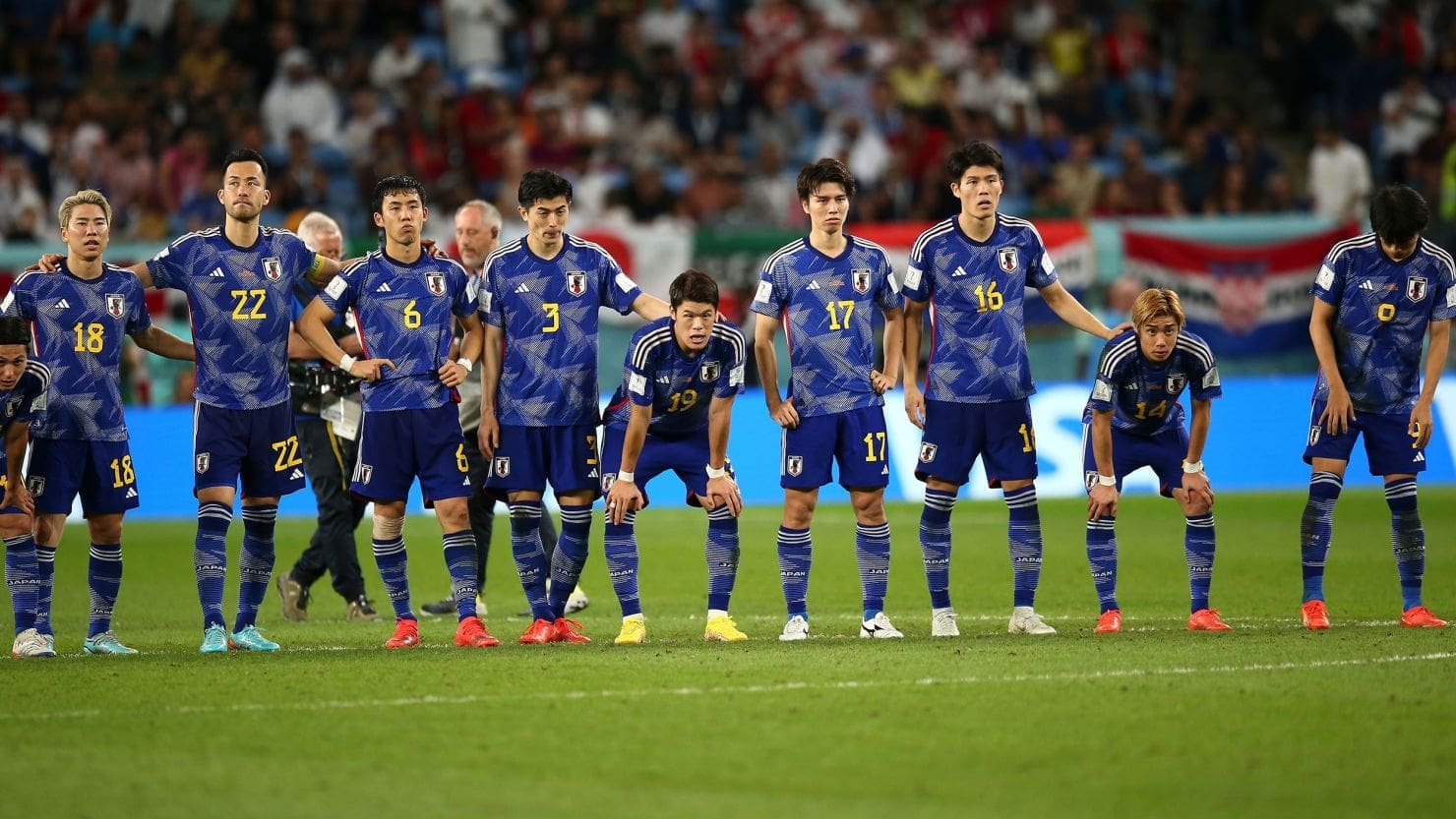
Japan’s 2022 World Cup Round of 16 appearance distributed approximately $1.5-2 million in bonuses across the squad. Each player earned roughly $100,000-$150,000 in tournament payments supplementing club salaries.
FAQs
Who is the richest Japanese footballer?
Shinji Kagawa holds this distinction with $25 million net worth from his Manchester United, Borussia Dortmund, and European career. Among active players, Kaoru Mitoma leads with $15 million accumulated through his Brighton success.
What is Kaoru Mitoma’s salary at Brighton?
Mitoma earns approximately £7 million annually at Brighton after his breakout 2022-23 season. His contract includes performance bonuses that can push total earnings above £8 million with Champions League qualification.
How much do Japanese national team players earn per match?
Japanese players receive $12,000-$18,000 per World Cup match with progression bonuses. Asian Cup matches pay $10,000-$15,000, while friendlies provide $4,000-$6,000 per appearance.
What’s the average J-League salary?
The J1 League median salary for Japanese players is $150,000 annually, with the most common figure just $31,500. Including foreign players raises the average to $256,000, demonstrating significant wage disparities.
Why do Japanese players succeed in Europe financially?
Japanese players’ technical skills, tactical discipline, and professional work ethic make them attractive to European clubs. Their reliability and versatility allow them to command salaries 5-10 times higher than domestic J-League wages.
RELATED ARTICLES