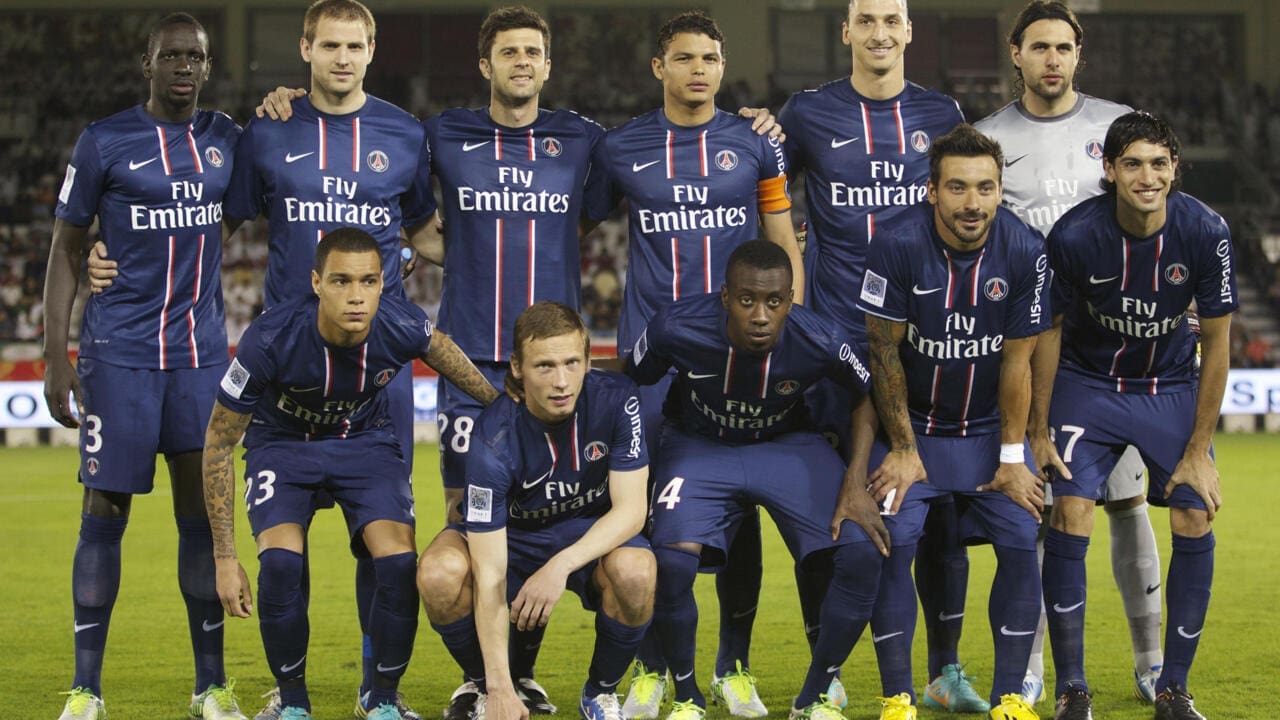
Paris Saint-Germain enters 2025-26 with a total wage bill of approximately €175 million annually. This is the highest in Ligue 1 and among Europe’s elite clubs. The total breaks down to roughly €3.36 million per week. The average player salary reaches €7.3 million per year.
Here is the striking part. This represents a significant reduction from 2024-25, when PSG’s wage bill hit €197 million. That €22 million cut might seem counterintuitive at first.
However, it tells a fascinating story. PSG moved away from the superstar-heavy approach that defined the Mbappé, Messi, and Neymar era. Instead, they invested strategically in a more balanced squad. It worked. The 2024-25 season delivered their first Champions League title in club history.
Ousmane Dembélé: PSG’s New Star Earner
Ousmane Dembélé commands the top salary at PSG. He earns €18 million per year. That is approximately €346,000 weekly. The French winger’s contract was signed in 2023. PSG paid Barcelona €50 million for him.
In his first season with PSG (2023-24), Dembélé struggled to justify the investment. But the 2024-25 campaign changed everything. He scored 35 goals in the league alone. This was a massive improvement from his previous best of 14 goals.
He delivered crucial performances throughout PSG’s Champions League run. His contribution was so significant that he won the 2025 Ballon d’Or. This cemented his position as one of Europe’s elite forwards.
The wage reflects the performance. At €18 million annually, Dembélé’s salary is justified by results. It is not just potential.
For context, even at Barcelona, where he was earning over €300,000 weekly, he never achieved these goal-scoring numbers. PSG’s investment and tactical system unlocked him completely.
Top 10 Highest-Paid PSG Players (2025-26)
| Rank | Player | Position | Annual Salary | Weekly Salary |
| 1 | Ousmane Dembélé | Forward | €18.0M | €346k |
| 2 | Khvicha Kvaratskhelia | Winger | €16.0M | €308k |
| 3 | Marquinhos | Defender | €11.6M | €223k |
| 4 | Achraf Hakimi | Right-Back | €11.4M | €219k |
| 5 | Lucas Hernandez | Left-Back | €11.4M | €219k |
| 6 | Gianluigi Donnarumma | Goalkeeper | €10.8M | €208k |
| 7 | Vitinha | Midfielder | €11.0M | €211k |
| 8 | Nuno Mendes | Left-Back | €10.0M | €192k |
| 9 | Bradley Barcola | Winger | €6.6M | €127k |
| 10 | Warren Zaire-Emery | Midfielder | €8.0M | €154k |
Kvaratskhelia’s arrival in January 2025 brought a massive wage jump. He earned just €2 million annually at Napoli. Now he earns €16 million at PSG.
Marquinhos is the squad captain and Europe’s most consistent defender. He solidified his position with a lucrative contract. He has nearly 500 appearances for the club.
Defender and goalkeeper investment reflects PSG’s tactical priority. They focus on a solid defensive foundation for attacking football.
Multiple players signed recent extensions in early 2025. These include Hakimi, Mendes, and Vitinha. This shows PSG’s commitment to squad stability.
PSG’s Salary Tiers
PSG’s wage structure reveals clear strategic investment priorities.
Elite Tier (€15M and above): Attack-Focused Investment
Two players occupy this tier. They are Dembélé and Kvaratskhelia. This represents PSG’s commitment to world-class attacking talent. These are the foundations of their Champions League-winning team.
Core Tier (€10-15M): Defensive and Midfield Foundation
Marquinhos, Hakimi, Lucas Hernandez, Donnarumma, and Vitinha form this group. These are experienced, battle-tested players. They provide tactical stability. Marquinhos captains the side. Hakimi and Hernandez anchor the defense. Donnarumma provides goalkeeper excellence. Vitinha controls midfield tempo.
Young and Developing Tier (€5-10M): Future Assets
Players like Bradley Barcola and Warren Zaire-Emery earn here. They are signed to long-term contracts until 2028-2029. These are academy products and promising signings. PSG is investing in them for the future.
Squad Depth (below €5M)
The remaining first-team players provide tactical flexibility. They offer rotation options.
RELATED ARTICLES

This structure is fundamentally different from the Mbappé era. Back then, the top 3-4 players consumed a disproportionate share of the budget. Now investment is spread across attack, defense, and midfield. This creates a more balanced, sustainable model.
How PSG Cut Wages But Won the Champions League
The narrative shift at PSG is remarkable. In 2024, Mbappé, Neymar, and Messi collectively earned approximately €164 million annually. This was astronomical spending. However, it failed to deliver the club’s ultimate goal. That goal was the Champions League trophy.
When Mbappé left for Real Madrid in 2024, his departure freed roughly €25-30 million in annual wages. Instead of replacing him with another megastar, PSG made a calculated choice. They decided to reinvest strategically. They built a cohesive unit.
The new approach involved several key decisions. First, they signed Kvaratskhelia for €70M. Second, they extended Hakimi, Mendes, and Vitinha to reward emerging form. Third, they secured core players long-term. Fourth, they invested in depth rather than superstar concentration. Fifth, they built a squad less fractious and more unified in tactical purpose.
The 2024-25 result proved the strategy correct. PSG won the Champions League for the first time in their history. They defeated Inter Milan in the final. Luis Enrique‘s tactical system thrived with a balanced squad. It worked better than ego management.
This proves something fundamental. More wages do not equal better results. PSG spent €22 million less than the previous year. Yet they achieved their greatest success. The efficiency came from smart investment, not lavish spending.
PSG vs Ligue 1: Wage Dominance
PSG’s wage spending dwarfs every other Ligue 1 competitor.
PSG spends €175 million annually. AS Monaco spends roughly €47 million (4 times less). Olympique Lyonnais spends about €70 million (2.5 times less). Olympique Marseille spends approximately €60 million (3 times less).
This gulf reflects Qatar Sports Investments’ financial backing since 2011. PSG operates in a different financial league than the rest of French football.
However, a critical lesson emerged from 2024-25. Financial dominance finally translated to sporting dominance. This happened not through star accumulation. It happened through strategic investment and tactical coherence.
Recent Contract Extensions and Marquee Signings
Khvicha Kvaratskhelia (January 2025)
PSG paid Napoli €70 million plus add-ons for the Georgian winger. He is one of football’s most exciting young talents. His salary jumped from €2 million at Napoli to €16 million annually. This reflects his elevation to PSG’s elite tier. He is signed through 2029.
Achraf Hakimi (Early 2025 Extension)
The Moroccan right-back signed a new deal extending to 2029. His terms improved significantly. He now earns over €250,000 weekly. He has the promise of €100,000 plus in performance bonuses. His relentless energy and attacking threat made him indispensable.
Nuno Mendes (Early 2025 Extension)
Nuno Mendes is regarded as one of Europe’s best left-backs. He signed a new four-year deal in early 2025. This raised his salary to €10 million annually. His rise from a young prospect to elite defender warranted the investment.
Vitinha (February 2025 Contract Renewal)
The Portuguese midfielder effectively doubled his salary in February 2025. His new salary is approximately €11 million per year. His reward reflected finishing 3rd in the 2025 Ballon d’Or voting. This was a remarkable achievement for a midfielder. It showed his importance in PSG’s system.
These extensions reveal PSG’s strategy. They lock in proven performers. They no longer chase new names constantly.
Average Squad Salary and Depth
PSG has approximately 24 first-team players. The total wage bill is €175 million. The average PSG player earns €7.3 million annually. That is roughly €583,000 per month. This is significantly higher than any other Ligue 1 club.
The distribution shows PSG does not rely on a handful of superstars anymore. Instead, they have built genuine squad depth. Fifteen players earn €5 million or more.
This means a significant portion of the squad consists of well-compensated professionals. They are also experienced. This depth was crucial in maintaining consistency. It mattered throughout the 2024-25 Champions League campaign.
FAQs
Why did PSG’s wage bill decrease but they won more?
The €22 million reduction eliminated salary inflation from the Mbappé era. Strategic reinvestment created a more balanced squad. This included the Kvaratskhelia signing and key extensions. It produced a tactically cohesive unit. Fewer egos meant better teamwork. Luis Enrique’s system rewarded cohesion over individual brilliance.
How much did Kvaratskhelia’s salary jump when he joined PSG?
His salary jumped from €2 million at Napoli to €16 million at PSG. This is an eight-fold increase. It reflects his immediate elevation to PSG’s attacking elite.
Is PSG’s wage spending sustainable?
At €175 million, it is sustainable for PSG given Qatar’s backing. However, FFP regulations continue to evolve. PSG remains under scrutiny. The reduced wage bill compared to 2024-25 suggests movement toward more balanced spending.
Who benefits most from PSG’s wage structure?
Defenders (Marquinhos, Hakimi, Hernandez, Mendes) and the goalkeeper (Donnarumma) are well-paid. This reflects PSG’s defensive-first approach. Combined with elite attackers (Dembélé, Kvaratskhelia), it creates attacking prowess with defensive stability.
What happened to Mbappé’s salary when he left?
His departure freed approximately €25-30 million in annual wages. PSG reinvested this through the Kvaratskhelia signing. They also made strategic extensions rather than signing another marquee player.
How does PSG’s average salary compare to other Ligue 1 clubs?
PSG’s €7.3 million average is roughly 4 times higher than Monaco’s average. This reflects PSG’s financial dominance. It shows Qatar’s willingness to outspend competition.
Which players recently signed extensions in 2025?
Hakimi, Mendes, Vitinha, and Donnarumma all signed improved terms. These were rewards for performance. They also represented efforts to retain key players.
How many PSG players earn €5 million or more annually?
Approximately 15 players in PSG’s first-team squad earn €5 million or more per season. This reflects significant investment in squad depth beyond top earners.