The Plate Tapping Test (also called the Reaction Tap Test) measures how fast your upper body can react and move. This simple test is used in sports science, PE classes, and medical settings to check how well your brain controls your movements.
Purpose and Applications
The primary purpose of the Plate Tapping Test is to assess:
- Upper limb speed and coordination
- Hand-eye quickness
- Reaction time
- Neuromotor development
This test forms an important part of the Eurofit Testing Battery, a set of physical fitness tests developed by the Council of Europe to assess health-related fitness in children and adults.
Equipment Required
To properly conduct the Plate Tapping Test, you’ll need:
- A table (preferably height-adjustable)
- Two yellow discs (20cm diameter)
- One rectangle (30 x 20 cm)
- A stopwatch or timing device
- Recording forms
Test Procedure
Pre-Test Preparations
- Explain the test procedures thoroughly to the participant
- Obtain informed consent from the participant
- Record basic information including age, height, body weight, and gender
- Adjust the table height so the participant can stand comfortably
Test Setup
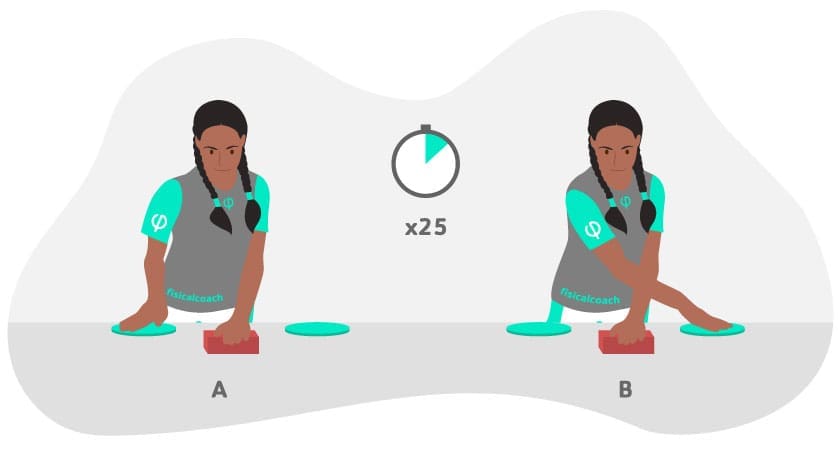
- Place two yellow discs on the table with their centers exactly 60 cm apart
- Position the rectangle equidistant between the two discs
- Have the participant stand in front of the table facing the discs
Test Execution
- The participant places their non-preferred hand on the rectangle in the middle
- The preferred hand is placed on one of the discs
- On the “Go” signal, the participant moves their preferred hand back and forth between the discs, over the hand in the middle
- The movement must be performed as quickly as possible
- A complete cycle consists of touching both discs (2 taps)
- The test continues until 25 complete cycles (50 taps) are performed
Scoring
- The time taken to complete 25 cycles (50 taps) is recorded in seconds
- The test is typically performed twice, with the best (fastest) result being recorded
- Lower scores indicate better performance
Normative Data and Interpretation
Performance in the Plate Tapping Test varies by age, gender, and athletic background. While specific normative data should be consulted for accurate interpretation, general guidelines suggest:
- Elite athletes typically complete the test in 9-12 seconds
- Average adults usually finish in 12-15 seconds
- Children and older adults may take longer, with times varying based on developmental stage and age-related factors
Related Assessments
Several other tests measure similar aspects of coordination and reaction time:
RELATED ARTICLES


- Minnesota Rate of Manipulation Test – Assesses manual dexterity using various object manipulation tasks
- Block Transfer Test – Evaluates coordination through moving blocks between designated areas
- Light Board Test – Measures reaction time to visual stimuli
- Foot Tap Speed Test – Similar concept applied to lower limbs, counting foot taps in 30 seconds
Practical Applications
The Plate Tapping Test has valuable applications across multiple fields:
Sports Science
- Identifying athletes with exceptional hand speed potential
- Tracking improvements in coordination following training interventions
- Comparing performance between different sports and positions
Physical Education
- Assessing motor development in children
- Establishing baseline coordination metrics
- Creating appropriate physical education programs
Clinical Settings
- Evaluating neurological function
- Monitoring recovery following injury
- Assessing motor skills in various populations
FAQs
How does the Plate Tapping Test differ from other tests?
It focuses on quick back-and-forth movements of the arms. The test checks how well you can change direction while staying accurate. It tests brain-muscle control, not just speed.
Is the test good for all ages?
Yes, people of all ages can take the test, from children to older adults. But results should be compared to others of the same age.
What things can affect test results?
Age, gender, how tired you are, brain or nerve problems, past injuries, which hand you prefer, and how familiar you are with the test.
How is the test used in the Eurofit Testing?
In the Eurofit tests, the Plate Tapping Test helps check overall fitness. It looks at brain-muscle fitness along with tests for strength, endurance, and flexibility.
Can the test be changed for people with disabilities?
Yes, there are different versions for different people. There are sitting versions for wheelchair users and adapted scoring for people with physical limits.