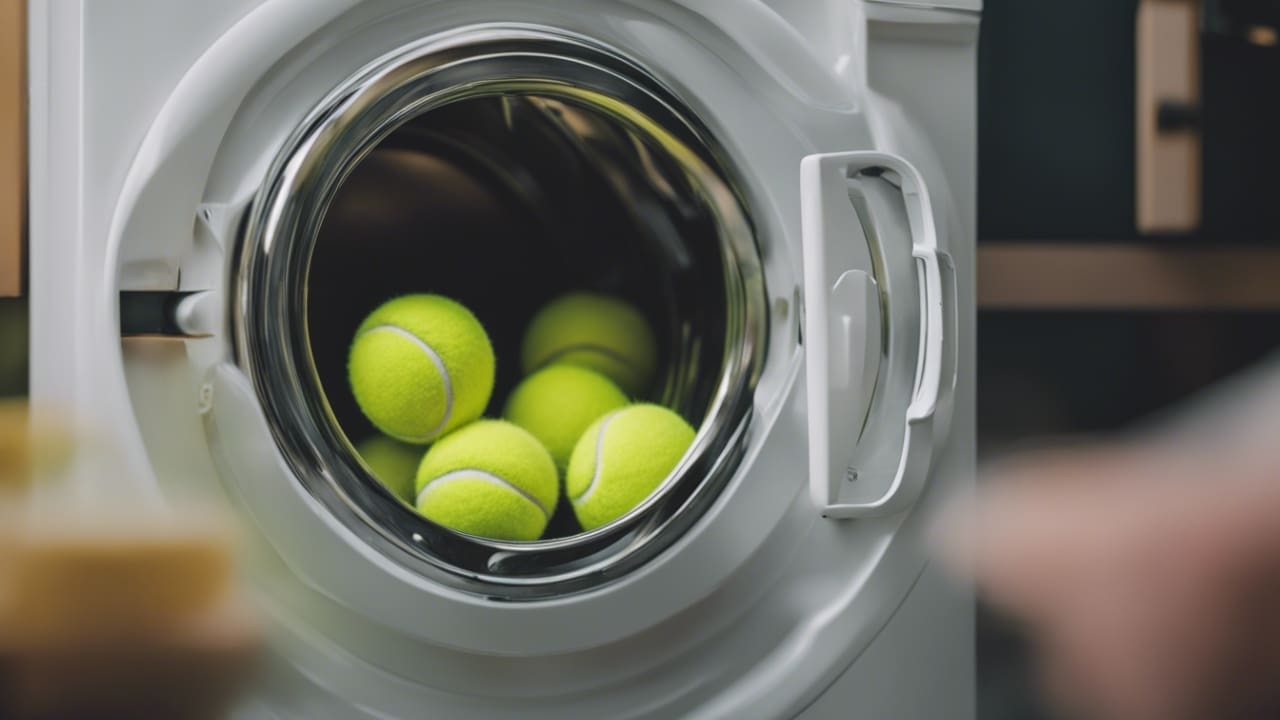
Yes, it is generally safe to put tennis balls in the washing machine. They can help fluff up garments and bedding.
Placing tennis balls in the washing machine has become a popular laundry hack for many households.
The rubbery texture of tennis balls is known to aid in washing by improving circulation and beating clumps out of items like jackets and comforters.
These balls are particularly beneficial during the drying cycle. Their gentle pounding action fluffs up the laundry, reducing lumps and helping items dry more evenly.
Using tennis balls is a cost-effective solution to keep your laundry looking and feeling fresh without additional chemical softeners or expensive dryer balls.
Remember to use this trick responsibly. It is best suited for sturdy fabrics and should be avoided for delicate garments.
The Great Debate: Tennis Balls in the Wash
Many wonder if using tennis balls in the washing machine is smart. The idea is that they help fluff up laundry items.
But the question remains: do they cause harm? To settle the debate, let’s separate myths from facts.
Some say that tennis balls clean efficiently and even reduce drying time. Yet, peace of mind is crucial. So, let’s consider the risks.
Could these bouncy helpers damage your washing machine or clothes? Is it possible they wear out faster than expected? Your laundry’s longevity and the possible need for repair are on the table.
Behind the Myth: Why Tennis Balls?
Many have been intrigued by the idea of tennis balls in washing machines. Tennis balls are believed to improve washing efficiency by bouncing around.
This movement in the drum is thought to aid the cleaning process by helping laundry circulate more effectively. This can reduce drying time and prevent laundry from clumping.
On the other hand, tennis balls’ heritage in laundry stems from old wives’ tales. Traditions suggest that tennis balls help fluff up clothing and preserve its softness.
Folklore aside, practical use has shown mixed outcomes. Despite anecdotes, there’s a lack of scientific evidence.
It clues in on the actual benefits or potential harm. Before tossing a tennis ball in, users should consider the type of laundry and washer specifications.
The Mechanics: How Washing Machines Work
Many people wonder if it’s safe to place tennis balls in washing machines. Washing machines operate by utilizing agitation and rotation for cleaning.
These motions rub clothes against each other, helping remove dirt from fabrics. A mix of water and detergent does the hard work.
RELATED ARTICLES


Considering the safety of your washing machine, tennis balls could cause issues. They add extra pressure on the drum and agitator.
Think about this stress like a heavy workout for your machine. Over time, this could lead to wear and tear. So, the age and model of your device are key to making a decision.
Check your user manual or consult a professional. This will help you understand what’s best for your equipment.
Materials Matter: The Composition of Tennis Balls
Tennis balls typically have a rubber core wrapped in fibrous felt. The outer fabric can withstand some rough treatment, and quality tennis balls might survive washing machine cycles with minimal damage.
Yet, their durability will depend on both the ball’s quality and the type of detergent used. Over time, repeated washing can reduce a ball’s integrity.
Exposing tennis balls to harsh detergents and tumbling action should be done cautiously. Substandard balls may decompose more swiftly in a machine environment.
Choose a gentle cycle and mild detergent to preserve the balls’ lifespan. This approach helps avoid unnecessary wear and tear.
Tales From the Spin Cycle: Personal Experiences
Many users report tennis balls can make towels fluffier. Soft, bouncy towels are a delight. Several have discovered adding clean tennis balls to a dryer does the trick.
Reduced drying time is another happy side effect. Less time, energy, and softer towels seem like a win-win-win situation.
Some stories warn against misusing tennis balls in the laundry. Some folks found their laundry damaged by the balls.
Before tossing them in, one should always check the balls for any external wear or color fading.
This step ensures they won’t harm fabrics. Balancing the load in the washing machine is key to avoiding noisy, unpleasant surprises.
The Verdict of Manufacturers
Many washing machine brands recommend caution with non-laundry items. Consult the manual before proceeding. Misuse may lead to damage or void warranties.
Tennis ball manufacturers generally design them for sports, not laundry. They advise against exposing balls to extremes like washing cycles. The materials may degrade.
| Brand | Recommendation |
|---|---|
| Brand A | No non-laundry items |
| Brand B | Check manual first |
| Tennis Ball Co. | Not recommended |
Alternative Laundry Aids: Comparing Options
Tennis balls in the washing machine can be surprisingly helpful. They are gentle on clothes and improve washing efficiency. But there are safer alternatives.
Dryer balls, for instance, are designed for laundry. They reduce static and wrinkles. Made of wool or plastic, these balls protect fabrics from damage.
Some people prefer DIY laundry hacks. Items like aluminum foil balls or knotted socks can work. They simulate dryer balls at no added cost, but these hacks may not be as effective.
Always consider materials specific to laundry needs. This ensures fibers remain intact and fabrics stay fresh.
Expert Advice: What Professionals Recommend
Many laundry experts agree that using tennis balls in the washing machine can be beneficial. The balls can help fluff up laundry and prevent clumping items like comforters or jackets.
Avoid excessive use to keep your washing machine and tennis balls in good shape. It’s best to use them only with large, bulky items. Make sure the balls are clean and free of dirt to avoid stains.
It’s vital to understand that not all washing machines may react the same way. Certain models, especially older machines, might be more susceptible to damage.
Before trying this, it is wise to consult the user manual or contact the manufacturer. This will ensure that the warranty remains intact.
Safety First: Guiding Your Laundry Practices
Placing tennis balls in the washing machine can help fluff up laundry items. However, to avoid damage, this trick must be used wisely.
Inspect tennis balls for wear and tear before they join your laundry load. Damaged tennis balls could leak harmful materials into your wash.
Look for signs like cracks or missing chunks on balls. These are clear indicators that they are not suitable for washing machines.
| Tennis Ball Condition | Suitable for Washing? |
|---|---|
| Smooth, no cracks | Yes, it can be used |
| Minor surface wear | Use with caution |
| Cracks/Visible damage | No, should retire |
Conclusion
To sum it up, tennis balls in your washer can be a game changer. They help fluff fabrics while being gentle on clothes.
Remember, using two to three clean balls balances efficacy with safety. By following manufacturer instructions, you can maintain your machine’s longevity.