Richest South Korean tennis players have built modest fortunes despite limited Grand Slam success.
Hyeon Chung leads with an estimated $5 million net worth from $3,771,115 in career prize money. Kwon Soon-woo follows with approximately $4 million in career earnings from two ATP titles.
South Korea’s 51 million population produces minimal tennis wealth as the country prioritizes baseball, soccer, and esports.
South Korea’s Tennis Wealth Rankings
| Player | Net Worth | Career Prize Money | ATP Titles | Peak Ranking |
| Hyeon Chung | $5M | $3,771,115 | 1 ATP | No. 19 |
| Kwon Soon-woo | $2M+ | $4M+ | 2 ATP | No. 52 |
| Hyung-Taik Lee (retired) | $2M+ | $3M+ | 1 ATP | No. 36 |
Chung’s $5M Peak
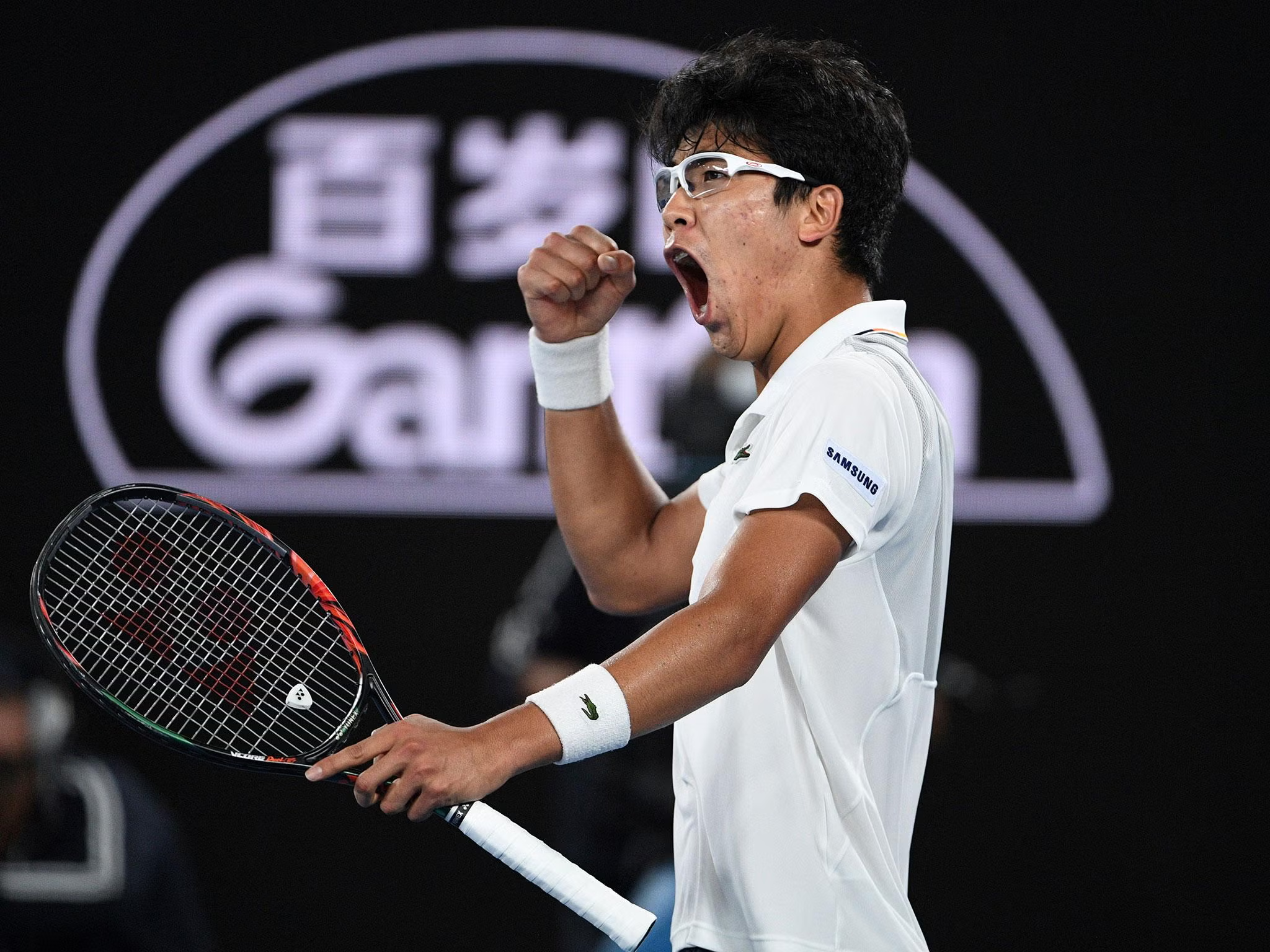
Hyeon Chung has an estimated $5 million net worth from $3,771,115 in career prize money. His career peaked dramatically in 2018 when he reached the Australian Open semifinals at age 21. That single tournament run earned him $660,000 and propelled him to world No. 19.
His 2018 season generated $1,588,383 in prize money, his best year financially. He won one ATP title at the 2017 Next Generation Finals. His career record of 87 wins and 70 losses shows early promise that injuries derailed.
Persistent injuries forced him into hiatus from 2020-2023. His 2025 earnings total just $31,628 as he struggles to regain form. His net worth includes endorsement deals with Korean brands from his peak years.
Kwon’s Two ATP Titles
Kwon Soon-woo has earned over $4 million in career prize money from two ATP titles. His estimated net worth sits around $2-3 million. He reached a career-high ranking of world No. 52 in 2023.
His breakthrough came at the 2021 Astana Open, becoming the first South Korean to win an ATP title since 2003.
He won his second title at the 2023 Adelaide International as a lucky loser, making history as the first Korean with multiple ATP titles. These victories paid approximately $100,000-$150,000 each.
RELATED ARTICLES


His 2023 season was most lucrative before a six-month hiatus. He returned using protected ranking at Grand Slams. His career demonstrates the financial challenge of staying healthy on tour.
Why South Korea Produces Limited Tennis Wealth
South Korea’s 51 million population invests heavily in baseball, soccer, and esports rather than tennis. These sports offer much higher earning potential and cultural prestige. Tennis receives minimal government funding compared to Olympic priority sports.
No ATP or WTA tournaments exist in South Korea regularly. Korean players must travel internationally year-round, adding $20,000-$30,000 yearly expenses. Most promising juniors train abroad in the United States or Australia, further increasing costs.
Corporate sponsorships focus almost entirely on baseball players and esports stars. Tennis players struggle to secure deals exceeding $50,000 annually unless they reach top-50 status. This makes wealth accumulation extremely difficult for players ranked outside the elite.
The Asian Tennis Gap
South Korea’s tennis wealth lags far behind Japan and China. Japan’s Kei Nishikori earned $26 million in prize money while Naomi Osaka has a $120 million net worth.
China’s Zheng Qinwen earned $26.1 million in 2025 alone. South Korea’s combined tennis wealth from all players barely matches one top Chinese or Japanese star.
Japan and China invest billions in tennis infrastructure and development programs. South Korea lacks comparable investment outside of individual player academies.
The cultural preference for team sports prevents tennis from gaining mainstream popularity.
FAQs
Who is South Korea’s richest tennis player?
Hyeon Chung is South Korea’s richest tennis player with an estimated $5 million net worth from $3,771,115 in career prize money. He reached world No. 19 and the 2018 Australian Open semifinals.
How much has Kwon Soon-woo earned from tennis?
Kwon Soon-woo has earned over $4 million in career prize money as of 2024. He won two ATP titles including the 2023 Adelaide International as a lucky loser.
Has a South Korean player won a Grand Slam?
No South Korean player has won a Grand Slam singles title. Hyeon Chung reached the 2018 Australian Open semifinals, South Korea’s best Grand Slam result.
Why doesn’t South Korea produce tennis millionaires?
South Korea’s 51 million population invests in baseball, soccer, and esports rather than tennis. Limited tournaments, minimal government funding, and small corporate sponsorships prevent wealth accumulation.
How does South Korean tennis compare to Japan?
South Korea lags far behind Japan in tennis wealth. Japan’s top players earned $26M+ while South Korea’s highest earner has under $4M total.
RELATED ARTICLES