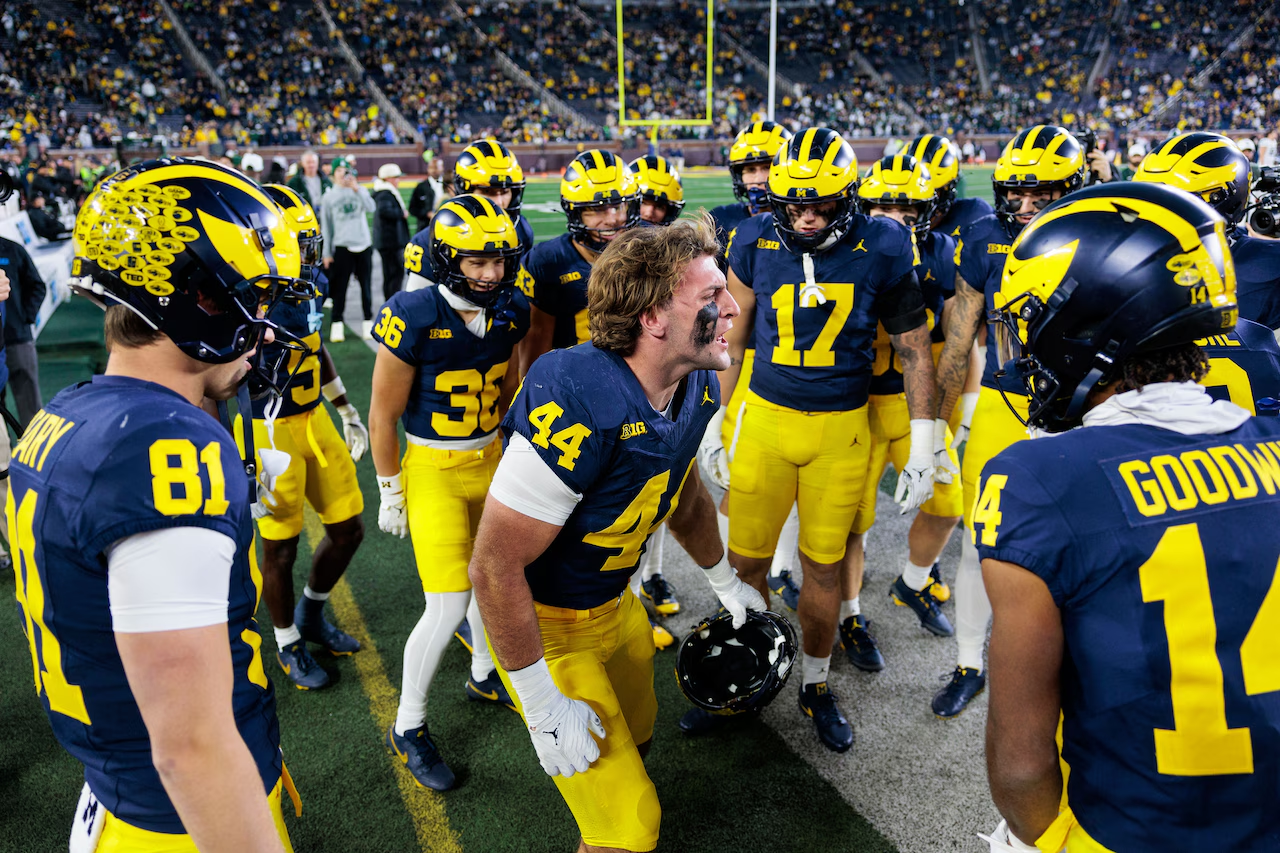
Michigan Wolverines football salaries reflect transition from Jim Harbaugh’s championship era. Sherrone Moore earns $6.11 million for 2025, ranking 40th nationally and 14th in Big Ten.
The Wolverines generated $238 million in total athletic revenue with football contributing over $160 million.
Michigan’s Champions Circle collective raised $7.5 million for football by late 2022, though external NIL funding needs remain $6-10 million annually to stay competitive.
Moore’s $13.897 million buyout protects Michigan’s investment despite disappointing 6-6 debut season following the Harbaugh departure.
His $3.775 million maximum bonus potential ranks 3rd nationally and highest in Big Ten, incentivizing immediate championship results.
Find out more about the Michigan Wolverines players biography and net worth by clicking on their name.
| Quarterbacks (QB) | Running Backs (RB) | Wide Receivers (WR) |
| Anthony Arnou | Jadyn Davis | Jayden Denegal |
| Jack Tuttle | Donovan Edwards | Alex Orji |
| Davis Warren | Justice Haynes | Donovan Johnson |
| Mikey Keene | Kendrick Bell | Jordan Marshall |
| Cole Cabana | Logan Forbes | |
| Henry Donohue | Channing Goodwin | |
| Tavierre Dunlap | Donaven McCulley | |
| Leon Franklin | Fredrick Moore | |
| Benjamin Hall | Amorion Walker | |
| Micah Ka’apana | ||
| Bryson Kuzdzal | ||
| Tomas O’Meara |
Top 10 Highest Paid Michigan Football Staff 2024-2025
Michigan’s coaching staff salaries emphasize defensive investment with Wink Martindale commanding $2.5 million as college football’s 4th-highest paid assistant after leaving NFL coordinator positions.
| Rank | Name | Position | Annual Salary | Contract Length | Total Contract Value |
| 1 | Sherrone Moore | Head Coach | $6,110,000 | Through 2029 | $30,000,000+ |
| 2 | Wink Martindale | Defensive Coordinator | $2,500,000 | Through 2026 | $7,500,000 |
| 3 | Chip Lindsey | Offensive Coordinator | $1,600,000 | Through 2026 | N/A |
| 4 | Steve Clinkscale | Co-DC/Safeties | $1,325,000 | Through 2025 | N/A |
| 5 | George Helow | Co-OC/RBs | $850,000 | Through 2025 | N/A |
| 6 | Grant Newsome | Offensive Line | $750,000 | Through 2025 | N/A |
| 7 | Jay Harbaugh | Special Teams | $675,000 | Through 2025 | N/A |
| 8 | Lou Esposito | Defensive Line | $625,000 | Through 2025 | N/A |
| 9 | Ben Herbert | Strength & Conditioning | $600,000 | Through 2025 | N/A |
| 10 | Kirk Campbell | Tight Ends | $525,000 | Through 2025 | N/A |
Wink Martindale’s $2.5 million defensive coordinator salary for 2025 ranks 4th nationally behind Penn State’s Jim Knowles ($3.1M), LSU’s Blake Baker ($2.5M tied), and Auburn’s DJ Durkin ($2.5M tied). His salary increases to $2.7 million in 2026 through structured escalators.
Chip Lindsey earns $1.6 million as offensive coordinator after joining from Troy. His salary represents significant investment rebuilding Michigan’s offense that struggled averaging 348.5 yards per game in 2024, ranking 95th nationally.
Michigan’s total assistant pool reaches approximately $10.5 million. This trails Ohio State ($12M+) and Penn State ($9M+) but exceeds most Big Ten programs, though coordinator-heavy spending limits position coach compensation compared to SEC powerhouses.
How Much Does Sherrone Moore Make at Michigan?
Sherrone Moore earns $6.11 million total compensation for 2025 including $500,000 retention bonus paid if he remains head coach through January 31, 2026.
His five-year contract runs through 2029 with annual increases reaching approximately $6.5 million.
Moore’s bonus structure allows maximum $3.775 million in additional earnings, ranking 3rd nationally behind only Lane Kiffin and Kirby Smart.
He receives incentives for Big Ten Championship appearance ($500K), winning conference ($750K), CFP qualification ($1M), and national championship ($1.525M).
His buyout stands at $13.897 million if fired December 1, 2025, ranking 36th nationally and 14th in Big Ten.
If Michigan terminates him mid-2025 season, total payout reaches $16.5 million including salary already earned, creating significant financial protection despite disappointing first season.
Michigan Football Program Revenue Breakdown 2024-2025
| Revenue Source | 2024 Amount | % of Total | Conference Rank | National Rank |
| Football Revenue | $160,500,000 | 67.4% | 2nd Big Ten | Top 5 |
| Big Ten Media Rights | $65,000,000 | 27.3% | Tied Big Ten | Top 10 |
| Ticket Sales | $50,300,000 | 21.1% | 1st Big Ten | Top 5 |
| Contributions/Donations | $32,000,000 | 13.4% | 3rd Big Ten | Top 15 |
| Other Revenue | $13,200,000 | 5.5% | N/A | N/A |
| Total Revenue | $238,000,000 | 100% | 2nd Big Ten | 3rd National |
Michigan’s athletic department generated $238 million in total operating revenue for fiscal year 2024, ranking 3rd nationally behind Ohio State ($279.2M) and trailing only within Big Ten. Operating expenses totaled $237.4 million, producing modest $557,000 surplus.
Football generated approximately $160.5 million, representing 67.4% of total athletic revenue.
Michigan led Big Ten in football ticket sales at $50.3 million from Michigan Stadium’s 107,601 capacity, exceeding Ohio State’s $47.85 million despite Buckeyes’ larger seating.
Big Ten media rights distributed approximately $65 million to Michigan, part of the conference’s $7 billion seven-year deal.
This payout substantially exceeds SEC’s $50 million and nearly doubles ACC’s $32 million, providing Michigan competitive financial advantages over non-Big Ten/SEC programs.
Michigan Top NIL Earners & Champions Circle Funding
| Player Name | Position | Est. NIL Value | Top NIL Deal | Total Deals |
| Colston Loveland | Tight End | $789,000 | Regional partners | 5+ deals |
| Alex Orji | Quarterback | $600,000 | Local businesses | 3+ deals |
| Mason Graham | Defensive Tackle | $500,000 | Multiple brands | 4+ deals |
| Will Johnson | Cornerback | $450,000 | Regional deals | 3+ deals |
| Kenneth Grant | Defensive Tackle | $400,000 | Michigan boosters | 2+ deals |
Michigan’s Champions Circle collective raised $7.5 million for football and $1 million for basketball by late 2022.
The collective operates under Valiant Management Group, functioning as marketing agency executing NIL deals on donors’ behalf rather than direct contracts with athletes.
Colston Loveland led Michigan players with $789,000 NIL valuation before entering 2025 NFL Draft. His tight end position typically commands lower NIL values than quarterbacks, demonstrating Michigan’s ability attracting endorsements for non-traditional premium positions.
Michigan’s Champions Circle FAQ states programs need $6-10 million in external NIL funding beyond revenue sharing to remain competitive.
This requirement reflects Big Ten’s competitive landscape where Ohio State reportedly allocates $20 million annually while Penn State invests $15 million.
What Do Michigan Assistant Coaches Earn?
Wink Martindale’s $2.5 million defensive coordinator salary for 2025 ranks 4th nationally tied with LSU’s Blake Baker and Auburn’s DJ Durkin.
His three-year deal escalates to $2.7 million in 2026, making him one of college football’s most expensive assistant hires from NFL ranks.
Chip Lindsey earns $1.6 million as offensive coordinator, ranking approximately 25th nationally. His salary reflects Michigan’s need rebuilding offense after 6-6 season where the Wolverines ranked 95th nationally in total offense averaging just 348.5 yards per game.
Position coaches earn $525,000-$850,000 annually. George Helow’s $850,000 co-offensive coordinator/running backs salary leads position coaches, while Ben Herbert’s $600,000 strength coach compensation reflects Michigan’s emphasis on physical development that sustained success under Harbaugh.
Michigan vs Ohio State: Which Program Spends More?
Sherrone Moore’s $6.11 million salary trails Ryan Day’s $10 million by $3.89 million, reflecting Ohio State’s championship expectations and Day’s proven track record versus Moore’s first-year struggles.
The gap represents Big Ten’s largest head coach salary disparity between rivals.
Coordinator spending shows mixed results. Wink Martindale’s $2.5 million exceeds Ohio State DC Jim Knowles’s $2.2 million by $300,000, but Ohio State OC Chip Kelly’s $2 million tops Chip Lindsey’s $1.6 million by $400,000, giving Buckeyes slight edge in combined coordinator salaries.
Total athletic revenue heavily favors Ohio State. The Buckeyes’ $279.2 million exceeds Michigan’s $238 million by $41.2 million (17% advantage), creating substantial financial cushion for facilities, recruiting, and NIL investments that compound competitive advantages annually.
FAQs
How much does Sherrone Moore make?
Sherrone Moore earns $6.11 million total compensation for 2025 including $500,000 retention bonus, ranking 40th nationally. His maximum bonus potential of $3.775 million ranks 3rd nationally and highest in Big Ten.
How much NIL money do Michigan players get?
Michigan’s Champions Circle collective raised $7.5 million for football by late 2022. The program requires $6-10 million in external NIL funding annually beyond revenue sharing to remain competitive with Ohio State and Penn State.
What is Wink Martindale’s salary?
Wink Martindale earns $2.5 million as Michigan’s defensive coordinator in 2025, increasing to $2.7 million in 2026. His salary ranks 4th nationally among assistants tied with LSU’s Blake Baker and Auburn’s DJ Durkin.
How much does Michigan make from football?
Michigan football generated approximately $160.5 million during fiscal year 2024, representing 67.4% of the athletic department’s $238 million total revenue. The program led Big Ten in ticket sales at $50.3 million.
RELATED ARTICLES