The IPL just dropped to $9.6 billion in brand value, but it’s still crushing every other T20 league by miles. While that sounds like bad news, it’s actually still more than triple the next biggest league. The gap between cricket’s premier tournament and everyone else isn’t even close.
Franchise T20 cricket has exploded worldwide, turning what started as a fun format into billion-dollar entertainment empires. Players now chase contracts across continents, fans follow multiple leagues, and countries compete to host the next big thing.
Quick answer: The IPL dominates with $9.6 billion in value. The ILT20 sits second at $15 million, while SA20 rounds out the top three at $12.5 million. Here’s how all 10 stack up and why each one matters.
KEY TAKEAWAYS:
- IPL’s $9.6B valuation still dwarfs all competitors combined
- Three new leagues (ILT20, SA20, MLC) launched in 2023 alone
- Prize money ranges from $2.4M (IPL) down to $200K (LPL)
- January-February has become the busiest T20 season globally
1. Indian Premier League (IPL) — The Undisputed King
- Value: $9.6 billion | Teams: 10 | Prize: $2.4 million | Season: March-May
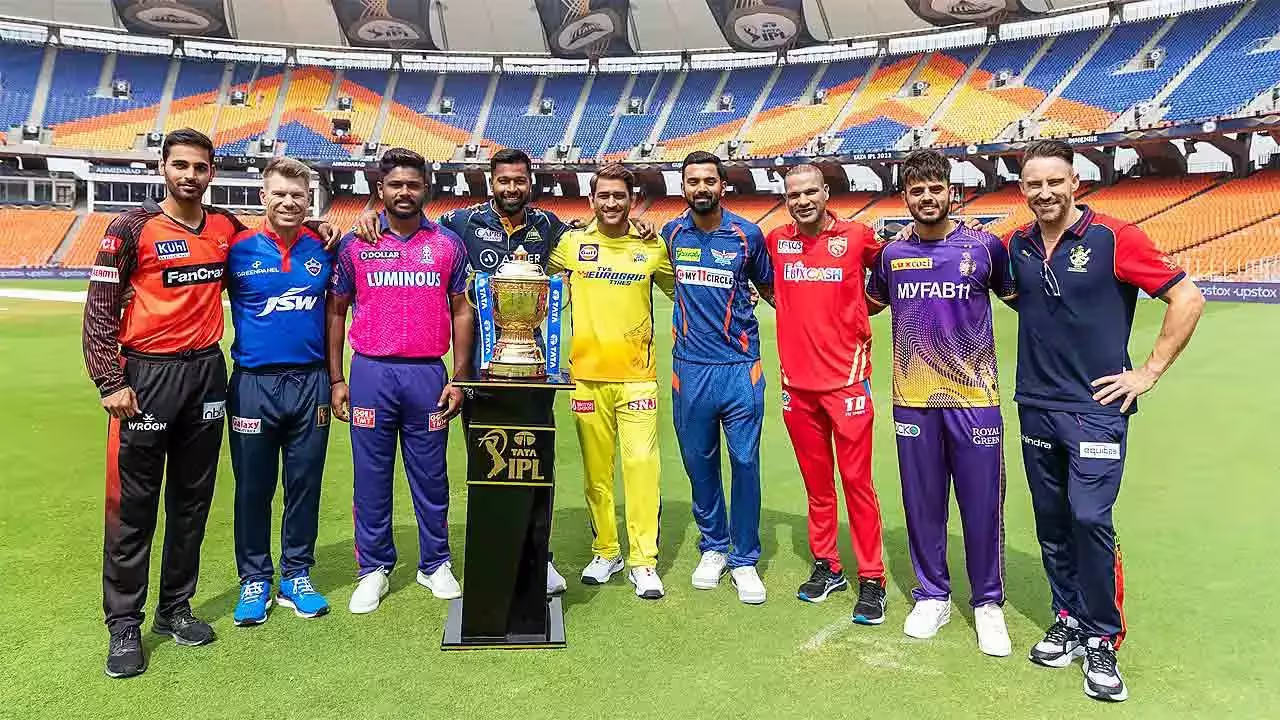
The IPL isn’t just the biggest T20 league—it’s in a different universe from everything else. Even with its recent value drop, the gap between the IPL and second place is like comparing a skyscraper to a garden shed.
What makes the IPL untouchable? Three things: money, talent, and eyeballs. The auction alone generates more headlines than entire seasons of other leagues. When Rishabh Pant went for ₹27 crores in 2025, that single deal was worth more than some entire leagues.
The broadcast numbers tell the real story. Over 600 million people watched the 2024 season, making it one of the most-watched sporting events globally. No other cricket league even comes close to those viewing figures.
Plus, the IPL keeps evolving. The mega auction system, Impact Player rule, and expanding digital coverage ensure it stays ahead of competitors who are still figuring out basic logistics.
2. International T20 League (ILT20) — The Desert Storm
- Value: $15 million | Teams: 6 | Prize: $700,000 | Season: January-February
The ILT20 burst onto the scene in 2023 and immediately became the IPL’s biggest threat. Well, “threat” might be generous, but it’s definitely second place with room to grow.
What works for the ILT20 is timing and logistics. While other leagues fight for calendar space, the ILT20 owns January-February when cricket-starved fans will watch anything quality. The UAE’s infrastructure means no rain delays, perfect pitches, and world-class stadiums.
The 2025 season introduced full player auctions, creating genuine drama around team building. When Jos Buttler went unsold initially, it proved even this league has unpredictable moments that keep fans engaged.
The league’s smart enough to know it can’t compete with IPL money, so it focuses on being the best alternative. International players treat it as a serious preparation platform, not just a paycheck stop.
3. SA20 — South Africa’s Cricket Revival
- Value: $12.5 million | Teams: 6 | Prize: $890,000 | Season: January-February
SA20 saved South African cricket from irrelevance. Before 2023, the country’s domestic scene was basically invisible. Now it’s must-watch television with packed stadiums and genuine star power.
The franchise model works because South African fans finally have teams worth supporting. The Johannesburg Super Kings vs Cape Town connection creates real rivalry, not just manufactured marketing nonsense.
What separates SA20 from other new leagues is the cricket quality. These aren’t exhibition matches—teams actually care about winning. The 2025 season featured some of the best T20 cricket outside the IPL, with nail-biting finishes and proper competitive intensity.
The league also figured out something others missed: local talent development actually matters. Young South African players getting exposure to international stars creates genuine storylines fans can follow.
4. Big Bash League (BBL) — Australia’s Family Favorite
- Value: $10 million | Teams: 8 | Prize: $450,000 | Season: December-January
The BBL owns the family entertainment space like no other league. While everyone else chases the IPL’s intensity, the BBL perfected the “cricket as fun night out” formula.
Summer cricket in Australia just hits different. The timing works perfectly—kids are on school holidays, families want outdoor entertainment, and the weather cooperates. The BBL captured that vibe and turned it into consistent attendance success.
The league’s genius move was signing its first Indian male international in 2025. That sounds small, but it signals the BBL’s evolution from purely domestic entertainment to genuine international product. If they can crack the Indian viewing market even slightly, the numbers change dramatically.
What the BBL does better than anyone: innovation without gimmicks. The bash boost, power surge, and X-factor rules actually improve the game instead of just creating confusion.
5. The Hundred — England’s Bold Experiment
- Value: $9 million | Teams: 8 | Prize: $190,500 | Season: July-August
The Hundred divided cricket opinion like no format since T20 itself launched. Purists hated the 100-ball concept, but the numbers don’t lie—packed stadiums, strong TV ratings, and genuine mainstream coverage.
The BBC partnership was brilliant strategy. While other leagues hide behind paywalls, The Hundred reaches casual fans who might never pay for cricket coverage. That accessibility creates new fans instead of just stealing existing ones from other formats.
The format actually works too. Twenty fewer balls sounds gimmicky, but it creates noticeably different tactics. Bowlers can’t settle into rhythms, batsmen can’t build slowly, and every ball carries extra pressure.
The prize money looks tiny compared to other leagues, but The Hundred’s value isn’t in player salaries—it’s in growing cricket’s audience in England and proving shorter formats can work mainstream.
6. Major League Cricket (MLC) — America’s Cricket Invasion
- Value: $6.9 million | Teams: 6 | Prize: $500,000 | Season: July
MLC represents cricket’s biggest untapped opportunity. The American sports market is massive, wealthy, and completely open to new entertainment if it’s packaged right.
The 2025 move to Texas shows serious long-term planning. Instead of cramming into existing markets, MLC is building cricket infrastructure from scratch. That’s expensive and risky, but it could pay off enormously if American fans embrace the sport.
The league’s challenge isn’t cricket quality—it’s cultural translation. American sports fans expect different entertainment rhythms than cricket traditionally provides. MLC needs to figure out how to maintain cricket’s essence while delivering American-style excitement.
Early signs look promising. Diverse crowds, strong streaming numbers, and sponsor interest suggest cricket can work in America if presented properly.
7. Pakistan Super League (PSL) — The Comeback Story
- Value: $5.7 million | Teams: 6 | Prize: $700,000 | Season: February-March
The PSL deserves massive credit for reviving Pakistan’s cricket scene after years of international isolation. When top players couldn’t visit Pakistan, the PSL brought quality cricket to Pakistani fans anyway.
The expansion to eight teams signals real confidence in the league’s growth potential. More teams means more local representation, more player opportunities, and higher media rights value. If executed properly, this could push the PSL closer to the top five leagues.
What makes the PSL special is the atmosphere. Pakistani cricket fans create an intensity other leagues struggle to match. When crowds are allowed at full capacity, PSL stadiums become genuinely intimidating environments.
The league’s biggest challenge remains calendar positioning. Squeezed between bigger leagues, the PSL fights for both player availability and global attention.
8. Bangladesh Premier League (BPL) — Fighting Through Problems
- Value: $4.8 million | Teams: 7 | Prize: $205,000 | Season: January-February
The BPL’s 2025 season highlighted both the league’s potential and its ongoing struggles. When the Bangladesh Cricket Board had to take over player payments directly, it showed the organizational challenges that keep holding the league back.
But the cricket quality isn’t the problem. Bangladesh produces genuine talent, and when international players actually show up, the matches can be compelling. The issue is consistent administration and financial stability.
The league’s timing in January-February puts it directly against stronger competitions. Without significant improvement in organization and marketing, the BPL risks being permanently overshadowed by better-run leagues.
Still, Bangladesh’s growing economy and cricket-mad population suggest the BPL could explode if someone figures out the business model properly.
9. Caribbean Premier League (CPL) — Pure Caribbean Vibes
- Value: $4.6 million | Teams: 6 | Prize: $1.2 million | Season: August-September
The CPL nailed something other leagues miss: authentic cultural identity. This isn’t cricket trying to be something else—it’s Caribbean cricket at its most joyful and entertaining.
The Republic Bank sponsorship renewal through 2028 shows commercial stability that some higher-valued leagues lack. Consistent sponsorship support indicates the CPL found its sustainable niche without chasing unsustainable growth.
What the CPL does better than anyone: making cricket feel like a celebration instead of just competition. The music, atmosphere, and pure fun factor create experiences that stick with fans long after matches end.
The prize money actually competing with much larger leagues proves the CPL’s efficient operation. They maximize impact without massive budgets.
10. Lanka Premier League (LPL) — Small But Determined
- Value: $3.1 million | Teams: 5 | Prize: $200,000 | Season: July
The LPL’s postponement of its 2025 season to prepare for the T20 World Cup shows smart long-term thinking. Instead of rushing a substandard tournament, they’re investing in infrastructure that could benefit the league for years.
The Indian investment group buying a franchise signals growing confidence in Sri Lankan cricket’s commercial potential. If the 2026 T20 World Cup succeeds, the LPL could benefit enormously from improved facilities and global attention.
The league’s challenge is standing out in cricket’s most crowded market segment. With five teams and limited prize money, the LPL needs unique value propositions beyond just “another T20 league.”
The Real T20 League Rankings
Here’s what the numbers actually mean:
- Tier 1: The Colossus IPL ($9.6B) — In its own category, no real competition
- Tier 2: The Challengers
ILT20 ($15M), SA20 ($12.5M), BBL ($10M) — Fighting for second place - Tier 3: The Established The Hundred ($9M), MLC ($6.9M), PSL ($5.7M) — Solid foundations, growth potential
- Tier 4: The Survivors BPL ($4.8M), CPL ($4.6M), LPL ($3.1M) — Smaller but persistent
The gap between tiers tells the real story. The IPL isn’t just bigger—it’s operating in a completely different economic reality from everyone else.
What’s Next for T20 Cricket?
Three trends will shape the next five years:
- Calendar Congestion: January-February is now brutally competitive. Leagues will fight harder for player availability and fan attention.
- American Opportunity: If MLC succeeds, it could shift global cricket economics dramatically. The U.S. sports market is massive enough to change everything.
- Technology Integration: Leagues embracing better streaming, stats, and fan engagement will separate from those stuck in traditional thinking.
The IPL will likely stay dominant, but the gap between second and tenth place could shrink significantly. That’s where the real competition happens—and where the most interesting cricket stories will emerge.
FAQs
Which is the biggest T20 league in the world?
The Indian Premier League (IPL) is by far the biggest T20 league globally, with a brand value of $9.6 billion in 2025. Despite a recent decline from previous highs, the IPL still dwarfs all other T20 leagues combined, with the second-place ILT20 valued at just $15 million.
How much prize money do T20 leagues offer?
Prize money varies dramatically across leagues. The IPL offers the highest at $2.4 million for winners, while the CPL provides $1.2 million and SA20 gives $890,000. Smaller leagues like the LPL offer around $200,000, showing the massive financial gap between top and bottom-tier competitions.
Which T20 leagues started in 2023?
Three major T20 leagues launched in 2023: the International T20 League (ILT20) in UAE, SA20 in South Africa, and Major League Cricket (MLC) in the United States. All three have quickly established themselves as significant players in the global T20 landscape.
When is the best time to watch T20 cricket?
January-February has become the busiest T20 season globally, with ILT20, SA20, PSL, and BPL all running during this period. The IPL dominates March-May, while the BBL owns December-January in Australia. This creates nearly year-round T20 cricket for fans.
Can any league challenge the IPL’s dominance?
Currently, no league comes close to challenging the IPL’s financial and viewership dominance. The ILT20 shows the most potential as the strongest second-tier league, but with a value gap of over $9 billion, catching the IPL would require fundamental changes in global cricket economics.