Eleven players have scored the fastest centuries in women’s ODI cricket history. These explosive innings show the incredible power and skill that female cricketers bring to the sport.
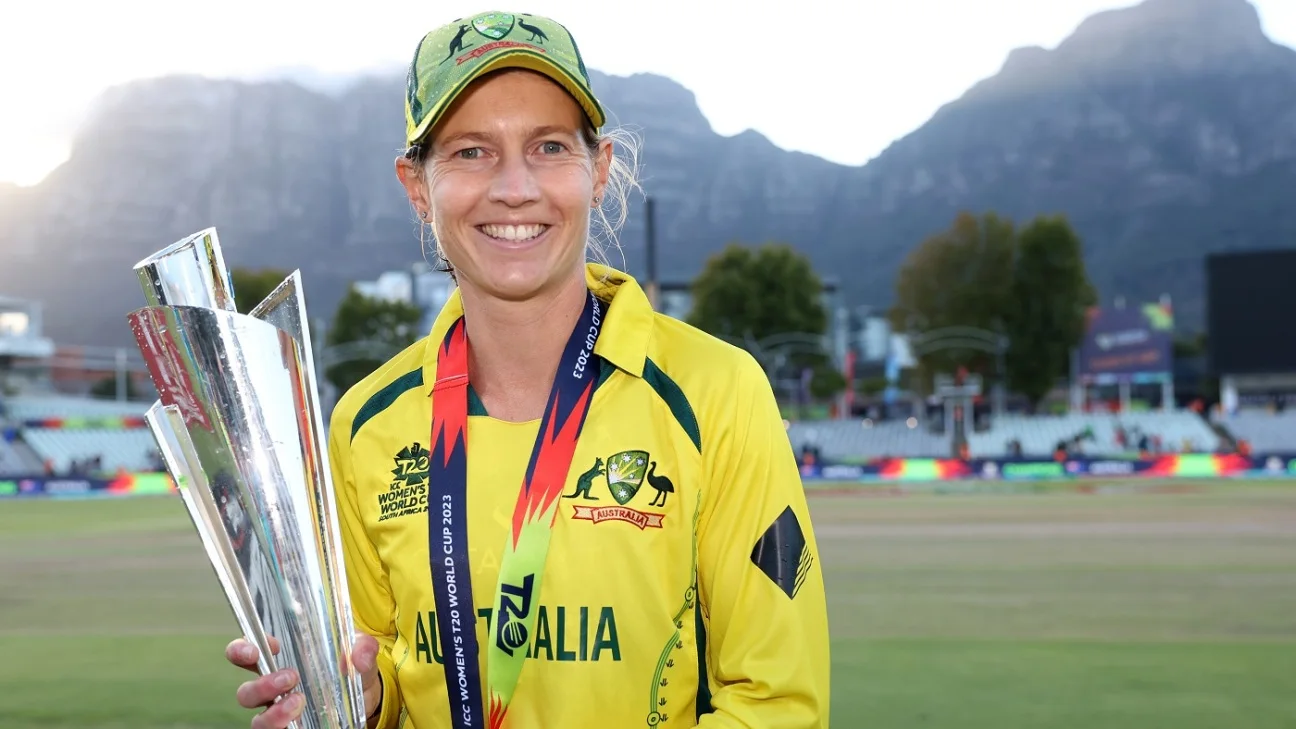
Meg Lanning tops the list with her legendary 45-ball century from 2012. But she’s joined by ten other remarkable batters who’ve scored hundreds in 70 balls or fewer – a feat that’s incredibly rare even in modern cricket.
From Smriti Mandhana’s recent 50-ball masterpiece to Maia Lewis’s pioneering effort back in 1997, these 11 players have created some of cricket’s most exciting moments. Here’s how each of them achieved their lightning-fast centuries.
Complete List: 11 Fastest Centuries in Women’s ODI Cricket
| Rank | Player | Balls | Country | Against | Venue | Year |
| 1 | Meg Lanning | 45 | Australia | New Zealand | Sydney | 2012 |
| 2 | Smriti Mandhana | 50 | India | Australia | Delhi | 2025 |
| 3 | Karen Rolton | 57 | Australia | South Africa | Lincoln | 2000 |
| 4 | Beth Mooney | 57 | Australia | India | Delhi | 2025 |
| 5 | Sophie Devine | 59 | New Zealand | Ireland | Dublin | 2018 |
| 6 | Chamari Athapaththu | 60 | Sri Lanka | New Zealand | Galle | 2023 |
| 7 | Maddy Green | 62 | New Zealand | Ireland | Dublin | 2018 |
| 8 | Nat Sciver-Brunt | 66 | England | Sri Lanka | Leicester | 2023 |
| 9 | Maia Lewis | 68 | New Zealand | Pakistan | Christchurch | 1997 |
| 10 | Ashleigh Gardner | 69 | Australia | England | Indore | 2025 |
| 11 | Charlotte Edwards | 70 | England | New Zealand | Lincoln | 2011 |
Player-by-Player Breakdown: How Each Century Unfolded
1. Meg Lanning (Australia) – 45 Balls vs New Zealand (2012)
- Match details: Sydney Cricket Ground, December 9, 2012
- Team total: Australia 178/1 (21.2 overs)
- Lanning’s score: 103* off 50 balls (18 fours, 3 sixes)
- Match result: Australia won by 9 wickets
Lanning created history with the fastest century ever in women’s ODI cricket. Chasing just 178 runs, she attacked from the first over and never let up.
Her century came in 45 balls, and she finished unbeaten on 103 off 50 balls. New Zealand’s bowlers had no answers as boundaries flew to all parts of Sydney Cricket Ground.
2. Smriti Mandhana (India) – 50 Balls vs Australia (2025)
- Match details: Delhi, March 15, 2025
- Team total: India 369 all out (48.1 overs)
- Mandhana’s score: 125 off 63 balls (17 fours, 5 sixes)
- Match result: India lost by 43 runs
Mandhana scored the fastest century by any Indian player while chasing Australia’s record total of 413 runs.
Her 50-ball century gave India hope of pulling off the highest successful chase in women’s cricket. Though India ultimately fell short, Mandhana’s innings broke barriers and inspired millions.
3. Karen Rolton (Australia) – 57 Balls vs South Africa (2000)
- Match details: Lincoln, New Zealand, February 12, 2000
- Era significance: Early women’s cricket development
- Playing style: Power hitting with intelligent shot selection
- Impact: Set template for Australian aggressive batting
Rolton’s century came when women’s cricket was less professional than today. Her 57-ball hundred showed that fast scoring was possible even with basic equipment and limited coaching support. She influenced the next generation of Australian batters, including Meg Lanning.
4. Beth Mooney (Australia) – 57 Balls vs India (2025)
- Match details: Delhi, March 18, 2025
- Team context: Australia’s dominant batting display
- Technique: Modern power hitting with perfect timing
- Achievement: Matched Rolton’s 25-year-old record
Mooney equaled Karen Rolton’s record from 2000, proving Australia continues producing fast scorers.
Her innings combined traditional shot-making with modern power techniques, showing how Australian cricket has evolved while maintaining its aggressive philosophy.
5. Sophie Devine (New Zealand) – 59 Balls vs Ireland (2018)
Match details: Dublin, Ireland, June 10, 2018 Captain’s innings: Leading from the front Dominance level: Complete control over Ireland’s bowling Team impact: Set up convincing New Zealand victory
Devine’s captaincy and batting combined perfectly in Dublin. She showed how modern captains can influence matches through personal performance, attacking Ireland’s bowlers from the start and maintaining pressure throughout her innings.
6. Chamari Athapaththu (Sri Lanka) – 60 Balls vs New Zealand (2023)
- Match details: Galle, Sri Lanka, July 5, 2023
- Home conditions: Playing in front of Sri Lankan crowd
- Leadership factor: Captain inspiring entire team
- Cultural significance: Boosting Sri Lankan women’s cricket
Athapaththu’s home century proved that smaller cricket nations produce world-class talent. Playing in Galle with crowd support, she mixed traditional Sri Lankan batting techniques with modern aggressive approaches to dominate New Zealand’s bowling.
7. Maddy Green (New Zealand) – 62 Balls vs Ireland (2018)
- Match details: Dublin, Ireland, June 8, 2018
- Batting depth: Showing New Zealand’s strong middle order
- Consistency: Part of New Zealand’s aggressive team approach
- Development: Establishing herself as reliable performer
Green’s century demonstrated New Zealand’s batting depth beyond their star players. Her 62-ball hundred proved the team had multiple players capable of fast scoring when conditions allowed aggressive batting.
8. Nat Sciver-Brunt (England) – 66 Balls vs Sri Lanka (2023)
- Match details: Leicester, England, September 12, 2023
- All-round contribution: Key player delivering with bat
- Technical excellence: Proper shots played at high speed
- England’s evolution: More aggressive than traditional approach
Sciver-Brunt showed how England adapted their traditionally cautious approach to include aggressive batting.
Her 66-ball century combined technical soundness with modern power hitting, proving England could compete with the world’s fastest scorers.
9. Maia Lewis (New Zealand) – 68 Balls vs Pakistan (1997)
- Match details: Christchurch, New Zealand, January 28, 1997
- Historical importance: Early pioneer of fast scoring
- Equipment era: Achieved with basic cricket equipment
- Legacy impact: Inspired future New Zealand batters
Lewis’s century came in the early days of women’s cricket when professional support was minimal.
Her 68-ball hundred with basic equipment proved that exciting, fast-paced cricket was possible regardless of resources available.
10. Ashleigh Gardner (Australia) – 69 Balls vs England (2025)
- Match details: Indore, India, March 22, 2025
- Tournament pressure: ICC Women’s World Cup match
- Opposition quality: Against England’s experienced attack
- Match impact: 104* helped Australia dominate crucial game
Gardner’s World Cup century came against strong opposition on cricket’s biggest stage. Her unbeaten 104 off 69 balls showed how Australian batters perform under tournament pressure while maintaining their aggressive approach.
11. Charlotte Edwards (England) – 70 Balls vs New Zealand (2011)
- Match details: Lincoln, New Zealand, March 8, 2011
- Captain’s role: Leading England’s batting charge
- Technical approach: Traditional technique with aggressive intent
- Career highlight: One of Edwards’s most memorable performances
Edwards completed the list with her 70-ball century, showing England’s growing confidence in aggressive batting. Her innings mixed traditional English cricket values with the modern need for fast scoring in ODI cricket.
Country Analysis: Who Produces the Fastest Scorers
Australia (4 players): Lanning, Rolton, Mooney, Gardner
Australia’s cricket culture emphasizes aggression from junior levels. Their players learn to attack first and refine technique later, creating fearless batters who seize scoring opportunities.
New Zealand (3 players): Devine, Green, Lewis
New Zealand combines traditional technique with modern power hitting. Their players balance aggressive intent with smart cricket, knowing when to attack and when to build innings.
England (2 players): Sciver-Brunt, Edwards
England has evolved from cautious batting to calculated aggression. Their players maintain technical excellence while incorporating modern power-hitting approaches.
India (1 player): Mandhana
India’s traditionally patient approach changed with Mandhana’s breakthrough. She proved Indian batters could play aggressively while maintaining their technical strengths.
Sri Lanka (1 player): Athapaththu
Sri Lanka’s representation shows how smaller cricket nations produce world-class talent. Athapaththu inspired cricket growth throughout the country with her aggressive batting.
Evolution of Fast Scoring in Women’s Cricket
1997-2005: Early Pioneers
Maia Lewis showed fast scoring was possible with basic equipment and minimal professional support. Her 68-ball century proved women’s cricket could be exciting entertainment.
2000-2012: Revolution Begins
Karen Rolton and Meg Lanning changed expectations completely. Rolton’s 57-ball century became the template, while Lanning’s 45-ball record set an unmatched standard.
2018-2025: Modern Power Era
Recent years produced 6 of the 11 fastest centuries. Modern players benefit from better coaching, equipment, and fitness while developing more aggressive mindsets.
What Makes These 11 Players Special
- Sub-60 ball centuries: Only 5 players (Lanning, Mandhana, Rolton, Mooney, Devine) achieved this rare feat.
- Different eras represented: From Lewis (1997) to multiple players (2025), showing cricket’s continuous evolution.
- Various match situations: Some chasing big totals (Mandhana), others in comfortable positions (Lanning), proving versatility.
- Global representation: Players from 5 different countries, demonstrating worldwide cricket development.
- Leadership influence: 6 captains in the list, showing how leaders perform under pressure.
FAQs
Who scored the fastest century in women’s ODI cricket?
Meg Lanning holds the record with a 45-ball century against New Zealand in 2012.
How many players have scored centuries in under 60 balls?
Five players: Lanning (45), Mandhana (50), Rolton (57), Mooney (57), and Devine (59).
Which country has produced the most fast centurions?
Australia leads with 4 players, followed by New Zealand with 3 players.
Who has the fastest century by an Indian player?
Smriti Mandhana’s 50-ball century is the fastest by any Indian player in ODI cricket.
Are these fast centuries becoming more common?
Yes, 6 of the 11 fastest centuries came after 2018, showing modern cricket’s aggressive evolution.
Which player is most likely to break Lanning’s record?
Smriti Mandhana has the best chance, having already scored a 50-ball century and continuing to improve.
Do fast centuries guarantee team victories?
Not always. Mandhana’s 50-ball century came in a losing cause when India fell short chasing 413 runs.
What’s required to score a century this quickly?
Perfect combination of batting-friendly conditions, suitable opposition bowling, comfortable match situation, and fearless batting approach.
The Legacy of These 11 Rapid-Fire Performers
These 11 players have changed women’s cricket forever. Their explosive batting proved female cricketers could deliver entertainment equal to any sport while inspiring millions of young girls to take up cricket.
From Maia Lewis’s pioneering effort in 1997 to the modern power-hitting of Mandhana and Mooney, each player contributed to cricket’s evolution.
Their fast centuries created viral moments, attracted new fans, and established new standards for aggressive batting.
Meg Lanning’s 45-ball record still stands as the ultimate achievement, but these 10 other players proved that lightning-fast scoring is possible for batters with the right combination of skill, courage, and opportunity.
The chase continues for someone to join this exclusive group of 11 players who’ve scored the fastest centuries in women’s ODI cricket history.