India, Australia, England and South Africa enter the ICC Men’s Cricket World Cup 2026 as the top contenders based on recent tournament performance, squad depth and adaptability to varied playing conditions.
The ICC Men’s Cricket World Cup 2026 arrives with growing anticipation as global power dynamics continue to shift. The ICC Men’s Cricket World Cup 2026 takes place across South Africa, Zimbabwe and Namibia, where pitch conditions, travel demands and venue diversity introduce competitive variables.
Tournament planning points toward a 14-team format with a revised group phase and a Super 6-style progression, which increases volatility while still rewarding consistency. Fan interest continues to rise as early narratives form around squad depth, adaptability to African conditions and schedule management.
Betting markets already show activity in long-term futures, reflecting speculation well ahead of final squad confirmation. Attention now turns to which teams qualify as genuine contenders and what data trends and early odds indicate about their chances of lifting the trophy.
Is India Still the Most Formidable Team Heading Into 2026?
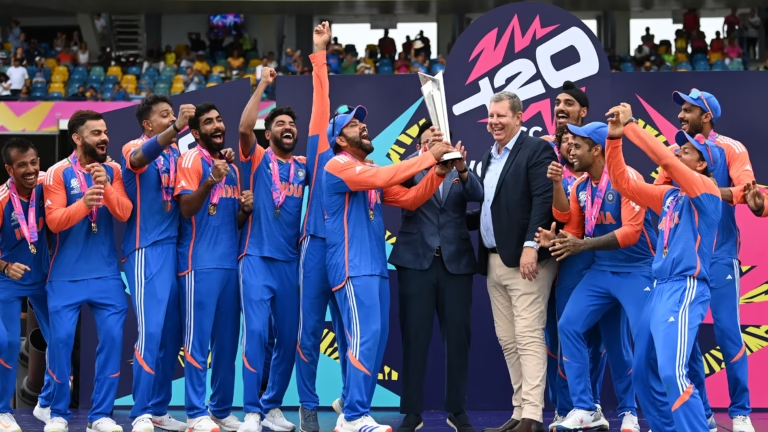
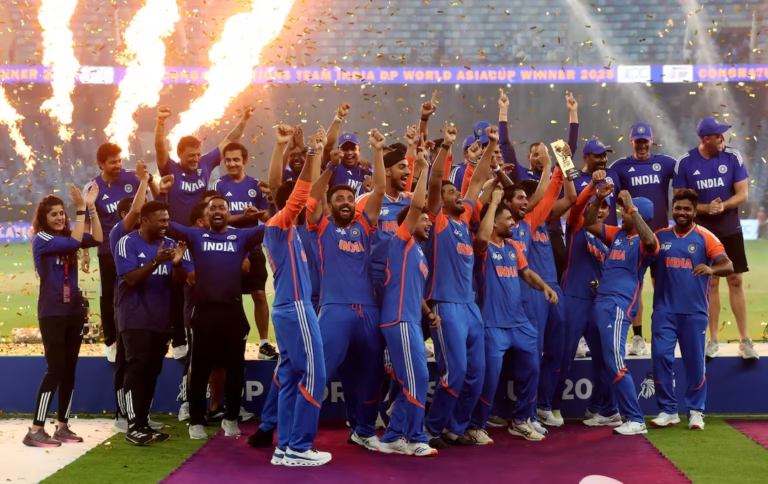
Yes, India remains the most formidable team heading into the ICC Men’s Cricket World Cup 2026 based on depth, continuity and sustained performance across formats.
India’s batting lineup combines established run accumulation with an expanding pool of multi-format players capable of adapting to different match tempos.
Post-2023 World Cup results reinforced India’s consistency in bilateral series and major tournaments, while strong T20 performances highlighted tactical flexibility and bench strength. India’s domestic structure continues to produce international-ready talent, which reduces reliance on a fixed core and mitigates injury risk.
Away performances in challenging conditions have improved, particularly against pace-heavy attacks, which matters in African venues.
India enters 2026 with fewer transition concerns than most rivals, supported by a stable selection philosophy and an extensive youth pipeline ready to step into high-pressure roles.
Can Australia Or England Regain Their ICC Dominance?
Yes, Australia and England both retain realistic pathways to regaining ICC dominance, though through different trajectories.
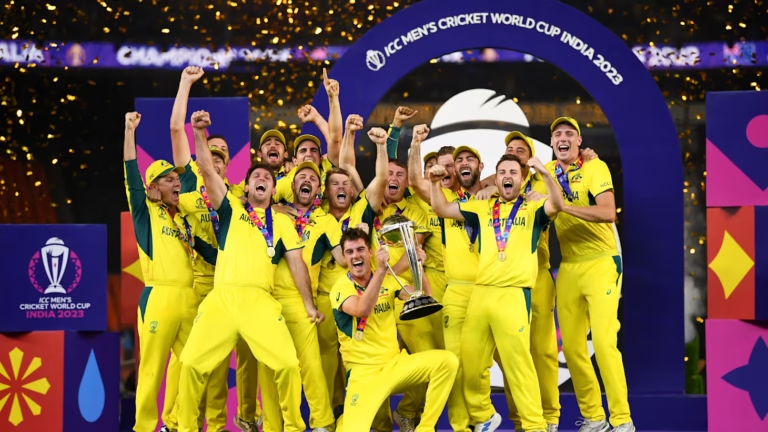
Australia’s strength remains tournament execution, where adaptability, game management and knockout experience consistently translate into results. Recent ICC events reaffirmed Australia’s ability to peak at the right time, even during transitional phases.
England’s position reflects a rebuilding white-ball identity following earlier success, with emphasis shifting toward role clarity and flexible batting depth. England’s away series performances showed uneven results but highlighted emerging middle-order stability.
Coaching continuity and data-led selection underpin England’s long-term outlook. Australia benefits from clearer succession planning and a proven pace rotation suited to African conditions. Both teams carry risk tied to squad turnover, but neither enters 2026 as an outsider.
Is South Africa Poised For A Breakthrough On Home Soil?
Yes, South Africa is poised for a breakthrough on home soil. South Africa’s pace attack aligns naturally with local surfaces that reward bounce, seam movement and disciplined length bowling.
Historical tournament exits created a narrative of underachievement, yet recent cycles show improved composure and structural depth.
A new generation of all-rounders has shifted South Africa away from specialist-heavy selections toward line-ups that absorb pressure across phases of a match.
Familiarity with local pitches reduces adaptation time and allows preparation to focus on matchups rather than conditions across South Africa, Zimbabwe and Namibia. Knockout-stage pressure remains the unresolved question after repeated past failures.
This squad differs in profile, with more players accustomed to closing tight games at international level, which makes a sustained run realistic if early performances establish authority rather than hesitation.
What Do The Early Odds Say About Dark Horses?
Early odds highlight several dark horses gaining attention due to structural consistency rather than headline dominance. Pakistan attracts interest when rhythm stabilises across batting and bowling units, though volatility remains the defining risk.
New Zealand continues its pattern of efficient tournament play despite limited resources, benefiting from tactical clarity and role discipline. Bangladesh shows incremental progress through deeper batting orders and improved pace options, narrowing gaps against top-tier teams.
Bettors closely watch the odds on licensed betting platforms like BETVIBE – a mobile-first sportsbook offering live cricket markets, real-time odds, and local payment support.
As futures odds begin to shape up, the BETVIBE sportsbook platform is already pricing India and Australia as early favorites, while sharper bettors monitor Pakistan and South Africa for potential value as squad clarity improves closer to the tournament.
Which Players Could Define The 2026 World Cup?
Find below a list of players who could define the 2026 World Cup.
- Shubman Gill. Shubman Gill anchors India’s top order with technical stability and scoring range. Consistency across formats positions him as a cornerstone batter.
- Shaheen Shah Afridi. Shaheen Afridi leads Pakistan’s pace attack with new-ball penetration and death-over impact. Fitness management remains the key variable.
- Harry Brook. Harry Brook provides England with middle-order acceleration and matchup flexibility. His adaptability against pace and spin increases tactical options.
- Marco Jansen. Marco Jansen offers South Africa balance through left-arm pace and lower-order batting. Conditions amplify his effectiveness on home soil.
- Travis Head. Travis Head delivers high-impact innings in tournament settings. Australia relies on his ability to shift momentum rapidly.
- Rachin Ravindra. Rachin Ravindra contributes control across batting and spin bowling. New Zealand’s structure benefits from his versatility.
- Emerging U19 graduates. Emerging U19 graduates enter senior squads with tournament-specific exposure. Youth integration widens tactical depth late in the cycle.
Final Prediction: Who Looks Most Likely To Lift The Trophy?
India and Australia currently appear most likely to lift the ICC Men’s Cricket World Cup 2026 based on structural stability, depth and tournament execution history. India holds an edge through squad continuity and batting depth, while Australia retains unmatched knockout-stage efficiency.
South Africa’s home advantage introduces a conditional pathway to contention, provided early results reinforce confidence. England’s prospects depend on cohesion gains before the tournament begins.
Betting odds will continue to adjust as injuries, form cycles and squad announcements reshape projections, reinforcing the importance of timing and context when assessing final value.