
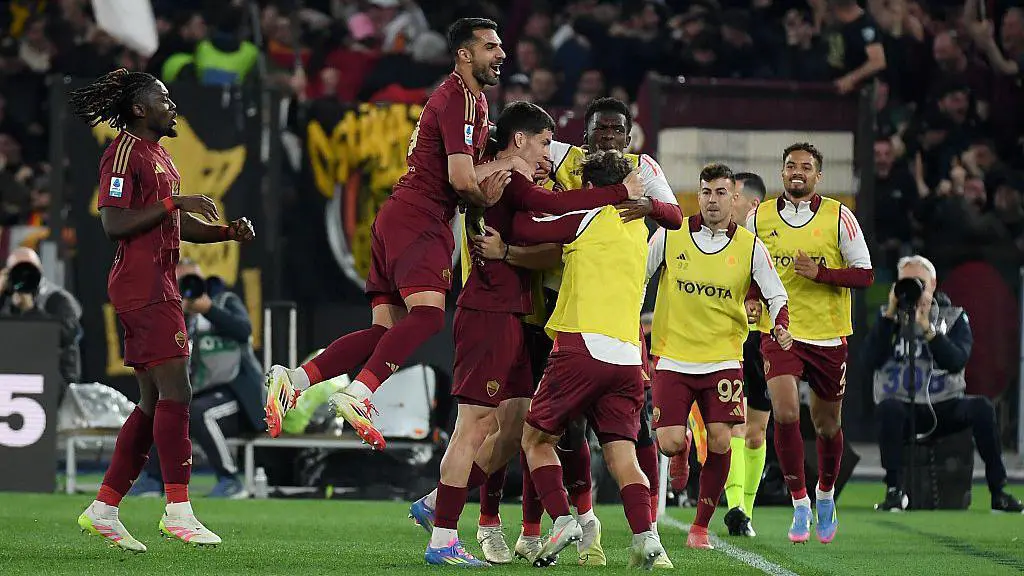
AS Roma’s 2025-26 wage bill reaches €107.5 million, representing a 22.3% increase over the previous season. Paulo Dybala leads the Giallorossi at €12.9 million annually, making him Serie A’s third-highest earner behind only Vlahović and Martínez.
The capital club employs four players earning €5.5 million or more, reflecting their ambitions to compete for Champions League qualification. Roma’s average squad salary sits at €3.5 million, positioning them fourth in Serie A spending behind Inter, Juventus, and Napoli.
Explore complete AS Roma player profiles including career history and personal net worth details.

| Player Name | Position | Nationality |
| Giorgio De Marzi | Goalkeeper | USA |
| Alessio Marcaccini | Goalkeeper | Italy |
| Renato Marin | Goalkeeper | Italy |
| Pierluigi Gollini | Goalkeeper | Italy |
| Mile Svilar | Goalkeeper | Serbia |
| Devyne Rensch | Defender | Netherlands |
| Angeliño | Defender | Spain |
| Evan Ndicka | Defender | Ivory Coast |
| Saud Abdulhamid | Defender | Saudi Arabia |
| Mats Hummels | Defender | Germany |
| Zeki Çelik | Defender | Turkey |
| Gianluca Mancini | Defender | Italy |
| Victor Nelsson | Defender | Denmark |
| Anass Salah-Eddine | Defender | Netherlands |
| Buba Sangaré | Defender | Spain |
| Federico Nardin | Defender | Italy |
| Bryan Cristante | Midfielder | Italy |
| Lorenzo Pellegrini | Midfielder | Italy |
| Leandro Paredes | Midfielder | Argentina |
| Manu Koné | Midfielder | France |
| Lucas Gourna Douath | Midfielder | France |
| Tommaso Baldanzi | Midfielder | Italy |
| Alessandro Romano | Midfielder | Switzerland |
| Niccolò Pisilli | Midfielder | Italy |
| Artem Dovbyk | Forward | Ukraine |
| Eldor Shomurodov | Forward | Uzbekistan |
| Matìas Soulè | Forward | Argentina |
| Paulo Dybala | Forward | Argentina |
| Alexis Saelemaekers | Forward | Belgium |
| Stephan El Shaarawy | Forward | Italy |
Top 10 Highest-Paid AS Roma Players
Roma’s wage structure heavily favors attacking creativity and Italian defensive leadership. Dybala’s contract represents exceptional value given his €35 million market valuation and consistent performances.
| Player | Position | Weekly Salary | Annual Salary | Contract Until |
| Paulo Dybala | Forward | €248,000 | €12.9 million | 2025 |
| Lorenzo Pellegrini | Midfielder | €105,000 | €5.5 million | 2026 |
| Gianluca Mancini | Defender | €105,000 | €5.5 million | 2027 |
| Mario Hermoso | Defender | €105,000 | €5.5 million | 2027 |
| Bryan Cristante | Midfielder | €84,000 | €4.4 million | 2027 |
| Evan N’Dicka | Defender | €83,000 | €4.3 million | 2028 |
| Artem Dovbyk | Forward | €73,000 | €3.8 million | 2029 |
| Stephan El Shaarawy | Winger | €75,000 | €3.9 million | 2026 |
| Manu Koné | Midfielder | €67,500 | €3.5 million | 2029 |
| Mats Hummels | Defender | €60,000 | €3.1 million | 2025 |
Three Italian internationals—Pellegrini, Mancini, and Cristante—earn identical or similar salaries, reflecting Roma’s commitment to homegrown Serie A talent. The club’s wage structure maintains internal harmony through transparent tier systems.
How Roma Manages Financial Constraints
AS Roma operates under significant financial pressure while competing with wealthier Serie A rivals. The Friedkin ownership increased the wage bill 22.3% to €107.5 million, demonstrating commitment to European qualification despite limited revenues.
The club strategically targets free agents and loan deals to maximize squad quality without excessive transfer spending. Hermoso’s free transfer from Atlético Madrid allowed higher wages without amortized fees impacting the budget.
Roma prioritizes contract extensions for Italian core players before they reach free agency. Pellegrini’s renewal locked him through 2026, preventing Premier League raids while maintaining squad stability.
Growth Decree tax benefits reduce Roma’s burden for foreign players. Dybala’s €8 million net costs approximately €12.9 million gross with tax relief, versus €14.8 million without the decree.
Wage Bill and Serie A Spending Comparison
Roma’s €107.5 million wage bill positions them fourth in Serie A behind Inter (€141.5M), Juventus (€123M), and Napoli (€110.1M). The Giallorossi outspend Milan (€104.5M), Lazio (€69.9M), and Fiorentina (€62.7M) significantly.
The 22.3% year-over-year increase reflects aggressive recruitment under new management. Dovbyk’s €32 million transfer added substantial wages while Hermoso’s free signing boosted defensive spending.
Roma’s wage-to-revenue ratio approaches 65%, higher than fiscally sustainable levels recommended by UEFA. This aggressive spending strategy risks financial penalties if European qualification fails.
Richest AS Roma Players by Net Worth
Roma’s squad includes several players who built substantial wealth before arriving in the capital. Career earnings from previous clubs combined with endorsement portfolios create impressive net worth figures.
| Player | Position | Estimated Net Worth | Age | Previous Major Clubs |
| Paulo Dybala | Forward | $75 million | 31 | Juventus |
| Mats Hummels | Defender | $35 million | 36 | Borussia Dortmund, Bayern |
| Alexis Saelemaekers | Winger | $18 million | 25 | AC Milan |
| Lorenzo Pellegrini | Midfielder | $15 million | 29 | Roma (academy) |
| Bryan Cristante | Midfielder | $12 million | 30 | Atalanta, Milan |
Dybala accumulated $75 million through seven seasons at Juventus earning €7-10 million annually plus substantial Argentine market endorsements. His Roma contract pays less but extended his elite-level career.
Hummels built $35 million across Bayern Munich and Borussia Dortmund careers spanning 15+ years. His Roma move represents a late-career swan song while maintaining competitive wages.
Performance Incentives and Bonuses
Roma structures contracts with achievement-based bonuses that significantly increase total compensation. Champions League qualification bonuses add approximately €500,000-€1 million per player when the top-four finish is secured.
Goal bonuses reward attackers €40,000-€120,000 per season depending on targets. Dybala and Dovbyk benefit most from these structures given their creative roles.
Europa League progression bonuses pay €200,000-€400,000 for reaching knockout stages. Roma’s frequent European campaigns make these clauses financially significant for budget planning.
Clean sheet bonuses pay defenders €20,000-€60,000 for meeting defensive metrics. Mancini, Hermoso, and N’Dicka’s contracts include substantial defensive performance clauses.
Position-Based Salary Breakdown
Roma invests heavily in attacking creativity while maintaining balanced defensive spending. The club’s tactical system under current management emphasizes possession and creative midfield play.
Forward Wages: €20.6 million combined (Dybala, Dovbyk, El Shaarawy dominate spending)
Midfield Salaries: €19.8 million total (Pellegrini, Cristante, Koné lead central spending)
Defensive Wages: €27.3 million combined (Hermoso, Mancini, N’Dicka, Hummels command premium)
Goalkeeper Salaries: €2 million total (Svilar needs contract upgrade consideration)
Mile Svilar’s €1 million salary requires significant increase for renewal. His performances justify wages approaching €3-4 million annually to match elite Serie A goalkeeper standards and prevent transfer interest.
FAQs
Who is AS Roma’s highest-paid player?
Paulo Dybala leads Roma wages at €248,000 weekly (€12.9 million annually), making him Serie A’s third-highest earner. His contract expires in 2025, with renewal negotiations ongoing regarding wage structure and length.
What is AS Roma’s total wage bill?
Roma’s 2025-26 wage bill totals €107.5 million, representing a 22.3% increase over the previous season. This ranks fourth in Serie A behind Inter, Juventus, and Napoli but ahead of AC Milan.
How much does Lorenzo Pellegrini earn at Roma?
Pellegrini earns €105,000 weekly (€5.5 million annually) as Roma captain. His contract runs through 2026, with his wages reflecting his importance as homegrown Italian international and club leader.
Do Roma players receive European qualification bonuses?
Yes, Roma contracts include substantial Champions League qualification bonuses ranging from €500,000-€1 million per player. Europa League progression adds €200,000-€400,000 for reaching knockout stages.
How does Roma’s wage structure compare to Lazio?
Roma’s €107.5 million wage bill significantly exceeds Lazio’s €69.9 million, approximately 54% higher. This spending gap reflects different ownership ambitions, with Roma prioritizing European competition while Lazio maintains fiscal conservatism.