
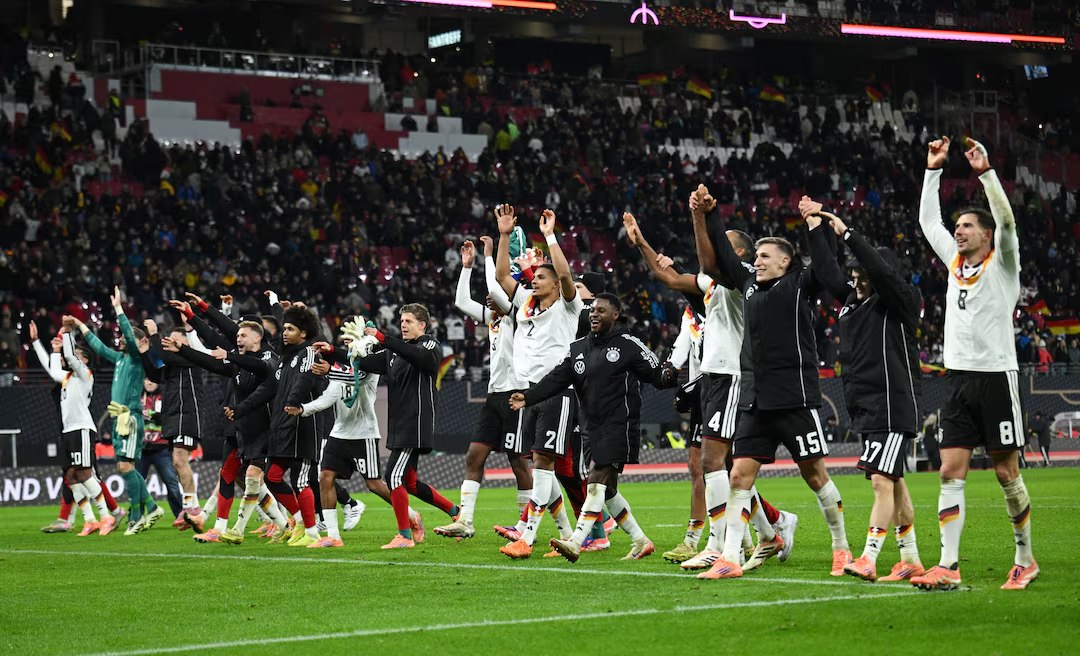
Germany produces technically elite footballers commanding premium salaries across Europe’s top leagues. Jamal Musiala leads current German players with a market value of £102 million, while retired stars like Toni Kroos accumulated $25 million net worth through Real Madrid success.
The Bundesliga serves as Germany’s primary talent development hub before players move to Premier League or La Liga mega-contracts. Bayern Munich and Borussia Dortmund maintain competitive wage structures that keep elite Germans domestic while building substantial wealth.
Explore German football stars’ career earnings and compare with global football players net worth across all major leagues.

| Goalkeeper | Defender | Midfielder | Forward |
| Marc-André ter Stegen | Jonathan Tah | Joshua Kimmich | Kai Havertz |
| Alexander Nübel | Robin Koch | Ilkay Gündogan | Leroy Sané |
| Oliver Baumann | David Raum | Florian Wirtz | Jamal Musiala |
| Kevin Trapp | Thilo Kehrer | Leon Goretzka | Niclas Füllkrug |
| Manuel Neuer | Maximilian Mittelstädt | Pascal Groß | Serge Gnabry |
| Waldemar Anton | Robert Andrich | Deniz Undav | |
| Nico Schlotterbeck | Felix Nmecha | Thomas Müller | |
| Benjamin Henrichs | Aleksandar Pavlović | Nick Woltemade | |
| Malick Thiaw | Julian Brandt | Karim Adeyemi | |
| David Raum | Jamal Musiala | Youssoufa Moukoko | |
| Lukas Klostermann | Lennard Maloney | ||
| Maximilian Mittelstädt | Joseph Aidoo | ||
| Antonio Rüdiger | İlkay Gündoğan | ||
| Sebastian Rudy | |||
| Niklas Süle |
10 Richest Football Players in Germany
German footballers build wealth primarily through Bayern Munich dynasties or lucrative Premier League moves. Philipp Lahm retired with $100 million, setting the benchmark for German player fortunes.
| Player Name | Annual Salary | Estimated Net Worth | Current Status |
| Toni Kroos | N/A | $25 million | Retired (2024) |
| Mesut Özil | N/A | $120 million | Retired |
| Bastian Schweinsteiger | N/A | $90 million | Retired |
| Philipp Lahm | N/A | $100 million | Retired |
| Manuel Neuer | €15 million | $70 million | Bayern Munich (Active) |
| Thomas Müller | €15 million | $60 million | Bayern Munich (Active) |
| Kai Havertz | £16.8 million | $50 million | Arsenal (Active) |
| İlkay Gündoğan | £10 million | $45 million | Barcelona (Active) |
| Joshua Kimmich | €19.5 million | $40 million | Bayern Munich (Active) |
| Jamal Musiala | €12 million | $30 million | Bayern Munich (Active) |
Kimmich’s €19.5 million annual salary makes him Germany’s highest-paid active player, reflecting his status as Bayern’s midfield orchestrator.
Germany National Team Payment Structure
The German Football Association (DFB) operates a transparent payment system rewarding performance. Germany’s 2014 World Cup triumph distributed €300,000 per player in championship bonuses.
National Team Compensation:
- World Cup/Euro matches: €10,000-€15,000 per appearance
- Nations League games: €7,000-€10,000 per match
- Friendly fixtures: €5,000-€7,000 per game
- Tournament victory bonuses: Multi-million distributions for championships
- Performance escalators: Increased payments for knockout round progression
Germany’s players donate portions of national team earnings to charity foundations. The 2014 World Cup winners collectively donated over €1 million to youth development programs.
Bundesliga Wages vs. International Markets
Germany’s Bundesliga maintains fiscal responsibility while paying competitive European wages. Bayern Munich’s wage bill exceeds €300 million annually, but still falls below Premier League giants.
| Competition | Top German Salary | Example Player | Career Potential |
| Bundesliga | €19.5 million | Joshua Kimmich | $60-100M over career |
| Premier League | £16.8 million | Kai Havertz | $80-120M over career |
| La Liga | €12 million | İlkay Gündoğan | $60-90M over career |
| Serie A | €8 million | German exports | $40-70M over career |
Bayern Munich dominates German player salaries with eight of the top 10 earners on their roster. Their financial power allows them to retain stars like Kimmich and Musiala against Premier League competition.
German players increasingly explore Premier League opportunities for salary upgrades. Havertz’s Arsenal move nearly doubled his Bayern-equivalent wage, demonstrating English football’s financial advantage.
How German Stars Build Wealth
German footballers accumulate fortunes through long-term Bundesliga commitments or strategic Premier League transfers. Bayern Munich’s dominance creates decade-long earning opportunities for elite talents.
Primary Wealth Sources:
- Bayern Munich contracts offering €10-20 million annually
- Premier League moves multiplying salaries 1.5-2 times
- Adidas endorsements leveraging Germany’s football heritage
- Champions League success bonuses
- Conservative investment strategies in German real estate
Kroos built his $25 million fortune through Real Madrid’s golden era, winning five Champions League titles. His salary peaked at €20 million annually including bonuses and image rights.
Musiala represents Germany’s future wealth potential. At 21 with a £102 million market value, his projected career earnings could exceed €200 million if he maintains elite performance levels.
Legendary German Icons’ Career Fortunes
Germany’s previous generation accumulated wealth during Bundesliga and Premier League’s financial growth. These World Cup winners maximized earnings through longevity and smart career choices.
| Legendary Player | Playing Era | Est. Net Worth | Peak Annual Salary | Primary Clubs |
| Mesut Özil | 2006-2023 | $120 million | £18M | Arsenal, Real Madrid |
| Philipp Lahm | 1995-2017 | $100 million | €11M | Bayern Munich |
| Bastian Schweinsteiger | 1998-2019 | $90 million | €14M | Bayern, Man United |
| Miroslav Klose | 1998-2016 | $25 million | €6M | Bayern Munich |
Özil’s $120 million fortune came from Arsenal’s record £350,000 weekly contract plus Adidas endorsements. His eight-year Emirates stint generated over £140 million in gross earnings.
FAQs
1. Who is the richest German footballer?
Mesut Özil holds this distinction with $120 million net worth built through Real Madrid and Arsenal’s mega-contracts. His £350,000 weekly Arsenal salary was England’s highest when signed, creating massive wealth accumulation.
2. What is Jamal Musiala’s salary at Bayern Munich?
Musiala earns approximately €12 million annually at Bayern Munich. At 21 with a £102 million market value, contract renewals will likely increase his salary to €15-20 million within two years.
3. How much do Germany national team players earn per match?
German players receive €10,000-€15,000 per World Cup or Euro match, with substantial championship bonuses. The 2014 World Cup victory earned each squad member approximately €300,000 in tournament payments.
4. Why do German players stay in the Bundesliga longer?
Bayern Munich offers competitive salaries (€10-20M annually) that approach Premier League levels for top stars. German players also value domestic stability, shorter travel, and Bayern’s consistent Champions League success.
5. What is Joshua Kimmich’s net worth?
Kimmich has accumulated approximately $40 million net worth through his Bayern Munich career. As Germany’s highest-paid active player at €19.5 million annually, his wealth continues growing substantially each season.