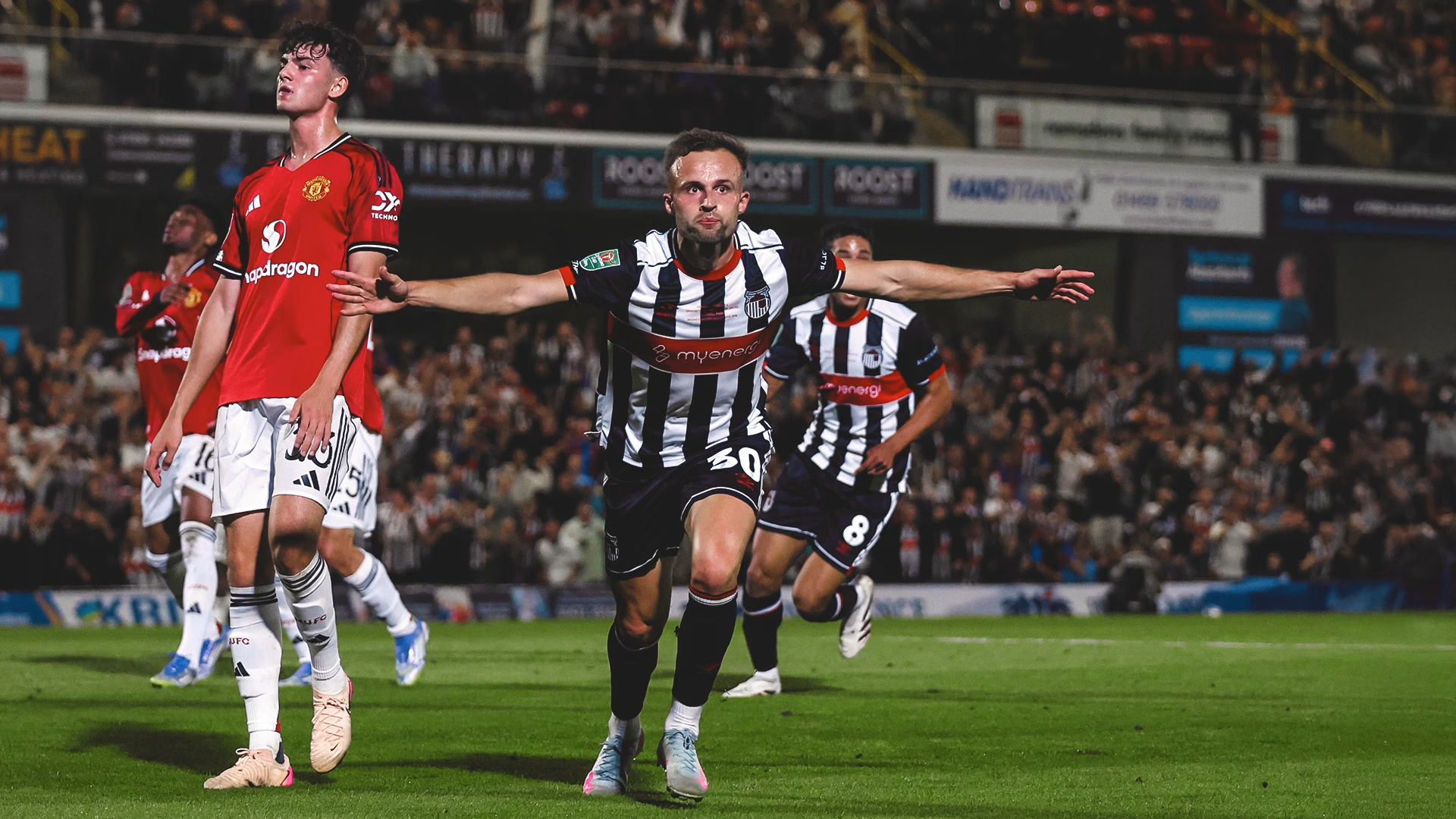
Fourth-tier Grimsby Town did something nobody saw coming on August 27, 2025. They beat Premier League Manchester United in one of the most dramatic penalty shootouts in English football history.
The match ended 2-2 after 90 minutes. Then Grimsby won 12-11 on penalties in 13 rounds of pure intensity.
This wasn’t just any upset. It was the first meeting between these clubs in 77 years, and the biggest shock Carabao Cup had seen in decades.
| Category | Grimsby Town | Manchester United |
| League | League Two (4th tier) | Premier League |
| Match Result | 2-2 (90 mins) | — |
| Penalty Shootout | Won 12-11 | Lost 11-12 |
| Possession | 35% | 65% |
| Shots on Target | 4 | 7 |
| Total Shots | 8 | 15 |
| Attendance | 9,747 (full) | 1,169 supporters |
| Key Scorers | Vernam (22′), Warren (30′) | Mbeumo (75′), Maguire (89′) |
| All-Time Record | 16 wins | 16 wins |
The Power Gap Was Supposed to Be Insurmountable
Manchester United brought everything to Blundell Park that night. Their wage bill for the season dwarfed Grimsby’s entire annual budget.
Benjamin Sesko cost 76 million pounds from RB Leipzig and was making his first start. Harry Maguire and Kobbie Mainoo featured in the lineup. Bruno Fernandes waited on the bench.
Grimsby sat fourth in League Two. They’d been unbeaten in all competitions heading into this match.
The disparity was absurd. Manchester United had spent more on individual players than Grimsby’s entire operation in recent years.
Yet Grimsby had something money couldn’t buy that night: organization, hunger, and a perfect gameplan.
When Grimsby Actually Competed With Manchester United
These clubs have met 38 times across 94 years. The history shows something shocking.
Grimsby has won 16 of those matches. Manchester United has also won exactly 16 matches. Six meetings ended in draws. The record is completely level.
This equality seems impossible given United’s dominance in modern football. But it tells a story about how different these teams were in the 1930s and 1940s.
In January 1931, Grimsby beat Manchester United 1-0 in an FA Cup tie at home. This was considered a major upset at the time. Grimsby progressed to the fifth round before elimination.
The clubs met regularly through the 1930s when league structure was different. Teams rotated between divisions more frequently than today. Grimsby showed they could compete with anyone when circumstances aligned. They weren’t an underdog then—they were a respected rival.
December 25, 1933, saw Grimsby beat United 3-1 at home on Christmas Day. Two days later, on December 26, Grimsby won 7-3 away in Manchester. The 7-3 scoreline remains shocking even by modern standards. Grimsby completely demolished United that day.
This wasn’t a fluke. Grimsby’s success reflected genuine competitive balance of that era. As United climbed to permanent top-flight status, the power dynamic shifted irreversibly. Grimsby gradually descended into lower divisions over subsequent decades.
The 77-Year Gap: Different Worlds
After March 17, 1948, something unusual happened. These clubs didn’t play for 77 years.
That 1948 match at Grimsby ended 1-1 in League Division One. Neither team could find a winner.
Following that draw, Manchester United’s trajectory changed forever. They became a permanent fixture in English football’s top tier.
Grimsby took a different path. They gradually descended into lower divisions over subsequent decades.
Cup draws didn’t favor rematches either. The odds of two teams in completely different leagues meeting diminished dramatically.
By 2025, that 1948 match was ancient history. Very few people alive had watched these teams play.
The gap between fourth tier and Premier League felt unbridgeable. But cup football has always created magic from mismatches.
Manchester United’s Fragile State
Manchester United’s recent seasons had been troubled. They finished 15th in the Premier League in 2023-24—their worst league finish in decades.
New manager Ruben Amorim had just arrived to rebuild a wounded organization.
The Carabao Cup second round against Grimsby seemed like an ideal opportunity. United could build momentum with a comfortable victory.
Amorim named eight changes from United’s previous match. But the quality remained high with nine full international players on the field.
Meanwhile, Grimsby came in unbeaten in all competitions, sitting fourth in League Two with genuine momentum.
The crowd at Blundell Park swelled to 9,747. The stadium was completely packed.
First Half: Grimsby Took Complete Control
Grimsby started with intensity that surprised everyone. They weren’t awed by Manchester United’s reputation or resources.
The gameplan was simple but brilliant. Direct, organized, efficient. They used the crowd to their advantage.
In the 22nd minute, Charles Vernam scored. He collected a cross from Darragh Burns on the right side and buried his strike past Andre Onana at his near post.
RELATED ARTICLES



Blundell Park erupted. The impossible suddenly seemed possible.
Just eight minutes later, Tyrell Warren made it 2-0 after pouncing on a defensive lapse from a corner kick. A soft goal by Premier League standards.
Grimsby had achieved something remarkable. They were completely dominating a Premier League side on their own ground.
United looked lost. Their possession dominance meant nothing. Their expensive signings couldn’t figure out Grimsby’s simple but effective gameplan.
Grimsby had chances to extend the lead further. Kieran Green missed an open goal in the first half that should have made it 3-0. A chance that would haunt him later.
A 2-0 lead felt commanding. Grimsby went into halftime with a famous victory apparently in sight.
Second Half: United’s Desperate Comeback
Amorim made adjustments at the interval. He needed more attacking firepower.
Bruno Fernandes and Bryan Mbeumo came off the bench. United turned up the pressure considerably in the second 45 minutes.
Grimsby’s legs grew tired after their first-half intensity. The defending became increasingly nervous.
United dominated possession now. They camped in Grimsby’s half, launching corner after corner.
Pym made several important saves to keep Grimsby in front. His composure was vital during the sustained pressure.
In the 75th minute, Bryan Mbeumo curled a beautiful strike into the far corner past Christy Pym. The goal energized United and silenced Blundell Park.
In the 89th minute, Harry Maguire powered home a header from a corner kick. It was 2-2.
Grimsby had surrendered their commanding position. Now they faced 30 minutes of extra time, or a penalty shootout.
The momentum had shifted completely toward United. They sensed blood and opportunity.
Penalties: 13 Rounds of Absolute Drama
After 90 minutes without a winner, both teams lined up for the penalty spot.
Most penalty shootouts are over by the fifth round. This one went to round 13, where both teams had already scored 12 each. The tension at Blundell Park became almost physically unbearable.
Grimsby’s goalkeeper Christy Pym became their hero. He made a crucial save on Clarke Oduor’s penalty to keep Grimsby alive when it mattered most.
Matheus Cunha, one of United’s most talented players, blasted his penalty over the bar. A clear chance to win the shootout wasted. That miss proved costly.
Round after round continued. Players stepped to the spot knowing their season potentially hung in the balance. Some composed, some visibly shaking.
The crowd roared with every successful penalty. Groans erupted after each miss. Families held their breath.
By the 12th round, Grimsby needed to score to keep alive. They converted. Composure under pressure.
United’s turn came. They scored again, keeping the shootout alive.
Then came round 13. Bryan Mbeumo stepped to the spot for Manchester United. He’d already scored earlier in the shootout.
His penalty rose toward the crossbar. It looked true, looked destined to score. The ball hit the crossbar and bounced away. A miss. The decisive miss.
Grimsby had won. The home crowd stormed onto the pitch in pure euphoria.
Players collapsed to their knees in emotion. Fans embraced each other in disbelief. Some wept.
One of the greatest upset victories in English cup football was complete.
Why This Match Matters
For Grimsby, this victory entered the club’s folklore immediately.
A fourth-tier team had defeated a Premier League giant in the most dramatic circumstances possible. The wage bill disparity was enormous. Grimsby’s annual budget was a fraction of what Manchester United spent on individual players.
Grimsby’s players achieved something that will be remembered for generations. The community celebrated throughout the night and beyond. Local pubs stayed open till dawn. Players were mobbed in streets for weeks.
This wasn’t just a cup victory. It validated everything Grimsby had built that season. It proved that preparation, organization, and mentality could overcome financial disadvantage.
For Manchester United, the loss represented a new low.
They had lost to a team from England’s fourth tier. It was the first time in the club’s history this had happened in the modern cup competition era. A stain on their record.
Mbeumo’s missed penalty haunted the narrative. He had cost United their season with a strike that bounced off the crossbar. His face would haunt him for years.
The result raised serious questions about Amorim’s rebuild, player recruitment, and the club’s direction under new ownership. How could they lose to fourth-tier opposition?
The Complete Historical Timeline
Key Meetings Across 94 Years:
- January 24, 1931 (FA Cup): Grimsby won 1-0 at home
- December 25, 1933 (League): Grimsby won 3-1 at home
- December 26, 1933 (League): Grimsby won 7-3 away
- March 17, 1948 (League): Draw 1-1 (last meeting for 77 years)
- August 27, 2025 (Carabao Cup): Grimsby won 12-11 on penalties
The head-to-head record between these clubs tells a surprising story.
Grimsby has won 16 matches. Manchester United has also won exactly 16 matches. Six meetings ended in draws.
This equality seems impossible given United’s dominance over the past 50 years. But it reflects a different era.
Most meetings occurred during the 1930s and 1940s when league structure was vastly different. Teams rotated between divisions more frequently than the modern era allows.
The earliest meetings from 1930-1931 demonstrated Grimsby’s genuine capability to compete evenly. They weren’t underdogs then—they were a respected rival.
Their initial dominance reflected competitive balance of that era. As United climbed to permanent top-flight status, Grimsby’s fortunes reversed.
By August 2025, Grimsby’s 16th victory tied the all-time record permanently at 16-16.
FAQs
What was the final score?
Grimsby Town won 2-2 in regular time, advancing 12-11 after a 13-round penalty shootout in the Carabao Cup second round.
Who scored for Grimsby?
Charles Vernam scored in the 22nd minute. Tyrell Warren scored in the 30th minute. Both goals came in the first half.
Who scored for Manchester United?
Bryan Mbeumo scored in the 75th minute to make it 2-1. Harry Maguire scored the equalizer with a header in the 89th minute.
Who missed the decisive penalty?
Bryan Mbeumo missed his second penalty for Manchester United in the 13th round. His shot bounced off the crossbar.
When did these teams last play before 2025?
March 17, 1948. The match ended 1-1 in League Division One at Grimsby. That was 77 years prior.
What was the attendance?
Official attendance was 9,747, including 1,169 Manchester United supporters who made the journey to Cleethorpes.
Why is this such a historic upset?
A fourth-tier team defeated a Premier League team with nine international players. The wage bill disparity was enormous. It was the first time United had lost to a fourth-tier team in modern cup competition.
What’s the all-time head-to-head record?
Across 38 meetings since 1931, Grimsby has won 16 matches. Manchester United has also won 16 matches. Six meetings ended in draws. The August 2025 victory gave Grimsby their 16th win.
RELATED ARTICLES