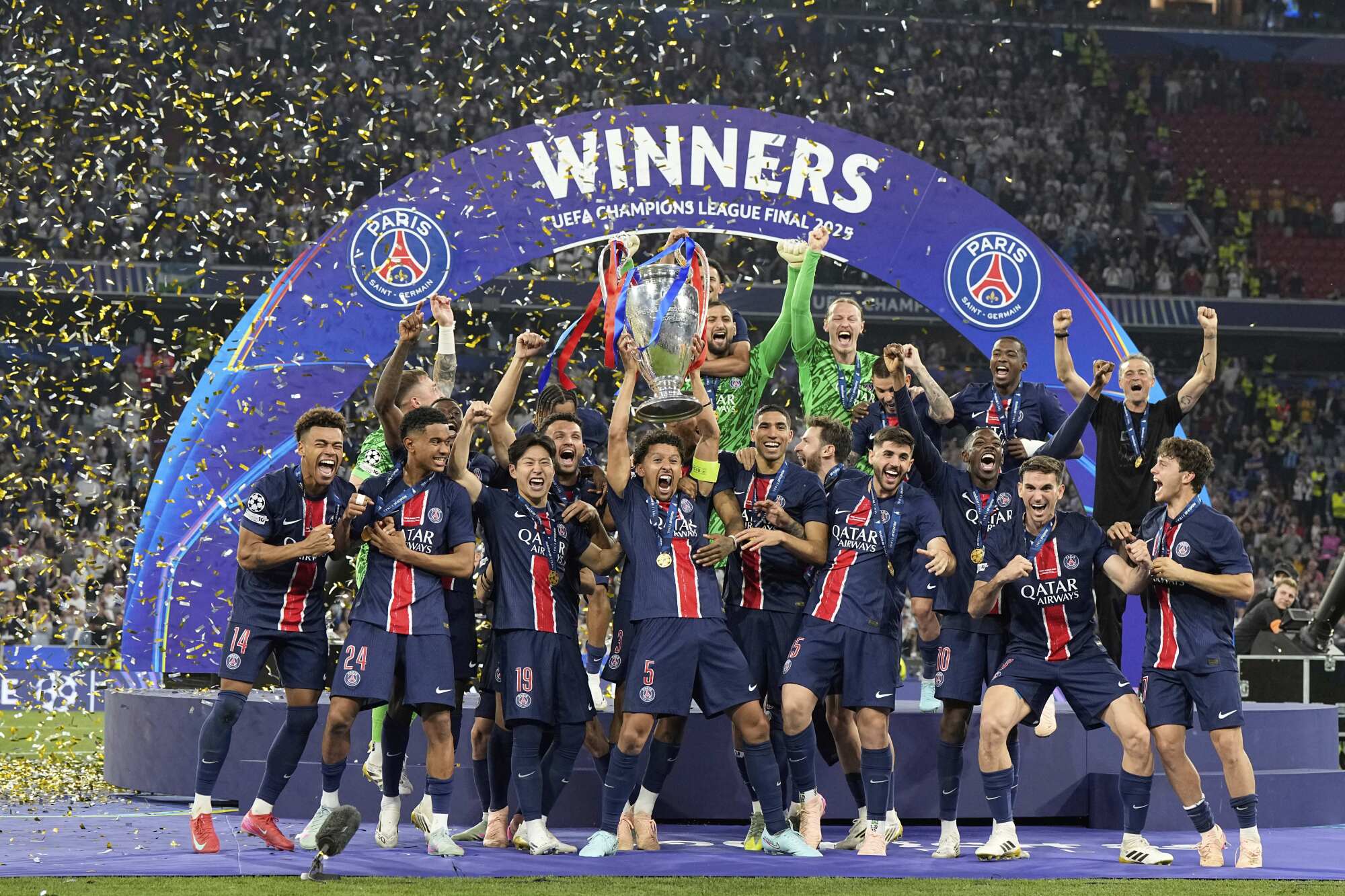
The Champions League is Europe’s biggest club football tournament. Every year, the continent’s best teams battle it out for the most prestigious trophy in club football. (It runs alongside the Europa League, which features teams that didn’t qualify for the Champions League.)
Real Madrid: The Kings of Europe
No team comes close to Real Madrid’s dominance. They’ve lifted the trophy 15 times; more than double any other club. Their journey started when they won the very first tournament back in 1955-56, and they added their latest crown in 2024. That seven-decade span tells you everything about their European pedigree.
Notable Moments
The 2013-14 final made history when Real Madrid faced Atlético Madrid. Never before had two teams from the same city met in the final. Lightning struck twice when these Madrid rivals faced off again in 2016; proof that the Spanish capital had become Europe’s football powerhouse during that era.
The tournament’s format and prestige have evolved over the decades, but one thing hasn’t changed: winning the Champions League remains the ultimate achievement for any European club. Players dream of scoring in finals, managers build entire careers chasing this trophy, and fans remember these nights forever.
List of Winners
| Season | Winners | Runners-up | Score |
| 2024–25 | Paris Saint-Germain | Inter Milan | 5-0 |
| 2023–24 | Real Madrid | Borussia Dortmund | 2-0 |
| 2022–23 | Manchester City | Inter Milan | 1-0 |
| 2021–22 | Real Madrid | Liverpool | 1-0 |
| 2020–21 | Chelsea | Manchester City | 1–0 |
| 2019–20 | Bayern Munich | Paris Saint-Germain | 1-0 |
| 2018–19 | Liverpool | Tottenham Hotspur | 2-0 |
| 2017–18 | Real Madrid | Liverpool | 3-1 |
| 2016–17 | Real Madrid | Juventus | 4-1 |
| 2015–16 | Real Madrid | Atlético Madrid | 1-1 (5–3) |
| 2014–15 | Barcelona | Juventus | 3-1 |
| 2013–14 | Real Madrid | Atlético Madrid | 4-1 |
| 2012–13 | Bayern Munich | Borussia Dortmund | 2-1 |
| 2011–12 | Chelsea | Bayern Munich | 1-1 (4–3) |
| 2010–11 | Barcelona | Manchester United | 3-1 |
| 2009–10 | Inter Milan | Bayern Munich | 2-0 |
| 2008–09 | Barcelona | Manchester United | 2-0 |
| 2007–08 | Manchester United | Chelsea | 1-1 (6–5) |
| 2006–07 | Milan | Liverpool | 2-1 |
| 2005–06 | Barcelona | Arsenal | 2-1 |
| 2004–05 | Liverpool | Milan | 3-3 (3-2) |
| 2003–04 | Porto | Monaco | 3-0 |
| 2002–03 | Milan | Juventus | 0-0 (3-2) |
| 2001–02 | Real Madrid | Bayer Leverkusen | 2-1 |
| 2000–01 | Bayern Munich | Valencia | 1-1 (5–4) |
| 1999–2000 | Real Madrid | Valencia | 3-0 |
| 1998–99 | Manchester United | Bayern Munich | 2-1 |
| 1997–98 | Real Madrid | Juventus | 1-0 |
| 1996–97 | Borussia Dortmund | Juventus | 3-1 |
| 1995–96 | Juventus | Ajax | 1-1 (4-2) |
| 1994–95 | Ajax | Milan | 1-0 |
| 1993–94 | Milan | Barcelona | 4-0 |
| 1992–93 | Marseille | Milan | 1-0 |
| 1991–92 | Barcelona | Sampdoria | 1-0 |
| 1990–91 | Red Star Belgrade | Marseille | 0-0 (5–3) |
| 1989–90 | Milan | Benfica | 1-0 |
| 1988–89 | Milan | Steaua București | 4-0 |
| 1987–88 | PSV | Benfica | 0-0 (6–5) |
| 1986–87 | Porto | Bayern Munich | 2-1 |
| 1985–86 | Steaua București | Barcelona | 0-0 (2–0) |
| 1984–85 | Juventus | Liverpool | 1-0 |
| 1983–84 | Liverpool | Roma | 1-1 (4–2) |
| 1982–83 | Hamburg | Juventus | 1-0 |
| 1981–82 | Aston Villa | Bayern Munich | 1-0 |
| 1980–81 | Liverpool | Real Madrid | 1-0 |
| 1979–80 | Nottingham Forest | Hamburg | 1-0 |
| 1978–79 | Nottingham Forest | Malmö FF | 1-0 |
| 1977–78 | Liverpool | Club Brugge | 1-0 |
| 1976–77 | Liverpool | Borussia Mönchengladbach | 3-1 |
| 1975–76 | Bayern Munich | Saint-Etienne | 1-0 |
| 1974–75 | Bayern Munich | Leeds United | 2-0 |
| 1973–74 | Bayern Munich | Atlético Madrid | 1-1 |
| 1973–74 replay | Bayern Munich | Atlético Madrid | 4-0 |
| 1972–73 | Ajax | Juventus | 1-0 |
| 1971–72 | Ajax | Inter Milan | 2-0 |
| 1970–71 | Ajax | Panathinaikos | 2-0 |
| 1969–70 | Feyenoord | Celtic | 2-1 |
| 1968–69 | Milan | Ajax | 4-1 |
| 1967–68 | Manchester United | Benfica | 4-1 |
| 1966–67 | Celtic | Inter Milan | 2-1 |
| 1965–66 | Real Madrid | Partizan | 2-1 |
| 1964–65 | Inter Milan | Benfica | 1-0 |
| 1963–64 | Inter Milan | Real Madrid | 3-1 |
| 1962–63 | Milan | Benfica | 2-1 |
| 1961–62 | Benfica | Real Madrid | 5-3 |
| 1960–61 | Benfica | Barcelona | 3-2 |
| 1959–60 | Real Madrid | Eintracht Frankfurt | 7-3 |
| 1958–59 | Real Madrid | Stade de Reims | 2-0 |
| 1957–58 | Real Madrid | Milan | 3-2 |
| 1956–57 | Real Madrid | Fiorentina | 2-0 |
| 1955–56 | Real Madrid | Stade de Reims | 4-3 |
FAQs
1. How many times has Real Madrid won the Champions League?
Real Madrid has won the Champions League 15 times, which is more than double any other club in history. Their victories span from the very first tournament in 1955-56 all the way to their most recent triumph in 2024. This 68-year dominance across different eras makes them the undisputed kings of European football.
2. Which teams have played each other in a Champions League final from the same city?
Real Madrid and Atlético Madrid made history as the first same-city rivals to meet in a Champions League final. They faced off in 2014 in Lisbon, with Real winning 4-1 after extra time. The Madrid derby happened again in the 2016 final in Milan, where Real won on penalties 5-3. No other same-city final has occurred in the tournament’s history.
3. What’s the difference between the Champions League and Europa League?
The Champions League features Europe’s top-performing clubs from each domestic league; basically the best of the best. The Europa League includes strong teams that didn’t quite qualify for the Champions League. Think of it as Europe’s second-tier competition. Both run simultaneously throughout the season, but the Champions League carries far more prestige and prize money.
4. Who has won the second-most Champions League titles after Real Madrid?
AC Milan sits in second place with 7 Champions League titles, though that’s still less than half of Real Madrid’s 15. After Milan, Liverpool and Bayern Munich are tied with 6 titles each, followed by Barcelona with 5. The gap between Real Madrid and everyone else shows just how dominant they’ve been in this competition.
5. When did the Champions League start and has it always been called that?
The competition started in 1955-56 but was originally called the European Cup. It kept that name until 1992 when it was rebranded as the UEFA Champions League and expanded its format to include a group stage. Despite the name change and format evolution, the trophy’s prestige has only grown over the decades.