Real Madrid leads all-time Champions League winners with 15 titles. AC Milan is second with 7. Bayern Munich and Liverpool each have 6. Barcelona has won 5 times; the only other club with 5+ titles.
Per official UEFA records, this dominance spans seven decades. But the story goes deeper than one dominant club. It’s about how football’s geography of excellence has shifted dramatically over 70 years.
Quick Answer:
- Most winners: Real Madrid (15 titles)
- Second place: AC Milan (7 titles)
- Total different champions: 24 clubs
- Current champion: Paris Saint-Germain (2024–25)
This guide shows every Champions League winner ever, the records that matter, and the patterns competitors miss.
Most Successful Champions League Teams: All-Time Rankings
When a club wins 15 titles across seven decades, the gap between first and second place tells you everything about sustained excellence.
| Rank | Club | Titles | Last Title |
| 1 | Real Madrid | 15 | 2024 |
| 2 | AC Milan | 7 | 2007 |
| 3 | Bayern Munich | 6 | 2020 |
| 3 | Liverpool | 6 | 2019 |
| 5 | Barcelona | 5 | 2015 |
| 6 | Ajax | 4 | 1995 |
| 7 | Manchester United | 3 | 2008 |
| 7 | Inter Milan | 3 | 2010 |
| 9 | Juventus | 2 | 1996 |
| 9 | Benfica | 2 | 1962 |
| 9 | Nottingham Forest | 2 | 1980 |
| 9 | Porto | 2 | 2004 |
| 9 | Chelsea | 2 | 2021 |
| 14 | Aston Villa | 1 | 1982 |
| 14 | Celtic | 1 | 1967 |
| 14 | Steaua Bucuresti | 1 | 1986 |
| 14 | Red Star Belgrade | 1 | 1991 |
| 14 | Eintracht Frankfurt | 1 | 1960 |
| 14 | PSV Eindhoven | 1 | 1988 |
| 14 | PSG | 1 | 2025 |
Real Madrid’s 15 exceeds AC Milan, Bayern Munich, and Liverpool combined. That gap reveals structural dominance, not temporary success.
Real Madrid won 5 times in a row (1956–1960), then again in 1966. No other club has achieved consecutive titles like this across any era.
- AC Milan’s last win was 2007
- Liverpool’s was 2019
- Barcelona’s was 2015
Only Real Madrid keeps returning; which is the defining story of modern European football.
Interesting Records & Trivia
Atletico Madrid’s 0-for-3 Curse: Atletico reached the Champions League final three times (2014, 2016, 2018) and lost every time. They’ve never won. In 2014 they lost to Real Madrid 4–1 a.e.t. In 2016 they lost to Real Madrid again 1–1, then 5–3 on penalties.
In 2018 they lost to Real Madrid once more 1–0. Playing the same opponent three times and losing all three has happened to no other club at the final stage.
The 45-Year Gap: Inter Milan won in 1965. They didn’t win again until 2010; 45 years later. That’s the longest drought any champion has ever faced.
Liverpool holds the modern record: 1984 to 2019 (35 years) before winning again. That shows how hard it is to stay at the peak once you fall.
Only One Back-to-Back Repeat in Champions League Era: Before Real Madrid’s three-peat, Bayern Munich (2014–2016 back-to-back) and Liverpool (1977–1978) won consecutive titles.
Nobody repeated three times. Real Madrid’s 2016, 2017, 2018 was the first and remains the only. That’s how hard sustained excellence is at Europe’s highest level.
Most Finals Without Winning: Juventus lost seven Champions League finals; and won only two (1985, 1996). Playing in European football’s biggest stage and losing more than you win is Turin’s quiet tragedy.
Carlo Ancelotti’s Record: Most decorated manager with 5 Champions League titles; two with AC Milan (2003, 2007), three with Real Madrid (2014, 2022, 2024).
No other manager has won more than three. Ancelotti’s ability to win across different leagues and eras is unprecedented.
The Multiple-Winner Badge: Six clubs earned the right to keep an official trophy permanently for winning 5+ times or three consecutive:
- Real Madrid
- Ajax
- Bayern Munich
- AC Milan
- Liverpool
- Barcelona
Real Madrid’s Era of Dominance: 15 Titles Across Seven Decades
When a club dominates like Real Madrid has, it changes how European football works. Real Madrid didn’t just win Champions Leagues; they redefined what winning means in European football.
Their 15 titles span from 1956 to 2024, covering the entire history of the competition. One club, through different players, managers, and entire generations, keeps winning. That’s almost impossible to grasp.
Five Consecutive: The Record That Stands Alone (1956–1960)
Real Madrid won the inaugural European Cup in 1956, then won again in 1957, 1958, 1959, and 1960. Five times in a row. No other club has done this in 70 years of the competition.
Because Spain’s system produces consistent excellence and Real Madrid had the best players of that era (Di Stéfano, Puskás, Gento), consecutive titles meant you had to be the best team in Europe five seasons running. That compounds exponentially.
You can’t luck into that. Real Madrid’s team from that era is remembered as arguably the greatest team ever assembled. They didn’t just win; they dominated.
The 1960 final saw them beat Eintracht Frankfurt 7–3. That’s a scoring margin you almost never see in finals anymore.
After winning five straight, Real Madrid won one more in 1966 (their sixth), then fell quiet until 1998. That 32-year gap showed Real Madrid isn’t invincible; they’re just persistently excellent.
The 2010s Renaissance: Real Madrid 8 of 13 Titles
From 2010 onward, Real Madrid won in:
- 2014 (beat Atletico Madrid 4–1 a.e.t.)
- 2016, 2017, 2018 (three back-to-back; only team to do this in Champions League era)
- 2022 (beat Liverpool 1–0)
- 2024 (beat Borussia Dortmund 2–0)
That’s 8 titles in 15 years. In that same window, Bayern Munich won 1 (2020), Liverpool 1 (2019), and Manchester City 1 (2023). One club won more than the other three combined.
When Cristiano Ronaldo arrived at Real Madrid, his presence accelerated what was already there. From 2014–2018, Ronaldo won four of those five titles.
His departure in 2018 didn’t stop Real Madrid. They won again in 2022 and 2024. This suggests systemic excellence, not just one player, though Ronaldo’s era accelerated the run.
The 2016–2018 three-peat deserves special mention. Bayern Munich won back-to-back (2014–2016) and Liverpool won consecutive titles (1977–1978), but Real Madrid is the only team to win three in a row in the Champions League format.
That’s six matches across 180 minutes where they never faltered. When expansion came in 2021 and the field grew to 36 teams, parity should have increased. Real Madrid won in 2022 and 2024 anyway.
Champions by Era: How Dominance Shifted Across 70 Years
If you map who won the Champions League by decade, you see geographical dominance shifting like tectonic plates. Understanding this reveals why Real Madrid, Spain, and modern football’s power structures exist today.
1956–1965 (The Real Madrid Era)
Real Madrid won 6 of 10 titles because their squad (Di Stéfano, Puskás, Gento) was genuinely superior to European competition. The field was small (16 teams initially), meaning fewer contenders. Result: Real Madrid’s five-peat (1956–1960) was nearly inevitable. No other team won more than once in this span.
1966–1980 (English Rise + Italian Emergence)
English clubs dominated starting in 1977:
- Liverpool won 4 times (1977, 1978, 1981, 1984)
- Manchester United won once (1968)
- AC Milan won in 1963 and 1969
- Inter Milan won in 1965 and 1970
This era splits between two powers claiming territory and setting the stage for Italian dominance.
1981–1992 (The English Ban + Italian Takeover)
English clubs were banned from European competition for five years after the Heysel disaster (1985). This opened space for AC Milan to assert dominance:
- AC Milan won in 1989, 1990, 1994
- Steaua Bucuresti won in 1986
- PSV Eindhoven won in 1988
- Barcelona won in 1992
When English clubs returned in 1991, they came back to find an Italian fortress already built.
1993–2000 (The Milan Dynasty + Munich Rise)
AC Milan continued their dominance, but new challengers emerged:
- Manchester United won in 1999
- Bayern Munich won in 2001
- Barcelona won in 1992
- Real Madrid won in 1998 and 2000 (beginning of modern renaissance)
The old order broke up. Real Madrid’s return signaled their next era.
2001–2015 (The Spanish Emergence)
Barcelona dominated this window:
- Barcelona won in 2006, 2009, 2011, 2015
- Real Madrid won in 2014
- Liverpool won once (2005)
- Bayern Munich won once (2013)
Spanish clubs claimed 4 of 15 titles. This era marks the rise of attacking, possession-based Spanish football challenging older Italian and English models.
2016–2025 (Spanish Dominance + Real Madrid’s Modern Peak)
Real Madrid won 2016, 2017, 2018, 2022, 2024. Barcelona fell out of contention. Bayern Munich won in 2020 (one) during COVID. Manchester City won in 2023. Real Madrid shifted to tactical depth (not just possession) and sustained excellence through the 2020s when other Spanish clubs faded.
Recent Champions: Last 5 Years (2020–2025)
Who Won Champions League 2020?
Bayern Munich beat PSG 1–0 in Lisbon during COVID-19 lockdown. Bayern had their moment; a complete dominant cycle with three Bundesliga titles and the European crown in one season. Then fell away.
Who Won Champions League 2021?
Chelsea beat Manchester City 1–0 in Porto. Thomas Tuchel’s arrival stabilized Chelsea after years of instability. One year peak, then decline.
Who Won Champions League 2022?
Real Madrid beat Liverpool 1–0 in Paris. Karim Benzema’s final Champions League reminded everyone that Real Madrid’s modern success comes from relentless optimization, not star power alone. Liverpool’s loss showed they couldn’t quite reclaim their 1980s dominance.
Who Won Champions League 2023?
Manchester City beat Inter Milan 1–0 in Istanbul. Pep Guardiola’s finest achievement; City had become unstoppable domestically and finally broke through Europe. One title, then European pressure caught up (they haven’t returned to another final).
Who Won Champions League 2024?
Real Madrid beat Borussia Dortmund 2–0 at Wembley. Vinicius Jr’s emergence as a genuine global star showed Real Madrid’s ability to regenerate. Dortmund had just won the Bundesliga; it didn’t matter. Real Madrid’s experience and depth won.
Who Won Champions League 2025?
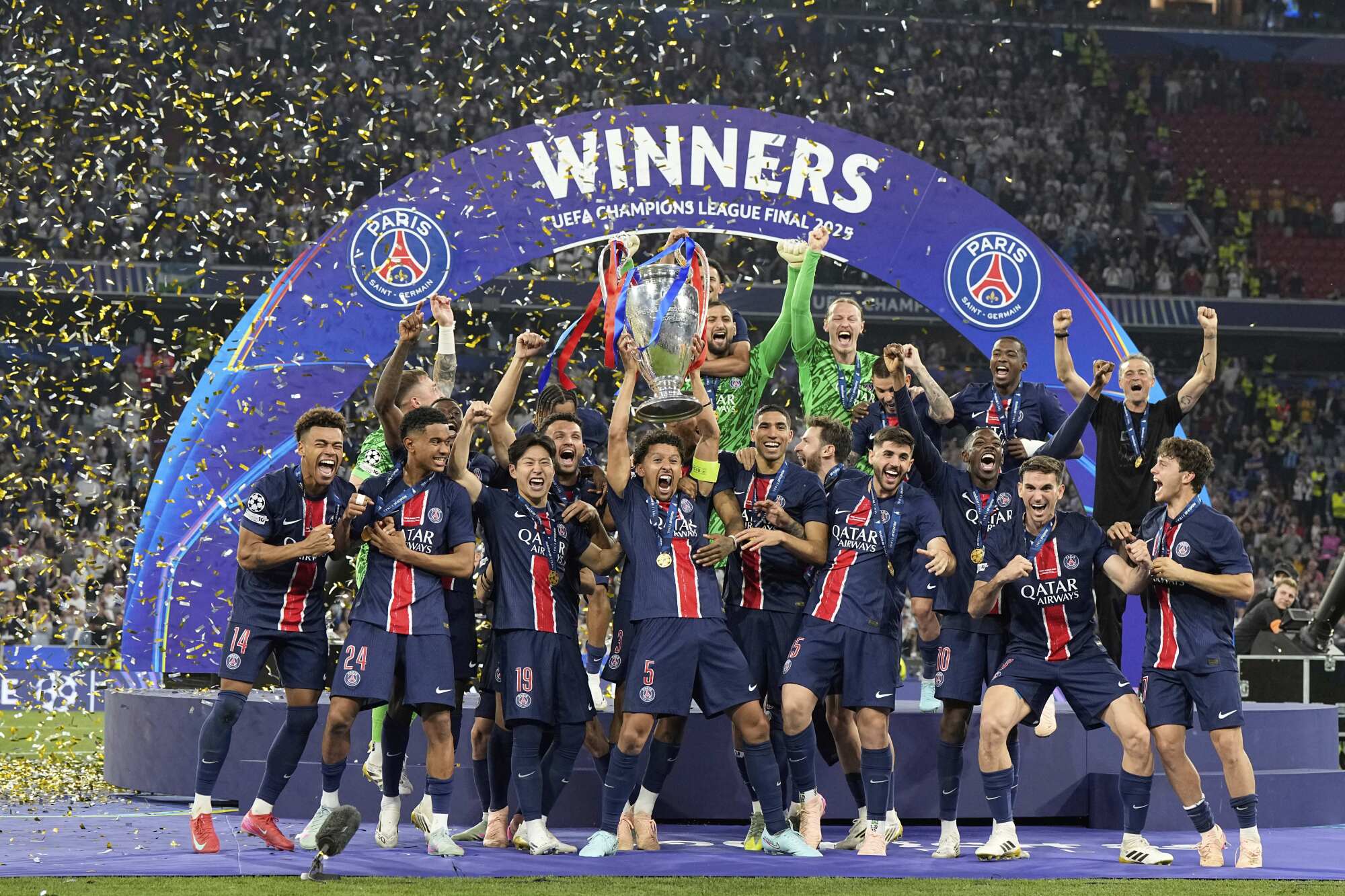
Paris Saint-Germain beat Inter Milan 5–0 in a historic final. This is significant. PSG has been trying to win Europe since their oil-backed project began in 2011. They reached the final in 2020 and lost to Bayern. Finally, after 14 years of massive investment, PSG conquered Europe. Kylian Mbappé’s presence (signed from Real Madrid in 2023) proved the missing piece. A 5–0 Champions League final is genuinely rare; it signals total dominance.
Is PSG the new challenger to Real Madrid’s dominance? Probably not yet. Real Madrid won two of the last three years. But PSG’s breakthrough means European football has 24 valid winners now, not 6. That’s healthier competition.
Most Successful Nations: Spain’s Overwhelming Lead
If you step back and ask which country’s football system is best, the Champions League gives you a clear answer: Spain dominates by a massive margin.
Spanish clubs have won 20 titles total:
- Real Madrid: 15
- Barcelona: 5
That’s more than England (15 titles from 6 clubs), more than Italy (12 titles from 3 clubs), more than Germany (8 titles). Spain’s near-monopoly on European supremacy is staggering.
How did this happen? Spain’s football system produces consistent excellence across multiple elite clubs. Real Madrid is the constant. Barcelona emerged in the 1990s and won five times in 15 years. No other nation has two separate clubs at this level.
National Success in Champions League (All-Time)
| Nation | Total Titles | Clubs with Wins | Most Successful Club | Runner-Up |
| Spain | 20 | 2 | Real Madrid (15) | Barcelona (5) |
| England | 15 | 6 | Liverpool (6) | Manchester United (3) |
| Italy | 12 | 3 | AC Milan (7) | Inter Milan (3) |
| Germany | 8 | 3 | Bayern Munich (6) | Borussia Dortmund (1) |
| Netherlands | 6 | 3 | Ajax (4) | PSV (1) |
| Portugal | 4 | 2 | Benfica (2) | Porto (2) |
| France | 1 | 1 | PSG (1) | ; |
England has the most different winners (6 clubs); Liverpool, Manchester United, Nottingham Forest, Chelsea, Aston Villa, Manchester City; but they’re scattered across decades. Spain’s two clubs account for 20 consecutive years of dominance from 1992–2015 and still hold recent titles.
Italy concentrated excellence in just three clubs (AC Milan, Inter Milan, Juventus), and they won during the 1980s–1990s when Italian football was considered the world’s best. Now Italy hasn’t won since 2010. The system aged.
Germany’s Bayern Munich is essentially German football’s only European voice. One dominant club, periodic success, but no secondary contender. Borussia Dortmund reached the final multiple times but won only once (1997).
Netherlands has Ajax (4 times), the only non-Real Madrid club to win as frequently. Ajax’s 1971, 1972, 1973 three-peat is their era marker. They haven’t won since 1995, suggesting their youth academy excellence wasn’t sustainable at scale.
Portugal’s Benfica and Porto split early wins (1961, 1962 for Benfica, then quiet until Porto’s shock 2004 victory). Portuguese football is competitive domestically but rarely breaks through Europe anymore.
France only has PSG, and they just won in 2025. Before that, zero titles in 70 years of competition. France’s domestic league (Ligue 1) has never produced sustained European success despite financial resources. That’s the puzzle of French football.
The takeaway: Spain built a system where multiple elite clubs can dominate Europe. Every other nation relies on one dominant club cycling through decades. That’s why Spain owns the trophy.
Single-Time Champions: The Underdog Winners
Not everyone remembers that 24 different clubs have won the Champions League. Most focus on the familiar names; but the single-time winners tell a different story about how competition works.
Nottingham Forest (1979–1980): Only club to win the European Cup more times (2) than their own domestic league (1). That’s the craziest anomaly in football history. When you can win Europe twice but your domestic league once, it reveals something about competition structure and opportunity.
Benfica (1961, 1962): Actually won twice, but hasn’t been back since. Portuguese football’s moment of dominance, then permanent fade.
Aston Villa (1982): Won the English top flight that year. Haven’t reached another European final since.
Celtic (1967): First British club to win. Scottish football’s moment of dominance, never repeated at this level.
Eintracht Frankfurt (1960): Reached the final in 1956, finally won in 1960. Then vanished from European contention for 60+ years (only returned to final in 2024).
PSV Eindhoven (1988): Knocked out Real Madrid en route to winning. Then never reached another final.
Steaua Bucuresti (1986): Eastern European triumph before the Cold War ended. One moment of glory in an isolated system.
Red Star Belgrade (1991): Yugoslav football’s last continental moment before the federation collapsed.
Chelsea (2012, 2021, 2024): Actually a multi-time winner with three titles.
Why each faded: Domestic league success didn’t translate to sustained European investment. Single-time winners prove that winning once doesn’t build infrastructure for repeating. Real Madrid and Barcelona built that infrastructure. These clubs built nothing permanent.
FAQs
Has any team reached the final but never won?
Yes, and it’s Atletico Madrid; the most painful record in European football. They reached three finals (2014, 2016, 2018) and lost every time. Twice to Real Madrid in regular time or penalties, once more to Real Madrid. No other club has been to three finals without winning at least one. That curse defines their era.
How many different teams have won the Champions League?
24 clubs total. Most people know maybe 10. The others; Steaua Bucuresti, Porto, Eintracht Frankfurt, Celtic, Nottingham Forest, Aston Villa; won their era’s glory, then faded. That’s the harshness of European football: one championship doesn’t guarantee another.
What’s the longest time a champion went without winning again?
Inter Milan holds this record: 45 years between 1965 and 2010. Liverpool was 35 years (1984–2019). Real Madrid? Only 32 years between 1966 and 1998. Then they never stopped winning again. The gap reveals how hard it is to stay relevant at Europe’s peak once you fall.
Who is the most successful Champions League manager?
Carlo Ancelotti with five titles (2003, 2007 with AC Milan; 2014, 2022, 2024 with Real Madrid). Pep Guardiola and Zinedine Zidane each have three. Ancelotti’s versatility; winning across leagues and decades; sets him apart. Most great managers peak once. Ancelotti kept peaking.
Which country has won the most Champions League titles?
Spain by a massive margin: 20 titles (Real Madrid 15, Barcelona 5). England is second with 15 spread across 6 clubs. Italy has 12 from 3 clubs. Spain’s dominance is structural, not accidental. Their system enables sustained excellence from multiple clubs simultaneously.
What team won first in 1956?
Real Madrid beat Stade de Reims 4–3 in Paris. It was the inaugural European Cup. Real Madrid went on to win five consecutive, setting a standard that no club matched for 60+ years. That first victory started everything.
Who won in 2024–25?
Paris Saint-Germain beat Inter Milan 5–0 in a historic final. It was PSG’s first Champions League title after 14 years of trying. A 5–0 scoreline in a Champions League final is genuinely rare; it signals total dominance and marks PSG’s arrival as a European power.
RELATED ARTICLES