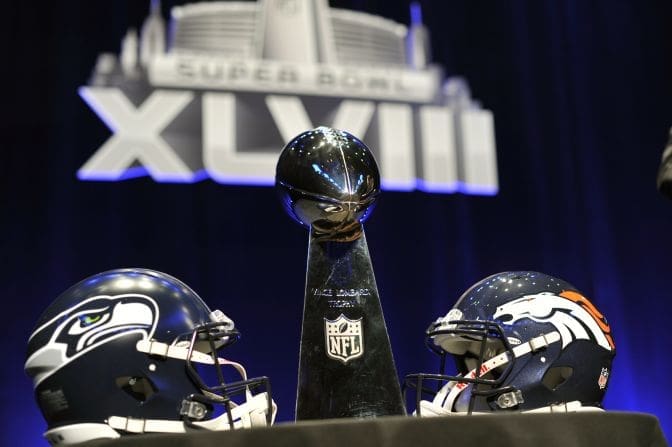
Super Bowls aren’t decided by hype alone. They hinge on details, one exploited matchup, one protection breakdown, one timely adjustment.
Super Bowl LX is gearing up to fit that mold, pairing the Seahawks’ disciplined, league-best defense against a Patriots offense built on efficiency, creativity, and a rapidly maturing quarterback.
This isn’t a clash of identical styles. It’s structure versus improvisation, pressure versus poise. Those contrasts show up most clearly in the trenches, on the perimeter, and in early play-calling decisions.
A few key battles will quietly shape momentum long before the final score, revealing how the game unfolds and which moments define it.
Why Matchup Moments Matter
Big games shrink the margin for error. Playbooks tighten. Stars face tighter coverage. What remains are matchups that either hold up or crack under pressure.
Seattle and New England reached Super Bowl LX for different reasons, but both rely on winning specific situations:
- Seattle thrives when its defense dictates tempo and forces predictable decisions.
- New England succeeds when it turns chaos into manageable reads and controlled aggression.
When those philosophies collide, individual battles become difference makers. Each win or loss in those moments compounds, tilting field position, tempo, and confidence. That’s where this game will be decided.
Speed vs Discipline on the Perimeter
Jaxon Smith-Njigba enters the Super Bowl as the league’s most productive receiver, but his impact goes beyond yardage. Seattle shifts him across formations, forcing defenses to declare coverage and adjust leverage. Slot fades, crossers, and delayed releases help him win early or stretch coverage vertically.
Christian Gonzalez represents the Patriots’ counter. Physical at the line, fluid in space, and comfortable in man coverage, he has been New England’s most reliable defensive asset during the postseason. The Patriots lean heavily on man concepts, which turns this matchup into a near-constant one-on-one test.
Momentum often follows explosive perimeter plays. One deep completion can flip field position, quiet a defense, and open the playbook, while tight coverage or a forced throw can stall drives and shift control. These moments frequently shape postgame conversations around recognition and legacy when matchups hinge on performances like this.
Pressure, Poise, and Pocket Control
The most important matchup may never show up in highlight reels. New England’s offensive line has been inconsistent, particularly against interior pressure. That vulnerability aligns directly with Seattle’s greatest strength.
Leonard Williams and Byron Murphy II generate pressure without heavy blitzing. That allows the Seahawks to keep coverage intact while collapsing the pocket from the inside. Mike Macdonald’s defense compounds the problem by disguising fronts and coverage shells, forcing quarterbacks to react quickly under stress.
RELATED ARTICLES


Drake Maye has handled pressure better than most young quarterbacks, using mobility to escape and reset plays. Extended plays have fueled several of New England’s biggest gains this season. The risk is obvious. Holding the ball invites sacks, hurried throws, or strip opportunities.
Games like this often swing when a quarterback escapes pressure just enough or doesn’t. A few early hits can change timing, confidence, and play-calling. That battle between patience and urgency will define how New England’s offense functions.
Arm Talent vs Coverage Discipline
Sam Darnold’s resurgence has been one of the season’s quieter storylines. Seattle has asked him to make controlled, timely throws rather than chase hero moments. That approach will be tested by a Patriots secondary that mixes man and zone seamlessly.
New England’s defensive backs communicate well, pass off routes cleanly, and rarely bust assignments. Deep speed from Seattle’s supporting receivers can stretch coverage, but only if Darnold stays disciplined and resists forcing throws into tight windows.
Quarterbacks rarely dominate Super Bowls with sheer volume. They win them by choosing the right moments, one perfectly placed deep shot or one patient third-down conversion that changes field position and momentum. Those timely decisions often matter more than raw totals on the stat sheet.
Because of that, postgame narratives tend to focus on efficiency and impact rather than accumulation. This is one of the reasons why fans follow conversations around markets like the odds to win Super Bowl MVP, especially when a handful of plays can end up defining the night.
Creativity vs Control on the Sidelines
Few Super Bowl battles are as subtle or as important as the one between Josh McDaniels and Mike Macdonald. Their early decisions often dictate tempo, field position, and how quickly each offense is forced to adjust.
McDaniels has leaned into Drake Maye’s mobility and layered route concepts to simplify reads and stress defenses horizontally and vertically. Early scripts often include misdirection and quick hitters designed to build rhythm.
Macdonald counters with structure. His defense relies on discipline, delayed pressure, and post-snap movement that clouds decision-making. The goal isn’t chaos, but control, forcing offenses into long-yardage situations where creativity becomes risk.
The team that establishes its identity early usually dictates the game’s pace. Adjustments matter, but imposing terms in the first quarter often determines who plays from comfort and who plays from urgency.
Complementary Football and the Hidden Edges
Super Bowls are rarely won in isolation. Field position, special teams, and situational execution often decide which stars get opportunities to shine.
New England’s physical approach under Mike Vrabel emphasizes mistake-free football and emotional resilience. Seattle’s version of complementary football relies on balance, defense setting up offense, offense sustaining drives, and special teams avoiding negative swings.
Third-down efficiency, red-zone execution, and penalty discipline quietly shape momentum throughout a game. These details rarely dominate headlines, but they often determine which team controls field position and closes drives.
These moments don’t trend on social media, yet they decide championships. Fans who enjoy tracking how games ripple into future storylines often keep an eye on broader league context, including upcoming NFL games and props.
This information can be invaluable when judging how performances echo beyond Super Bowl Sunday.
The Moments That Outlast the Final Score
Super Bowl LX won’t be remembered for pregame narratives or halftime spectacle alone. It will be defined by execution inside these matchups. A receiver beating tight coverage. A quarterback surviving pressure. A defense forcing patience to crack.
Stars earn spotlights by winning within schemes, not escaping them. Coaches leave fingerprints through discipline, not speeches. When the game tightens, head-to-head showdowns often decide who controls the moment.
For fans, recognizing those battles as they unfold adds depth to every snap. This Super Bowl promises plenty of moments worth watching closely and remembering long after the final whistle.