This is your central hub connecting all 15 Winter Olympics medal articles across 10 sports and 4 countries. Use the Navigation section below to jump to any specific sport or country analysis.
Country Wise Winter Olympics Medal Winners by Sport reveals how different nations dominate specific disciplines.
Norway leads with 405+ all-time medals, powered by excellence in cross-country skiing, biathlon, and Nordic combined. Germany and the USA follow, each with distinct sporting strengths.
The 15 Winter Olympic sports create vastly different medal patterns. Some nations specialize in a single sport (South Korea’s short track dominance), while others distribute medals across multiple disciplines.
Alpine Skiing Medals by Country
| Country | Gold | Silver | Bronze | Total | Era of Dominance |
| Austria | 37 | 41 | 43 | 121 | 1952-Present |
| Switzerland | 30 | 25 | 20 | 75 | 1948-Present |
| USA | 18 | 12 | 10 | 40 | 1952-Present |
| France | 14 | 11 | 9 | 34 | 1952-Present |
| Italy | 13 | 14 | 9 | 36 | 1952-Present |
| Germany | 10 | 10 | 11 | 31 | 1952-Present |
| Norway | 9 | 7 | 6 | 22 | 1952-Present |
Key Insight: Austria’s 121 Alpine medals represent 27% of all Alpine skiing medals ever awarded. Their consistent excellence across downhill, slalom, and giant slalom reflects deep skiing culture and training systems established in the 1950s.
Explore in Depth: See complete Alpine Skiing Olympic Medal Winners with year-by-year data and most-decorated athletes. For USA-specific Alpine performance, check USA Alpine Skiing Olympic Medal Winners.
Cross-Country Skiing Medals by Country
| Country | Gold | Silver | Bronze | Total | Era of Dominance |
| Norway | 52 | 33 | 23 | 108 | 1924-Present |
| Sweden | 32 | 22 | 23 | 77 | 1924-Present |
| Finland | 43 | 31 | 27 | 101 | 1924-Present |
| Soviet Union | 25 | 20 | 17 | 62 | 1956-1991 |
| Russia | 8 | 6 | 4 | 18 | 1994-Present |
Key Insight: Cross-country skiing is Norway’s national obsession. 108 medals over 98 years (since 1924) makes Norway the undisputed cross-country skiing power. This single sport accounts for ~27% of Norway’s total Winter Olympic medals.
Explore in Depth: See complete Cross-Country Skiing Olympic Medal Winners with distance-by-distance breakdown and most-decorated skiers. For Norway-specific performance, check Norway Cross-Country Skiing Medal Winners.
Biathlon Medals by Country
| Country | Gold | Silver | Bronze | Total | Era of Dominance |
| Norway | 22 | 16 | 17 | 55 | 1980-Present |
| Germany | 20 | 17 | 20 | 57 | 1980-Present |
| France | 11 | 7 | 4 | 22 | 1980-Present |
| Soviet Union | 8 | 8 | 6 | 22 | 1980-1991 |
| Russia | 5 | 3 | 5 | 13 | 1994-Present |
Key Insight: Germany and Norway compete fiercely for biathlon dominance. Combined, these two countries won 112 of the 200+ biathlon medals ever awarded; representing 56% of all biathlon Olympic medals.
Explore in Depth: See complete Biathlon Olympic Medal Winners with year-by-year results across all distances and relay events.
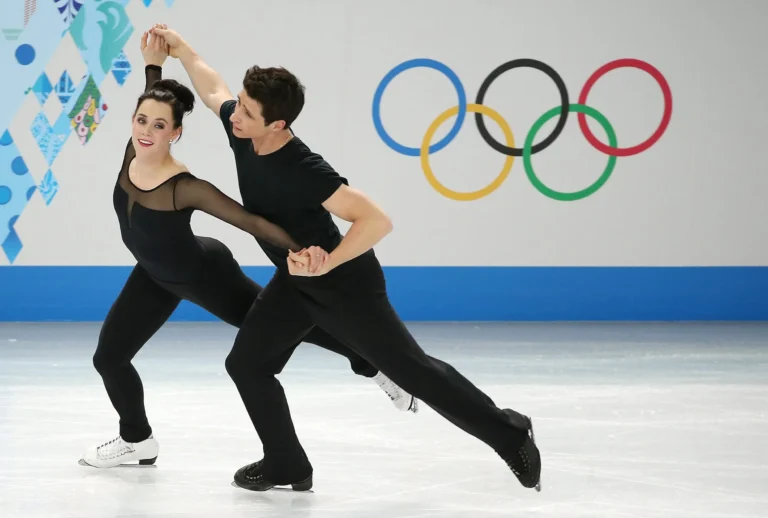
Figure Skating Medals by Country
| Country | Gold | Silver | Bronze | Total | Era of Dominance |
| Russia/USSR | 35 | 28 | 15 | 78 | 1964-Present |
| USA | 17 | 16 | 21 | 54 | 1948-Present |
| Canada | 6 | 9 | 5 | 20 | 1948-Present |
| Sweden | 4 | 2 | 0 | 6 | 1908-1932 |
| Great Britain | 3 | 1 | 2 | 6 | 1908-1980 |
Key Insight: Soviet/Russian dominance in figure skating stems from systematic training programs and emphasis on pairs skating and ice dance. Russia won 78 medals across 114 years (since 1908); making them the undisputed figure skating superpower.
Explore in Depth: See complete Figure Skating Olympic Medal Winners with results by discipline and most-decorated skaters. For Russia-specific dominance, check the Russia Figure Skating Gold Medalists.
Speed Skating (Long Track) Medals by Country
| Country | Gold | Silver | Bronze | Total | Era of Dominance |
| Netherlands | 37 | 31 | 21 | 89 | 1924-Present |
| Norway | 22 | 14 | 20 | 56 | 1924-Present |
| Soviet Union | 24 | 21 | 11 | 56 | 1956-1991 |
| USA | 17 | 19 | 17 | 53 | 1924-Present |
| Germany | 17 | 20 | 24 | 61 | 1952-Present |
Key Insight: The Netherlands’ 89 speed skating medals reflect a 5-century tradition of skating on frozen canals. Dutch skaters hold 22% of all long-track speed skating medals, the highest concentration in any single sport by any country.
Explore in Depth: See complete Speed Skating Olympic Medal Winners with all distances and legendary skaters like Ireen Wüst and Irene Schouten.
RELATED ARTICLES


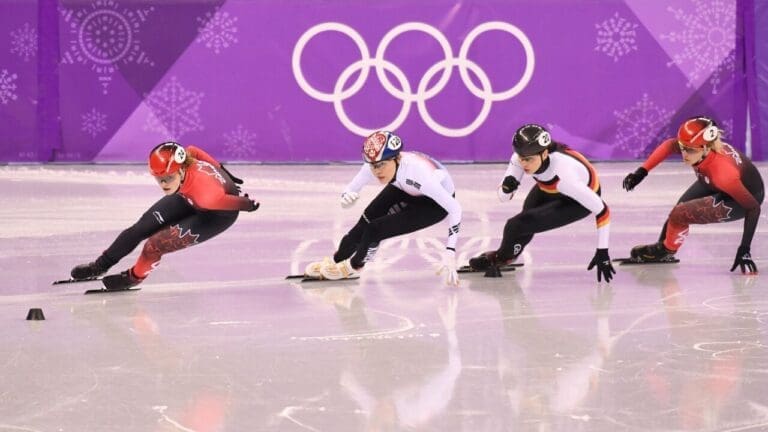
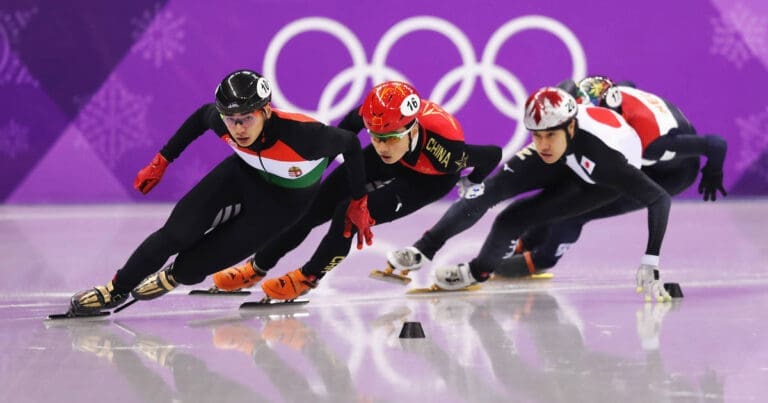
Short Track Speed Skating Medals by Country
| Country | Gold | Silver | Bronze | Total | Era of Dominance |
| South Korea | 26 | 14 | 13 | 53 | 1992-Present |
| China | 12 | 13 | 12 | 37 | 1998-Present |
| Canada | 10 | 14 | 13 | 37 | 1992-Present |
| USA | 4 | 7 | 9 | 20 | 1992-Present |
| Italy | 8 | 7 | 4 | 19 | 1992-Present |
Key Insight: Short track is South Korea’s domain. Their 53 medals since 1992 represent 36% of ALL short track Olympic medals ever awarded; a higher concentration than any country in any sport. Short track comprises 67% of South Korea’s total Winter Olympic medals.
Explore in Depth: See complete Short Track Speed Skating Olympic Medal Winners with all events and most-decorated skaters like Arianna Fontana and Viktor Ahn.
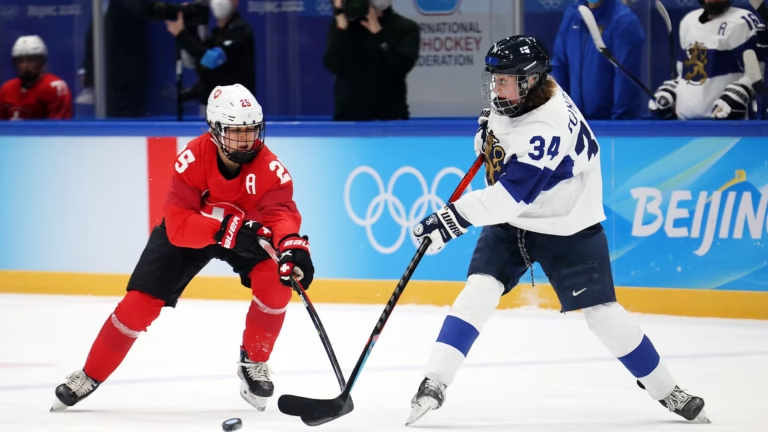
Ice Hockey Medals by Country
| Country | Men | Women | Total | Era of Dominance |
| Canada | 9G, 8S, 6B | 5G, 4S, 0B | 32 | 1920-Present |
| USSR/Russia | 8G, 9S, 7B | 0G, 0S, 1B | 25 | 1956-Present |
| USA | 2G, 5S, 6B | 2G, 4S, 5B | 24 | 1948-Present |
| Sweden | 1G, 6S, 8B | 1G, 1S, 0B | 17 | 1920-Present |
| Finland | 0G, 2S, 5B | 0G, 0S, 2B | 9 | 1952-Present |
Key Insight: Canada’s ice hockey dominance is legendary. 9 gold medals in men’s hockey plus 5 in women’s hockey (first nation to win women’s gold) makes them the sport’s undisputed leader. Ice hockey represents ~24% of Canada’s Winter Olympic medals.
Explore in Depth: See complete Ice Hockey Olympic Medal Winners with men’s and women’s tournament results. For Canada-specific dominance, check Canada Ice Hockey Olympic Medalists.
Bobsled/Skeleton Medals by Country
| Country | Gold | Silver | Bronze | Total | Era of Dominance |
| Germany | 36 | 27 | 26 | 89 | 1952-Present |
| Switzerland | 10 | 10 | 11 | 31 | 1936-Present |
| USA | 6 | 5 | 6 | 17 | 1932-Present |
| Italy | 6 | 8 | 7 | 21 | 1956-Present |
| Austria | 5 | 7 | 4 | 16 | 1952-Present |
Key Insight: German engineering expertise translates to bobsled/skeleton dominance. 89 medals (36 golds) represent 29% of all bobsled/skeleton medals. When combined with East/West Germany historical records, the total reaches 122+ medals; 47% of the sport’s entire Olympic history.
Explore in Depth: See complete Bobsleigh Olympic Medal Winners and Skeleton Olympic Medal Winners with event-by-event historical data and top athletes.
Nordic Combined Medals by Country
| Country | Gold | Silver | Bronze | Total |
| Norway | 33 | 17 | 11 | 61 |
| Germany | 16 | 8 | 5 | 29 |
| Finland | 5 | 3 | 4 | 12 |
| Austria | 3 | 2 | 1 | 6 |
| Japan | 4 | 1 | 2 | 7 |
Key Insight: Nordic combined showcases Norwegian excellence. Their 61 medals include 33 golds; representing 64% of all Nordic combined Olympic medals ever awarded. This single sport accounts for ~15% of Norway’s total Winter Olympic medals.
Skiing (Freestyle & Moguls) Medals by Country
| Country | Gold | Silver | Bronze | Total | Notable Athletes |
| USA | 12 | 9 | 10 | 31 | Eileen Gu, David Wise |
| Canada | 12 | 6 | 7 | 25 | Marc-Andre Moreau |
| China | 3 | 2 | 3 | 8 | Eileen Gu |
| Japan | 2 | 2 | 3 | 7 | Ayumu Hirano |
| France | 2 | 2 | 1 | 5 | ; |
Key Insight: USA and Canada split freestyle skiing dominance, each with 12 golds. Younger sport (debuted 1992) with growing participation from China (Eileen Gu’s 2022 breakthrough), creating more competitive medal distribution than traditional Winter sports.
Snowboarding Medals by Country
| Country | Gold | Silver | Bronze | Total | Notable Athletes |
| USA | 17 | 12 | 10 | 39 | Chloe Kim, Shaun White |
| Switzerland | 7 | 6 | 4 | 17 | Iouri Podladtchikov |
| Austria | 2 | 5 | 4 | 11 | ; |
| France | 2 | 3 | 2 | 7 | Pierre Vaultier |
| China | 2 | 1 | 1 | 4 | Ayumu Hirano |
Key Insight: USA dominates snowboarding with 17 golds; 39% of all snowboarding Olympic medals. Since its 1998 debut, snowboarding has broadened Winter Olympics beyond traditional skiing nations, attracting athletes from diverse backgrounds.
Curling Medals by Country
| Country | Gold | Silver | Bronze | Total | Notable Teams |
| Canada | 3 | 1 | 2 | 6 | Multiple Olympic champions |
| Sweden | 1 | 2 | 2 | 5 | 2022 men’s champions |
| Switzerland | 1 | 2 | 0 | 3 | 2018 women’s champions |
| Germany | 1 | 1 | 0 | 2 | 2018 mixed doubles |
| Denmark | 0 | 0 | 1 | 1 | ; |
Key Insight: Canada’s 3 curling golds (6 total medals) represent 40% of all curling Olympic medals. Curling’s North American/European concentration reflects the sport’s geographic origins in Scotland and traditional power bases.
Explore in Depth: See complete Curling Olympic Medal Winners with men’s, women’s, and mixed doubles results across all Olympic Games.
Ski Jumping Medals by Country
| Country | Gold | Silver | Bronze | Total | Notes |
| Norway | 23 | 13 | 9 | 45 | Strongest discipline |
| Austria | 18 | 12 | 7 | 37 | Women’s events added 2014 |
| Germany | 12 | 12 | 12 | 36 | Traditional power |
| Finland | 10 | 9 | 7 | 26 | Historic strength |
| Japan | 10 | 4 | 6 | 20 | Modern growth |
Key Insight: Norway and Austria dominate ski jumping with 82 combined medals; representing 45% of all ski jumping Olympic medals. Japan’s recent growth (20 medals since 1972) reflects modernization of their program.
Luge Medals by Country
| Country | Gold | Silver | Bronze | Total | Notes |
| Germany | 24 | 16 | 11 | 51 | Including East/West |
| Austria | 16 | 12 | 10 | 38 | Strong tradition |
| USA | 4 | 4 | 9 | 17 | Limited participation |
| Italy | 9 | 7 | 8 | 24 | Competitive program |
| Soviet Union | 6 | 5 | 4 | 15 | Historical record |
Key Insight: German luge dominance (51 medals) includes East Germany’s historic strength. When combining East/West/Unified Germany records, the total reaches 87 medals; representing 34% of all luge Olympic medals.
Top Countries: Overall Winter Olympics Comparison
| Country | Total Medals | Gold | Key Sports | Rank |
| Norway | 405 | 133 | Cross-Country (108), Biathlon (55), Alpine (22) | 1st |
| USA | 330 | 114 | Alpine (40), Snowboarding (39), Speed Skating (53) | 2nd |
| Germany | 267 | 92 | Luge (51), Bobsled (89), Biathlon (57) | 3rd |
| Soviet Union | 194 | 65 | Cross-Country (62), Speed Skating (56), Figure Skating | 4th* |
| Austria | 232 | 64 | Alpine (121), Ski Jumping (37), Luge (38) | 4th |
| Canada | 214 | 65 | Ice Hockey (32), Short Track (37), Freestyle (25) | 5th |
| Italy | 176 | 40 | Alpine (36), Bobsled (21), Luge (24) | 6th |
| Finland | 167 | 43 | Cross-Country (101), Ski Jumping (26), Speed Skating | 7th |
| Sweden | 153 | 50 | Cross-Country (77), Biathlon (14), Speed Skating | 8th |
| Switzerland | 153 | 55 | Alpine (75), Bobsled (31), Speed Skating | 9th |
*Soviet Union dissolved 1991; medals tallied separately from Russia (1994+)
Country Specialization Patterns
Single-Sport Dominators
- South Korea (Short Track): 53 of 79 total medals = 67% concentration
- Canada (Ice Hockey): 32 of 214 total medals, but 9/32 in men’s gold
- Norway (Cross-Country): 108 of 405 total medals = 27% concentration
Multi-Sport Powerhouses
- Germany: Competitive in 10+ sports (Luge, Bobsled, Biathlon, Speed Skating, Alpine, Ski Jumping)
- Austria: Alpine (121), Ski Jumping (37), Luge (38) = balanced portfolio
- Norway: Excel in Nordic sports (Cross-Country, Biathlon, Nordic Combined, Ski Jumping)
Emerging Powers
- China: Growth in Short Track (37), Freestyle Skiing (8), Snowboarding (4)
- Japan: Growth in Ski Jumping (20), Snowboarding (7)
- Netherlands: Focused excellence in Speed Skating (89 medals)
FAQs
Which country has won the most Winter Olympic medals overall?
Norway leads with 405+ all-time medals across 24 Winter Games, including 133 golds. Their dominance is built on excellence in cross-country skiing (108 medals), biathlon (55 medals), and Nordic combined (61 medals). Norway’s unique advantage is consistent success across multiple winter sports rather than specialization in a single discipline.
Which country dominates each Winter Olympic sport?
Alpine Skiing: Austria (121 medals, 37 golds). Cross-Country Skiing: Norway (108 medals, 52 golds). Biathlon: Germany (57 medals, 20 golds). Figure Skating: Russia/USSR (78 medals, 35 golds). Speed Skating: Netherlands (89 medals, 37 golds). Short Track: South Korea (53 medals, 26 golds). Ice Hockey: Canada (32 medals, 9 golds men’s + 5 women’s). Bobsled/Skeleton: Germany (89 medals, 36 golds).
Why does South Korea dominate short track speed skating?
South Korea has won 53 of 140 total short track medals awarded since 1992; representing 38% of all medals in the sport. This dominance reflects: systematic national training programs developed after the sport became official in 1992, geographic advantage (frozen terrain), consistent government investment, and cultural emphasis on short track excellence as a medal-winning discipline.
Which countries specialize in one sport versus compete across multiple?
Specialists: South Korea (short track = 67% of their medals), Netherlands (speed skating = 40% of their medals). Diversified: Norway (medals across 10+ sports), Germany (medals in 12+ disciplines), Austria (Alpine skiing, ski jumping, luge). Diversification provides stability; countries reliant on a single sport face pressure if that sport’s competitive landscape shifts.
Has the distribution of Winter Olympic medals by country changed over time?
Yes. Historically, European nations dominated (Norway, Austria, Switzerland, Germany, Soviet Union). Recent Games show growth from: China (short track, freestyle skiing), South Korea (short track dominance), USA (snowboarding, freestyle skiing). New sports added since 1990 (snowboarding, freestyle skiing, short track) attract athletes from non-traditional winter sports nations.
What is the relationship between climate and Winter Olympic dominance?
Alpine/Nordic geography correlates strongly with dominance. Mountain nations (Austria, Switzerland, Italy) excel in Alpine skiing. Nordic nations (Norway, Sweden, Finland) dominate cross-country skiing and Nordic combined. Cold-climate nations (Russia, Germany, Canada) excel in ice sports (figure skating, speed skating, ice hockey). However, modern training facilities and national programs now matter more than geography; China’s growth shows investment can overcome climate limitations.
Why do some countries have different medal concentrations in different eras?
Political changes affected medal attribution. Soviet Union (1956-1991, 194 medals) competed as a unified team. After dissolution, Russia competed separately (1994+), with additional medals stripped for doping violations. Germany appears multiple times due to division: West Germany (1952-1988), East Germany (1956-1988), Unified Germany (1992+). These geopolitical changes create discontinuities in historical medal records.
Which country is projected to earn the most medals at the 2026 Milano Cortina Winter Olympics?
Norway, Germany, and Sweden are expected to remain top medal contenders based on historical dominance and strong programs in traditional Winter sports. China and South Korea will compete strongly in their specialty sports. The USA should remain competitive across snowboarding, freestyle skiing, and figure skating. Milano Cortina 2026 will likely maintain the current top-5 hierarchy: Norway, USA, Germany, Austria/Canada, and Sweden/Switzerland.
RELATED ARTICLES