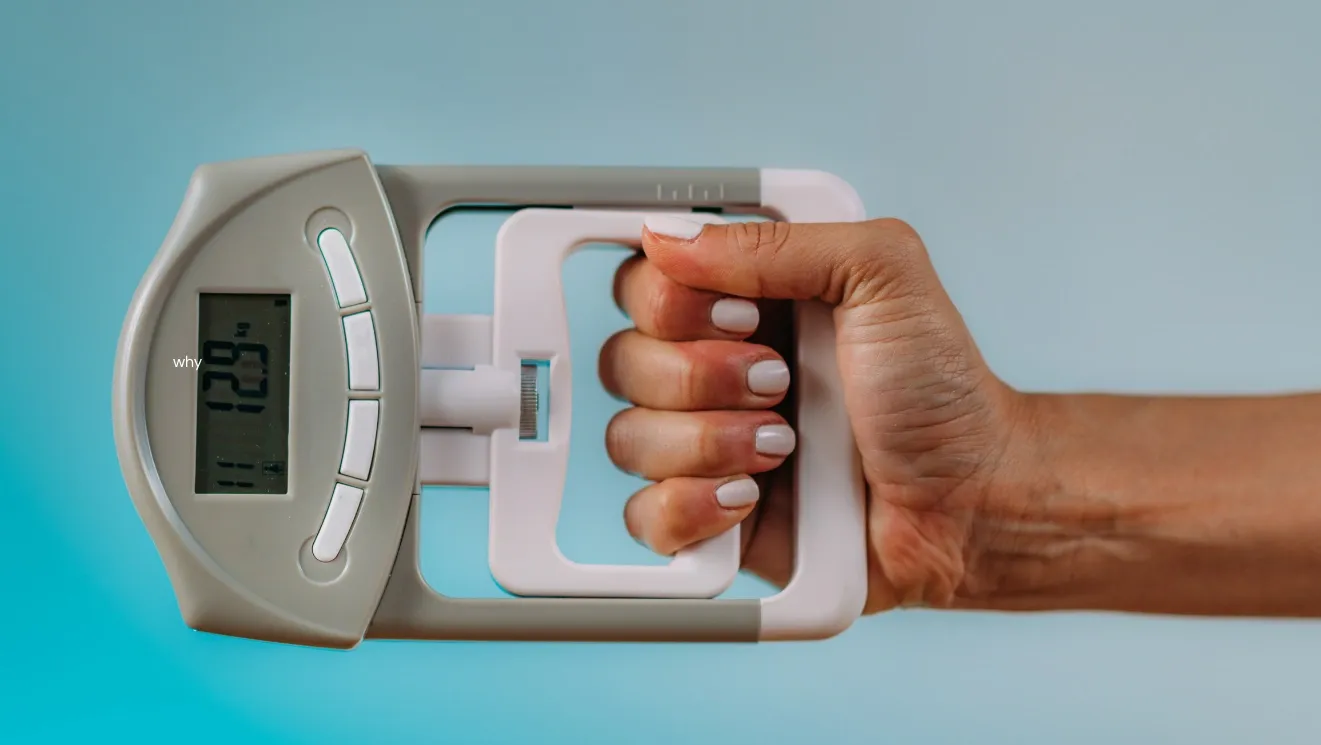
Grip strength shows how strong your upper body is and how healthy you are overall. These grip strength norms help you see if your hand strength is weak, normal, or strong for your age and gender.
Hand Strength Reference Values by Gender
The following normative data tables allow for accurate assessment of grip strength performance measured in kilograms (kg), facilitating both clinical evaluations and personal fitness monitoring.
Male Grip Strength Norms (in kg)
| Age Group | Weak | Normal Range | Strong |
| 10-11 | < 12.6 | 12.6-22.4 | > 22.4 |
| 12-13 | < 19.4 | 19.4-31.2 | > 31.2 |
| 14-15 | < 28.5 | 28.5-44.3 | > 44.3 |
| 16-17 | < 32.6 | 32.6-52.4 | > 52.4 |
| 18-19 | < 35.7 | 35.7-55.5 | > 55.5 |
| 20-24 | < 36.8 | 36.8-56.6 | > 56.6 |
| 25-29 | < 37.7 | 37.7-57.5 | > 57.5 |
| 30-34 | < 36.0 | 36.0-55.8 | > 55.8 |
| 35-39 | < 35.8 | 35.8-55.6 | > 55.6 |
| 40-44 | < 35.5 | 35.5-55.3 | > 55.3 |
| 45-49 | < 34.7 | 34.7-54.5 | > 54.5 |
| 50-54 | < 32.9 | 32.9-50.7 | > 50.7 |
| 55-59 | < 30.7 | 30.7-48.5 | > 48.5 |
| 60-64 | < 30.2 | 30.2-48.0 | > 48.0 |
| 65-69 | < 28.2 | 28.2-44.0 | > 44.0 |
| 70-99 | < 21.3 | 21.3-35.1 | > 35.1 |
Female Grip Strength Norms (in kg)
| Age Group | Weak | Normal Range | Strong |
| 10-11 | < 11.8 | 11.8-21.6 | > 21.6 |
| 12-13 | < 14.6 | 14.6-24.4 | > 24.4 |
| 14-15 | < 15.5 | 15.5-27.3 | > 27.3 |
| 16-17 | < 17.2 | 17.2-29.0 | > 29.0 |
| 18-19 | < 19.2 | 19.2-31.0 | > 31.0 |
| 20-24 | < 21.5 | 21.5-35.3 | > 35.3 |
| 25-29 | < 25.6 | 25.6-41.4 | > 41.4 |
| 30-34 | < 21.5 | 21.5-35.3 | > 35.3 |
| 35-39 | < 20.3 | 20.3-34.1 | > 34.1 |
| 40-44 | < 18.9 | 18.9-32.7 | > 32.7 |
| 45-49 | < 18.6 | 18.6-32.4 | > 32.4 |
| 50-54 | < 18.1 | 18.1-31.9 | > 31.9 |
| 55-59 | < 17.7 | 17.7-31.5 | > 31.5 |
| 60-64 | < 17.2 | 17.2-31.0 | > 31.0 |
| 65-69 | < 15.4 | 15.4-27.2 | > 27.2 |
| 70-99 | < 14.7 | 14.7-24.5 | > 24.5 |
Key Insights from Grip Strength Data
Analysis of these normative values reveals several important patterns in hand strength development and maintenance across the lifespan:
- Peak Performance Period: Both males and females reach maximum grip strength during the 25-29 age bracket, with men averaging 37.7-57.5 kg and women averaging 25.6-41.4 kg in the normal range.
- Gender Differences: Male grip strength consistently exceeds female values by approximately 40-60% across all age categories, reflecting biological differences in muscle mass, hormonal profiles, and skeletal structure.
- Developmental Progression: Adolescents experience significant strength gains between ages 10-19, with male grip strength nearly tripling from childhood to late adolescence.
- Age-Related Decline: After peaking in the late twenties, grip strength demonstrates a gradual decline that accelerates after age 50, with the most pronounced reductions occurring after age 70.
Testing Methodology and Standardization
To ensure accurate measurement and meaningful comparison to these norms, proper testing protocols should be followed:
- Equipment Selection: Use a calibrated hand dynamometer, preferably the same model used to establish these reference values (Camry Electronic Hand Dynamometer).
- Hand Position: Adjust the dynamometer handle to fit the hand or maintain a consistent setting for all measurements.
- Body Alignment: Standardize the position of wrist, elbow, and shoulder—typically standing with the arm at the side and elbow bent at 90 degrees.
- Testing Procedure: Perform multiple trials (typically 3) with adequate rest between attempts to identify maximum strength capacity.
- Hand Dominance: Test both dominant and non-dominant hands separately, or focus consistently on the dominant hand for longitudinal tracking.
- Result Interpretation: Compare measurements to age and gender-appropriate norms, recognizing that the dominant hand typically exhibits 10-15% greater strength.
Clinical and Functional Significance
Grip strength measurements provide valuable insights beyond simple hand function assessment:
- Overall Health Indicator: Research consistently demonstrates correlations between grip strength and general health status, including associations with cardiovascular health, cognitive function, and mortality risk.
- Predictive Value: Declining grip strength often precedes broader functional limitations, serving as an early warning sign for potential health concerns.
- Rehabilitation Benchmark: These normative values establish essential reference points for tracking recovery following upper extremity injuries or neurological conditions.
- Training Progress Marker: Strength athletes and fitness enthusiasts can utilize these standards to evaluate training effectiveness and set realistic performance goals.
Improvement Strategies
For individuals seeking to enhance grip strength relative to these normative standards:
- Progressive Resistance Training: Implement targeted exercises like farmer’s walks, dead hangs, and pinch grip training with gradually increasing loads.
- Specificity Principle: Focus on exercises that replicate the grip position used during testing to maximize carryover.
- Consistent Assessment: Retest grip strength every 4-6 weeks during improvement programs to track progress and adjust training accordingly.
- Complementary Nutrition: Support muscle development with adequate protein intake (1.6-2.2g/kg of body weight) and overall caloric sufficiency.
FAQs
What is normal grip strength for adults?
Normal grip strength depends on age and gender. Men aged 25-29 typically range from 37.7-57.5 kg. Women the same age usually measure between 25.6-41.4 kg.
How often should grip strength be measured?
For general fitness, check every 3-6 months. During rehab or training, check more often (every 2-4 weeks). Don’t test daily as normal changes might confuse results.
What factors affect grip strength test accuracy?
Time of day, recent activity, hand temperature, test position, equipment setup, and motivation all matter. Keeping these the same helps get true results.
Can grip strength predict overall health?
Yes, research shows grip strength can indicate general health. Lower grip strength has been linked to higher death risk, worse brain function, and poorer physical ability.
How quickly can grip strength improve with training?
With regular, increasing resistance training for grip, most people see results in 4-6 weeks. You can gain 5-20% over 3 months, depending on how fit you start.