Most sports bettors lose. The math demands it. For every $100 placed at standard -110 odds, bookmakers keep roughly $4.54, a margin that compounds over hundreds of wagers until your bankroll runs dry.
The Wall Street Journal has reported that fewer than 100 people globally can sustain win rates of 55% over time, and most of those belong to professional syndicates with teams of statisticians wagering millions each week.
So the question becomes practical: what separates the small percentage who profit from the overwhelming majority who do not?
The answer lies in the process. Profitable bettors treat wagering as a discipline with defined rules, mathematical principles, and emotional guardrails. They accept that winning 56% of bets qualifies as elite performance.
They understand that a single percentage point in win rate can translate to thousands of dollars over a season. And they avoid the behavioral traps that drain recreational bettors month after month.
The Breakeven Problem
Before discussing strategy, the numbers need to be plain. Winning half your bets does not mean you break even.
At standard -110 lines, where you risk $110 to win $100, the breakeven threshold sits at 52.38%. Win fewer than that, and you lose money over time regardless of how many correct picks you make.
This vigorish, the bookmaker’s commission, creates a structural disadvantage. Tunica Travel puts it simply: winning 50% leaves you 4.55% in the red. Every strategy that follows aims to overcome this built-in deficit.
Value Betting as a Foundation
Professionals identify wagers where the odds offered exceed the true probability of an outcome. This is value betting. If you calculate that a team has a 55% chance to win, but the sportsbook prices them at odds implying 50%, you have found value.
The concept sounds straightforward. The execution requires work. You need to develop your own probability assessments through statistical analysis, then compare those to market prices.
According to Topend Sports, professional bettors typically look for edges of 2% to 5% or higher. An expected value of +5% means you expect to profit $5 for every $100 wagered over time.
Expected value calculations follow a basic formula: multiply your probability of winning by the potential payout, then subtract your probability of losing multiplied by your stake. Any positive result indicates a profitable bet over the long run.
Reducing Costs Through Sportsbook Promotions
Sportsbooks compete for new users by offering sign-up bonuses, deposit matches, and free bet credits. These promotions lower the effective cost of placing wagers when used correctly. A $100 deposit match, for instance, doubles your starting bankroll without requiring additional risk.
Finding valid bonus codes, comparing welcome offers across platforms, and stacking reload bonuses all reduce the amount of personal capital you need to expose.
The catch is wagering requirements. Most bonuses require you to bet through the bonus amount multiple times before withdrawing. A 10x rollover on a $50 bonus means placing $500 in wagers. Factor this into your calculations before claiming any offer.
Line Shopping Changes Everything
Different sportsbooks post different lines on the same game. This variance creates opportunity.
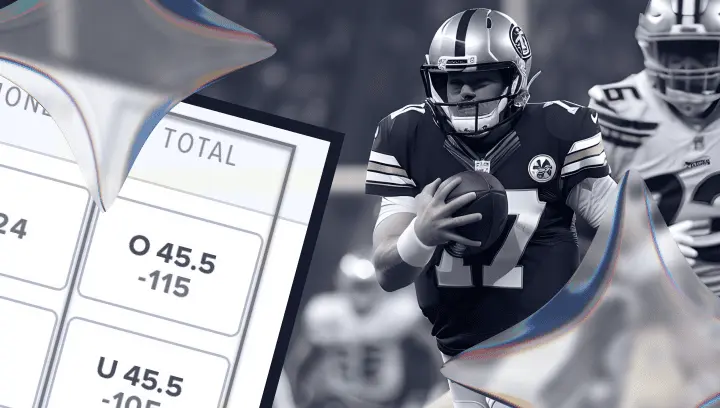
Odds Shopper provides a useful illustration: at -110, you need 52.38% wins to break even; at -105, you need only 51.22%. That 1.16 percentage-point difference seems minor until you project it across volume.
Over 1,000 bets at $100 per wager, the expected profit difference reaches $1,160.
RELATED ARTICLES



Line shopping requires accounts at multiple sportsbooks and the discipline to check each before placing a bet. The process takes time. It also represents one of the few edges available to recreational bettors without advanced modeling skills.
BettingUSA notes that the best professional bettors win 55% to 56% of their tossup wagers. When margins are that thin, finding an extra half point on a spread or slightly better moneyline odds compounds meaningfully across a season.
Bankroll Management Rules
Money management determines survival. Sports Betting Dime reports that most experts recommend wagering between 1% and 3% of your total bankroll per bet. Professional bettors rarely exceed 1% on any single event.
The logic is mathematical. A 1% unit size allows you to absorb losing streaks without depleting your funds. At 2%, which SBO.net describes as a reasonable medium, you can withstand variance while still building capital during winning periods.
Aggressive bettors sometimes push to 4% or 5% per wager, but this increases the risk of ruin substantially.
A bankroll of $1,000 with a 2% unit means betting $20 per wager. You would need to lose 50 consecutive bets to go broke. That cushion matters because even profitable bettors endure extended cold stretches.
Chasing Losses Destroys Bankrolls
The urge to recover money after a loss leads to larger bets, longer shots, and abandoned strategy. Birches Health identifies loss chasing as the most frequent behavior among people who develop gambling problems.
Research published by the National Institutes of Health confirms that loss chasing is a defining feature of problem gambling, with bettors wagering more than intended in an attempt to recover, then losing additional money.
The solution is mechanical. Set your unit size before each week or month, and do not deviate based on results.
If you lose three bets, your next wager remains the same percentage of your remaining bankroll. Emotional responses to short-term outcomes have no place in a profitable betting operation.
Emotions and Data
Gut feelings, favorite teams, and hunches produce entertaining wagers but poor returns. Sofascore advises that emotions cloud judgment, leading to impulsive decisions that undermine strategy.
This means ignoring your rooting interests when placing bets. It means not wagering on teams you hate out of spite. It means treating each bet as a mathematical proposition stripped of narrative or feeling.
The Parlay Trap
Parlays pay large sums relative to the stake. They also lose at rates that make long-term profit nearly impossible. Wikipedia’s research notes that parlays now account for over 60% of revenue for some sportsbooks.
Bookmakers exploit the appeal of big payouts while not increasing odds commensurate with actual probabilities.
Leans.AI states it plainly: mathematically, parlays are almost never worth it. If one leg loses, the entire bet fails. The win rate required for parlay profitability exceeds what most bettors can achieve on straight wagers.
Birches Health reports that for every bettor who hits a substantial parlay, thousands more lose. The entertainment value may justify occasional parlay bets, but treating them as a primary strategy leads to predictable losses.
Record Keeping and Adjustment
You cannot improve what you do not measure. SBO.net emphasizes that keeping accurate records helps bettors track profits and losses while allowing introspection on what works and what fails.
Record the date, sport, bet type, odds, stake, result, and your reasoning for each wager.
Over time, patterns emerge. You might discover you perform better on underdogs than favorites, or that your NFL picks outperform your NBA picks. This data allows refinement. Without it, you are guessing about your own performance.
Realistic Expectations
BettorEdge reports that consistent, profitable bettors typically achieve an ROI between 4% and 10% over the long term. Elite Pickz notes that professionals rarely sustain win rates above 56%, with many operating at 53% to 54%.
These numbers should calibrate expectations. A 5% ROI means $50 profit per $1,000 wagered. At 100 bets per month with $20 stakes, that translates to $100 monthly profit.
The income potential scales with volume and bankroll size, but the percentages remain modest even at the highest skill levels.
Combining Strategies
Professional bettors layer multiple approaches. Value betting identifies positive expected value wagers. Line shopping maximizes the odds obtained. Bankroll management controls risk exposure. Record keeping enables ongoing refinement.
Each component reinforces the others. No single edge makes betting profitable. The accumulation of small advantages, applied consistently across thousands of wagers, separates winners from the majority who fund sportsbook profits.
The strategies described here are accessible to anyone willing to put in the analytical work and maintain discipline through both winning and losing periods.
Conclusion
Profitable sports betting is not about luck, hot streaks, or insider tips. It is about structure, discipline, and math.
Understanding breakeven points, identifying value, reducing costs through promotions, and consistently finding better odds all contribute to a small but meaningful edge.
Bankroll management protects you from inevitable losing streaks, while emotional control keeps your strategy intact. Record keeping ensures you learn from every wager, and realistic expectations prevent frustration.
The bettors who succeed long term are not the boldest or the loudest. They are the most consistent. By applying these principles patiently and objectively, you give yourself the best possible chance to stay profitable in a market designed for you to lose.
RELATED ARTICLES