
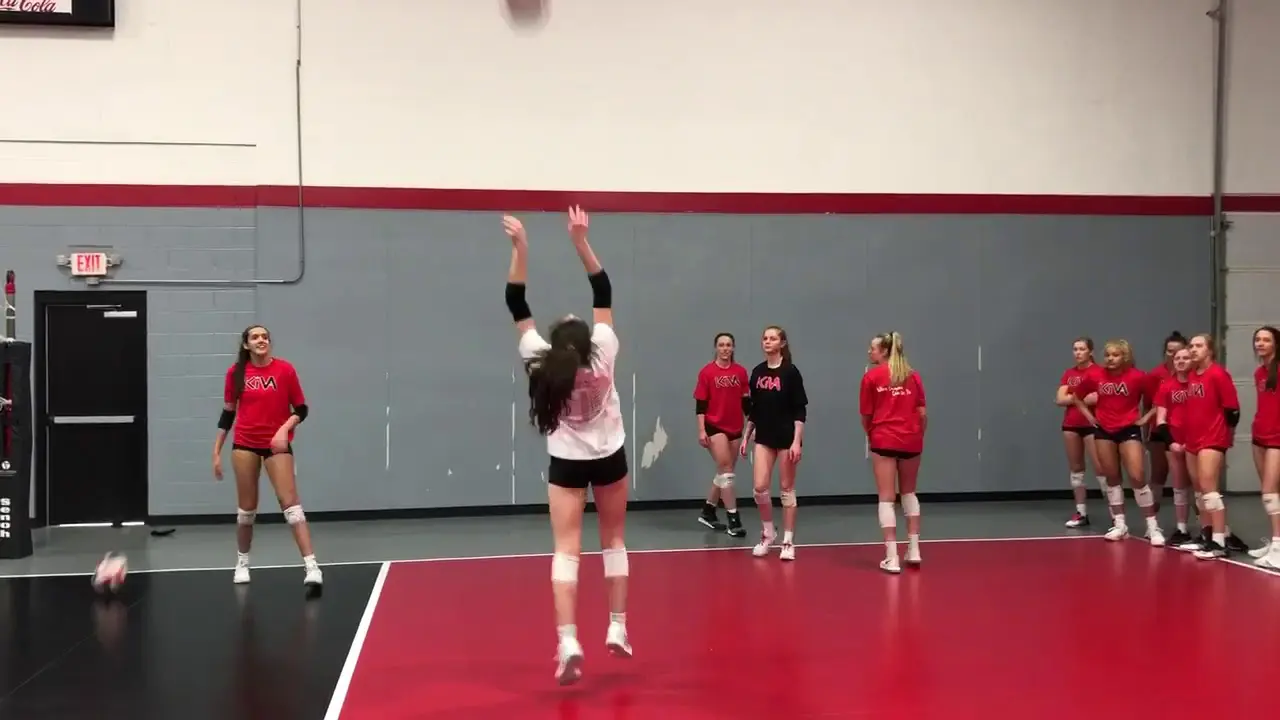
Volleyball coaching clinics offer an excellent means for seasoned coaches to refine their expertise, share ideas, and rehearse their coaching skills. As the game progresses, so do the techniques that coaches use to better players’ skills.
Mature coaches taking part in any of these clinics look for drills and methods that can enhance the level of play of their teams.
These clinics focus on methods, tactics and mentality. As a result, coaches are given more to work with in the practices and matches to improve player and team development.

Improving technical competencies using specific drills.
A major running theme at volleyball coaching clinics is the improvement of technical skills. A volleyball team at high-performance depends on the performance of several fundamental skills, including serving, passing, setting, attacking, and blocking.
Advanced coaches work on the abilities that a player acquires during their formative playing years as these things must be regularly worked on as a player gets ready for matches where he must perform at the peak of his abilities under pressure situations.
Experienced coaches learn to embed advanced footwork and timing in drills relating to passing so that optimum utilization by the player for receiving serves and attacks is achieved. Techniques like a “step and shuffle” pattern with the footwork are emphasized so the players can move quickly and get into position to pass.
In a similar way, advanced setup drills aim at enhancing the setter’s capacity to assess ball flight, the hitter’s run-up, and various game situations in relation to the setup.
The volleyball coaching clinics also teach advanced blocking drills, in which the coach reads the hitter’s approach and times the jump with appropriate hand positioning.
These drills enhance the blocking ability of the individual player while improving communication and coordinating the defence for better blocking by the team.
Tactical Approaches for Advanced Strategies
Specialist volleyball coaching clinics help elite coaches to delve into advanced technical tactics. In high-level volleyball, more than technical prowess, the players must be solid in terms of strategy and game management.
An important area is the development of offensive and defensive systems. Clinics usually offer detailed plans for teams and individual players. Whether it be the 6-2 offense or 5-1 offense, coaches learn to use different systems based on team strengths and weaknesses.
Advanced coaching methods also employ initiatives to grow defensive systems, a perimeter defense, or a middle-up defense whose goal is to disrupt the process opponents are using to score.
Another important point touched upon in these clinics is match management, or how to change one’s tactics during a game. By assessing the other team’s behavior and tactics, coaches adapt and adjust strategy.
For instance, they may go to a high-ball offense and then a quick tempo offense to exploit bad blocks by the opponent. The tactical exercises are useful for the coach and give flexibility to the team and help deal with various situations.
Mental Toughness and Leadership Development
Beyond physical skills and tactics, volleyball coaching clinics also emphasize the importance of mental toughness and leadership in high-performance environments.
It’s understood by coaches that the tactical side of the game more often than not dictates whether a side wins or loses especially in close situations when the pressure is high.
The importance of helping athletes develop and learn to use resilience as a weapon is one subject. Clinics usually contain a drill and discussion on getting players to remain calm and collected, whether serving at match point or performing in a critical defensive scenario.
Visualisation and mindfulness training techniques are frequently used with experienced coaches to help them teach their players how to control their emotions and remain mentally focused during the course of the game.
Important topic of these clinics is also Leadership development. It is encouraged for coaches to recognize and develop leadership qualities in players.
In volleyball, leadership is not only the team captain or senior players, but also creating a space for all players to contribute to the team and its decisions.
These include supporting communication, encouraging accountability in the team, and encouraging players to perform their roles.
Leveraging Video Analysis for Performance Improvement
Integrating technology into volleyball training is gaining in popularity, and volleyball coaching clinics are at the forefront of this development.
The coaches are getting advanced video analysis of their teams and players for a deeper analysis of players and teams.
By using video footage, coaches are able to break down individual movements and wider team patterns. Players see how they could improve.
Video analysis can also help make drills that correct technical errors, such as body shape when passing or timing of blocks being out of sync. When a coach can pinpoint these nuances, they can really target their corrections for big results.
Moreover, the clinics instruct coaches on conducting video analysis before matches to access opposition strategies, thereby designing counter-strategies that give their team a competitive edge.
Integrating Cross-Training for Overall Athletic Development
Cross-training is an increasingly popular topic at volleyball coaching clinics and its importance in advanced coaching will be discussed here. Coaches with experience on the other hand value complementary exercises and drills from differing sports as vital to becoming more athletic in volleyball.
Volleyball practice often includes strength training, agility drills, and plyometric exercises. Mentors are shown ways to create off-season programs to develop strength, speed, agility and more with an eye on performance.
Furthermore, incorporating other forms of exercise will aid every athlete in becoming more flexible, stable and stronger in the core area, thereby preventing injuries and helping to move better overall.
Combining these three will not only make players better in volleyball but also give them the edge with more complete athleticism. Clinics will demonstrate how to run these programs effectively so that each athlete’s physical growth matches his or her volleyball technique.
Team Dynamics and Communication Drills
The tools that a volleyball coach obtains from coaching clinics can help their team to communicate better both on and off the court. At the advanced level, chemistry is needed for performing as a team.
The aim of these clinics is a strong team culture based on trust, respect and encouraging open and candid communication with the team.
A game-like environment should be created by a certain activity through which the players will communicate or non-communicate. Coaches come to better understand how to set an environment where players feel freed to offer feedback, offer reassurance and play on the fly.
More or less, the setters, liberons and outside hitters on the court have to keep communicating with one other so the player can execute.
Volleyball coaching clinics advocate for emotional intelligence while working in teams. Coaches acquire skills to identify and deal with the informal issues which are threatening team performance.
Clinics talk about the monitoring of the conflicts between team parties or the way to handle the players who are demotivated or lack self-confidence. By approaching a few downfalls, coaches can have a better team culture and effectiveness.
Final
The coaching clinics for volleyball allow experienced mentors to learn new strategies and tools for the betterment of their coaching.
Whether it is refining technical abilities, building tactical capability, enhancing mental toughness or strengthening team culture – the best clinics will offer coaches the complete package.
The training facilities are equipped with modern technical aids; cross training activities in coordination with some of India’s best coaches, and leadership development are all part of the plan.
Experienced coaches can improve their ability to lead their teams to success by attending Volleyball coaching clinics. They can stay at the forefront of the sport. Invaluable insight from clinics leaves lasting impact on the coach’s and team’s performance.
But, it takes time to accept changes made at these elite clinics. Advanced techniques and drills will help coaches create an environment that can help players benefit individually and as part of a team.