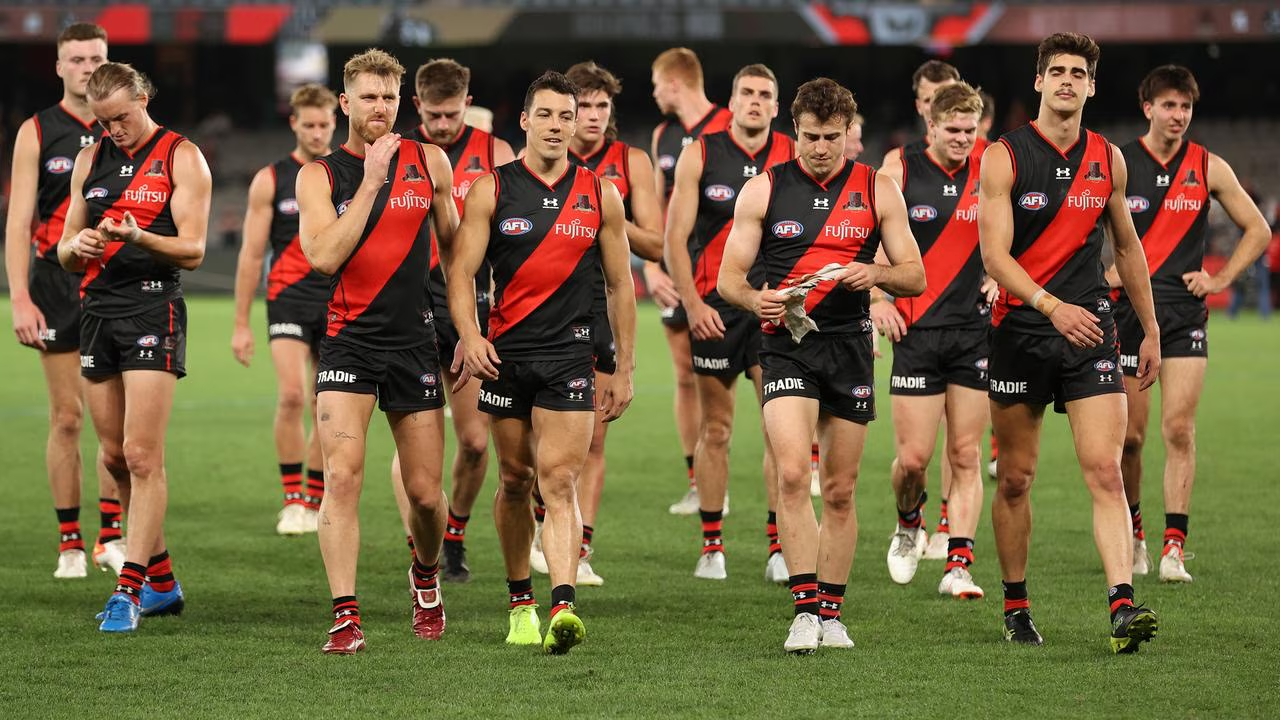
Under the AFL’s $16.49M soft salary cap, Essendon have invested heavily in leadership, locking in captain Zach Merrett on a six‑year, roughly $6.5M contract to 2028.
A 9–14 finish left them 13th in 2024, and the club has now missed finals for three straight years. With no finals win since 2004, the Bombers are chasing a breakthrough.
List manager Matt Rosa has prioritized high‑paid veterans such as Stringer ($800K), Wright ($700K) and Heppell ($650K) as part of an aggressive push, while Brad Scott must deliver results in year three.
Explore detailed player profiles and career earnings by clicking on any Essendon Bombers player’s name.
Essendon Bombers’ Biggest Contracts
- Zach Merrett – Captain/Midfielder: Zach Merrett signed a six-year extension through 2028 worth approximately $6.5 million total. He reportedly earns $1-1.1 million annually as the 2021 Crichton medallist and three-time All-Australian. The 29-year-old averaged 29.8 disposals per game in 2024, finishing 7th in Brownlow Medal voting despite Essendon’s struggles.
- Jake Stringer – Forward: Jake Stringer extended through 2027 on a deal worth approximately $4 million total. The former Western Bulldogs premiership player earns an estimated $800,000-850,000 annually. He kicked 42 goals in 2024 despite Essendon finishing 13th, providing elite forward firepower on a struggling list.
- Darcy Parish – Midfielder: Darcy Parish signed a six-year extension through 2027 worth approximately $4.5 million total. He earns an estimated $700,000-800,000 annually after winning the 2021 Crichton Medal alongside Merrett. The 26-year-old averaged 27.3 disposals in 2024 but struggled for finals-level impact.
- Peter Wright – Key Forward: Peter Wright extended through 2028 on a deal worth approximately $4 million total. The former Gold Coast player earns an estimated $650,000-750,000 annually after joining Essendon in 2020. He kicked 48 goals in 2024, leading the Bombers’ forward line despite inconsistent supply.
- Dyson Heppell – Midfielder/Leadership: Dyson Heppell remains on a veteran contract earning an estimated $600,000-700,000 annually through 2025. The 32-year-old former captain played 18 games in 2024, providing leadership despite reduced output. His high salary for limited production creates cap pressure.
Essendon’s top-five contracts total approximately $24-26 million across multiple years. The Bombers consume roughly 38-42% of salary cap space on these five players. This concentration creates imbalanced spending with limited depth behind the top tier.
How Essendon Manages the $16.49M Salary Cap
The AFL’s salary cap for 2025 features a $16.49 million soft cap and $17.16 million hard cap. Essendon operates at maximum capacity with minimal remaining space after aggressive 2020-2023 spending spree.
The Bombers allocate 40-45% of salary cap to their top six highest-paid players. This concentration mirrors Carlton’s star-heavy approach but delivers worse results. Essendon finished 13th with nine wins, while Carlton managed ten wins in 11th position.
Essendon benefits from no recent father-son or academy picks providing salary cap relief. The club’s last significant discount came with Matt Guelfi (Pick 42, 2016 Next Generation Academy). This forces Essendon into expensive free agency and trade market recruitment.
The Bombers cleared minimal salary space before 2024, losing only Devon Smith ($500K retirement) and Jake Kelly ($300K delisting). These moves created approximately $800,000 cap flexibility but weren’t enough to prevent salary cap squeeze.
Essendon faces critical pressure in 2025-2026 with Nic Martin ($550K) and Archie Perkins ($400K) due for extensions. The club must navigate aging veterans like Heppell ($650K) and Mason Redman ($500K) while maintaining list competitiveness.
Essendon’s Biggest Salary Cap Decision: The Jake Stringer Gamble
Essendon’s most significant salary cap decision came recruiting Jake Stringer from Western Bulldogs in 2017, then extending him in 2023 through 2027. The club committed approximately $8 million across his entire Bombers tenure for a forward with inconsistent output.
RELATED ARTICLES



Stringer arrived via trade costing Pick 23 and future second-rounder. Essendon initially paid $650,000-700,000 annually before extending him at $800,000-850,000 through 2027. The increased investment came despite Essendon missing finals consistently during his tenure.
His 2024 output of 42 goals justified the investment on paper. However, Stringer’s goals came in low-pressure games with Essendon eliminated from finals by Round 19. His big-game performances remain absent, contrasting his 2016 Bulldogs premiership heroics.
The Stringer extension represents Essendon’s pattern of rewarding good statistical years without achieving team success. The club extended Zach Merrett ($1.1M) and Darcy Parish ($750K) to elite contracts despite zero finals wins since 2004.
This approach differs from Collingwood’s ruthless standards demanding team success for premium pay. The Magpies moved on from Adam Treloar despite elite statistics. Essendon rewards individual output regardless of team performance, creating salary cap inefficiency.
Salary Cap Strategy: Essendon vs Richmond
Essendon employs a veteran-heavy model allocating 40-45% of cap space to six established players earning $650,000-1.1 million.
Richmond pursues a list refresh strategy spreading 35% across ten transitioning players earning $400,000-700,000.
The Bombers maintain expensive veterans like Dyson Heppell ($650K), Mason Redman ($500K), and Andy McGrath ($550K) into their 30s.
Richmond moved on from dynasty heroes Dustin Martin ($1.2M retired), Dion Prestia ($700K retired), and Shane Edwards ($500K retired), creating cap space for youth.
Essendon’s philosophy targets immediate finals breakthrough through experience. Richmond accepts short-term pain for long-term list building.
The Tigers finished 18th with 4 wins in 2024 but secured top draft picks. Essendon finished 13th with 9 wins, stuck in no-man’s land without youth or success.
The traditional rivals meet twice annually with Richmond holding premiership bragging rights from 2017, 2019, and 2020 dynasty.
Essendon hasn’t defeated Richmond in finals since 1984. The spending contrast shows: Richmond won three flags before rebuilding, Essendon spends heavily without finals success.
FAQs
How much does Zach Merrett earn at Essendon?
Zach Merrett earns an estimated $1-1.1 million annually on his six-year extension through 2028 worth approximately $6.5 million total. The three-time All-Australian captain is Essendon’s highest-paid player, averaging 29.8 disposals in 2024 despite the club finishing 13th with 9 wins.
What is Jake Stringer’s contract worth?
Jake Stringer signed an extension through 2027 worth approximately $4 million total, earning an estimated $800,000-850,000 annually. The 30-year-old forward kicked 42 goals in 2024 as Essendon’s leading goalkicker, though he’s delivered zero finals wins across seven Bombers seasons.
Does Essendon have salary cap problems?
Essendon operates at near-maximum salary cap capacity with minimal remaining space under the $16.49 million soft cap. The club faces pressure with Nic Martin and Archie Perkins due for extensions while maintaining expensive veterans like Dyson Heppell ($650K) and Mason Redman ($500K).
Why hasn’t Essendon’s spending delivered finals success?
Essendon invests 40-45% of salary cap in six players but hasn’t won a final since 2004, the AFL’s longest active drought at 20 years. The club rewards individual statistics like Zach Merrett’s disposals without demanding team success, creating salary cap inefficiency. Richmond won three flags with similar spending before rebuilding, showing ruthless standards matter.