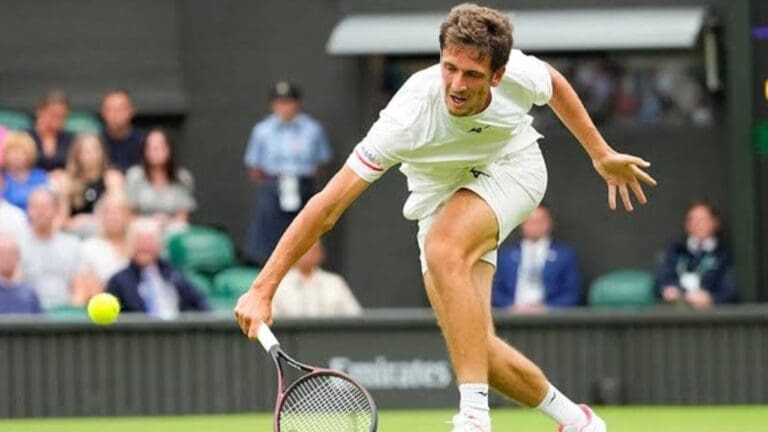
Magnus Norman is a name synonymous with excellence in Swedish tennis, both as a world-class player and a legendary coach.
Once ranked as high as world No. 2, Norman battled through injuries to forge a legacy that extends far beyond his playing days. Today, he is celebrated for transforming the careers of stars like Stan Wawrinka and Robin Söderling.
In this article, you will know Magnus Norman’s Net worth, career earnings, career overview, stats, relationship, and more.
Magnus Norman’s Biography
| Detail | Information |
|---|---|
| Full Name | Magnus Norman |
| Date of Birth | May 30, 1976 |
| Age | 49 |
| Birthplace | Filipstad, Sweden |
| Nationality | Swedish |
| Height | 1.88 m (6 ft 2 in) |
| Turned Pro | 1995 |
| Retired | 2004 |
| Net Worth | ~$4.5 Million – $6 Million (Est.) |
| Career Prize Money | $4,545,489 (ATP Tour) |
| Wife | Jessica Wahlgren (Married 2022) |
| Coach | Coach of Stan Wawrinka (Current/Past) |
| Academy | Good to Great Tennis Academy (Co-Founder) |
Early Career
Magnus Norman was born in Filipstad, Sweden, and showed immense promise from a young age. Growing up in a country with a rich tennis heritage led by legends like Björn Borg and Stefan Edberg, Norman was part of the next generation of Swedish talent. He turned professional in 1995 at the age of 19.
His early years on tour were marked by a steady climb up the rankings. He captured his first ATP title in 1997 in Bastad, winning on home soil, which remains a cherished memory.
Known for his incredible fitness and heavy topspin groundstrokes, he quickly established himself as a clay-court specialist who could grind down opponents with relentless consistency.
Professional Career
Magnus Norman’s peak came at the turn of the millennium. The year 2000 was his masterpiece; he won five ATP titles and reached the final of the French Open, where he famously saved 10 match points against Gustavo Kuerten before eventually falling in four sets. This run propelled him to a career-high ranking of World No. 2.
Despite his success, Norman’s playing career was cut short by severe hip injuries. He underwent multiple surgeries and officially retired in 2004 at the young age of 27. However, retirement was just the beginning of his second act. He transitioned into coaching and founded the Good to Great Tennis Academy in Stockholm.
His coaching career is legendary; he guided Robin Söderling to two French Open finals and helped Stan Wawrinka win three Grand Slam titles, transforming him from a top-20 player into a multiple major champion.
In 2025, he continued to work with Wawrinka, proving their partnership remains one of the most enduring in tennis history.
Wife
Magnus Norman is married to Jessica Wahlgren, a well-known Swedish makeup artist and influencer. The couple tied the knot in a beautiful, star-studded ceremony in June 2022 after being together for several years.
Jessica Wahlgren often shares glimpses of their life together on social media, including their travels and time spent at their luxury home. She has brought a new level of public visibility to Norman’s personal life, blending the worlds of sports and entertainment in Sweden.
Before marrying Jessica, Norman was in a high-profile relationship with Swiss tennis star Martina Hingis. He has twin children, Elin and Estelle, from a previous relationship, whom he prioritizes deeply, famously stepping back from coaching Wawrinka in 2017 to spend more time with them.
Magnus Norman’s Net Worth Details
As of 2026, Magnus Norman’s estimated net worth is between $4.5 million and $6 million. His wealth is a combination of his playing career earnings and his successful post-retirement ventures.
Career Earnings
| Year | Prize Money (Approx.) | Key Highlights |
|---|---|---|
| 2000 | ~$1.6 Million | French Open Final, 5 Titles |
| 1999 | ~$500,000+ | Consistent Tour Results |
| 1997-1998 | ~$500,000+ | First ATP Title |
| Total Career | ~$4.5 Million | Official ATP Prize Money |
Career Stats
| Stat | Value |
|---|---|
| Career High Ranking | No. 2 (June 2000) |
| Singles Titles | 12 |
| Grand Slam Best | Finalist (French Open 2000) |
| Career Win/Loss | 244-177 (ATP Tour) |
| Titles on Hard Court | 5 |
| Titles on Clay | 7 |
FAQs
1. Who does Magnus Norman coach?
Magnus Norman is most famous for coaching Stan Wawrinka. He has also coached Robin Söderling and Thomas Johansson. He currently works with Wawrinka and oversees players at his Good to Great Tennis Academy.
2. Did Magnus Norman win a Grand Slam?
As a player, Magnus Norman reached the final of the 2000 French Open but lost to Gustavo Kuerten. As a coach, he has guided Stan Wawrinka to three Grand Slam titles (Australian Open, French Open, US Open).
3. Who is Magnus Norman’s wife?
Magnus Norman is married to Jessica Wahlgren, a Swedish makeup artist. They married in June 2022.
4. How much is Magnus Norman worth?
His net worth in 2025 is estimated to be around $4.5 million to $6 million. This wealth comes from his career prize money of over $4.5 million and his successful coaching academy.
5. Why did Magnus Norman retire?
Magnus Norman retired from professional tennis in 2004 due to persistent and severe hip injuries. He was only 27 years old at the time of his retirement.