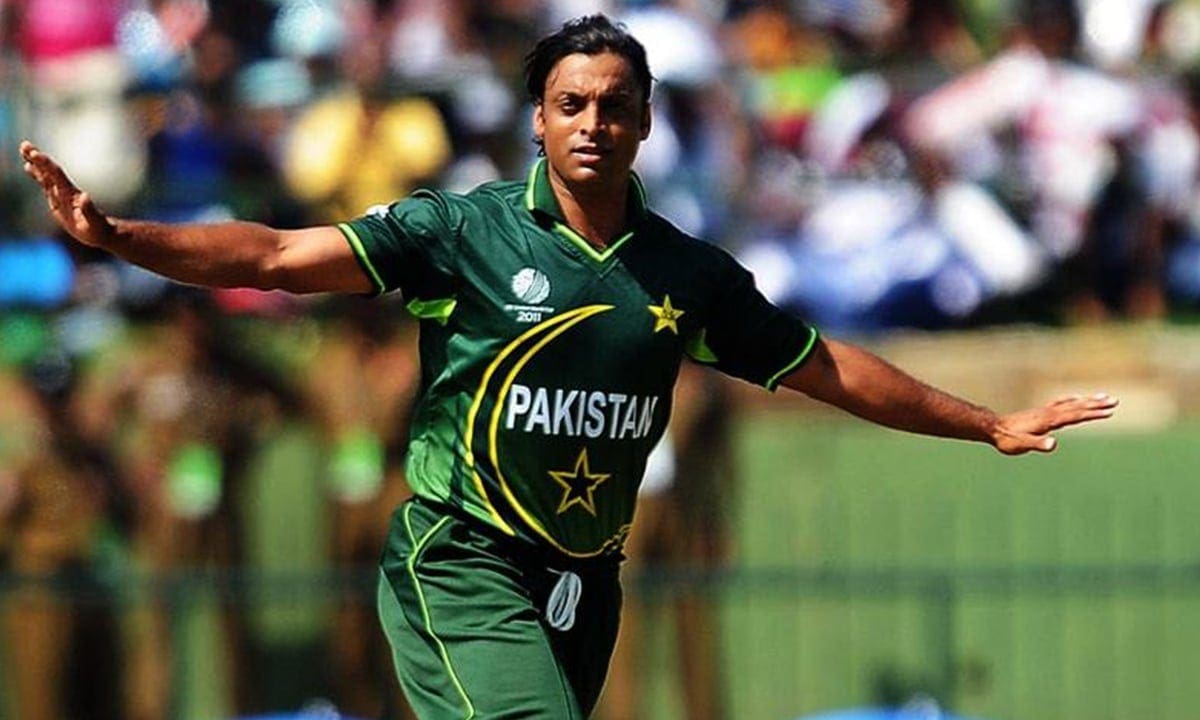
When Shoaib Akhtar unleashed a 161.3 km/h thunderbolt against England during the 2003 ICC World Cup, he set a mark that stands untouched 22 years later. He is still the fastest bowler in the world.
No bowler, despite decades of evolution in training, technology, and athletic science, has surpassed the Rawalpindi Express. That’s not to say modern fast bowlers aren’t spectacular. They are. But Akhtar’s record exists in a category of its own, one that might never fall.
Yet the question shifts depending on how you ask it.
Who holds the fastest delivery ever? Shoaib Akhtar.
Who’s the fastest active bowler in 2025?
That’s Mitchell Starc, Mark Wood, or one of the emerging Indian pace sensations. This guide covers both: the legacy that defines the sport and the active threats chasing it.
Master Rankings: Fastest Bowlers of All Time
| Rank | Bowler | Country | Speed (km/h) | Speed (mph) | Match/Context | Year |
| 1 | Shoaib Akhtar | Pakistan | 161.3 | 100.23 | World Cup vs England | 2003 |
| 2 | Brett Lee | Australia | 161.1 | 100.1 | vs New Zealand | 2005 |
| 3 | Shaun Tait | Australia | 161.1 | 100.1 | vs England | 2010 |
| 4 | Mitchell Starc | Australia | 160.4 | 99.57 | vs New Zealand | 2015 |
| 5 | Andy Roberts | West Indies | 159.5 | 99.12 | vs Australia | 1975 |
| 6 | Jeff Thomson | Australia | 160.6 | 99.83 | Ashes Series | 1975 |
| 7 | Fidel Edwards | West Indies | 157.7 | 97.94 | vs South Africa | 2003 |
| 8 | Mitchell Johnson | Australia | 156.8 | 97.49 | vs England | 2013 |
| 9 | Kagiso Rabada | South Africa | 155.8+ | 96.73+ | Various Tests | 2020-2025 |
| 10 | Mark Wood | England | 153.2+ | 95.13+ | Test Matches | 2024-2025 |
The Fastest Delivery Ever Recorded: Shoaib Akhtar’s 161.3 km/h
Shoaib Akhtar isn’t just the fastest bowler in cricket history. He’s the fastest by a margin that matters.
Born in Rawalpindi, Pakistan, in 1975, Akhtar played international cricket from 1997 to 2011 with a reputation for intimidation, aggression, and raw pace that opponents dreaded.
His fastest delivery, 161.3 km/h (100.23 mph), came against England on March 22, 2003, in the World Cup.
Measured by modern radar technology, this remains the official record. No close calls. No disputed measurements from different eras. Just one bowler, one moment, one delivery that defined an era.
What separated Akhtar from other speedsters was consistency. He didn’t bowl 161 km/h once and back off.
Throughout his career, he regularly bowled at 158–160 km/h, applying sustained pressure on batsmen who knew they had microseconds to react. Batsmen didn’t relax when Akhtar came on. They tensed.
For a detailed breakdown of Akhtar’s career and impact, Cricket Bureau’s comprehensive analysis provides excellent context on how his speed evolved over his playing years.
Akhtar’s career statistics reflect this impact:
- 178 Test wickets at an average of 24.44
- 247 ODI wickets across World Cups and international tournaments
- 23 Test centuries as a batsman (yes, he could bat too)
His record for sustained pace, combined with his ability to generate movement even at extreme speeds, made him uniquely dangerous.
The question asked today isn’t whether anyone will break his record. It’s whether anyone can.
Can Anyone Break Shoaib Akhtar’s Record? The Reality Check
In the 22 years since Akhtar’s record, cricket has transformed. Sports science is more advanced. Training methods are optimized. Gym equipment, nutrition, and recovery protocols are light-years ahead of 2003. Yet the fastest deliveries recorded are still clustered around the same speeds Akhtar achieved.
Notice something about the master table above? The record-setters span different eras. Akhtar’s 2003 mark sits at the top despite 20+ years of technological advancement.
This suggests the speed plateau is less about equipment and more about human physiology, the limits of what a human arm, shoulder, and core can generate.
Modern bowlers like Mitchell Starc (Australia’s left-arm speedster) have admitted they’re not chasing Akhtar’s record with serious intent.
They’re chasing consistency, success, and longevity. Starc has sustained express pace across 15+ years, something Akhtar struggled with due to injuries. That’s a different measure of excellence.
According to research on Test cricket’s fastest bowlers, the modern generation prioritizes maintaining pace across entire spells rather than hitting one-off extremes. This shift reflects changing cricket strategy and injury management philosophy.
Who’s the Fastest Bowler in 2025? Active Players Breaking 150 km/h
The landscape of active fast bowling in 2025 reveals a new generation of pace merchants carrying the torch.
Current Fastest Active Bowlers (2025)
| Bowler | Country | Current Avg Speed (km/h) | Peak Speed (km/h) | Format Specialty |
| Mitchell Starc | Australia | 145-152 | 160.4 | Test/ODI |
| Mark Wood | England | 150+ | 153.2+ | Test |
| Haris Rauf | Pakistan | 150 | 159 (T20WC) | T20/ODI |
| Anrich Nortje | South Africa | 150+ | 155+ | Test/T20 |
| Mayank Yadav | India | 150 | 150+ | T20/Emerging |
| Jofra Archer | England | 148+ | 152+ | Test/T20 |
| Kagiso Rabada | South Africa | 150 | 155.8+ | Test/ODI |
Mitchell Starc (Australia) — 160.4 km/h Peak
Mitchell Starc isn’t just Australia’s fastest bowler. He’s the closest anyone’s come to Akhtar in the modern era. His 160.4 km/h delivery against New Zealand in 2015 remains the 4th-fastest ever recorded.
At 35 years old in 2025, Starc has achieved something remarkable: sustained pace across his entire career while maintaining movement and accuracy.
What makes Starc lethal isn’t just speed. It’s the combination of:
- Left-arm angle – creates different problems for right-handed batsmen
- 1.96-meter frame – generates steep bounce and awkward trajectories
- Yorker mastery – his death-over bowling is cricket’s most feared skill
- Swing capability – new-ball magic with reverse swing in the death
Starc now averages 145–152 km/h across formats, a speed most bowlers would dream of maintaining at his age.
His 2015 World Cup performance was a masterclass in fast bowling: 22 wickets, Player of the Tournament, and a delivery of 160.4 km/h that announced he belonged in Akhtar’s conversation.
Mark Wood (England) — 93+ mph / 150+ km/h Consistency
Mark Wood is pure pace. When England needs wickets, Wood delivers speed first and asks questions later. His recent Test performances have seen him clock speeds exceeding 93 mph (150 km/h), and when truly fired up, he approaches 94–95 mph.
Wood’s approach differs from Starc’s. He’s less about swing and movement, more about bounce and sheer intimidation. His high action and athletic build allow him to extract steep bounce that troubles top batsmen.
In the 2024–2025 Test season, Wood was one of England’s most effective pace bowlers, regularly testing Indian and Australian batsmen with pace that exceeded 150 km/h.
What separates Wood is his willingness to sustain pace across entire spells. He averages slightly below 90 mph to manage workload and injury prevention, a pragmatic approach to a brutal sport.
Haris Rauf (Pakistan) — 150+ km/h T20 Specialist
Haris Rauf represents a new generation of Pakistani pace merchants. The skiddy pacer from Pakistan regularly bowls at 150 km/h, particularly in T20 cricket. Against England in the T20 World Cup final 2022, Rauf clocked 99 mph (159 km/h).
Rauf’s strength is T20 cricket, formats where batsmen face searing pace with minimal time for adjustment.
His ability to bang the ball into the pitch and extract bounce makes him ideal for white-ball cricket. Over 206 international wickets across formats, with exceptional consistency at extreme pace.
Anrich Nortje (South Africa) — 150+ km/h Consistency
Anrich Nortje is the modern South African pace answer to Dale Steyn’s legacy. Regularly clocking 150+ km/h in international cricket, Nortje combines express pace with accuracy that’s rare in fast bowling.
His test cricket performance has been exceptional, and he’s one of the few active bowlers who can genuinely claim to bowl “express pace” across entire spells without significant drop-off in speed. According to detailed Test cricket analysis, Nortje ranks among the most consistent modern pacers.
Jofra Archer (England) — The Comeback Speedster
Jofra Archer made his long-awaited return to Test cricket in 2025 after injuries sidelined him. His effortless action and explosive pace allow him to bowl spells with speeds over 90 mph (145+ km/h). His unique action combines raw power and a whippy wrist release that yields fierce pace.
At 30 years old, Archer represents a bridge between England’s past and future, with hopes he’ll bring hostility, bounce, and aggression to the 2025–2026 Ashes series in Australia.
Emerging Threats: The Next Generation of Pace
This is where the conversation gets exciting. India’s emerging pace talents suggest the next generation might challenge modern records.
Mayank Yadav (India) — The Rising Star
Mayank Yadav clocked the fastest delivery of the 2024 IPL season, with speeds consistently at 150 km/h. At just 21 years old, Yadav represents India’s fastest talent in years: someone who could potentially challenge 160 km/h marks if he continues development.
His inclusion in India’s international setup signals cricket boards view him as a serious prospect. The combination of youth, raw pace, and competitive exposure in the IPL creates the perfect environment for development.
Umran Malik (India) — The IPL Sensation
Umran Malik burst onto the scene in IPL 2022 with deliveries regularly exceeding 150 km/h. Like Yadav, Malik is raw, powerful, and still learning the technical aspects of Test cricket. Both represent hope that India’s pace bowling might again produce a 160+ km/h thunderbolt.
Other Emerging Talents to Watch:
- Nahid Rana (Bangladesh) – Consistently bowling over 90 mph with strong athleticism at just 22 years old
- Will O’Rourke (New Zealand) – At 6’6″, O’Rourke’s frame suggests potential for extreme pace generation
Recent rankings of emerging fast bowlers show these young players are closing the gap between emerging talent and established international performers.
The Mechanics of Extreme Pace: Why So Few Reach 160+ km/h?
Bowling at 160+ km/h isn’t just about muscle. It’s about biomechanics, conditioning, and genetic factors that most bowlers don’t possess. Here’s what separates the 160-club from the 150-club:
Key Factors for Extreme Pace Generation
1. Rotational Power & Core Strength
Extreme-pace bowlers generate speed through explosive hip and shoulder rotation. The kinetic chain, from legs through core to arm, needs to synchronize perfectly. Any break in this chain wastes energy and reduces velocity.
Bowlers like Akhtar and Starc developed exceptional core strength through targeted conditioning. Modern fast bowlers use explosive training methods unavailable in earlier eras, yet speeds haven’t increased. This suggests genetics matter more than training.
2. Arm Speed & Extension
The final extension at release determines the ball’s exit velocity. Bowlers with longer arms and higher arm speeds naturally generate more pace. Starc’s 1.96-meter frame gives him biomechanical advantages that a 1.78-meter bowler simply can’t match.
3. Injury Tolerance & Pain Management
Bowling at extreme pace places enormous stress on shoulders, elbows, and knees. Akhtar battled injuries throughout his career: stress fractures, shoulder problems, repeated ankle injuries. Yet he persisted because he had an obsessive drive to bowl fast.
Modern bowlers often choose longevity over chasing records. Mark Wood’s slightly lower average speed (around 150 km/h vs 160+) reflects a conscious choice to extend career length. Starc does something similar, managing workload to sustain pace.
4. Specific Bowling Technique
Not all fast bowling actions are equal. Bowlers with “slingy” actions (like Shaun Tait) or unique releases (like Lasith Malinga) sometimes generate surprising pace despite shorter run-ups. The angle of arm release, body rotation, and follow-through all contribute.
Fastest Bowlers by Format: The Breakdown
Speed rankings shift depending on format:
| Format | Characteristic Speed | Fastest Examples |
| Test Cricket | 145-160 km/h | Starc (160.4), Wood (150+), Nortje (150+) |
| ODI Cricket | 150-159 km/h | Starc, Rauf (159 vs England), emerging bowlers |
| T20 Cricket | 150-160+ km/h | Malik, Yadav, Ferguson (higher risk tolerance) |
| IPL/Leagues | 150-157 km/h | Yadav (IPL 2024), Malik (IPL 2022) |
Test Cricket: Mitchell Starc, Mark Wood, Anrich Nortje regularly exceed 150 km/h. Starc’s 160.4 km/h remains the fastest in Test cricket.
ODI Cricket: Haris Rauf (159 km/h vs England final), Mitchell Starc, and younger bowlers in World Cups regularly touch 155+ km/h. ODI cricket, with its perceived lower stakes than Tests, sometimes sees faster deliveries.
T20 Cricket: T20 sees the most extreme pace simply because bowlers have less to lose. Umran Malik, Mayank Yadav, and Lockie Ferguson regularly bowl 150+ in T20 leagues. Some argue T20 pace is the most exciting because bowlers go all-out for short spells.
IPL (Indian Premier League): The IPL has become a showcase for emerging fast bowling talent. Mayank Yadav and Umran Malik gained global attention through IPL performances. The league’s intensity and short format encourage extreme pace.
Why Shoaib Akhtar’s Record Might Never Fall
Here’s the uncomfortable truth: Shoaib Akhtar’s 161.3 km/h might be the fastest anyone ever bowls in cricket.
Modern biomechanical analysis suggests the human arm can only generate so much velocity. We’ve likely approached the ceiling.
Genetics determine shoulder mobility, muscle fiber composition, and bone density, factors that can’t be trained beyond natural limits.
Additionally, modern cricket prioritizes:
- Longevity over one-off records
- Consistency over extremes
- Accuracy with pace rather than pace alone
A bowler like Mitchell Starc bowling 145–152 km/h across 15 years while taking 400+ Test wickets is arguably more impressive than one perfect delivery at 160+ km/h followed by injury.
Yet young bowlers like Mayank Yadav still have time. He’s 21. If he develops strength, technique, and the drive that consumed Akhtar, he could threaten the record in the next 5–10 years.
The Legacy: From Akhtar to the Next Generation
The fastest bowlers in cricket represent more than speed. They represent the human drive to push physical limits, the willingness to endure pain, and the pursuit of perfection in a brutal sport.
Shoaib Akhtar’s 161.3 km/h defined his career and cricket itself. Mitchell Starc’s 160.4 km/h in 2015 showed that modern athletes could still approach those limits. Mark Wood and Anrich Nortje sustain 150+ km/h with precision, redefining what “fast bowling” means in contemporary cricket.
Emerging talents like Mayank Yadav represent hope, the possibility that the next generation might surpass what we thought impossible.
For now, Shoaib Akhtar remains the fastest bowler cricket has ever seen. His record, set 22 years ago, still stands.
In an era of constant technological advancement and athletic evolution, that’s remarkable. It’s also a challenge to the next generation: Can you be faster? Can you be fiercer? Can you be the Rawalpindi Express of your time?
The world of cricket is watching.
FAQs
Who is the fastest bowler in the world right now?
Shoaib Akhtar holds the all-time fastest delivery record at 161.3 km/h from 2003. Among currently active bowlers in 2025, Mitchell Starc and Mark Wood are the fastest, regularly bowling 150+ km/h. In T20 and IPL cricket, Mayank Yadav and Umran Malik consistently clock 150+ km/h.
Has anyone come close to breaking Shoaib Akhtar’s 161.3 km/h record?
Only two bowlers have officially broken the 100 mph (161 km/h) barrier: Brett Lee (161.1 km/h in 2005) and Shaun Tait (161.1 km/h in 2010). Mitchell Starc’s 160.4 km/h in 2015 is the closest in the modern era. In the last 22 years since Akhtar’s record, no one has surpassed it despite improvements in training and sports science.
Why don’t modern bowlers bowl faster than Shoaib Akhtar if training is better now?
Modern bowling is limited more by human physiology than equipment or training. The human arm, shoulder, and rotator cuff have natural speed limits. Additionally, today’s bowlers prioritize longevity and consistency over one-off extremes. Injuries from extreme pace bowling are common, so modern players choose sustainable speeds of 145–152 km/h across entire careers rather than chasing records.
What is the fastest bowler in 2025 in active international cricket?
Mitchell Starc (Australia) and Mark Wood (England) are the fastest active bowlers in international cricket as of 2025. Starc regularly bowls 145–152 km/h across formats, while Wood consistently exceeds 150 km/h (93+ mph) in Test cricket. Haris Rauf (Pakistan) and Anrich Nortje (South Africa) are also among the fastest currently playing.
Can emerging bowlers like Mayank Yadav break Akhtar’s record?
Mayank Yadav is currently the most promising young bowler who could threaten Akhtar’s record. At 21 years old, he regularly clocks 150+ km/h in IPL cricket. However, moving from 150 to 161 km/h requires not just talent but exceptional genetics, consistent training, and longevity without major injuries. While Yadav has the potential, modern cricket’s injury-prevention focus means record-chasing may never again be a priority for elite bowlers.
RELATED ARTICLES