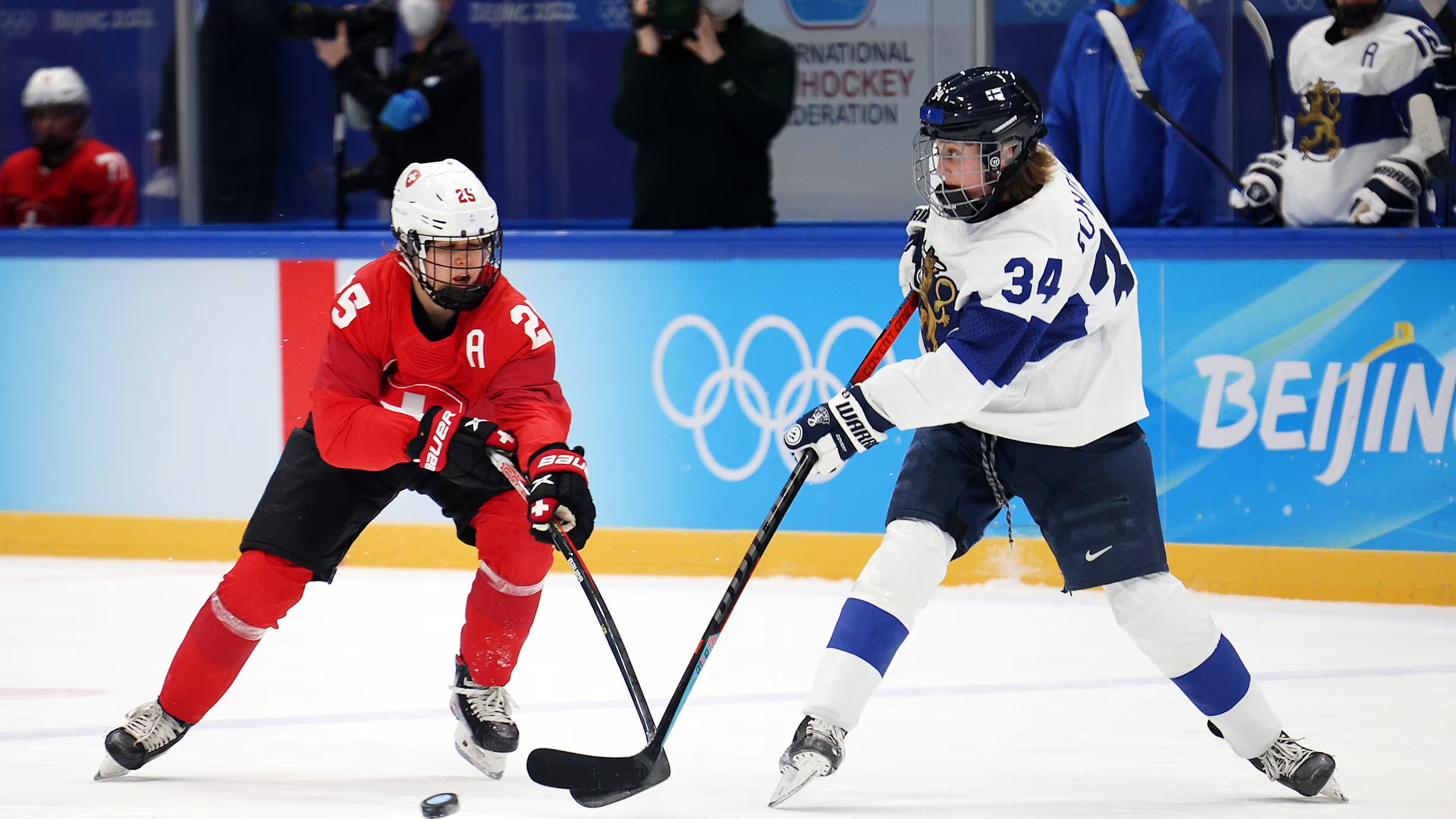
Ice hockey made its Olympic debut at the 1920 Summer Olympics in Antwerp, Belgium, and has since become one of the Winter Games’ most iconic sports.
From Canada’s early dominance to the Soviet Union’s reign and the “Miracle on Ice,” ice hockey Olympic medal winners represent the sport’s greatest achievements and most unforgettable moments.
Canada leads with 14+ golds, followed by the Soviet Union/Russia and the United States, making it a sport defined by international rivalry and excellence.
This guide compiles every ice hockey Olympic medal winner from 1920 through Beijing 2022, including both men’s and women’s tournaments (women’s added in 1998), with projections for Milano Cortina 2026.
Ice Hockey Olympic Medal Winners (1920-2022)
Ice hockey tournaments include both men’s and women’s competitions. Men’s hockey has been contested since 1920 (first at Summer Olympics, then Winter from 1924); women’s hockey began in 1998. The table below tracks every gold, silver, and bronze medalist.
| Year | Host City | Tournament | Gold | Silver | Bronze | Notes |
| 1920 | Antwerp | Men | Canada | USA | Czechoslovakia | Summer Olympics (7-on-7) |
| 1924 | Chamonix | Men | Canada | USA | Great Britain | First Winter Olympics |
| 1928 | St. Moritz | Men | Canada | Sweden | Czechoslovakia | — |
| 1932 | Lake Placid | Men | Canada | USA | Germany | — |
| 1936 | Garmisch | Men | Great Britain | Canada | USA | Britain’s only gold |
| 1948 | St. Moritz | Men | Canada | Czechoslovakia | Switzerland | — |
| 1952 | Oslo | Men | Canada | USA | Sweden | — |
| 1956 | Cortina | Men | USSR | USA | Czechoslovakia | USSR’s first Olympic hockey |
| 1960 | Squaw Valley | Men | USA | Canada | USSR | “Gold from the West” — USA upset USSR |
| 1964 | Innsbruck | Men | USSR | Czechoslovakia | Sweden | — |
| 1968 | Grenoble | Men | USSR | Czechoslovakia | Canada | — |
| 1972 | Sapporo | Men | USSR | USA | Czechoslovakia | Canada boycotted (disputed amateurism) |
| 1976 | Innsbruck | Men | USSR | Czechoslovakia | West Germany | Canada boycotted |
| 1980 | Lake Placid | Men | USA | USSR | Sweden | “Miracle on Ice” — USA beat USSR in semifinal |
| 1984 | Sarajevo | Men | USSR | Czechoslovakia | Sweden | — |
| 1988 | Calgary | Men | USSR | Finland | Sweden | USSR’s last Olympic gold before dissolution |
| 1992 | Albertville | Men | Unified Team | Canada | Czechoslovakia | Unified Team (former Soviet states) |
| 1994 | Lillehammer | Men | Sweden | Canada | Finland | — |
| 1998 | Nagano | Men | Czech Republic | Russia | Finland | First Olympics with full NHL participation |
| 1998 | Nagano | Women | USA | Canada | Finland | First women’s Olympic hockey tournament |
| 2002 | Salt Lake City | Men | Canada | USA | Russia | Canada’s first men’s gold in 50 years |
| 2002 | Salt Lake City | Women | Canada | USA | Finland | — |
| 2006 | Turin | Men | Sweden | Finland | Czech Republic | — |
| 2006 | Turin | Women | Canada | Sweden | USA | — |
| 2010 | Vancouver | Men | Canada | USA | Finland | Canada wins home gold |
| 2010 | Vancouver | Women | Canada | USA | Finland | — |
| 2014 | Sochi | Men | Canada | Sweden | Finland | Canada wins back-to-back |
| 2014 | Sochi | Women | Canada | USA | Sweden | — |
| 2018 | PyeongChang | Men | Olympic Athletes from Russia | Germany | Finland | Russia banned; athletes competed as neutral |
| 2018 | PyeongChang | Women | USA | Canada | Finland | USA wins first women’s gold since 1998 |
| 2022 | Beijing | Men | Finland | ROC | Sweden | Finland wins first Olympic men’s gold |
| 2022 | Beijing | Women | Canada | USA | Finland | — |
Ice Hockey Olympic Medal Count by Country (All-Time)
| Country | Men’s Gold | Men’s Total | Women’s Gold | Women’s Total | Combined Total | Dominant Era |
| Canada | 9 | 25 | 5 | 18 | 43 | 1920s-1950s (men), 1998-present (women) |
| USSR/Russia | 7 | 17 | 0 | 5 | 22 | 1956-1992 (men) |
| USA | 2 | 14 | 1 | 10 | 24 | 1960, 1980 (men); 1998, 2018 (women) |
| Sweden | 1 | 8 | 0 | 6 | 14 | 1994 (men) |
| Czech Republic | 1 | 4 | 0 | 4 | 8 | 1998 (men) |
| Finland | 1 | 8 | 0 | 7 | 15 | 2022 (men) |
| Great Britain | 1 | 5 | 0 | 0 | 5 | 1936 (men) |
| Czechoslovakia | 0 | 14 | 0 | 0 | 14 | Mid-century (silver/bronze focus) |
| Germany (combined) | 0 | 7 | 0 | 3 | 10 | Modern era (2006 onwards) |
| Norway | 0 | 2 | 0 | 6 | 8 | Women’s rising power |
Men’s Ice Hockey Olympic Champions (Gold Medalists Only)
| Year | Host | Champion | Runner-Up | Key Facts |
| 1920 | Antwerp | Canada | USA | Summer Olympics, 7-on-7 format |
| 1924 | Chamonix | Canada | USA | First Winter Olympics, 6-on-6 format established |
| 1928 | St. Moritz | Canada | Sweden | — |
| 1932 | Lake Placid | Canada | USA | — |
| 1936 | Garmisch | Great Britain | Canada | UK’s only Olympic hockey gold |
| 1948 | St. Moritz | Canada | Czechoslovakia | — |
| 1952 | Oslo | Canada | USA | — |
| 1956 | Cortina | USSR | USA | Soviet debut; immediate dominance |
| 1960 | Squaw Valley | USA | Canada | First USA gold; upset over heavily favored Soviets |
| 1964 | Innsbruck | USSR | Czechoslovakia | — |
| 1968 | Grenoble | USSR | Czechoslovakia | — |
| 1972 | Sapporo | USSR | USA | Canada boycotted (amateurism dispute) |
| 1976 | Innsbruck | USSR | Czechoslovakia | Canada boycotted (still disputed) |
| 1980 | Lake Placid | USA | USSR | “Miracle on Ice” semifinal; USSR won 4-3 in semis, USA won gold |
| 1984 | Sarajevo | USSR | Czechoslovakia | Soviet Union’s sixth gold |
| 1988 | Calgary | USSR | Finland | USSR’s final Olympic gold before 1991 dissolution |
| 1992 | Albertville | Unified Team | Canada | Former Soviet republics competed together |
| 1994 | Lillehammer | Sweden | Canada | First non-Communist champion since 1960 |
| 1998 | Nagano | Czech Republic | Russia | First Olympics with NHL players; Czech Republic’s only gold |
| 2002 | Salt Lake City | Canada | USA | Canada’s first men’s gold since 1952 (50-year drought) |
| 2006 | Turin | Sweden | Finland | Sweden’s second gold (1994 was first) |
| 2010 | Vancouver | Canada | USA | Sidney Crosby’s overtime winner; home gold |
| 2014 | Sochi | Canada | Sweden | Canada repeats as back-to-back champions |
| 2018 | PyeongChang | OAR (Russia) | Germany | Olympic Athletes from Russia (banned federation) |
| 2022 | Beijing | Finland | ROC | Finland’s first Olympic men’s hockey gold |
Women’s Ice Hockey Olympic Champions (Gold Medalists Only)
| Year | Host | Champion | Runner-Up | Key Facts |
| 1998 | Nagano | USA | Canada | First-ever women’s Olympic hockey; USA wins inaugural gold |
| 2002 | Salt Lake City | Canada | USA | Canada begins women’s dominance (4 of last 6 golds) |
| 2006 | Turin | Canada | Sweden | — |
| 2010 | Vancouver | Canada | USA | Canada wins home gold |
| 2014 | Sochi | Canada | USA | — |
| 2018 | PyeongChang | USA | Canada | USA’s second gold; overtime shootout victory |
| 2022 | Beijing | Canada | USA | Canada’s fifth women’s gold |
Most Successful Ice Hockey Nations (All-Time Medals)
Men’s Ice Hockey:
- Canada: 25 medals (9 gold, 7 silver, 9 bronze)
- USSR/Russia: 17 medals (7 gold, 7 silver, 3 bronze)
- USA: 14 medals (2 gold, 6 silver, 6 bronze)
- Czechoslovakia: 14 medals (0 gold, 6 silver, 8 bronze)
- Sweden: 8 medals (1 gold, 4 silver, 3 bronze)
Women’s Ice Hockey:
- Canada: 18 medals (5 gold, 7 silver, 6 bronze)
- USA: 10 medals (1 gold, 4 silver, 5 bronze)
- Finland: 7 medals (0 gold, 3 silver, 4 bronze)
- Sweden: 6 medals (0 gold, 2 silver, 4 bronze)
- Norway: 6 medals (0 gold, 2 silver, 4 bronze)
Iconic Ice Hockey Olympic Moments
| Year | Event | Impact |
| 1980 | “Miracle on Ice” — USA beats USSR in semifinal | America’s greatest sports upset; geopolitical Cold War symbolism |
| 2002 | Canada wins first men’s gold in 50 years | Marks beginning of modern Canadian dominance |
| 1998 | First women’s Olympic hockey tournament | USA wins inaugural gold; catalyst for women’s game growth |
| 2010 | Sidney Crosby’s overtime winner (home gold) | Most iconic Canadian Olympic moment; national celebration |
| 1956 | USSR’s Olympic debut and immediate dominance | Begins 36-year era of Soviet/Russian excellence |
| 2022 | Finland wins first men’s Olympic gold | End of 100+ year wait; surprises favorites Canada & USA |
Key Records & Milestones
Men’s Ice Hockey Records:
- Most golds by country: Canada (9)
- Most consecutive golds: Canada (4 straight: 1920-1932)
- Longest drought then comeback: Canada (0 golds 1956-1998, won 2002)
- USSR dominance period: 1956-1988 (won 7 of 8 Olympics from 1956-1984, then 1988)
- USA’s iconic moment: 1980 “Miracle on Ice” (defeated USSR 4-3 in semifinal)
Women’s Ice Hockey Records:
- Most golds by country: Canada (5 of 7 tournaments)
- Tournament debut: 1998 Nagano (USA won inaugural)
- Growing parity: USA, Canada, Finland now top three (Finland rising)
- Canada’s dominance: Won 5 of first 6 women’s tournaments (1998-2014), excluding 2018
Age/Longevity Records:
RELATED ARTICLES
- Oldest medalist: Teemu Selänne (Finland women’s 2022, age 51)
- Longest career: Multiple athletes competing across 3-4 Olympic cycles
- Youngest winners: Varies by team composition (typically early 20s)
Historical Context: Amateurism, Professionalism & Cold War
Ice hockey’s Olympic history reflects broader geopolitical and sports governance tensions:
Amateurism Era (1920-1984):
- Professional NHL players were banned; only “amateurs” could compete
- Soviet players were state-sponsored “amateurs,” creating unfair advantage
- Canada withdrew 1972 and 1976 to protest Soviet amateurism definitions
- This era favored Eastern Bloc countries with state-sponsored athletes
Professionalism Allowed (1986 onwards):
- International Olympic Committee permitted professional athletes (1986)
- NHL began allowing player participation (full participation by 1998)
- Fundamentally shifted competitive balance toward traditional hockey powers
- Canada & USA benefited from access to their best professional players
Women’s Hockey Growth (1998 onwards):
- Introduced in 1998; USA won first gold
- Rapid growth in female participation globally
- Canada emerged as dominant force (5 golds in 7 tournaments)
- Parity increasing with Finland, Sweden, Norway rising
FAQs
Who has won the most ice hockey Olympic gold medals?
Canada leads with 9 men’s gold medals (last won 2014) and 5 women’s gold medals (last won 2022). The Soviet Union won 7 men’s golds before its 1991 dissolution. Since 1992, Canada and USA dominate both tournaments.
What was the “Miracle on Ice”?
The “Miracle on Ice” occurred on February 22, 1980, when the USA defeated the heavily favored Soviet Union 4-3 in the men’s ice hockey semifinal at Lake Placid. The Soviets had won gold in 1976 and dominated international hockey. The USA victory became one of sports’ greatest upsets and remains an iconic Cold War moment. The USA went on to win gold.
When did women’s ice hockey become an Olympic sport?
Women’s ice hockey made its Olympic debut at the 1998 Nagano Winter Olympics. The USA won the first-ever women’s gold medal, defeating Canada in the final. This marked the beginning of rapid growth in women’s ice hockey globally. Women’s hockey has been held at every Winter Olympics since 1998.
Which countries have won men’s ice hockey Olympic gold?
Seven countries have won men’s Olympic ice hockey gold: Canada (9), USSR/Russia (7), USA (2), Sweden (1), Czech Republic (1), Finland (1), and Great Britain (1). Canada dominated early Olympics (1920-1952), the Soviet Union dominated mid-century (1956-1988), and modern era has seen more parity.
How many ice hockey Olympic tournaments have been held?
As of Beijing 2022: 26 men’s tournaments (since 1920) and 6 women’s tournaments (since 1998). The sport was first contested at the 1920 Summer Olympics in Antwerp, then moved to Winter Olympics starting in 1924. Women’s hockey debuted in 1998.
Who won ice hockey at the 2022 Beijing Olympics?
Men: Finland defeated ROC (Russian Olympic Athletes) 2-1 in the final to win their first-ever Olympic gold medal. Women: Canada defeated USA 3-2 in overtime to win their fifth women’s gold medal.
Why did Canada not compete in 1972 and 1976 ice hockey?
Canada withdrew from the Olympic ice hockey tournament in 1972 and 1976 to protest the IOC’s definition of “amateur” athletes. Canada argued that Soviet players were state-sponsored professionals competing as amateurs, creating unfair advantage. Canada returned in 1980.
Has USA ever won women’s Olympic ice hockey gold?
Yes, the USA has won 1 women’s Olympic gold medal: at the 1998 Nagano Winter Olympics when they defeated Canada in the inaugural women’s tournament. The USA has also won silver medals (2002, 2010, 2014) and bronze medals. As of 2022, Canada has dominated women’s hockey with 5 golds in 7 tournaments.
When will ice hockey be held at the next Olympics?
Ice hockey is scheduled for Milano Cortina 2026 (February 6-22, 2026). Men’s games will be held at Santagiulia and Rho Ice Hockey Arenas in Milan. Both men’s and women’s tournaments will be contested with full NHL participation expected.
RELATED ARTICLES