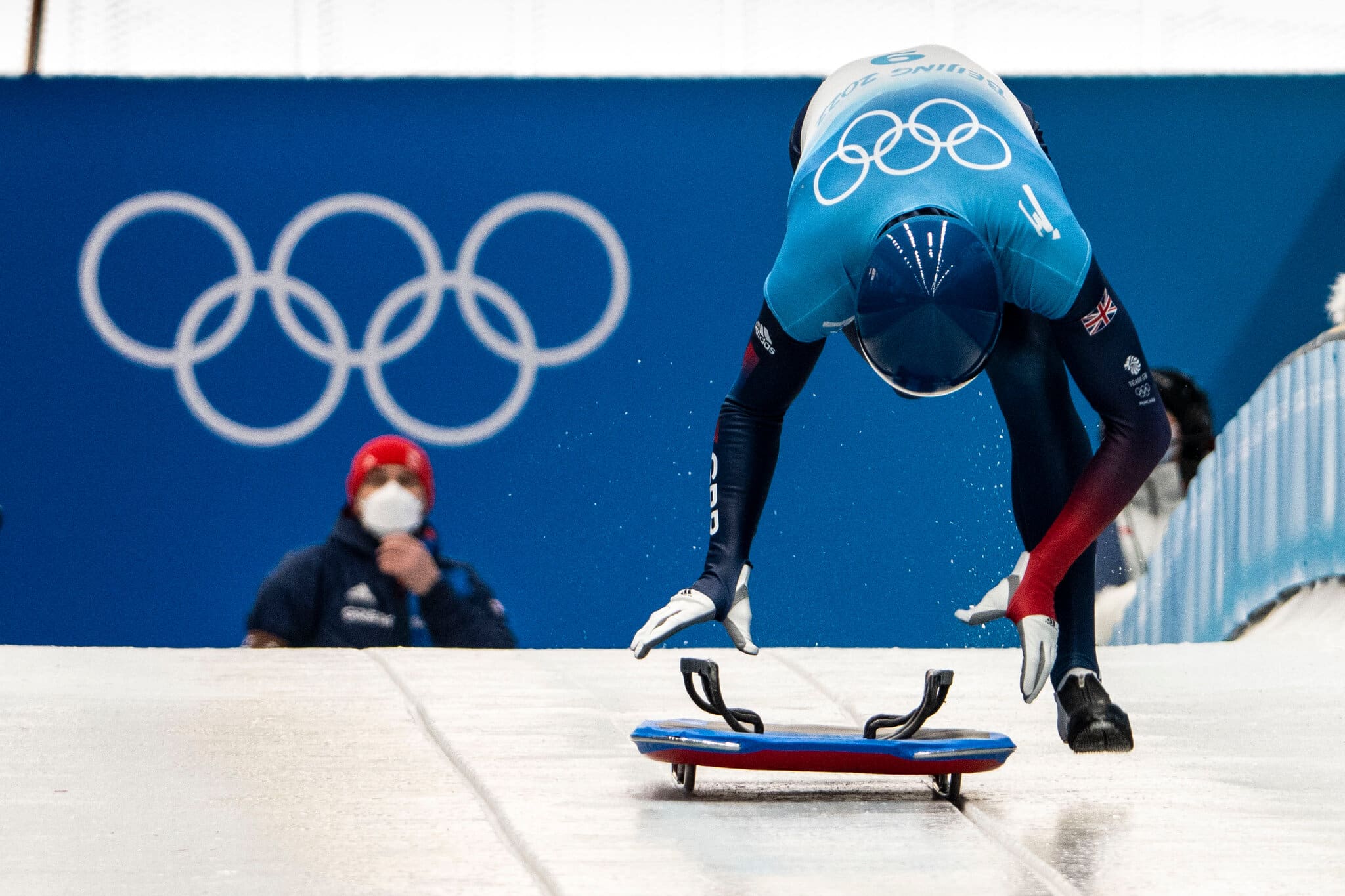
Skeleton Olympic Medal Winners represent one of the Winter Olympics’ most dramatic and lesser-known sports. Skeleton racing debuted at the 1928 Winter Olympics in St. Moritz, the birthplace of the sport.
Then it disappeared for 54 years before returning in 2002. Since its dramatic comeback, skeleton has produced elite athletes and thrilling competition.
The data reveals a clear picture: Great Britain dominates with 9 total medals, followed by the USA (8 medals) and Germany (4 medals). But the real story lies in the rapid shift in power.
Once an American stronghold with the legendary Heaton brothers, skeleton has transformed into a sport where British dominance in women’s events and German strength in men’s competition define the modern era.
This guide compiles every skeleton Olympic Medal Winner from 1928-2022, with insights into upcoming Milano Cortina 2026 competition.
Complete Skeleton Olympic Medal Winners (1928-2022)
Skeleton Olympic Medal Winners competed across just five Olympic Games due to the sport’s unique history: 1928 (St. Moritz), 1948 (St. Moritz), 2002 (Salt Lake City), 2006 (Turin), 2010 (Vancouver), 2014 (Sochi), 2018 (PyeongChang), and 2022 (Beijing). Men’s events featured at all instances; women’s events began in 2002.
| Year | Host City | Event | Gold | Silver | Bronze | Country |
| 1928 | St. Moritz | Men’s Skeleton | Jennison Heaton | John Heaton | Billy Fiske | USA |
| 1948 | St. Moritz | Men’s Skeleton | Nino Bibbia | John Heaton | John Crammond | Italy |
| 2002 | Salt Lake City | Men’s Skeleton | Jim Shea Jr. | Martin Rettl | Gregor Stähli | USA |
| 2002 | Salt Lake City | Women’s Skeleton | Tristan Gale | Lea Ann Parsley | Alex Coomber | USA |
| 2006 | Turin | Men’s Skeleton | Duff Gibson | Jeff Pain | Gregor Stähli | Canada |
| 2006 | Turin | Women’s Skeleton | Melissa Hollingsworth | Shelley Rudolph | Maya Pedersen | Canada |
| 2010 | Vancouver | Men’s Skeleton | Jon Montgomery | Martins Dukurs | Peter He | Canada |
| 2010 | Vancouver | Women’s Skeleton | Amy Williams | Shelley Rudolph | Anja Huber | Great Britain |
| 2014 | Sochi | Men’s Skeleton | Aleksandr Tretyakov | Martins Dukurs | Kristan Bromley | Russia |
| 2014 | Sochi | Women’s Skeleton | Lizzy Yarnold | Noelle Pikus-Pace | Elena Nikitina | Great Britain |
| 2018 | PyeongChang | Men’s Skeleton | Yun Sung-Bin | Sungbae Kim | John Jackson | South Korea |
| 2018 | PyeongChang | Women’s Skeleton | Lizzy Yarnold | Jacqueline Lölling | Elena Nikitina | Great Britain |
| 2022 | Beijing | Men’s Skeleton | Christopher Grotheer | Axel Jungk | Yan Wengang | Germany |
| 2022 | Beijing | Women’s Skeleton | Hannah Neise | Jaclyn Narracott | Kimberley Bos | Germany |
Most Decorated Skeleton Olympic Medal Winners
| Athlete | Country | Gold | Silver | Bronze | Total | Years |
| Lizzy Yarnold | Great Britain | 2 | 0 | 0 | 2 | 2014-2018 |
| Aleksandr Tretyakov | Russia | 1 | 1 | 0 | 2 | 2014-2018 |
| Martins Dukurs | Latvia | 0 | 2 | 0 | 2 | 2010-2014 |
| John Heaton | USA | 1 | 2 | 0 | 3 | 1928-1948 |
| Gregor Stähli | Switzerland | 0 | 0 | 2 | 2 | 2002-2006 |
| Jim Shea Jr. | USA | 1 | 0 | 0 | 1 | 2002 |
| Tristan Gale | USA | 1 | 0 | 0 | 1 | 2002 |
| Duff Gibson | Canada | 1 | 0 | 0 | 1 | 2006 |
| Jon Montgomery | Canada | 1 | 0 | 0 | 1 | 2010 |
| Amy Williams | Great Britain | 1 | 0 | 0 | 1 | 2010 |
| Yun Sung-Bin | South Korea | 1 | 0 | 0 | 1 | 2018 |
| Christopher Grotheer | Germany | 1 | 0 | 0 | 1 | 2022 |
| Hannah Neise | Germany | 1 | 0 | 0 | 1 | 2022 |
Skeleton Medal Count by Country (All-Time)
| Country | Gold | Silver | Bronze | Total | Notable Athletes |
| Great Britain | 3 | 1 | 5 | 9 | Lizzy Yarnold, Amy Williams, Alex Coomber |
| USA | 3 | 4 | 1 | 8 | Jennison Heaton, Jim Shea Jr., Tristan Gale |
| Germany | 2 | 1 | 1 | 4 | Christopher Grotheer, Hannah Neise, Axel Jungk |
| Canada | 2 | 0 | 0 | 2 | Duff Gibson, Jon Montgomery |
| Russia | 1 | 1 | 1 | 3 | Aleksandr Tretyakov, Elena Nikitina |
| Italy | 1 | 0 | 0 | 1 | Nino Bibbia |
| South Korea | 1 | 1 | 0 | 2 | Yun Sung-Bin, Sungbae Kim |
| Latvia | 0 | 2 | 0 | 2 | Martins Dukurs |
| Switzerland | 0 | 0 | 2 | 2 | Gregor Stähli |
| China | 0 | 0 | 1 | 1 | Yan Wengang |
| Australia | 0 | 1 | 0 | 1 | Jaclyn Narracott |
| Netherlands | 0 | 0 | 1 | 1 | Kimberley Bos |
Skeleton Olympic Medal Winners by Games (Historical Breakdown)
| Olympics | Host City | Year | Men’s Gold | Women’s Gold | Notable |
| 1928 | St. Moritz | 1928 | Jennison Heaton (USA) | — | First skeleton Olympic Games |
| 1948 | St. Moritz | 1948 | Nino Bibbia (Italy) | — | Italy’s first Olympic gold ever |
| 2002 | Salt Lake City | 2002 | Jim Shea Jr. (USA) | Tristan Gale (USA) | Sport’s return after 54 years |
| 2006 | Turin | 2006 | Duff Gibson (Canada, age 39) | Melissa Hollingsworth (Canada) | Gibson oldest gold medalist |
| 2010 | Vancouver | 2010 | Jon Montgomery (Canada) | Amy Williams (Great Britain) | GB’s first individual gold since 1980 |
| 2014 | Sochi | 2014 | Aleksandr Tretyakov (Russia) | Lizzy Yarnold (Great Britain) | Yarnold defends title (2 golds) |
| 2018 | PyeongChang | 2018 | Yun Sung-Bin (South Korea) | Lizzy Yarnold (Great Britain) | Yarnold 2-time gold medalist |
| 2022 | Beijing | 2022 | Christopher Grotheer (Germany) | Hannah Neise (Germany) | Germany sweeps both golds |
Age Records and Notable Skeleton Olympic Medal Winner Achievements
Youngest Gold Medalists:
Tristan Gale (USA): 21 years old, Women’s Skeleton, 2002. Sungbae Kim (South Korea): 22 years old, Men’s Skeleton, 2018.
Hannah Neise (Germany): 23 years old, Women’s Skeleton, 2022.
Oldest Gold Medalists:
Duff Gibson (Canada): 39 years old, Men’s Skeleton, 2006. John Heaton (USA): Age unknown, but competed in 1928 and 1948 (20-year span).
Jennison Heaton (USA): 24 years old, Men’s Skeleton, 1928.
Most Medals (Individual Athletes):
John Heaton (USA): 3 medals (1 gold, 2 silver) across 1928-1948. Lizzy Yarnold (Great Britain): 2 medals (2 gold) across 2014-2018.
Martins Dukurs (Latvia): 2 medals (0 gold, 2 silver) across 2010-2014. Gregor Stähli (Switzerland): 2 medals (0 gold, 2 bronze) across 2002-2006.
Gender Milestones:
Women’s skeleton debuted at 2002 Salt Lake City Olympics. Tristan Gale first women’s skeleton gold medalist.
Lizzy Yarnold only two-time gold medalist in skeleton history. Great Britain only nation to win medal at every skeleton Olympic Games.
Skeleton Olympic Medal Winners: Key Facts
Sport History:
Skeleton originated in St. Moritz, Switzerland in 1887. Named after the metal frame shape resembling human skeleton (1892).
Olympic debut: 1928 St. Moritz (men’s only). 54-year Olympic absence: 1948-2002.
Women’s events added: 2002 Salt Lake City.
Race Format:
Four timed runs across two days. Athletes push-start (run with sled), then go headfirst.
Cumulative time determines winner. Speeds: 130-140 km/h typical.
Track length: 1,200-1,650 meters.
Notable Skeleton Performances:
Duff Gibson’s 2006 victory at 39 remains oldest gold medalist. Jim Shea Jr. raced carrying memory of his grandfather (Jack Shea, 1932 speed skater).
Lizzy Yarnold defended back-to-back golds (2014-2018). Germany’s 2022 sweep was their first-ever skeleton golds.
FAQs
What is skeleton racing?
Skeleton is a Winter Olympic sport where athletes navigate icy tracks face-down on small sleds at speeds exceeding 130 km/h. Unlike luge (where athletes lie on their backs), skeleton racers go headfirst down the track, relying on body positioning and sled control to navigate turns and achieve fastest times. Races consist of four timed runs over two days.
Who is the most decorated skeleton Olympic Medal Winner?
Lizzy Yarnold of Great Britain is the most successful skeleton Olympic Medal Winner with two gold medals (2014 and 2018). She remains the only athlete in Olympic skeleton history to win two gold medals and the only one to defend a skeleton title across different Olympic Games.
Which country has won the most skeleton Olympic medals?
Great Britain leads with 9 total medals (3 gold, 1 silver, 5 bronze) as of 2022. However, by gold medal count, the USA has 3 golds vs. Great Britain’s 3 golds. The USA has 8 total medals overall, making them historically strong in the sport during its early years and modern comeback era.
When did skeleton return to the Olympics?
Skeleton was reintroduced to the Olympic program at the 2002 Salt Lake City Winter Olympics after a 54-year absence. The last skeleton competition before that was in 1948 at St. Moritz. The sport was dropped after 1948 due to safety concerns and limited suitable tracks globally.
Who was the first skeleton Olympic Medal Winner?
Jennison Heaton of the USA won the first-ever skeleton Olympic Medal Winner gold in 1928 at St. Moritz. His younger brother John took silver. In 1948, John Heaton competed again and won silver, making the Heaton brothers the sport’s pioneering legends.
What is the age record for skeleton Olympic Medal Winners?
Duff Gibson of Canada became the oldest Olympic skeleton gold medalist at 39 years old when he won the men’s event in 2006 in Turin. On the younger end, Tristan Gale of the USA became the youngest skeleton Olympic Medal Winner at 21 when she won the women’s inaugural event in 2002.
Why is skeleton so rare at the Olympics?
Skeleton’s rarity stems from its limited infrastructure. The sport requires specialized ice tracks (also used for bobsled and luge), which exist in only a handful of locations worldwide. The sport’s danger, with athletes reaching 140 km/h on unprotected tracks, also limited Olympic inclusion. It’s one of the oldest Winter Olympic sports (1928) but remained absent for 54 years before 2002.
How many countries compete in skeleton?
Approximately 30+ countries compete in international skeleton competitions, but only a subset qualify for the Olympics. As of 2022, 10 countries have won skeleton Olympic medals. Germany, Great Britain, USA, Canada, and Russia are the traditional powerhouses, though new nations like South Korea, Netherlands, and Australia have emerged recently.