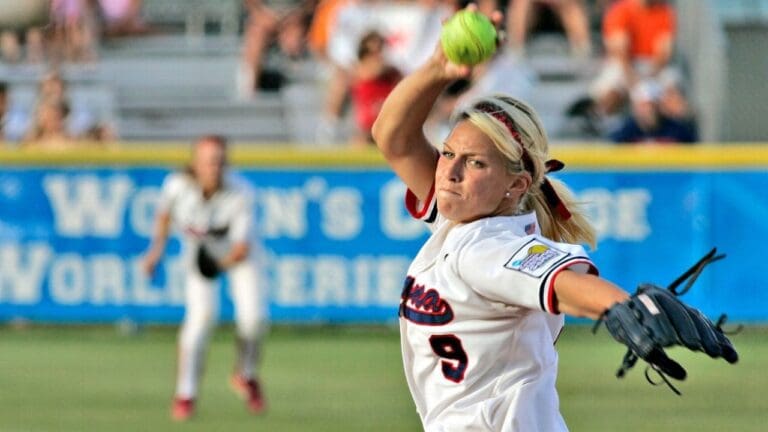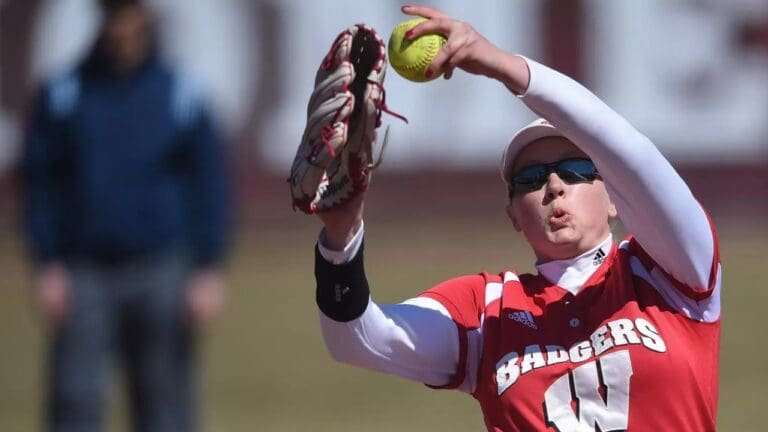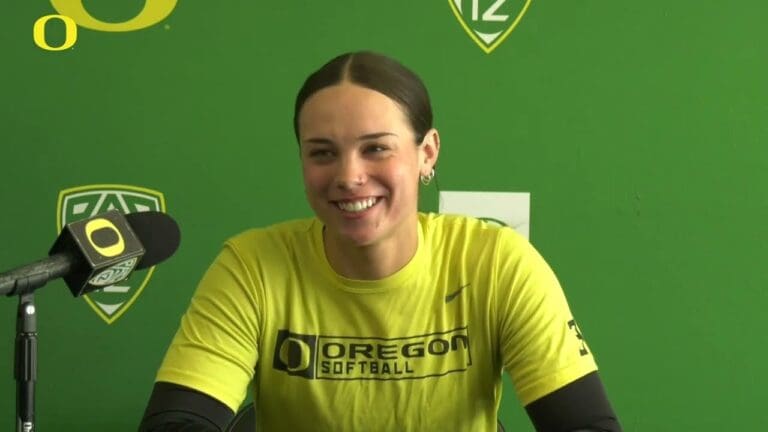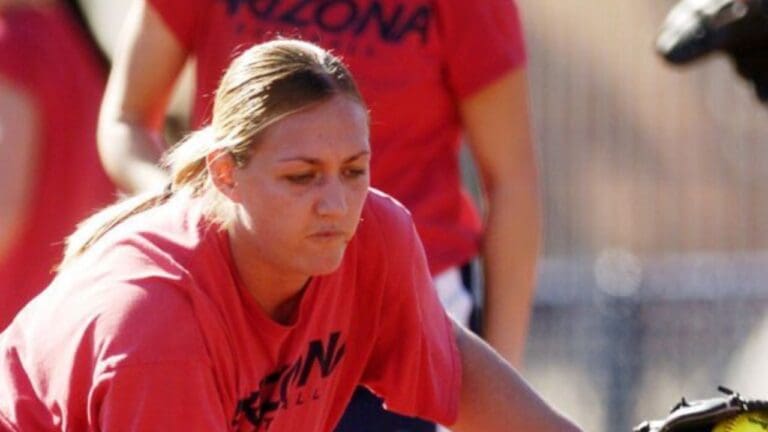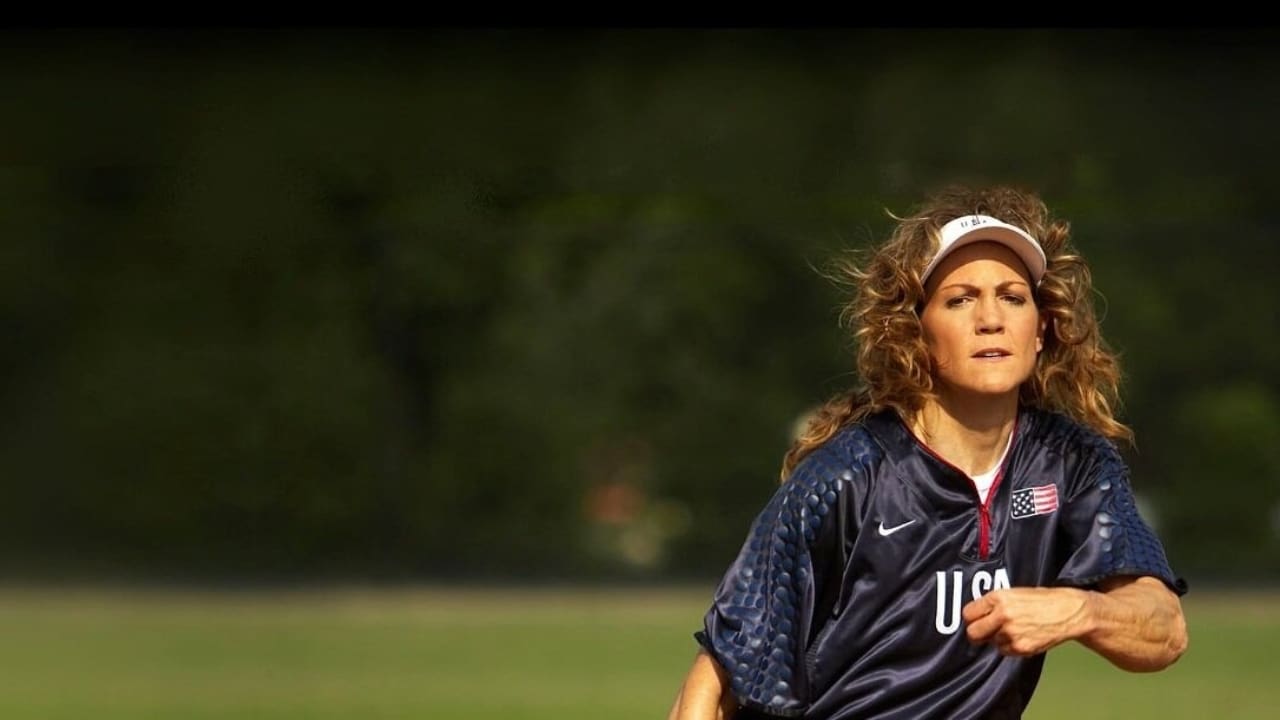
Michele Smith stands as one of softball’s most decorated legends, and her financial success reflects decades of excellence both on the field and in the broadcast booth.
As a two-time Olympic gold medalist and ESPN’s lead softball analyst, Smith has built a career that spans playing, coaching, and commentary.
In this article, you will know Michele Smith’s net worth, career earnings, career overview, stats, relationship status, and more.
Michele Smith’s Biography
| Category | Details |
|---|---|
| Full Name | Michele Mary Smith |
| Date of Birth | June 21, 1967 |
| Age | 58 years old |
| Nationality | American |
| Height | 5 feet 10 inches |
| Weight | 55 kg (121 lbs) |
| Education | Oklahoma State University (Bachelor of Science in Health and Wellness) |
| Turned Pro | 1992 (Japan Professional Softball League) |
| Net Worth | $1 million |
| Salary | $98,654 per year (ESPN analyst) |
| Marital Status | Single |
| Twitter Profile | @MicheleSmith32 |
Early Career
Michele Smith grew up in Califon, New Jersey, where she attended Voorhees High School in Glen Gardner. She didn’t start pitching until her sophomore year, but she quickly made up for lost time.
During her high school career, she posted a remarkable 51-6 record with 11 no-hitters.
Her junior year performance was particularly impressive, as she led her team to the New Jersey State Interscholastic Athletic Association Group 3 state softball title with a 23-1 record, a 0.17 earned-run average, and 229 strikeouts. She earned all-state softball team honors for three consecutive years.
Smith wasn’t just a softball star in high school. She excelled in multiple sports, earning first-team all-conference honors in field hockey as both a junior and senior.
In basketball, she scored 1,114 career points and was a two-time all-conference selection. This multi-sport excellence showcased her natural athleticism and competitive drive, traits that would define her professional career.
Her parents, Ernest and Barbara, supported her athletic pursuits throughout her formative years, creating a foundation for her future success.
Professional Career
Michele Smith’s professional career took off at Oklahoma State University, where she played for the Cowgirls from 1986 to 1989.
She compiled an outstanding 82-20 career record as a pitcher with a microscopic 0.75 earned-run average. She struck out 600 batters and threw nine no-hitters during her collegiate career.
Smith was equally dangerous at the plate, batting .343 with 15 home runs and 87 RBIs. She earned two-time All-American honors and was named the 1989 Academic All-Big 8 and MVP of the Big 8 Tournament.
Smith embarked on an incredible 16-year professional career in Japan with Toyota Shokki in the Japanese Professional Softball League starting in 1992. She became a sports icon in Japan, winning eight league championships and eight MVP awards.
Her dominance in Japan coincided with her international success representing Team USA. She won gold medals at the 1996 Atlanta and 2000 Sydney Olympics, going 2-0 with a 1.50 ERA and 23 strikeouts in 1996.
Smith also captured three World Championship gold medals in 1994, 1998, and 2002, along with two Pan American Games gold medals in 1995 and 1999. She earned ASA All-American honors 10 times and won the Bertha Tickey Award four times.
Smith transitioned to broadcasting in 1995, joining ESPN as a softball analyst, and has been their lead college softball color analyst since 1998.
Michele Smith’s Net Worth Details
As of 2026, Michele Smith’s net worth stands at approximately $1 million, accumulated through her dual career as a professional softball player and sports broadcaster.
Contract
Smith’s most significant contract came with Toyota Shokki in the Japanese Professional Softball League, where she played for 16 seasons starting in 1992.
Professional softball contracts in Japan were more lucrative than American leagues during that era, particularly for star players like Smith who dominated the league.
She won eight championships and eight MVP awards with Toyota Shokki, which likely resulted in performance bonuses and contract extensions throughout her tenure.
Her success in Japan helped her build financial stability while simultaneously representing Team USA in international competitions.
Salary
Smith’s current primary income comes from her role as ESPN’s lead softball analyst, where she earns approximately $98,654 per year.
She joined ESPN in 1995 and has been calling the Women’s College World Series alongside Beth Mowins, Jessica Mendoza, and Holly Rowe for over two decades.
During her playing career, the National Pro Fastpitch Softball League paid players between $5,000 and $6,000 for a 48-game season from June through August, with top players earning up to $20,000 annually.
Smith’s earnings in Japan were considerably higher, as the Japanese Professional Softball League offered more competitive salaries to elite international players, though exact figures from her playing days remain undisclosed.
Career Earnings
| Year | Source | Estimated Earnings |
|---|---|---|
| 1992-2007 | Japan Professional Softball League (Toyota Shokki) | Undisclosed (Higher than US leagues) |
| 1995-Present | ESPN Softball Analyst | ~$98,654 per year |
| 1996 | Olympic Gold Medal (Atlanta) | Prize money and bonuses |
| 2000 | Olympic Gold Medal (Sydney) | Prize money and bonuses |
| Various | Speaking Engagements and Clinics | Supplemental income |
Endorsements
Michele Smith has partnered with Worth Sports Company as a spokesperson, leveraging her credibility as an Olympic champion and softball legend.
Worth Sports manufactures softball equipment, making Smith an ideal brand ambassador who can speak authentically about products to players and coaches.
She also runs her own website, michelesmith.com, where she offers fast-pitch softball drills, speaking engagements, and softball camps.
These ventures provide additional income streams beyond her broadcasting salary.
Career Stats
| Category | Statistics |
|---|---|
| College Record (Oklahoma State) | 82-20 |
| College ERA | 0.75 |
| College Strikeouts | 600 |
| College No-Hitters | 9 |
| College Shutouts | 46 |
| College Batting Average | .343 |
| College Home Runs | 15 |
| College RBIs | 87 |
| Olympic Record | 2-2 |
| Olympic ERA | 0.50 (41.2 innings pitched) |
| Olympic Batting Average | .125 |
| 1996 Olympics (Atlanta) | 2-0, 1.50 ERA, 23 strikeouts |
| Japan Pro League Championships | 8 |
| Japan Pro League MVP Awards | 8 |
| World Championship Gold Medals | 3 (1994, 1998, 2002) |
| Pan American Games Gold Medals | 2 (1995, 1999) |
| ASA All-American Honors | 10 times |
| Bertha Tickey Awards | 4 times |
FAQs
1. What makes Michele Smith a softball legend?
Smith earned legendary status by winning two Olympic gold medals with Team USA in 1996 and 2000, capturing three World Championship titles, and dominating the Japanese Professional Softball League for 16 seasons. She won eight championships and eight MVP awards in Japan while maintaining her college records at Oklahoma State.
2. How did Smith transition from playing to broadcasting?
Smith joined ESPN as a softball analyst while still playing professionally in Japan, demonstrating her ability to balance both careers. She became ESPN’s lead college softball color analyst and has called the Women’s College World Series for over two decades.
3. What records did Smith set at Oklahoma State?
Smith holds Oklahoma State’s record for career wins with 82, which still stands decades later. She recorded 600 career strikeouts and threw nine no-hitters during her four seasons with the Cowgirls.
4. Did Smith receive any major awards during her career?
Smith won the Bertha Tickey Award four times, recognizing her as the outstanding pitcher at the Women’s Major Fast Pitch National Championship. She earned ASA All-American honors 10 times throughout her career and was named 1989 Academic All-Big 8 and MVP of the Big 8 Tournament.
5. What languages does Smith speak?
Smith speaks fluent Japanese, which she learned during her 16-year professional career in the Japanese Professional Softball League. This language proficiency helped her succeed both on and off the field in Japan, allowing her to connect with teammates, coaches, and fans.