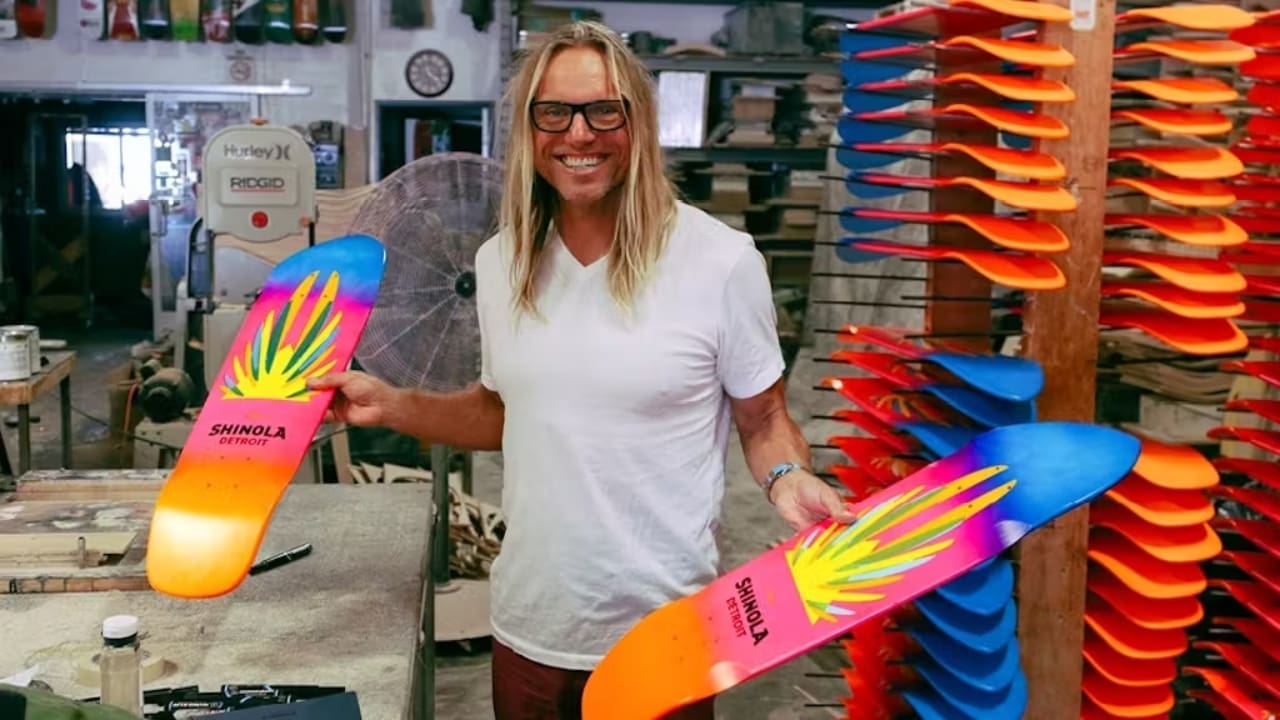
Natas Kaupas is an American former professional skateboarder of Lithuanian descent. Kaupas is often referred to as one of the first true professional street skateboarders.
He began skating during his childhood years and shot to popularity in the mid-1980s. In 2005, he received the Legend Award at the seventh annual Transworld Skateboarding Awards, and in 2014, he was inducted into the Skateboarding Hall of Fame.
Here we have Natas Kaupas’ net worth, career earnings, achievements, biography, family, and more.
About Natas Kaupas
Natas Kaupas was born on March 23, 1969. He grew up in South Santa Monica, California, in an area known as Dogtown.
Professional Career
Natas Kaupas’ professional career began in 1984 when he was discovered by Skip Engblom, who ran the skate company Santa Monica Airlines (SMA). Kaupas became a sponsored skater for SMA and soon after, he appeared on the cover of Thrasher magazine doing a wall ride.
He was known for his innovative approach to skateboarding. He was among the first to incorporate handrails into street skating and was the first to ollie a standing trash can on flat ground.
He also invented the ‘Natas spin’, a trick where he ollied up onto a fire hydrant and performed a 720-degree spin on top of it.
This trick was later incorporated into the Tony Hawk video game series.
His popularity and impact on street skating were so significant that in 1990, he became the first skateboarder to have a professional model shoe with Etnies.
In 1991, Kaupas left SMA to start 101 Skateboards, a popular company at the time. However, after a few years, Kaupas moved on and the company ceased operations.
Kaupas’ influence on skateboarding has been recognized with several awards. In 2005, he received the Legend Award at the seventh annual Transworld Skateboarding Awards, and in 2014, he was inducted into the Skateboarding Hall of Fame.
Natas Kaupas’ Net Worth Details
As of 2026, Natas Kaupas’s net worth is estimated to be $50 million. After retiring from professional skateboarding in the late 1990s, Kaupas transitioned to a career as a designer and consultant within the sport.
RELATED ARTICLES




He has been involved in various business ventures, including working as a graphic director and vice president of marketing for Quiksilver and founding a new board company called Designarium, which focuses on artists rather than pro skaters.
Income
Kaupas’s income primarily comes from his skateboarding-related career. He is estimated to earn between $39k-45k per year.
After retiring from professional skateboarding, Kaupas became a designer and consultant in the sport, associating with companies such as Vans and Element.
Kaupas has also earned income from his skateboard designs. For instance, his “Panther Heritage Re-Issue Deck” is sold for $79.95, and his “Dog Deck” is priced at $59.99.
He also has a line of skateboard wheels priced at $40.95.
Personal Details
| Personal Details | |
| Full Name | Natas Kaupas |
| Date of Birth | March 23, 1969 |
| Nationality | American |
| Ethnicity | Lithuanian descent |
| Place of Residence | Santa Monica, California, USA |
| Occupation | Former professional skateboarder, graphic director, vice president of marketing for Quiksilver, founder of Designarium |
| Notable Achievements | One of the first professional street skateboarders, inventor of the ‘Natas spin’, first skater to release a pro-model shoe, Legend Award from Transworld Skateboarding (2005), inducted into the Skateboarding Hall of Fame (2014) |
| oscarputdowntheknife |
Family
Natas Kaupas is married to Elizabeth A Dowling. The couple got married in 2008 in New York.
Kaupas is known to be a private individual who has kept details about his personal life out of the public eye.
He has 2 children who frequently appear on his Instagram page.

Career Achievements
| Achievements | |
| Inventor of the Natas Spin | Kaupas invented the ‘Natas spin,’ a trick where he ollied up onto a fire hydrant and performed a 720-degree spin on top of it. |
| First skater to release a pro-model shoe | Kaupas was the first skateboarder to have a professional model shoe with Etnies. |
| Legend Award from Transworld Skateboarding (2005) | In 2005, Kaupas received the Legend Award at the seventh annual Transworld Skateboarding Awards. |
| Inducted into the Skateboarding Hall of Fame (2014) | In 2014, Kaupas was inducted into the Skateboarding Hall of Fame. |
| Co-founder of 101 Skateboards | Kaupas co-founded 101 Skateboards, a popular company in the 1990s. |
| Founder of Designarium | In 2004, Kaupas started a new board company, Designarium, focusing on artists rather than pro skaters. |
| Vice President of Marketing for Quiksilver | Kaupas worked as a graphic director and vice president of marketing for Quiksilver. |
| Art Director for two magazines | In addition to his skateboarding career, Kaupas was an art director for 2 magazines. |
FAQs
1. Who is Natas Kaupas?
Natas Kaupas is an American former professional skateboarder of Lithuanian descent, widely regarded as one of the pioneers of modern street skateboarding. Born on March 23, 1969, in Santa Monica, California, he gained fame for his innovative tricks and contributions to skateboarding culture during the 1980s.
2. What are Natas Kaupas’ most notable skateboarding achievements?
Natas Kaupas is credited with inventing the “Natas Spin,” pioneering handrail skating, and performing groundbreaking tricks like wall rides and frontside flips. He was also the first skateboarder to release a professional model shoe with Etnies in 1988 and co-founded the skateboard company 101 Skateboards.
3. Why is Natas Kaupas considered a skateboarding legend?
Natas Kaupas revolutionized street skateboarding with his creativity and innovation. His ability to adapt freestyle tricks to street skating and his introduction of artistic elements into skateboarding earned him recognition as one of the sport’s most influential figures. He received the Legend Award in 2005 and was inducted into the Skateboarding Hall of Fame in 2014.
4. What is the “Natas Spin”?
The “Natas Spin” is a trick where Natas ollied onto a fire hydrant and performed a 720-degree spin on top of it. This iconic move showcased his creativity and technical skill, becoming a hallmark of his career and influencing both skateboarding and snowboarding.
5. What role did Natas Kaupas play in skateboarding videos?
Natas Kaupas featured prominently in influential skateboarding videos like Wheels of Fire (1987) and Streets on Fire (1989). His performances in these films highlighted his innovative tricks, such as advanced ollies and spins, helping to shape the future of street skating.
6. Did Natas Kaupas face controversy regarding his name?
Yes, Natas faced controversy due to his name, which spelled backward reads “Satan.” Despite explaining that it derived from the Lithuanian name “Natalija,” some schools and shops banned merchandise bearing his name during the late 1980s.
7. What did Natas Kaupas do after retiring from professional skateboarding?
After retiring in the late 1990s, Natas transitioned into design and art direction. He worked as a graphic director for Quiksilver, founded Designarium—a skateboard company focused on artists—and contributed to various creative projects within the skateboarding industry.
8. What awards has Natas Kaupas received?
Natas received several prestigious awards, including the Legend Award at the Transworld Skateboarding Awards in 2005 and induction into the Skateboarding Hall of Fame in 2014. These honors recognize his lasting impact on skateboarding culture.
9. Did Natas Kaupas contribute to other industries besides skateboarding?
Yes, Natas contributed to art and design by creating graphics for skate brands and working as an art director for magazines. His artistic approach extended beyond skateboarding, influencing fashion and visual culture within the sport.
10. How has Natas Kaupas influenced modern skateboarding?
Natas Kaupas laid the foundation for street skating by introducing creative tricks like wall rides and rail slides. His artistic approach inspired generations of skaters to embrace individuality and innovation, making him a key figure in shaping modern skateboarding’s identity.