I’ve covered the business side of football long enough to develop a healthy immunity to big numbers. Broadcast deals, transfer fees, sponsorship packages – after a while, the zeros blur together.
But every so often, a figure lands on my desk that makes me sit up straight, and the finances of the 2026 World Cup did exactly that.
With the help of cricket road online, as the tournament reaches its climax this week in North America, with the final set for July 19 at MetLife Stadium, the 48 competing nations have been playing for a share of the largest prize pool ever assembled in the history of this competition: a total distribution of $871 million.
To put that in perspective, the entire pot at Qatar 2022 was $440 million. FIFA initially announced a $727 million fund for this edition back in December, then increased it again in April – citing its strongest-ever financial position – to reach the final record figure.
The expansion from 32 to 48 teams and from 64 to 104 matches explains part of the growth, but even accounting for the extra mouths at the table, the per-team economics have shifted dramatically.
And because money is the language in which football’s power structures are written, understanding where these dollars flow – and to whom – tells you more about the modern game than most match reports ever will.
So let’s open the books properly: what every team earns, how the structure works, and what it all means beneath the headline number.
The Structure: Guaranteed Money Before a Ball Is Kicked
The first thing to understand about World Cup prize money is that it’s not one pot but two. There’s the performance-based pool – the money teams earn by advancing – and there’s the guaranteed money every qualified nation banks regardless of results.
That second layer matters enormously, especially for smaller federations, and it often gets lost in coverage that fixates on the champion’s cheque.
For 2026, every one of the 48 qualified nations was guaranteed $12.5 million before kickoff.
That figure breaks down into a $10 million qualification fee and a further $2.5 million in preparation money, intended to cover the real and substantial costs of training camps, travel, and accommodation across a tournament spread over three enormous countries.
In total, $168 million of FIFA’s distribution goes out on this non-performance basis.
Why does this matter so much? Because for a federation like Iraq, Uzbekistan, or Cape Verde, $12.5 million isn’t a bonus – it’s transformational, often exceeding an entire annual budget. It funds youth academies, coaching education, and infrastructure for years.
The guaranteed floor is, quietly, the World Cup’s most effective development mechanism, and the expansion to 48 teams multiplied its reach to sixteen additional federations that had never touched this kind of money.
The performance pool – $655 million, a 50 percent jump on Qatar’s equivalent – then scales with results.
Here’s the round-by-round ladder for 2026, showing what teams earn based on where their tournament ends:
- Group-stage exit: $9 million in performance money, meaning even the tournament’s least successful sides leave with roughly $21.5 million all-in.
- Round of 32 exit: $12 million, the new knockout round created by the expanded format.
- Round of 16 exit: $16 million, at which point a team has roughly tripled its guaranteed baseline.
- Quarter-final exit: $19 million, the threshold where the payouts begin their steep climb.
- Fourth place: $27 million, and third place: $29 million – making this week’s third-place playoff worth a real $2 million swing.
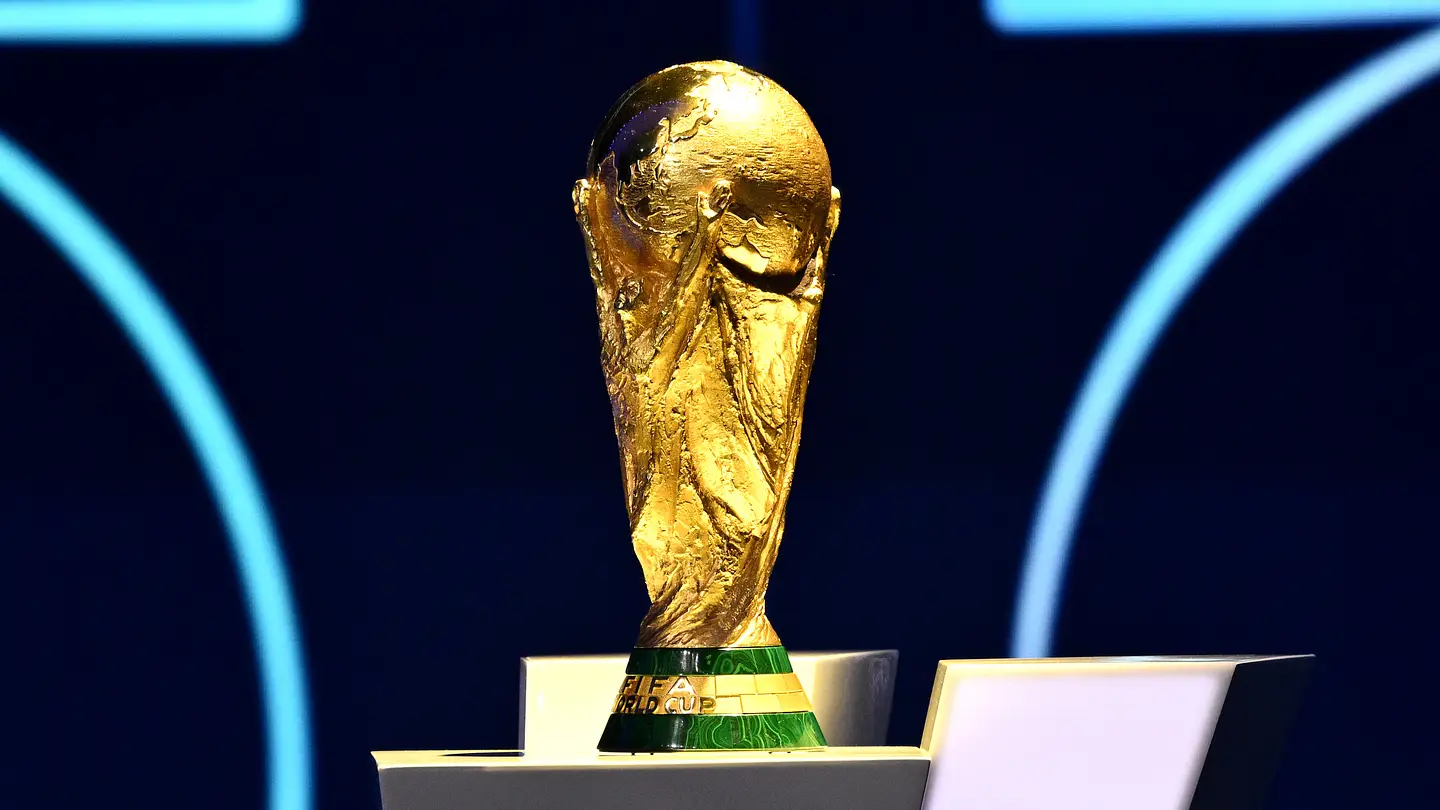
- Runners-up: $33 million, and the champion: $50 million, the largest winner’s prize in World Cup history.
Add the guaranteed money, and the team lifting the trophy on Sunday will bank more than $63.5 million in total – before any additional subsidies.
For comparison, Argentina’s 2022 triumph earned $42 million, and France’s in 2018 brought $38 million. The champion’s cheque has nearly doubled in eight years.
Reading Between the Numbers: Who Really Benefits
Raw figures are one thing; what they mean is another. And having watched these distributions evolve across several World Cup cycles, a few dynamics in the 2026 model deserve a closer look.
The first is the widening gap between the deep run and the early exit. The difference between going out in the group stage and reaching a semi-final now exceeds $18 million in performance money alone – and between a group exit and the title, it’s $41 million.
That gradient creates powerful incentives, and you could feel it on the pitch this summer: the knockout rounds carried a financial edge as sharp as the sporting one. A single penalty shootout in this tournament could swing eight figures.
When France and Spain contested their semi-final in Dallas, the sporting stakes were obvious; less visible was the $4 million difference between a finalist’s minimum and a semi-final loser’s ceiling, with the third-place match still to adjust the final ledger.
The second dynamic is where the money actually goes after FIFA wires it. This is the part casual fans rarely see. The prize money is paid to national federations, not players, and each federation negotiates its own split.
Player bonus structures vary wildly: some squads agreed fixed sums per round before the tournament, others take a percentage of the federation’s receipts, and a few – in a tradition I always find admirable – have donated portions to grassroots causes at home.
The rest funds the federation itself, which in well-governed countries means development programs, women’s football, and youth structures, and in poorly governed ones means, well, questions that investigative journalists will be asking for years.
The cheque is only as valuable as the institution cashing it.
The third observation is comparative, and it stings a little for the international game. FIFA’s own expanded Club World Cup, staged last year, carried a $1 billion pool with up to $125 million for the winning club – more than double what a world champion nation earns.
FIFA points to the different cost structures, and fairly: clubs carry enormous wage bills that federations don’t. But the symbolism is hard to miss.
For the first time, winning the biggest club tournament pays substantially more than winning the biggest prize in the sport. That inversion says something about where football’s economic center of gravity is drifting, and national associations have noticed.
The Bigger Picture: A Tournament’s Worth in Context
Step back from the round-by-round ladder, and the 2026 distribution model tells a story about the World Cup’s evolving role in the football economy – one with genuine bright spots and legitimate concerns.
Start with the trajectory. The total World Cup fund has grown from $358 million in 2014 to $400 million in 2018, $440 million in 2022, and now $871 million.
That’s not inflation; that’s transformation, driven by the commercial gravity of staging the tournament across the United States, Canada, and Mexico – the most lucrative media and sponsorship market in sport.
FIFA has effectively monetized North America and redistributed a meaningful share of the proceeds to its member associations. Whatever criticisms one levels at the governing body, and there are plenty available, the direction of that redistribution is defensible.
For anyone trying to hold the key figures in mind, here’s the tournament’s financial picture in five numbers, ordered from the broadest to the most specific:
- $871 million – the total distribution across all 48 teams, the largest in World Cup history and roughly double Qatar 2022.
- $655 million – the performance-based pool, scaling from group-stage exit to champion.
- $168 million – the guaranteed money paid to federations regardless of results, the tournament’s quiet development engine.
- $12.5 million – the floor every qualified nation banks, life-changing money for smaller federations.
- $63.5 million-plus – the champion’s total haul, the richest single prize any national team has ever played for.
The concerns are worth stating just as plainly. Ticket pricing for this tournament drew fierce criticism, and there’s an uncomfortable tension in FIFA posting record revenues while match-going fans absorbed record costs.
The prize-money arms race also risks widening the gap between football’s haves and have-nots if the guaranteed floor doesn’t keep pace with the performance ceiling.
And the Club World Cup comparison lingers as a warning: if the international game’s crown jewel becomes the second-richest prize in its own sport, the century-old primacy of the national team will face pressures no marketing campaign can fully paper over.
But let me end where the money can’t reach. On Sunday night in New Jersey, twenty-six players will lift a trophy, and I promise you that in that moment, not one of them will be thinking about the $50 million.
The genius of the World Cup – the reason it can command these staggering sums in the first place – is that the thing itself remains priceless.
The money follows the meaning, never the other way around. As long as that ordering holds, football’s biggest prize will keep being worth every dollar FIFA can attach to it, and quite a bit more besides.
RELATED ARTICLES