You’re checking a team’s schedule for next tournament, or planning your viewing calendar, and you need the exact number of matches they’ll play.
Here’s what you need to know: every team plays a minimum of 3 matches in the group stage, but the total depends on how far they advance.
In the 2026 World Cup, the maximum is now 8 matches (a historic first). Before 2026, every tournament since 1986 capped out at 7 matches.
The jump happened because FIFA expanded from 32 to 48 teams and added a new knockout stage called the Round of 32.
Quick Match Count by Format
| Format | Group Stage | Knockout Rounds | Maximum Total | Tournament Years |
| 2026 World Cup | 3 matches | 5 rounds (R32→R16→QF→SF→Final) | 8 matches | 2026 onwards |
| Pre-2026 Format | 3 matches | 4 rounds (R16→QF→SF→Final) | 7 matches | 1986–2022 |
The Direct Answer: How Many Matches Per Team?
Every team plays exactly 3 matches during the group stage. That’s non-negotiable.
From there, the number increases with each knockout round they win. A team winning all the way to the final plays 8 matches total in 2026 (3 group + 5 knockout). Before 2026, that number was 7 (3 group + 4 knockout).
Why the difference? The structure changed. Pre-2026 tournaments had 16 teams advancing to the Round of 16 directly. In 2026, 32 teams advance from groups, creating the new Round of 32 first.
2026 World Cup: Why 8 Matches Maximum?
The expansion from 32 to 48 teams created a ripple effect. You can’t just throw 48 teams into the old bracket system without massive complications.
FIFA’s solution: 12 groups of 4 teams instead of 8 groups of 4. That meant 32 teams advancing (top 2 from each group plus the 8 best third-place finishers) instead of 16. Thirty-two teams need a full knockout round before the traditional Round of 16.
This new Round of 32 is the key difference. It adds one extra match for advancing teams, pushing the maximum from 7 to 8. The tournament expanded by 40 games total (72 group + 32 knockout), but champions now must win one additional match.
A winning team’s path in 2026: 3 group stage + Round of 32 (1) + Round of 16 (1) + Quarterfinals (1) + Semifinals (1) + Final (1) = 8 total matches.
Stage-by-Stage Breakdown
Let’s walk through each stage so you see exactly where matches happen.
Group Stage: 3 Matches (Guaranteed for Everyone)
All 48 teams participate. Each group has 4 teams, and they play everyone once: Team A vs B, A vs C, A vs D, B vs C, B vs D, C vs D. That’s 6 matches per group (12 groups = 72 total group matches).
Every team gets 3 matches here. No exceptions. This is the only stage guaranteed for all participants.
Round of 32: 1 Match (2026 Format Only)
Here’s where 2026 differs from every previous World Cup. Sixteen matches happen in this new round.
The 32 advancing teams are: top 2 from each group (24 teams) + best 8 third-place teams (8 teams). Each match is win-or-go-home. If you advance, you play one more match. If you lose, you’re eliminated.
Previously, this stage didn’t exist. The 16 qualified teams went straight to the Round of 16.
Round of 16: 1 Match (Down to 16 Teams)
Sixteen teams remain after Round of 32. Eight matches determine who reaches the quarterfinals.
Winners advance, losers go home.
Quarterfinals: 1 Match (Down to 8 Teams)
Eight teams left. Four matches send four teams to the semifinals.
Semifinals: 1 Match (Down to 4 Teams)
Four teams compete in two matches. Winners reach the final. Losers play a third-place playoff (though that’s for pride, not qualification).
Final: 1 Match (Champion Determined)
Two teams left. One match crowns the world champion.
Total Knockout Rounds in 2026: 5 matches (R32 + R16 + QF + SF + Final)
Adding the 3 group matches: 3 + 5 = 8 maximum matches per team.
What Happens Based on Your Group Finish?
Not all teams play the same number of matches. Where you finish in your group determines everything.
| Finishing Position | Group Matches | Advances? | Total Matches Possible |
| 1st or 2nd in group | 3 | Yes to R32 | 4–8 |
| 3rd in group (Top 8) | 3 | Yes to R32 | 4–8 |
| 3rd in group (Not Top 8) | 3 | No | 3 |
| 4th in group | 3 | No | 3 |
Finish 1st or 2nd: You’re guaranteed to reach the Round of 32. From there, your match total depends on how far you advance. Win every match? 8 total. Lose in R32? 4 total.
Finish 3rd: This is where it gets interesting. You might advance, but only if you rank in the top 8 of all 12 third-place finishers. If you do, you get into R32 and can play up to 8 matches. If you don’t, you go home after 3 matches.
Finish 4th: You’re done. 3 matches total.
This system is why third-place matches are so intense in 2026. A 3rd-place team’s actual ranking against all other 3rd-place teams determines their tournament life.
For deeper insights into tournament structure, check out World Cup Qualification by Confederation: CAF, UEFA, CONMEBOL, AFC Rules to understand how teams from each region qualify.
Pre-2026 Format: Maximum 7 Matches
Every World Cup from 1986 through 2022 used the same structure: 32 teams, 8 groups of 4, and a Round of 16 as the first knockout stage.
Top 2 teams from each group (16 teams total) advanced straight to the Round of 16. No Round of 32. No third-place advancement based on ranking.
A champion’s path looked like: 3 group matches + Round of 16 + Quarterfinals + Semifinals + Final = 7 total matches.
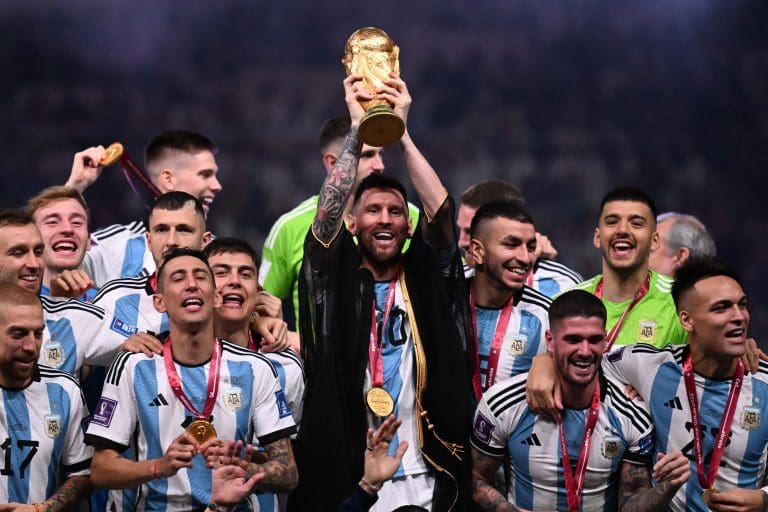
That was the standard for decades. Germany, Brazil, Argentina, France all won championships under this format. It worked, but FIFA felt 48 teams needed a fairer bracket system, hence the 2026 overhaul.
Real-World Match Implications
Winning a World Cup means serious commitment now.
In 2026: Champions play 8 matches across 39 days (June 11–July 19). That’s matches roughly every 5 days, with minimal rest between knockout rounds. Squad depth matters enormously.
Before 2026: Seven matches felt demanding enough. Coaches managed with 23-player squads and rotations. Eight matches pushes teams to bring stronger benches.
More matches also mean more injuries. A star player going down in round 1 leaves coaches scrambling. Backup players get real tournament experience, which changes team dynamics.
The expanded format also gives the 8 best third-place teams a legitimate shot at advancing. In pre-2026 tournaments, finishing 3rd meant going home. Now, beating strong nations in groups is rewarded even if you don’t finish top 2.
How the 2026 Format Changes Strategy
Coaches now think differently about group-stage matches.
In older tournaments, a team could rest players in game 3 if they’d already qualified. Now, a team finishing 3rd needs maximum points to rank high enough among other third-place finishers. Resting stars becomes risky.
This intensifies all 48 matches. Pre-2026, a few group matches felt less critical if you’d locked up first place. In 2026, every point counts for every team.
Teams also can’t plan around a Round of 16 date. If they advance from R32, they could face either a group winner or runner-up, depending on the bracket. That ambiguity requires different preparation.
Why 2026 Feels Different
For context, FIFA considered other formats when expanding to 48 teams. One proposal: 16 groups of 3 teams, with each team playing 2 group matches.
That would’ve meant fewer group matches but the same 7-match maximum for winners.
FIFA rejected it. Three-team groups create collusion risks (two teams can coordinate to both advance while eliminating a third).
The 12-group-of-4 format avoids that by guaranteeing more matches and fairer advancement rules.
So 2026’s 8-match maximum isn’t a bug; it’s intentional design to make the tournament more competitive and secure.
FAQs
How many matches does a team play if they lose in the group stage?
3 matches exactly. Every team plays all their group matches regardless of results.
Can a team advance from the World Cup if they finish 3rd in their group?
Yes, but only the 8 best third-place finishers (out of 12 possible) advance to the Round of 32. FIFA ranks them by points, then goal difference, then goals scored.
What’s the Round of 32?
It’s the first knockout stage in 2026 where 32 teams compete. It didn’t exist in pre-2026 tournaments. Eight groups of 4 teams play: top 2 + best 8 third-place teams.
Why did FIFA expand the World Cup to 48 teams?
More nations get tournament experience, more matches generate revenue, and a larger pool makes the competition less predictable. FIFA views it as growth.
How many total matches happen in the 2026 World Cup?
104 matches: 72 in groups, 32 in knockout rounds.
Do all group matches happen simultaneously?
No. The group stage runs 12 days. However, within each group, the final two matches happen at the same time to prevent unfair advantage.
Is 8 matches the highest ever for one team at a World Cup?
Yes. 2026 is the first tournament where teams can play 8 matches. Every previous World Cup maxed at 7.
How many rest days do teams get between knockout matches?
Typically 2–3 days between R32 and later rounds. The schedule is packed (39 days, 104 matches), so rest is minimal once you’re past group stage.