You’ve probably wondered how FIFA distributes its billions in revenue to countries around the world. With over 200 member nations, the financial structure seems complicated.
Here’s the straightforward answer: FIFA gives each of its 211 member associations up to $8 million over a four-year cycle through the FIFA Forward 3.0 program.
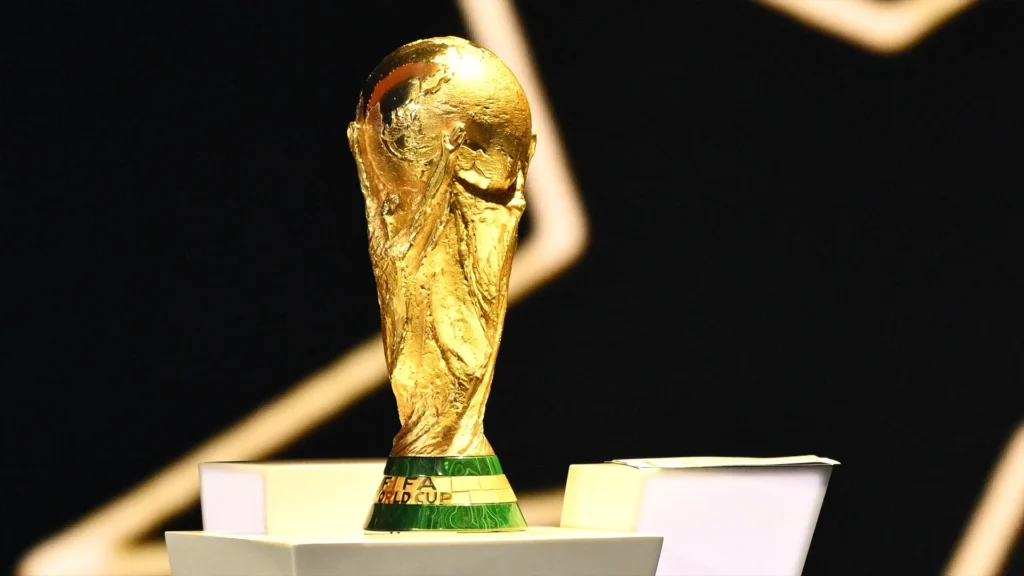
That’s separate from World Cup prize money, which ranges from $10.5 million to $50 million for the 48 teams that qualify for the 2026 tournament.
This guide breaks down both funding streams with current 2026 data, shows you specific country examples, and explains how FIFA ensures the money reaches its intended destination.
How Much Does FIFA Give Through FIFA Forward 3.0?
Each of FIFA’s 211 member associations receives up to $8 million per four-year cycle under FIFA Forward 3.0, which launched in January 2023.
This is development funding available to every country, regardless of whether they qualify for the World Cup.
The funding breaks down into three main categories. Member associations can receive $2 to $2.2 million annually for operational costs like paying staff and running leagues.
On top of that, they can access up to $1.5 million for specific infrastructure and program projects. Countries needing the most assistance can get an additional $1.2 million for things like national team travel and equipment.
This represents a massive increase from earlier versions. FIFA Forward 1.0, which started in 2016, provided only around $1.1 million per cycle. Forward 2.0 bumped that to $5 million.
The current Forward 3.0 program delivers a sevenfold increase since 2016, with total investment reaching $2.7 billion across all 211 member associations for the 2023-2027 cycle.
One thing to understand right away: this development funding is completely separate from World Cup prize money.
Countries receive Forward funding whether or not they qualify for tournaments.
FIFA Forward 3.0 Funding Breakdown by Category
The $8 million maximum isn’t just handed out as one lump sum. FIFA structures it across different types of support.
| Funding Category | Annual Amount | What It Covers | Requirements |
| Operational Costs | $500K-$550K | Base support ($100K) plus criteria-based additions | Must employ staff, organize leagues, have governance programs |
| Project Funding | Up to $1.5M total | Infrastructure, youth programs, women’s football initiatives | Requires detailed proposal and FIFA approval |
| Additional Support | Up to $1.2M total | Travel, accommodation, equipment for national teams | Available to associations needing most assistance |
World Cup Prize Money: How Much Do Qualifying Countries Earn?
Now we get to the tournament money, which is completely different from development funding.
The FIFA World Cup 2026 in the USA, Canada, and Mexico has a total prize pool of $655 million for 48 teams.
That’s a 50% increase from the $440 million distributed at Qatar 2022. But here’s what catches people off guard: only 48 countries out of 211 FIFA members will qualify, meaning most nations never see this money.
Every team that makes it to the tournament receives at least $10.5 million, even if they lose all three group stage matches.
This breaks down to $9 million in base prize money plus $1.5 million in preparation fees to cover training costs before the tournament.
The payouts increase based on how far teams advance:
- Group stage exit: $9-13 million
- Round of 32: Around $15 million
- Round of 16: Around $17 million
- Quarter-finals: Approximately $25 million
- Semi-finals: Approximately $37 million
- Runner-up: Around $42 million
- Winner: $50 million
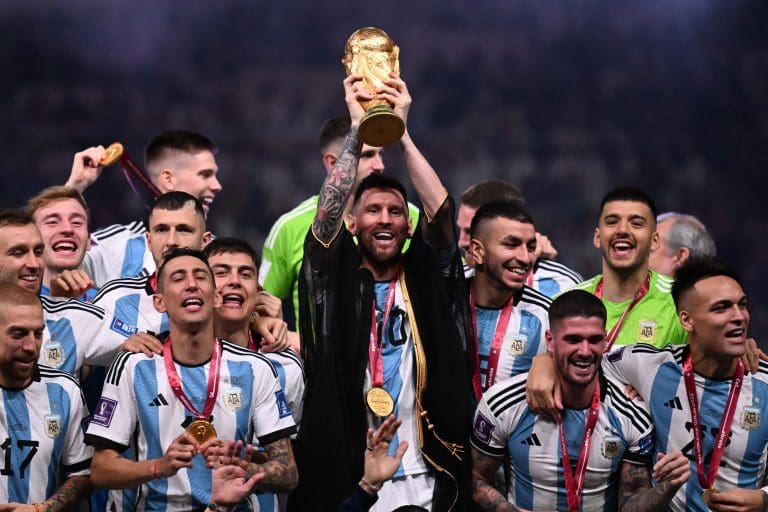
Compare that to Qatar 2022, where Argentina earned $42 million for winning and the minimum payout was $9 million.
The 2026 numbers represent FIFA’s largest-ever World Cup prize pool, though the expansion from 32 to 48 teams means more countries are splitting the money.
What a lot of people miss is that this prize money only goes to qualifying teams during tournament years.
In non-World Cup years, countries still receive their FIFA Forward development funding, but there’s no tournament prize money to compete for.
Real Country Examples: How Much FIFA Money Countries Received
Let’s look at actual numbers from specific countries to make this concrete.
Since 2016, when FIFA Forward 1.0 launched, several countries have received substantial cumulative funding across multiple cycles:
- New Caledonia: $20.5 million total
- Suriname: $20.6 million total
- Jamaica: $20 million total
- Democratic Republic of Congo: $20 million total
- Bolivia: $19 million total
- Iraq: $18.6 million total
These totals combine funding from Forward 1.0, 2.0, and the beginning of 3.0, not just annual amounts. The money went toward specific development projects in each country.
Do All 211 FIFA Members Get the Same Amount?
The short answer: base entitlement is the same, but actual amounts vary quite a bit.
Every member association has access to the full $8 million per four-year cycle, but they need to meet certain criteria to unlock different portions of it. Think of it like a meritocratic system within a set maximum.
Factors affecting how much each association receives include the number of active programs they run (men’s leagues, women’s leagues, youth competitions), whether they employ qualified technical staff and administrators, the quality of their governance and financial auditing, and the specific development projects they propose and get approved.
An association running both men’s and women’s leagues, maintaining youth programs, employing a technical director, and having strong governance structures will receive significantly more annual operational funding than an association with minimal activity.
That’s because each criterion they meet adds $50,000 to their annual operational budget.
The additional $1.2 million support specifically targets smaller federations that need the most help. This ensures associations in developing football regions can cover basic costs like traveling to qualification matches or buying equipment for national team training.
So while the system provides equal access to funding, more active and organized associations unlock larger portions of their entitlement.
No country receives more than the $8 million development funding maximum, but not everyone reaches that ceiling either.
How Does FIFA Ensure Money Is Spent Correctly?
With billions flowing to 211 countries, accountability matters.
All member associations receiving FIFA Forward funding undergo annual independent financial audits performed by world-class auditing firms.
These aren’t internal FIFA reviews; they’re conducted by external auditors who examine how every dollar was spent.
Before receiving project funding, associations must submit detailed proposals explaining exactly what they plan to build or develop.
FIFA’s governance structure includes at least 50% independent members on the Development Committee that oversees the Forward Programme, reducing conflicts of interest.
Projects must link to objectives the association previously agreed upon with FIFA. You can’t just request $1 million for a vague “development initiative” and expect approval.
The proposal needs to specify whether it’s building a training facility, launching a women’s league, or developing youth academies, complete with timelines and measurable outcomes.
After projects receive funding, associations must document spending and provide progress reports. For infrastructure projects like stadium renovations, FIFA requires proof of completion and proper use of the facilities.
Consequences for misuse are real. FIFA can suspend or withhold funding from associations that fail audits or misappropriate funds.
The enhanced regulations implemented in 2016 include much tougher compliance measures than existed before the Forward Programme started.
This verification system ensures development funding reaches its intended destination rather than disappearing into administrative overhead or personal enrichment.
FAQs
How much money does FIFA make from the World Cup?
FIFA generated $7.5 billion in revenue from the Qatar 2022 World Cup cycle (2019-2022), with $6.3 billion directly from tournament broadcasting and commercial rights. The 2026 World Cup is projected to generate $8.9 billion total revenue from broadcasting deals, sponsorships, ticket sales, and hospitality packages.
Does FIFA give money to countries that don’t qualify for the World Cup?
Yes, absolutely. All 211 FIFA member associations receive up to $8 million per four-year cycle through FIFA Forward 3.0 regardless of World Cup qualification. Only 48 teams qualify for the 2026 tournament, but every single member association gets development funding separately from prize money.
What is the FIFA Forward Programme?
FIFA Forward Programme is FIFA’s flagship development funding system that distributes money to all 211 member associations for operational costs, infrastructure projects, and football development initiatives. The current version, Forward 3.0 launched in 2023, provides up to $8 million per association per four-year cycle with enhanced oversight and accountability measures.
How much did the 2022 World Cup winner receive?
Argentina earned $42 million for winning the 2022 FIFA World Cup in Qatar. The total prize pool was $440 million distributed among 32 teams. Every participating country received a minimum of $9 million plus $1.5 million in preparation fees, even teams eliminated in the group stage.
Which countries get the most FIFA funding?
All 211 FIFA member associations have access to the same $8 million maximum per four-year cycle. No country receives more than this development funding cap. Associations that meet more criteria (organized leagues, qualified staff, good governance, approved projects) unlock higher portions of their entitlement, but the ceiling remains $8 million for everyone.
Can FIFA member associations spend development funds however they want?
No. FIFA Forward funds require pre-approval for specific projects. Member associations must submit detailed proposals, undergo annual independent audits, and document all spending. Operational costs follow defined criteria for staff and programs, while project funding requires FIFA approval before any money gets released.
How much money does FIFA have in reserves?
FIFA reported reserves of approximately $4.5 billion as of 2023. This substantial financial cushion enabled FIFA to provide $1.5 billion in COVID-19 relief to member associations when football activities halted worldwide during the 2020-2021 pandemic without jeopardizing the organization’s long-term financial stability.
Do confederations receive FIFA funding separately?
Yes, FIFA’s six confederations each receive $60 million per four-year cycle to develop, promote, and organize football within their respective regions. This confederation funding is completely separate from the $8 million per member association allocation and supports regional competitions, referee development, and administrative operations.
Has FIFA Forward funding increased over time?
Significantly. FIFA Forward 1.0 in 2016 provided approximately $1.1 million per cycle per association. Forward 2.0 increased that to $5 million. Forward 3.0, launched in 2023, provides up to $8 million per four-year cycle. That’s a sevenfold increase since 2016, with total investment across all 211 associations reaching $2.7 billion for the 2023-2027 cycle.
What happens to FIFA World Cup host country funding?
Host countries receive FIFA contributions toward organizing costs but bear the majority of infrastructure expenses themselves. Qatar 2022 received approximately $1.7 billion from FIFA plus $440 million for the prize money pool. The 2026 hosts (USA, Canada, Mexico) will receive similar organizational support, though exact amounts vary based on the hosting agreement negotiated with FIFA.