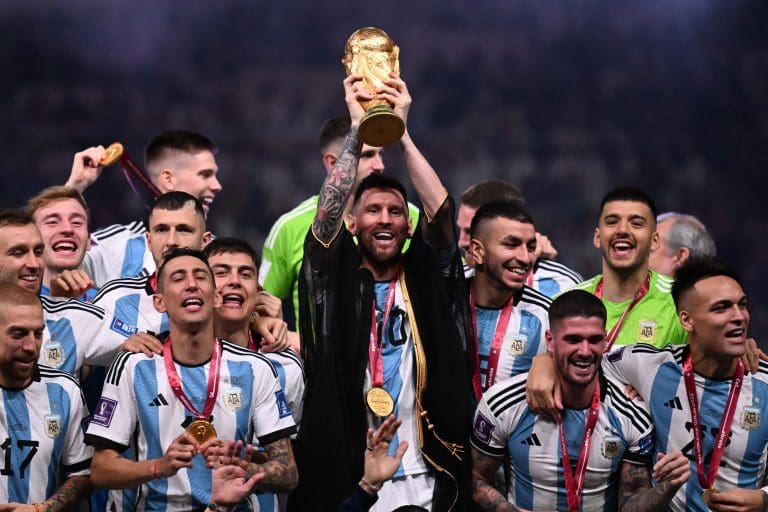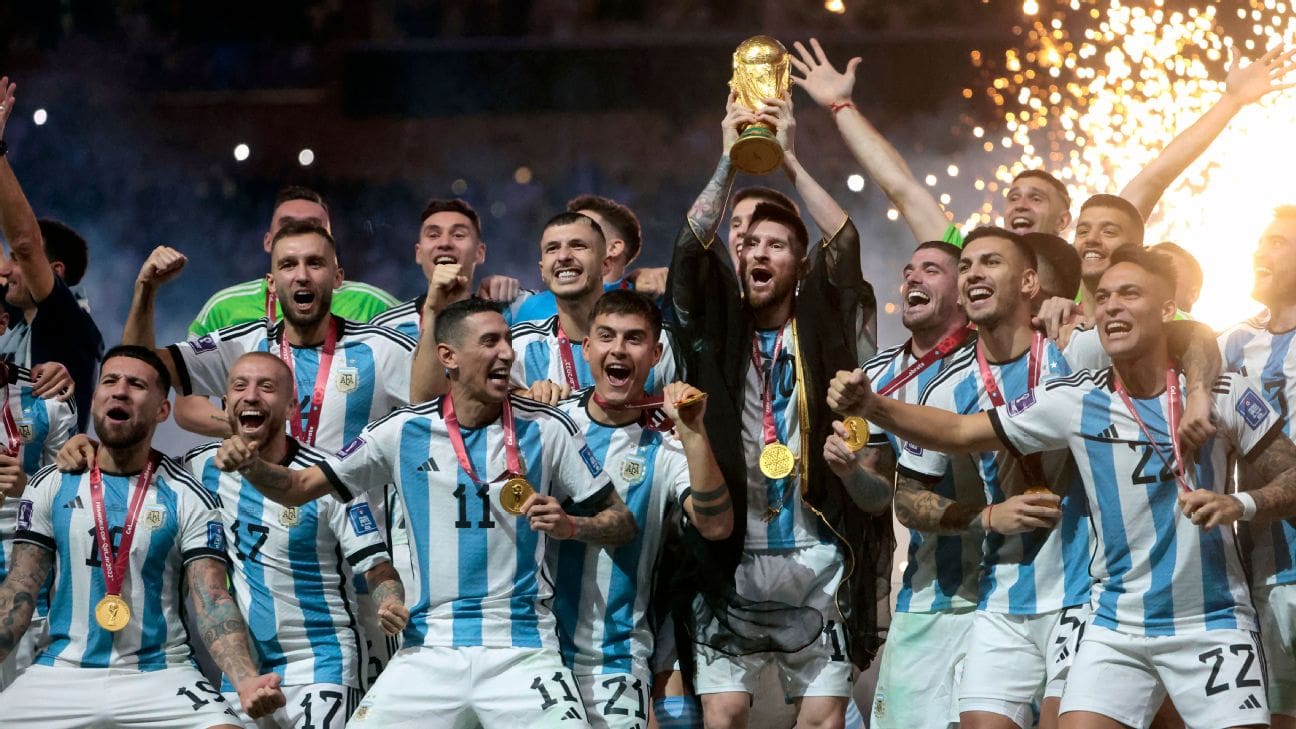
The FIFA World Cup is held every four years. This quadrennial schedule has been standard since 1930, with only two exceptions in 1942 and 1946 due to World War II.
The four-year cycle gives global qualification time, allows host nations to prepare infrastructure, and protects player health.
Three core reasons drive this schedule. First, the qualification spans 2-3 years across six confederations and 200+ nations competing for spots.
Second, host countries need 7-10 years minimum to build stadiums and logistics for millions of visitors. Third, players require recovery time between tournaments and development windows for younger squads.
| Reason for 4-Year Cycle | Impact | Timeline |
| Qualification across confederations (UEFA, CONMEBOL, AFC, CAF, CONCACAF, OFC) | 865+ matches in Qatar 2022; all 211 FIFA members compete for ~32 spots | 2-3 years required |
| Host nation infrastructure (stadiums, metro, roads, accommodations) | Qatar spent $220B total; requires construction permits, safety checks, labor coordination | 7-10 years typical |
| Player recovery and development | Prevents burnout; allows squad rebuilding after retirements; youth development cycles | Career spanning 2+ tournaments |
| Tournament prestige | Maintains rarity and global excitement; sustains commercial value | Quadrennial spacing necessary |
Reason 1: World Cup Qualification Takes 2-3 Years Across Six Confederations
World Cup qualification isn’t rushed. It’s a marathon involving nearly 900 matches spread across continents over multiple seasons.
In Qatar 2022 alone, 865 qualifying matches determined just 31 teams (the host nation enters automatically).
Here’s why compression fails. International football windows happen only a handful of times yearly. Clubs control players most of the year through domestic leagues running 34-38 matches per season.
FIFA can’t demand more international breaks without destroying club football’s revenue and player welfare.
The six continental confederations run qualification simultaneously: UEFA (Europe, 16 spots), CONMEBOL (South America, 4-5 spots), AFC (Asia, 4-5 spots), CAF (Africa, 5 spots), CONCACAF (North/Central America, 3-4 spots), OFC (Oceania, 0.5 spots).
Each confederation structures its own tournament format: some use round-robin groups, others use playoff rounds.
A compressed one-year qualification window would require clubs releasing players 15-20 times annually. This is commercially impossible and physically dangerous.
The four-year World Cup qualification schedule exists because it’s the only realistic timeline for global federation participation.
Reason 2: Host Nations Need 7-10 Years for Infrastructure
Hosting a World Cup isn’t building a stadium. It’s upgrading an entire city’s systems for 1-3 million visitors over a month.
Qatar’s 2022 World Cup illustrates this scale. The nation won hosting rights in 2010 and spent 12 years preparing.
Total investment exceeded $220 billion across eight new stadiums, a metro system ($36 billion alone), highways, cooling systems, security infrastructure, and accommodation upgrades.
Construction takes time. Safety inspections, labor permits, environmental reviews, and coordination between government agencies require years of planning.
A four-year World Cup frequency means host nations can finish construction and testing before the tournament arrives.
If World Cup happened every two years, host nations would face crushing preparation timelines. Excavation of metro systems alone takes 5-7 years. Stadium design, permitting, and construction span 4-5 years minimum.
Compressing this into a biennial schedule would either force inferior infrastructure or demand host nations begin construction immediately upon losing bids to later hosts.
The four-year cycle gives hosting nations adequate preparation windows while allowing tournament-to-tournament spacing that keeps excitement high.
Reason 3: Players Need Recovery and Development Time
Modern footballers are already fatigued. A standard season includes 34-38 domestic league matches, cup competitions, and international fixtures. Adding tournaments every two years instead of four intensifies injury risk and burnout.
Youth development matters too. A 19-year-old at one World Cup needs four years to mature into a reliable senior player by the next tournament.
Germany’s squad overhaul after 2014 illustrates this: the nation couldn’t reload instantly; it took the full four-year cycle to develop replacement talent and tactical systems.
Frequent tournaments compress player development windows. Emerging nations especially need four-year cycles to develop pathways from youth academies to senior competition. Two-year gaps eliminate this development space entirely.
Player injury rates spike with increased fixture density. The four-year gap provides recovery seasons where athletes rebuild strength, technique, and tactical understanding without constant tournament pressure.
Why Not Every 2 Years? The Failed Biennial Proposal
In 2021-2022, FIFA leadership (including Arsene Wenger) proposed a biennial World Cup. The confederation response was swift and negative.
UEFA (European football) called it “highly unviable” and cited “real dangers.” CONMEBOL (South America) stated the proposal “could put the quality of other tournaments at risk” and found “no sporting justification to cut the time period between World Cups.”
Club leagues opposed it aggressively. Premier League, La Liga, Bundesliga, and Serie A warned of fixture congestion that would destroy player welfare. European clubs would lose 2-3 weeks of player availability every two years instead of every four years.
The biennial proposal failed because it directly creates the problems the four-year schedule prevents.
Confederation objections centered on three points: insufficient qualification time for smaller nations, unsustainable player workload, and diminished prestige through over-frequency.
By 2023, FIFA quietly abandoned the biennial plan. The four-year cycle is now codified in FIFA statutes through at least 2030.
Historical Exception: WWII and Why It Matters
The only time the four-year cycle broke was forced by global catastrophe. The 1942 and 1946 World Cups were cancelled due to World War II. This created a 12-year gap between 1938 and 1950.
When FIFA resumed competition in 1950, it firmly reestablished the four-year schedule. This decision was deliberate: even after unprecedented disruption, FIFA chose the quadrennial cycle as the gold standard for tournament organization.
The WWII exception actually reinforces why the four-year pattern exists. The 12-year gap demonstrated that disruption damages tournament infrastructure, planning systems, and global football development. Returning to four-year spacing was a deliberate rejection of irregular scheduling.
What’s Next: 2026 and Beyond
The next World Cup arrives in 2026 with a major format change. The tournament expands from 32 to 48 teams and 104 total matches (up from 64). This happens in the USA, Mexico, and Canada jointly.
This expansion doesn’t change the four-year frequency. 2026 still occurs exactly four years after 2022.
The qualification timeline remains 2-3 years. Host nation preparation windows stay 7-10 years.
The schedule ahead confirms the pattern:
| Tournament | Year | Host | Teams | Format |
| Men’s World Cup | 2026 | USA, Mexico, Canada | 48 | 12 groups of 4 |
| Men’s World Cup | 2030 | Morocco, Spain, Portugal (+ South America centenary matches) | 48 | 12 groups of 4 |
| Men’s World Cup | 2034 | Saudi Arabia | 48 | Format TBD |
| Women’s World Cup | 2023 | Australia | 32 | 8 groups of 4 |
| Women’s World Cup | 2027 | Brazil | 32 | 8 groups of 4 |
Women’s World Cup also follows every four years but deliberately staggered from men’s tournaments. This alternating schedule prevents direct competition for viewership and media attention.
The 2026 expansion to 48 teams fits within the four-year frequency because more qualification spots exist (16 teams per confederation instead of 8 for some regions).
For a deeper breakdown of this, see World Cup Qualification by Confederation: CAF, UEFA, CONMEBOL, AFC Rules which explains how each confederation’s allocation expands.
How Qualification Breaks Down by Confederation
The four-year World Cup qualification schedule ensures every confederation gets adequate time to complete its process.
For detailed confederation-specific rules and allocation changes in 2026, check FIFA World Cup Group Schedule and Format Evolution.
| Confederation | 2026 Spots | Qualification Format | Typical Duration |
| UEFA (Europe) | 16 | 10 groups of 5-6 teams | 2 years, 10 matches per team |
| CONMEBOL (South America) | 6 | Round-robin 10 teams | 18 matches over 2 years |
| AFC (Asia) | 8 | 4 groups + playoffs | 2 years with playoff round |
| CAF (Africa) | 9 | Preliminary + group stages | 2+ years with preliminary round |
| CONCACAF (N/Central America) | 6 | 3-round format with leagues | 18 months to 2 years |
| OFC (Oceania) | 0.5 | Playoff path to other confederations | Varies, 1-2 years |
Why Qualification Timelines Aren’t Flexible
Clubs release players only during FIFA international breaks (typically 5-6 per season). Doubling tournament frequency would demand 10-12 breaks annually, which decimates club schedules and revenue.
This constraint is absolute. No confederation can compress qualification below 2 years without reducing match quality, eliminating smaller nations’ development opportunities, or creating unfair playoff formats. The four-year World Cup schedule acknowledges this reality.
FAQs
Why Did FIFA Reject the Every-2-Years Proposal?
UEFA, CONMEBOL, and club leagues opposed it. Confederation feedback centered on player burnout, fixture congestion, and reduced development time for smaller nations competing in World Cup qualification cycles.
Has the World Cup Ever Been Held at Different Frequencies?
Only during WWII (1942, 1946 cancellations). Since 1950, the four-year cycle has remained constant without exception through 22 completed tournaments.
Do Men’s and Women’s World Cups Happen Simultaneously?
No. Women’s tournaments occur every four years on alternating years (2023, 2027, 2031) to prevent competing for viewership and media attention globally.
How Many Matches Do Qualification Rounds Require?
The Qatar 2022 qualifier involved 865 total matches across 211 FIFA nations seeking 31 available spots. Format complexity varies by confederation size and geographical distribution.
Could Climate Change Force a Different Schedule?
No. The four-year frequency is codified in FIFA statutes through 2030. Climate might shift tournament months (Qatar 2022 moved to November-December for heat), but quadrennial spacing remains fixed.
What Happens to Players if World Cup Becomes Biennial?
Recovery time shrinks. Players would have only two years instead of four between tournaments. Injury rates would spike based on sports medicine research into fixture density and recovery windows.
Why Is 2026 Expanding to 48 Teams Within Four Years?
Expansion happens through increased qualification spots per confederation, not timeline compression. Each confederation qualifies more teams in the same 2-3 year window through revised group formats.
When Will the Next World Cup Qualification Begin?
2026 qualifiers began in 2024 across all six confederations. Matches continue through late 2025, with final playoffs concluding by early 2026 before the tournament opens in June.
Do Continental Championships Affect World Cup Qualification Timing?
Yes. UEFA Euro, Copa America, and African Cup of Nations are scheduled strategically around World Cup qualification windows to avoid fixture overlap and ensure player availability.
Has Any Nation Hosted World Cup Twice in Four Years?
No. The four-year gap ensures every host completes preparation and recovery before another nation hosts. Regional hosting (USA/Mexico/Canada 2026) distributes infrastructure costs across multiple nations.