The Jules Rimet Trophy has one of sport’s most dramatic histories. Designed in 1930 to celebrate football’s global game, it became the prize every nation dreamed of winning.
But twice thieves stole it. Only one theft had a happy ending.
The Trophy That Started a Global Game
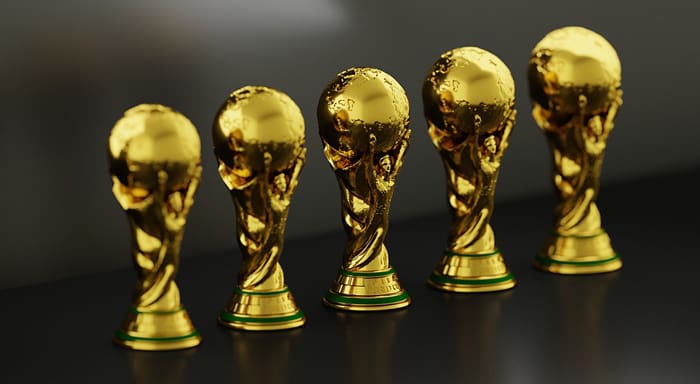
The original Jules Rimet Trophy stood 35 centimeters tall and weighed just 3.8 kilograms. French sculptor Abel Lafleur designed it to honor Jules Rimet, FIFA’s visionary president who created the World Cup in 1930.
The trophy depicted Nike, the Greek goddess of victory, holding an octagonal cup in her outstretched hands. Its base was made of lapis lazuli, a semi-precious stone with a deep blue color that made the trophy instantly iconic.
Gold-plated sterling silver formed the main body. In 1954, administrators replaced the original base with a taller version to accommodate the names of more World Cup winners.
From 1930 to 1970, this trophy was awarded to each World Cup champion. After Brazil won their third World Cup in 1970, they earned permanent ownership of the trophy under Jules Rimet’s original stipulation.
That’s when the trophy’s greatest troubles began. The trophy’s journey from celebration to crime scene changed football’s relationship with its most iconic symbol.
| Trophy Specification | Details |
| Height | 35 cm (14 inches) |
| Weight | 3.8 kg (8.4 pounds) |
| Material | Gold-plated sterling silver |
| Base Material | Lapis lazuli (semi-precious stone) |
| Designer | Abel Lafleur (French sculptor) |
| Years Used | 1930-1970 |
| Permanent Owner | Brazil (after 1970 third World Cup win) |
| Current Original Status | Lost/Stolen 1983, never recovered |
The 1966 Theft: A Trophy Vanishes Before England’s World Cup
On March 20, 1966, four months before England hosted the World Cup, the Jules Rimet Trophy disappeared from Westminster Central Hall in London. It was on display as part of a Stanley Gibbons stamp exhibition.
Six security guards were stationed there. Yet the trophy was stolen in broad daylight while a Methodist church service took place in another part of the building.
The thief forced open the display cabinet and removed the padlock with precision. Security guards only checked on the trophy once per hour during exhibition hours, which meant there was a 60-minute window for someone to act.
According to reporting from the BBC at the time, FA chairman Joe Mears received an anonymous call the next day. A ransom letter arrived demanding 15,000 British pounds, with a threat to melt the trophy down if authorities contacted police.
Despite warnings, Mears involved Scotland Yard’s Flying Squad. Police set up a sting operation using fake money. An undercover detective spotted the suspect, identified as Edward Betchley, a petty thief and used car dealer with a criminal record.
Betchley was arrested after jumping from a moving car during a dramatic chase. He claimed he was only a middleman working for someone called “The Pole,” a figure police never identified.
Betchley received a two-year prison sentence for his involvement. But the true mastermind behind the theft remains unknown to this day.
| 1966 Theft Timeline | Event |
| March 20, 1966 | Trophy stolen from Westminster Central Hall |
| March 21, 1966 | Ransom letter received by FA chairman |
| Late March 1966 | Police sting operation conducted |
| March 27, 1966 | Trophy recovered by Pickles the dog |
| July 30, 1966 | England wins World Cup with both original and replica present |
The Dog Who Found Football’s Greatest Prize
Seven days after the theft, David Corbett was walking his black and white collie near Beulah Hill in South London. He was heading to a telephone box when something unexpected happened.
Pickles, his dog, sniffed out a package wrapped in newspaper. Inside the package was the stolen Jules Rimet Trophy.
Corbett immediately reported his discovery to police. He received a 6,000-pound reward for the trophy’s recovery.
Pickles became a national hero, appeared on television, and received a silver medal from the National Canine Defence League.
As reported by various news outlets including the Daily Mirror archive, the FA immediately commissioned a secret replica of the trophy.
British jeweler George Bird created a gilded bronze copy in secret as a security measure, since FIFA had previously forbidden any replicas from being made.
Both versions of the trophy existed at Wembley Stadium during the 1966 World Cup Final on July 30. Queen Elizabeth II presented the original trophy to England’s captain Bobby Moore on the pitch.
However, a replica was secretly swapped before the players returned to the dressing room. Most of the England team never knew they had celebrated with a copy.
This swap was designed to protect the recovered original from further risk during the tournament.
The 1983 Theft: When the Trophy Vanished for Good
After Brazil earned permanent ownership of the Jules Rimet Trophy in 1970, it was moved to the Brazilian Football Confederation (CBF) headquarters in Rio de Janeiro.
The trophy was placed in a display cabinet with bulletproof glass on the front.
The back of the cabinet, however, was made of wood.
On December 19, 1983, thieves forced open the wooden rear of the cabinet using a crowbar. They took the trophy and disappeared. Unlike the 1966 theft, no ransom demand ever came.
Four men were arrested and tried in absentia: Sergio Peralta (the mastermind), Juan Carlos Hernández (an Argentine gold dealer), Luiz Bigode, and Chico Barbudo. None of them faced serious consequences for the crime.
Hernández bought an expensive estate in Rio’s upscale Humaitá neighborhood shortly after the theft, which sparked police suspicion. Officers theorized he had melted the trophy into gold bars and sold the gold.
But here’s the critical problem with that theory: the Jules Rimet Trophy wasn’t made of solid gold. It was gold-plated sterling silver with a lapis lazuli base.
According to investigative reports on the theft, melting the trophy would have been impractical and financially disastrous. The non-gold components would have been destroyed, reducing the total gold value to almost nothing.
Federal police officer Pedro Berwanger investigated the case and concluded: “If left intact, it would be worth much more.” Trace amounts of gold found at Hernández’s foundry didn’t match the trophy’s material composition either.
Hernández fled to France and was arrested in 1998 for drug trafficking. He was released in 2005 without ever serving time for receiving stolen goods related to the trophy.
Sergio Peralta was freed from jail in 1998 and died of a heart attack in 2003. Chico Barbudo was shot to death in a bar in 1989. Luiz Bigode was re-arrested and freed again in 1998.
The investigation stalled. The trophy was never found.
| 1983 Theft Suspects & Outcomes | Details |
| Sergio Peralta | Mastermind, freed 1998, died 2003 |
| Juan Carlos Hernández | Gold dealer, fled to France, arrested 1998 for drug trafficking |
| Luiz Bigode | Re-arrested and freed in 1998 |
| Chico Barbudo | Shot to death in bar in 1989 |
| Result | All escaped serious consequences for trophy theft |
What Happened to the Original Trophy? Three Theories Remain
Nearly 42 years have passed since the Jules Rimet Trophy disappeared from Rio. No conclusive evidence has ever surfaced about its fate.
Three competing theories exist, each with supporting evidence and critical flaws. Understanding these theories requires examining what researchers and investigators have discovered about the trophy’s composition and potential fate.
Theory 1: Melted Into Gold Bars
This is the most popular theory among football historians. Criminals could have melted the trophy and sold the gold on the black market for profit.
The problem: as noted above, the trophy’s material composition makes this impractical. It wasn’t solid gold. Research into trophy composition shows the impracticality of this approach.
Theory 2: Sold on the Black Market
Some investigators believe the trophy was sold intact to a private collector who has kept it hidden for decades. This theory preserves the trophy’s value and avoids the melting problems.
The risk is enormous. A private collector would need to hide one of football’s most recognizable objects forever without drawing attention. Understanding how such a theft could occur requires examining similar high-value sports artifact thefts throughout history.
Theory 3: Still in a Private Collection
A third possibility is that the trophy exists somewhere, held by a wealthy collector or institutional buyer. No evidence supports this theory beyond wishful thinking from Brazilian football fans.
The only piece of the original trophy ever recovered is the base. FIFA kept it in a basement at headquarters in Zurich prior to 2015.
This single component proves the original existed but provides no clues to the main trophy’s fate. The mystery remains genuinely unsolved.
| Fate Theory Comparison | Evidence | Problems |
| Melted into gold bars | Gold dealer bought estate; police theory | Trophy not solid gold; foundry traces didn’t match |
| Sold on black market | Avoids melting problems; preserves value | Risk of discovery; no buyer identified |
| Still in private collection | Wishful thinking from fans | No evidence; would require permanent secrecy |
The Replicas and What Survives Today
Multiple replicas of the Jules Rimet Trophy now exist in museums and archives. The confusion around which is which has created its own mystery.
The FA commissioned the first replica in secret in 1966. British jeweler George Bird created it from gilded bronze. This replica was used during public celebrations and appearances until 1970.
In 1997, FIFA purchased the replica at auction for 254,000 British pounds. This sparked wild conspiracy theories that the museum actually held the original, not a copy.
According to scientific analysis published by the University of Manchester, scientists from the institution settled the debate in 2016.
Using state-of-the-art X-ray technology and elemental analysis, they proved conclusively that the National Football Museum in Manchester holds a bronze and gold-plated replica, not the original.
The original trophy was made of cast silver beneath the gold plating. The Manchester replica contained tin and lead, confirming it was a fabrication.
Brazil commissioned a second replica in 1984, made by Eastman Kodak, after the 1983 theft. This copy was presented to the Brazilian military president and remains in Brazilian archives.
The only surviving piece of the original Jules Rimet Trophy is its base, held by FIFA in Zurich. This represents the only authentic component from the original that was ever recovered.
Why Did Two Thefts Have Such Different Outcomes?
The 1966 theft was opportunistic and semi-professional. The thief exploited human security gaps, demanded ransom, panicked when police got involved, and abandoned the trophy.
The 1983 theft was calculated and methodical. Criminals knew exactly where the security weaknesses were. They targeted the wooden back of a supposedly secure cabinet and made no ransom demand.
In 1966, the crime was traceable. The ransom demand created evidence and a clear investigative trail. Public attention was intense, which led to Pickles’ discovery.
In 1983, criminals offered no ransom and left minimal evidence. Years passed before the public understood the full scope of what had happened. By then, the thieves had scattered and disappeared.
Both incidents revealed the same lesson: administrators trusted institutions to protect something invaluable, yet security measures failed twice. In 1966, human oversight was inadequate. In 1983, structural design left the back door open.
Football’s greatest trophy couldn’t be kept safe in the hands of those meant to preserve it.
FAQs
Why was the Jules Rimet Trophy stolen in 1966?
A thief demanded a 15,000-pound ransom from FA chairman Joe Mears. Edward Betchley, the suspect arrested, claimed to be only a middleman for someone called “The Pole.” The true mastermind was never identified.
How did Pickles the dog find the trophy?
David Corbett was walking his collie near Beulah Hill in South London when Pickles sniffed out the trophy wrapped in newspaper against a car wheel. Corbett reported it and received a 6,000-pound reward.
Was the 1983 trophy melted down?
The leading theory claims it was melted, but the trophy’s gold-plated sterling silver composition makes melting impractical. Trace gold at suspect Juan Carlos Hernández’s foundry didn’t match the trophy’s material.
Who stole the trophy in 1983?
Four men were tried in absentia: Sergio Peralta (mastermind), Juan Carlos Hernández (gold dealer), Luiz Bigode, and Chico Barbudo. All escaped serious consequences. Peralta died in 2003; Barbudo was shot in 1989.
Where is the original Jules Rimet Trophy now?
It has never been found. Only the original base remains, held by FIFA in Zurich. The main trophy is presumed lost, melted, or in a private collection. The mystery remains unsolved.
What’s the difference between the original and the replicas?
The original was gold-plated sterling silver with a lapis lazuli base. The 1966 replica is gilded bronze. Manchester scientists proved with X-ray analysis in 2016 that the National Football Museum holds a replica, not the original.
Why did Brazil own the trophy permanently?
Jules Rimet stipulated that the first team to win the World Cup three times could keep the original trophy permanently. Brazil won their third title in 1970, earning ownership under this rule.
Could the trophy still exist?
Possibly. Some believe it’s in a private collection or hidden by someone who can’t risk revealing it. No evidence supports this. The most likely scenarios are melting or sale on the black market.