The World Cup started small in 1930. Just 13 teams competed in Uruguay. Today, the tournament has transformed into the world’s largest sporting event, growing from a simple concept into a complex structure involving over 200 qualifying nations.
World Cup format evolution tells the story of how FIFA adapted the tournament to accommodate more nations, improve competition, and create memorable moments.
Each expansion brought new challenges and opportunities for smaller nations to compete on football’s biggest stage.
| Era | Years | Teams | Format | Key Features |
| Era 1 | 1930-1938 | 13-16 | Groups + Knockout | No qualifying rounds (1930 only), invited teams, straight elimination in later years |
| Era 2 | 1950-1970 | 13-16 | Group-based formats | Round-robin groups, varied advancement rules, seeding systems |
| Era 3 | 1974-1982 | 16-24 | Two-stage groups | Initial groups plus second group phase, expansion to 24 teams |
| Era 4 | 1986-1994 | 24 | Group + Knockout | Standardized 8-team groups (later 6), straightforward quarterfinal structure |
| Era 5 | 1998-2022 | 32 | Modern knockout | 8 groups of 4, top 2 advance, consistent 64-match format |
| Era 6 | 2026+ | 48 | New expansion | 16 groups of 3, expanded knockout round, first three-nation host |
The Inaugural Tournament (1930): How It All Began
The first World Cup was unlike any tournament before or since. Only 13 teams competed, and nobody had to qualify. FIFA invited selected nations.
FIFA President Jules Rimet proposed the idea in 1928. He chose Uruguay as the host because the country was celebrating 100 years of independence and offered to pay for European teams’ travel expenses during the Great Depression.
The format used four groups with round-robin play. Group winners advanced directly to semifinals. No knockout matches until the final four teams remained.
Uruguay hosted the tournament from July 13 to July 30, 1930. Just 93,000 people attended the final between Uruguay and Argentina. Uruguay won 4-2 to claim the first World Cup title.
Seven South American teams participated alongside four European nations and two from North America. The European teams faced criticism for traveling across the Atlantic Ocean, which took weeks by ship.
This inaugural World Cup format established traditions still used today. Teams were divided into groups for initial competition. Winners progressed to later stages. The champion was determined by a final match.
Understanding the origins helps contextualize modern changes. Learn more about World Cup qualifying stages to see how participation evolved from invitation-only to competitive qualification rounds.
Early Expansion Era (1934-1950): Building Global Interest
The 1934 World Cup in Italy marked a major shift in World Cup format evolution. It was the first tournament with a qualifying stage. Suddenly, over 30 nations wanted to participate.
Only 16 teams qualified for the finals in Italy. The format changed dramatically from 1930. FIFA used a pure knockout system with no groups.
This meant teams played only one match before elimination. Critics complained it wasn’t fair. A strong team could lose once and go home.
The 1938 World Cup in France kept the same knockout-only format. Austria qualified but couldn’t compete because Nazi Germany had annexed the country. Only 15 teams appeared in France.
The 1950 World Cup in Brazil changed things again after World War II cancelled the 1942 and 1946 tournaments. This edition used a unique final group of four teams instead of a traditional final match.
The match between Uruguay and Brazil decided the champion. According to comprehensive World Cup historical records, it’s known as the “Maracanazo” because Brazil lost at home with approximately 200,000 spectators watching. Uruguay defeated Brazil 2-1.
This 1950 format gave more games to each team. Every nation played multiple matches before elimination. But FIFA found it confusing to crown champions without a dramatic final.
The Stable 16-Team Era (1954-1978): Building Structure
From 1954 to 1978, the World Cup format evolution stabilized around 16 teams. This era lasted 24 years and created the foundation for modern tournaments.
The 1954 World Cup in Switzerland was historic. It was the first tournament televised on television. West Germany defeated Hungary 3-2 in a famous final known as the “Miracle of Bern.”
The format featured four groups of four teams in a round-robin structure. The top two from each group advanced to quarterfinals. This created a simple, understandable progression.
From 1958 to 1970, this structure remained consistent. Teams played three group matches, with the top two advancing. Quarterfinal matches then eliminated two teams per match.
Between 1974 and 1978, FIFA introduced a second group stage. The top two teams from each group entered new groups instead of quarterfinals. This created six teams competing for the championship.
The format proved confusing but added more matches for top teams. Brazil, Argentina, and Italy sometimes met again in the second group phase. Winners of the final group played each other for the title.
This 16-team structure worked well for decades. It balanced fairness with competitive balance. Equal-sized groups of four became standard in football tournaments worldwide.
The First Major Expansion (1982-1994): 24 Teams Change Everything
Spain 1982 marked the first major expansion in World Cup format evolution. FIFA increased the tournament from 16 to 24 teams for the first time.
This created new challenges. Twenty-four teams don’t divide evenly into four groups of four. FIFA used six groups of four teams instead.
From each group, the top two teams advanced. But this created 12 teams in a second round. The second stage divided into two groups of six teams each.
The top two from each group qualified for semifinals. This format was complicated but generated more matches and revenue. More nations could participate and showcase their talent.
From 1982 to 1994, FIFA maintained the 24-team format. The 1986 Mexico World Cup introduced a rule where all final group matches must start simultaneously. This prevented collusion between teams.
The same simultaneous rule applied to 1990 and 1994. Teams couldn’t intentionally lose to benefit another team. Match-fixing became harder under this regulation.
In 1994, FIFA changed the points system. Previously, a win earned 2 points and a draw earned 1 point. Now, a win earned 3 points and a draw earned 1 point.
This 3-1-0 system encouraged attacking football. Teams needed more wins to advance. Draw matches became less valuable strategically. Learn about how this change affects World Cup tiebreaker rules in modern competition.
Brazil won the 1994 World Cup, defeating Italy on penalties. It was the first World Cup final decided by penalty shootout. The format created exciting opportunities for more teams worldwide.
The Modern Format Arrives (1998-2022): 32 Teams and Consistency
France 1998 introduced the most significant change in recent World Cup format evolution. FIFA expanded to 32 teams using eight groups of four.
This format created elegance and balance. Each group of four teams played round-robin matches. The top two from each group advanced to a knockout round of 16.
Thirty-two teams meant 64 total matches. Eight groups with four teams generated six matches per group. Then 16 teams competed in 16 knockout matches plus semifinals and finals.
This structure lasted from 1998 to 2022. Twenty-four consecutive years of consistent format. Coaches knew exactly how many matches their teams would play.
The eight groups meant more diverse regional competition. African nations could advance more consistently. Asian and North American teams had better opportunities.
The 2002 World Cup was historic. South Korea and Japan became the first Asian nations to co-host. South Korea reached the semifinals, the furthest any Asian nation had traveled.
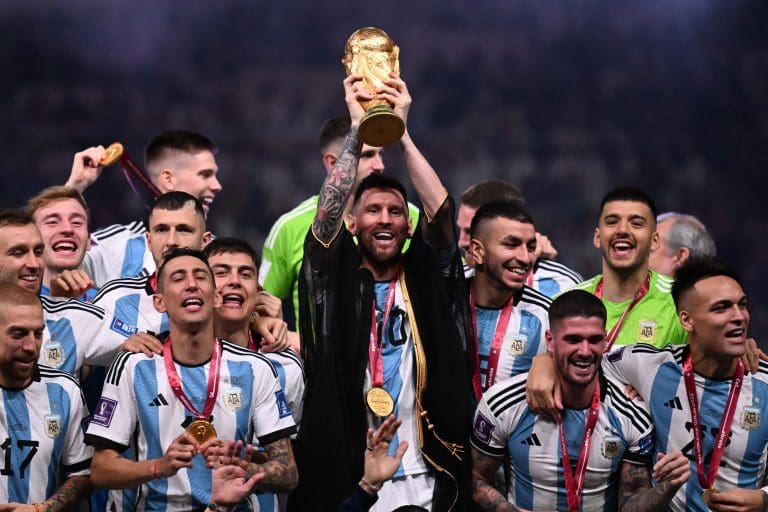
In 2022, Qatar hosted the first World Cup in the Middle East. The tournament occurred in November and December to avoid extreme summer heat. Argentina won the tournament, with Lionel Messi finally claiming his World Cup title.
This 32-team format became the most recognizable structure. Youth academies trained players for 64-match scenarios. Television networks planned coverage around this consistent schedule.
The format proved successful, popular, and profitable. FIFA generated billions in revenue. More nations participated than ever before in World Cup history.
The Future: 48 Teams (2026) and Beyond
The 2026 World Cup marks the next major evolution. For the first time, 48 teams will compete in the tournament. FIFA announced this expansion to make the World Cup more inclusive and generate additional revenue.
The 2026 tournament will occur in three countries. The United States, Mexico, and Canada will jointly host. This is the first time three nations have co-hosted the World Cup.
The format uses 16 groups of three teams. Forty-eight teams divided into three-team groups creates interesting tactical challenges. Each team plays two matches within their group.
The top two teams from each group advance to a knockout round of 32. This is the key difference from 1998-2022. Sixteen extra spots in the knockout stage means more nations get to compete longer.
According to official tournament format details, the expanded tournament will feature 104 matches instead of 64. This generates more television content and ticket revenue. Stadiums will host more games than previous World Cups.
Concerns exist about fairness with three-team groups. Head-to-head records become crucial. Some complain the expanded format favors larger nations with deeper squads.
FIFA also plans 48 teams for the Women’s World Cup starting in 2031. This shows the organization’s commitment to expanding worldwide participation.
Looking further ahead, FIFA has approved host nations through 2034. Morocco, Spain, and Portugal will host in 2030. Saudi Arabia will host in 2034.
The 2026 tournament represents a watershed moment in World Cup format evolution. No World Cup has ever had 48 teams or 104 matches. The tournament will be larger than the Olympic Games.
Why Format Changes Happened: The Driving Forces
World Cup format evolution didn’t occur randomly. Specific factors drove each major change in tournament structure and team numbers.
Television technology transformed the game. The 1954 World Cup’s television broadcast created global audiences. By the 1980s, television rights became FIFA’s primary revenue source.
More teams meant more matches. More matches meant more television content. Networks paid millions to broadcast games worldwide.
Politics also influenced format changes. Cold War divisions meant certain nations refused to participate. Non-aligned countries wanted better representation.
The 1966 World Cup in England introduced official mascots and logos. Marketing became central to World Cup identity. Commercial partnerships grew with each tournament.
Regional federations demanded more spots for their members. African nations complained about limited places. Asian and North American countries sought equal representation.
Economic disparity shaped participation. Travel costs deterred nations from competing in distant hosts. Expanded tournaments meant more nations could qualify regionally.
FIFA’s desire for profitability drove expansion. Twenty-four teams generated more revenue than 16. Thirty-two teams generated more than 24. Forty-eight teams will generate billions more.
Environmental and social movements influenced decisions. South Africa 1994 broke apartheid sanctions. Qatar 2022 raised concerns about labor practices and LGBTQ rights.
Understanding these forces helps explain current discussions about FIFA World Cup expansion and future tournament structures.
Comparison Table: Format Changes Through the Decades
| Decade | Teams | Primary Change | Impact |
| 1930s | 13-16 | No qualifying, invited teams | Limited participation, small tournament |
| 1950s | 13-16 | Group stages return | Better fairness, more balanced structure |
| 1960s | 16 | Television introduced | Exponential growth in viewership globally |
| 1970s | 16 | Two-stage group system | Extended competitions, more matches for top teams |
| 1980s | 24 | First expansion | African and Asian nations gained access |
| 1990s | 24 then 32 | Simultaneous matches rule | Prevention of collusion, pure competition |
| 2000s | 32 | Consistent stable format | Predictable tournaments, global standardization |
| 2010s | 32 | Traditional structure maintained | Peak of modern World Cup format |
| 2020s+ | 48 | Three-nation hosts, new groups | Unprecedented size, new qualification dynamics |
FAQs
When did the World Cup expand from 13 to 16 teams?
The World Cup started with 13 teams in 1930. By 1934, it expanded to 16 teams for the first time. This remained standard until 1982 when FIFA added eight more teams.
Why was the 1950 World Cup format different?
The 1950 World Cup used a final group of four teams instead of a traditional final. Uruguay defeated Brazil in that group match to win the championship without a dedicated final match.
How long did 32-team format last?
The 32-team format lasted from 1998 to 2022. That’s 24 consecutive years with eight groups of four teams. It became the most recognizable and stable World Cup structure.
What makes the 2026 format unique?
The 2026 World Cup features 48 teams in 16 groups of three. It’s the first tournament with three-team groups. The United States, Mexico, and Canada will co-host for the first time.
How many matches will the 2026 World Cup have?
The 2026 World Cup will feature 104 matches total. That’s 40 more matches than the 64-match 1998-2022 format. More matches mean more television content and revenue.
Did the point system always award 3 points for a win?
No. Until 1990, a win earned 2 points and a draw earned 1 point. Since 1994, FIFA changed it to 3 points for a win and 1 for a draw to encourage attacking football.
Why did FIFA expand to 48 teams in 2026?
FIFA expanded to increase global participation and generate more revenue. Forty-eight teams means more nations qualify than ever before. Television networks get more matches to broadcast worldwide.
Will the Women’s World Cup also expand to 48 teams?
Yes. The Women’s World Cup will expand to 48 teams starting in 2031. This shows FIFA’s commitment to equal tournament expansion across men’s and women’s football.
What’s the advantage of three-team groups?
Three-team groups are more unpredictable. Head-to-head records matter more. Some argue they add excitement and prevent collusion between teams seeking certain results.
How many teams participated in the first World Cup?
Only 13 teams participated in the 1930 World Cup. Uruguay hosted the tournament. The small size reflected limited global football infrastructure at that time.
Why was the 1954 World Cup the first televised?
Switzerland hosted the 1954 World Cup. Television technology had advanced enough to broadcast matches live. This created global audiences and transformed football’s popularity forever.
What countries host the 2026 World Cup?
The United States, Mexico, and Canada will co-host the 2026 World Cup. This is the first time three nations have shared hosting duties. Matches will be distributed across all three countries.