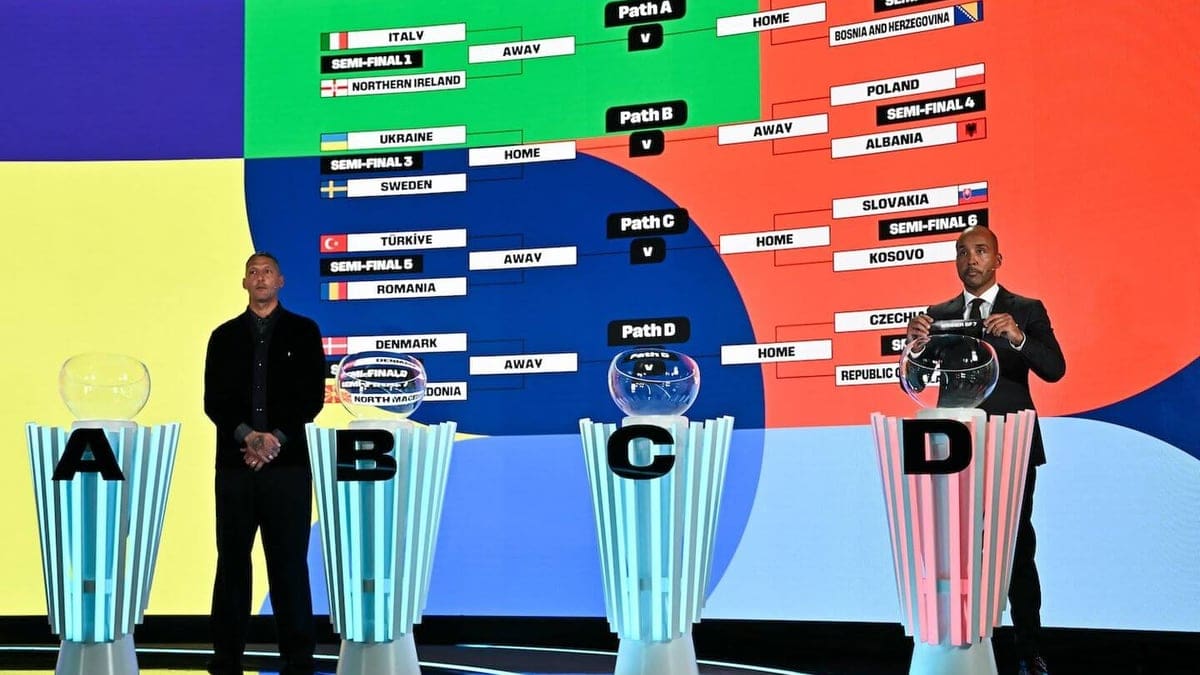
The 2026 World Cup introduces seeding changes that reshape how the tournament unfolds from group stage through to the final.
FIFA adopted a tennis-style knockout bracket system that mirrors Grand Slam tournaments.
This new seeding approach means the world’s top teams can no longer face each other until much later in the competition. Spain and Argentina, currently ranked first and second globally, are placed on opposite sides of the knockout bracket.
France and England follow the same separation pattern. These four elite nations are structured to avoid each other completely until at least the semifinals if they win their groups.
The seeding changes affect both how teams are drawn into groups and how the knockout phase unfolds.
The Tennis-Style Knockout Seeding System
| Element | Old Format (32 Teams) | New Format (48 Teams) |
| Bracket Structure | Single draw, equal group winners | Tennis-style pathways, separated top seeds |
| Top Teams Treatment | All group winners treated equally | Top 4 seeds placed in separate halves |
| Meeting Point | Could meet any round | Top 4 can’t meet before semifinals |
| Purpose | Fairness | Competitive balance + prize matches |
| Group Winners Distribution | 8 winners in bracket | 12 group winners separated strategically |
FIFA introduced this system to ensure the strongest teams don’t collide early and eliminate each other before captivating late-stage matches. Think of tennis majors where top seeds advance through predetermined pathways.
Spain and Argentina occupy opposite sides of the draw. If both win their groups and progress through all knockout rounds, they can only meet in the final at MetLife Stadium on July 19.
France and England face the same separation logic. This prevents marquee matchups between global powerhouses from happening in the Round of 32 or Round of 16 where exciting teams could be eliminated prematurely.
The system doesn’t guarantee specific semifinals pairings. Instead, it creates a bracket structure with randomized pathways. England might face Spain or Argentina in the semifinals depending on knockout results.
Four Pots Determine Group Stage Seeding
Pot 1 contains twelve teams: the three host nations plus the nine highest-ranked qualified teams. Canada, Mexico, and the United States get automatic seeding regardless of their FIFA rankings.
Spain, Argentina, France, England, Brazil, Portugal, the Netherlands, Belgium, and Germany round out Pot 1. These represent the elite tier entering the group stage with the strongest draw positions.
Pot 2 holds teams ranked 13 through 24 globally. Croatia, Morocco, Colombia, Uruguay, Switzerland, Japan, Senegal, Iran, South Korea, Ecuador, Austria, and Australia occupy this tier.
These mid-tier contenders face balanced group compositions. They avoid the weakest teams overall but encounter meaningful opposition from Pot 1 seeds.
Pot 3 includes teams ranked 25 through 36. Norway, Panama, Egypt, Algeria, Scotland, Paraguay, Tunisia, Ivory Coast, Uzbekistan, Qatar, Saudi Arabia, and South Africa make up this tier.
Pot 4 contains the lowest-ranked qualifiers plus six playoff placeholders for teams determined in March. Jordan, Cape Verde, Ghana, Curacao, Haiti, and New Zealand occupy known Pot 4 spots.
Each group receives exactly one team from each pot. This mathematical structure ensures balanced competition throughout group stage play.
How the Group Stage Draw Works in Practice
The draw begins with Pot 1 selections. One team from Pot 1 goes to each of the twelve groups labeled A through L. Teams drawn are placed in position one of their respective group.
Pot 2 teams are then drawn one at a time. These teams occupy position two of whichever group they’re assigned to. The randomization continues across all four pots.
Confederation restrictions prevent teams from the same region occupying the same group, except UEFA teams where up to two can appear together. This ensures geographic diversity and competitive balance.
The three hosts occupy predetermined positions. Mexico sits in Group A position one, Canada in Group B position one, and the United States in Group D position one.
These placements let each host nation play group matches at home venues. Mexico hosts its matches at Estadio Azteca and others. Canada plays at Toronto and Vancouver stadiums.
The United States plays at Los Angeles, Seattle, and Atlanta facilities. These stadiums were selected before the draw to accommodate host nation scheduling needs.
Playoff placeholders fill remaining spots until March 2026 when final qualifiers emerge from European and intercontinental playoff tournaments.
Top Four Seeds and Knockout Pathways
According to Sky Sports’ analysis, the top four ranked teams receive special treatment in knockout stage pathways. Spain occupies one pathway with Argentina in the opposite pathway.
France and England similarly occupy separate pathways. This architecture means Spain can only face Argentina in the final if both teams win every knockout match.
The same applies to France versus England matchups. These separations continue through all four quadrants of the 32-team knockout bracket.
According to OneFootball’s breakdown, if all four teams win their groups, the semifinals would feature Spain or Argentina playing France or England in each matchup.
This system differs from previous tournaments where group winners were drawn randomly into bracket positions. The tennis-style approach provides advance certainty about potential matchups.
Group runners-up occupy different bracket positions than group winners. This creates the Round of 32 stage where eight third-place teams also enter the competition.
Confederation Restrictions and Regional Balance
According to NBC Sports’ coverage, confederation restrictions shape which teams can be drawn together. No group can feature two teams from the same confederation except UEFA.
This rule prevents duplicate continental opponents. South America cannot have two teams in one group. Neither can Africa, Asia, or North America and the Caribbean.
UEFA gets special treatment due to having sixteen of the forty-eight teams. These European nations allow maximum two teams in any single group to avoid eliminating European competition entirely.
The three host nations sit in Pot 1, creating constraints for teams that could be drawn with them. Mexico cannot face another CONCACAF team in groups. Canada faces the same restriction. The United States also cannot draw other North American teams.
This means Panama from Pot 3 cannot be drawn with any of the three hosts. Haiti and Curacao in Pot 4 similarly cannot join host-nation groups.
These restrictions ensure diversity while maintaining competitive balance. Groups feature representative teams from multiple continents rather than concentrated regional opposition.
Why FIFA Changed the Seeding System
According to Inside World Football, FIFA explicitly stated the changes aimed to “ensure competitive balance.” The governing body wanted top-ranked teams rewarded for consistent performance.
By separating elite nations in knockout pathways, FIFA creates narrative excitement for later tournament stages. Early rounds feature meaningful competition without eliminating all favorites before semifinals.
The system mirrors the Club World Cup seeding introduced in 2023. That tournament’s tennis-style brackets proved successful at maintaining top-team involvement through late matches.
According to Fox Sports’ detailed explanation, FIFA wanted to prevent scenarios like previous years where two top-four teams faced each other in quarterfinals.
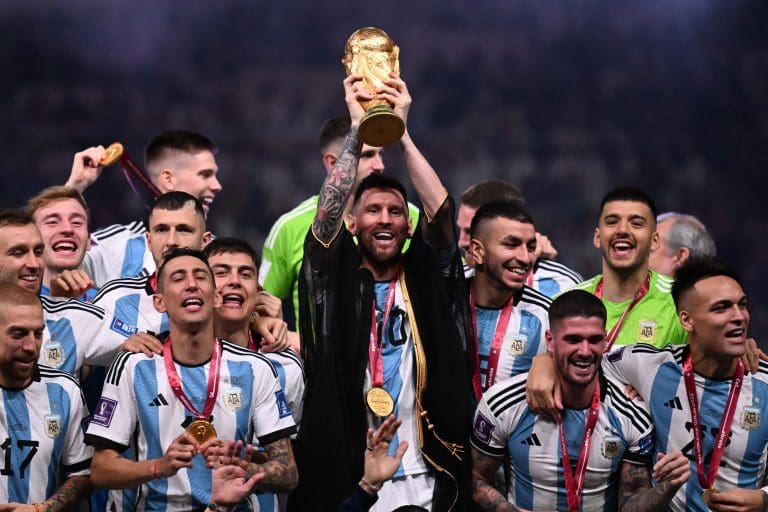
The 2022 World Cup saw France eliminated by Argentina in the final, but only after both advanced past numerous rounds. That dramatic matchup proved compelling, and FIFA wanted more guaranteed marquee games.
By architecture, not luck, the 2026 format ensures top-ranked teams reach late-stage competition if they perform well in groups.
What This Means for Tournament Predictions
The seeding changes make group-stage qualification more predictable for Pot 1 teams. Spain, Argentina, France, and England should advance as group winners given their strength relative to group-mates.
Other Pot 1 teams like Brazil, Portugal, the Netherlands, Belgium, and Germany similarly face favorable group compositions that should enable advancement.
Teams in Pot 2 encounter more challenging draws. They face Pot 1 opposition in every group but avoid direct competition with other top-ten ranked teams in group play.
This puts Pot 2 teams in competitive but navigable scenarios. Pot 3 and Pot 4 teams face steeper challenges with Pot 1 or strong Pot 2 opposition guaranteed.
According to a Sports Illustrated analysis, the seeding structure makes group advancement probabilities more predictable than previous tournaments.
Favorites advance more regularly. Underdog stories from group stages become less likely because elite teams face proportional opposition rather than random draws.
Comparison to Previous World Cup Draws
Previous World Cup draws treated all group winners equally in bracket placement. Group A winner faced Group B runner-up in established bracket positions.
The 2026 format separates this equality. Some group winners occupy more favorable bracket positions than others based on their seeding level.
This represents the most significant seeding change since 1998 when the modern 32-team format began. The tennis-style approach fundamentally reshapes knockout structure.
Hosts received automatic seeding in previous tournaments but weren’t separated from other top teams across the bracket. Now they receive Pot 1 placement plus bracket separation for the top four ranked teams.
FAQs
What makes the 2026 seeding system different from past World Cups?
Tennis-style pathways separate top four ranked teams so they can only meet in semifinals, unlike previous tournaments where random draws created early matchups between elite nations.
How many teams are in each pot?
Each pot contains exactly twelve teams. Four pots create twelve groups of four teams, with one team from each pot in every group.
Can two teams from the same country be drawn together?
No. Confederation restrictions prevent teams from the same region drawing into the same group, except UEFA which allows maximum two European teams per group.
Does every group have one team from each pot?
Yes. Every single group features one Pot 1 team, one Pot 2 team, one Pot 3 team, and one Pot 4 team without exception.
What happens if Spain and Argentina both win their groups?
They cannot meet until the final. The tennis-style pathways guarantee these top two seeds only collide if both win every knockout match.
Are the semifinal matchups predetermined?
No. While pathways separate top seeds, the specific semifinals are randomized during the draw. Seeding only guarantees top four teams can’t meet before semifinals.
How does the Round of 32 work with this seeding system?
Twelve group winners and eight third-place teams enter Round of 32. The bracket structure determines which winners face which runners-up and third-place teams.