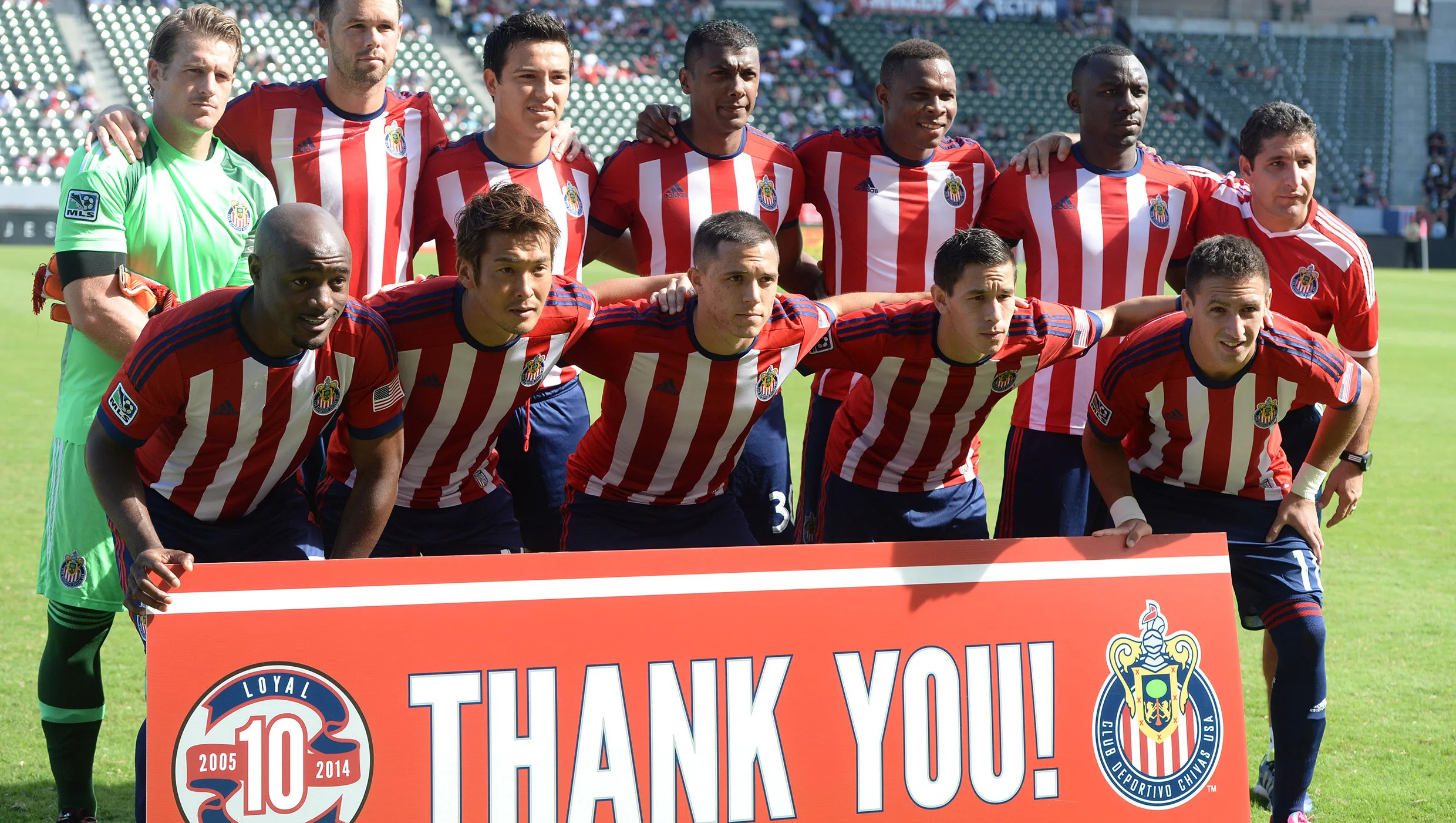
When Major League Soccer introduced Chivas USA in 2004, the vision was ambitious. Backed by Club Deportivo Guadalajara – one of Mexico’s most storied soccer institutions – the new team was meant to spark a cultural and sporting revolution in Los Angeles. With its Mexican-American identity and ties to the legendary Chivas brand, the club aimed to unite a large and underserved fan base in Southern California.
For MLS, still a young league in need of expansion and excitement, the move felt bold. It wasn’t just about growing the game – it was about tapping into a passionate demographic with deep soccer roots.
The fan engagement aspect was also designed to evolve in line with MLS expansion, with more supporters following teams online and exploring fantasy leagues, while discovering betting bonuses as part of the broader soccer experience in the U.S. But less than a decade later, that promise had completely unravelled.
Chivas USA ceased operations in 2014, remembered not for its triumphs but for its confusion, controversy, and ultimate collapse.
A Bold Idea with Cultural Weight
The concept, on paper, made a lot of sense. Club Deportivo Guadalajara, popularly known as Chivas, has a massive following across Mexico and among the Mexican diaspora. They’re known for only fielding Mexican players and maintaining a strong national identity.
The MLS version, dubbed Chivas USA, was meant to mirror that legacy. Located in Los Angeles, one of the most Latino and soccer-loving cities in the United States, the club was imagined as a “little brother” to the original Chivas, bridging the footballing cultures of two neighbouring countries.
This was more than an expansion team. It was a cross-border branding experiment that aimed to combine tradition, community, and market strategy. The team joined the league in 2005 and shared the StubHub Centre (now Dignity Health Sports Park) with the LA Galaxy.
From the very beginning, though, cracks began to show.
An Identity Crisis From the Start
Chivas USA never quite knew what it wanted to be.
Was it a feeder team for Chivas Guadalajara? A standalone MLS club? A hybrid of both? The identity issues bled into everything – from the roster to the front office to the way the club interacted with the community.
The branding leaned heavily into Chivas’ Mexican roots. Team kits mimicked the red and white stripes of the original Chivas. Spanish was prioritised in press releases and marketing. Many early signings were players of Mexican descent, even if they weren’t always the most competitive options available.
Instead of broadening the club’s reach, this narrow focus alienated huge chunks of the soccer community in LA. Fans who didn’t already support Chivas Guadalajara often felt like outsiders. Others questioned whether the team was truly invested in MLS or just playing second fiddle to its Mexican parent.
Where LA Galaxy were building a legacy and cultivating a diverse fan base, Chivas USA mimicked an import trying to find its place – and never quite succeeding.
Inconsistent Performances on the Pitch
Despite the early identity issues, Chivas USA did have some moments of promise.
In 2007, under head coach Preki, they finished first in the Western Conference. That squad featured future U.S. national team players like goalkeeper Brad Guzan, defender Jonathan Bornstein, and midfielder Sacha Kljestan.
For a while, it looked like the club might turn a corner. They made the playoffs four consecutive times from 2006 to 2009. But even at their peak, the success never translated into wider relevance or deep postseason runs.
As quickly as they rose, Chivas USA regressed. The club churned through coaches, general managers, and ownership ideas. It became a revolving door of instability – something no team, let alone a young franchise, can survive for long.
By the early 2010s, the results had dried up entirely. In 2013 and 2014, they finished near the bottom of the standings. Attendance plummeted. And worse, controversy was waiting just off the pitch.
Controversy and Chaos Off the Field
The biggest nail in the coffin came in 2012 when Jorge Vergara, who also owned Chivas Guadalajara, took full control of Chivas USA by buying out his partners.
Rather than shift the club toward a more inclusive and local strategy, Vergara went in the opposite direction. He leaned even harder into the “Mexican-only” ethos, reportedly prioritising Spanish-speaking staff and players of Latino background.
Soon, lawsuits began to pile up. Multiple former employees filed legal complaints alleging discrimination based on ethnicity and national origin. There were allegations that non-Latino staff were excluded from meetings or pushed out altogether. The team’s front office culture became a toxic subject in the media.
These revelations weren’t just troubling – they were catastrophic. In a league focused on diversity, inclusion, and upward growth, Chivas USA became a case study in what not to do.
MLS, which was just starting to find its footing on the national stage, could no longer afford the scandal.
Fans Disappeared
In 2005, during its debut season, Chivas USA averaged more than 17,000 fans per game. But by 2014, that number had cratered to fewer than 7,000.
The contrast with LA Galaxy, who continued to sign big names like David Beckham, Landon Donovan, and Robbie Keane, was impossible to ignore. Where Galaxy’s half of the stadium buzzed with energy and star power, Chivas USA often played in front of a hollow, echoing emptiness.
Marketing missteps, lack of star signings, and poor performances created a perfect storm of apathy. The club never built a proper fan culture, and the few loyal supporters who remained were given little reason to stay.
MLS Pulls the Plug
In October 2014, Major League Soccer announced it had purchased Chivas USA from Vergara and would dissolve the team following the season. It was a rare and decisive move that underscored just how unsalvageable the project had become.
But MLS didn’t just walk away from the LA market. Instead, they promised a reboot. A new team would be launched, with new ownership, a new identity, and a long-term plan to succeed where Chivas USA had failed.
Enter LAFC: A Modern Success Story
That reboot came in 2018 with the arrival of Los Angeles Football Club (LAFC). Backed by a diverse and high-profile ownership group – including Magic Johnson and actor Will Ferrell – LAFC opened Banc of California Stadium (now BMO Stadium) in downtown LA and immediately made waves.
They emphasised community, inclusivity, and performance from day one. The supporters’ section, known as the “3252,” brought unmatched energy. LAFC signed Carlos Vela, became competitive on the field, and built a fan-first brand rooted in the city’s multicultural identity.
In a few short years, they had achieved everything Chivas USA couldn’t – and then some.
The Legacy of Chivas USA
Chivas USA wasn’t a bad idea. In fact, its premise – building a club with cultural significance and regional pride – was ahead of its time.
But poor execution, a lack of adaptability, and cultural insensitivity turned a promising expansion club into an enduring cautionary tale.
Today, the ghost of Chivas USA lives on – not in banners or trophies, but in the lessons MLS has learned about branding, leadership, and community engagement. It’s a reminder that even the best ideas can collapse without clarity, consistency, and connection to the fans.