Gone are the days when golf totally depended on good weather, daylight hours, and access to a course. When winter hits, rain won’t stop, or schedules get packed, many golfers used to stop playing. That has now changed with the rise of indoor golf simulators.
Once limited to elite training facilities, indoor golf is now becoming common in homes, offices, and even small commercial spaces. And the impact goes beyond convenience.
Let’s discuss how a golf simulator for home and indoor commercial spaces is helping golfers practice their shots, how often they play, and how they improve.

What are the Limitations of Conventional Golf Courses?
Traditional golf courses provide an awesome playing experience, but they have some inherent limitations. These issues include:
- Weather changes like rain, winter and extreme heat disrupt the flow.
- Less daylight, particularly during the colder months
- Course shutdowns, maintenance days, and crowded tee times
- Time associated with traveling and full round games
These factors obviously affect consistency and players’ practice.
How Indoor Golf Simulators Fill the Traditional Golfing Gap?
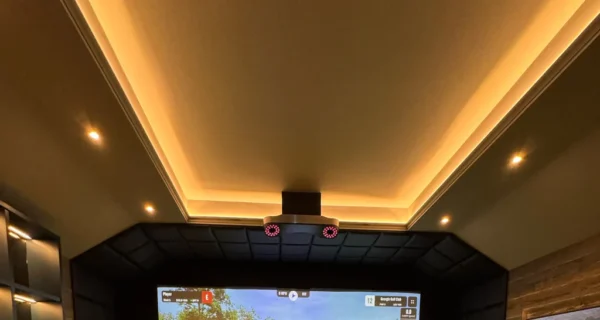
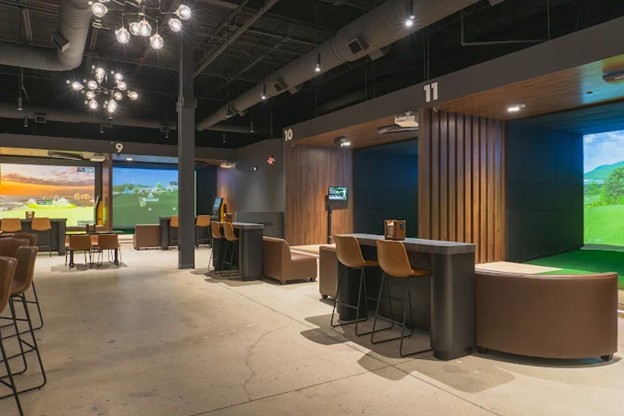
An indoor golf simulator removes most of the barriers associated with traditional courses. Whether you’re looking to install a simulator in your own space or want a social venue where you can enjoy golf alongside great food and drinks, reputable golf simulator providers like Golf VX offer solutions to suit both experiences.
With their modern indoor golf technology, players can play anytime, without worrying about time, weather, or place availability.
No Weather or Seasonal Limits
One of the biggest advantages of a golf simulator is freedom from relying on the weather. Rain, winter cold, extreme heat, or poor course conditions can no longer interrupt your practice. You can maintain rhythm and improve your golf swing consistency throughout the year instead of restarting every season.
Indoor Golf Fits Around Your Schedule
Traditional golf often demands large blocks of time. Indoor golf changes that. With open access, golfers can practice as early in the morning and late at night, or between business appointments. Short bursts of practice become possible, and that makes it easier to keep up the effort.
Targeted Practice Instead of Full Rounds
Instead of giving up an entire round, indoor simulators enable golfers to work on certain parts of their game. Whether it’s driving with a clearer target or sharpening approach shots, practice becomes more intentional and productive.
The Technology Powering Indoor Golf Simulators for Uninterrupted Practice
The effectiveness of an indoor golf simulator depends largely on the accuracy of its underlying technology. Modern indoor golf systems are built to capture real-world shot behavior in controlled environments, allowing golfers to practice with confidence that results translate outdoors.
Advanced Ball & Club Tracking Systems
Today’s indoor golf simulators rely on multiple tracking technologies working together to deliver precise shot data:
- High-speed camera systems: Capture impact at thousands of frames per second. Analyze club face angle, swing path, and contact point
- Swing analysis and tracking: Measures ball speed, launch angle, spin rate, and carry distance. Tracks full ball flight even in shorter indoor spaces
- Feedback sensor integration: Enhances accuracy in low-light or compact home environments and provides real-time feedback.
This layered approach ensures reliable feedback, whether the simulator is installed in a training facility or as a golf simulator for home.
Intelligent Simulation Software & Course Modeling
Hardware accuracy is only half the equation. Modern simulator software processes shot data and translates it into realistic outcomes:
- Real-world course mapping with elevation and terrain simulation
- Shot dispersion modeling based on spin, launch, and club data
- Adjustable environmental variables such as wind and lie conditions
These features allow golfers to practice specific scenarios rather than just hitting balls aimlessly.
Optimized for Home & Compact Spaces
One of the biggest technical advancements in recent years is the ability to maintain accuracy in limited spaces. Modern systems are engineered to perform reliably without requiring commercial-scale rooms. Indoor golf simulators come with:
- Efficient sensor placement for smaller environments
- Clean integration of hardware and software
- Reliable tracking performance without excessive calibration
This makes a high-quality golf simulator for home more practical and accessible for everyday golfers.
Data-Driven Practice for Swing Improvement
The true value of simulator technology lies in how data is used. Each shot generates feedback that helps golfers understand patterns over time:
- Swing path tendencies
- Face angle consistency
- Distance control and shot dispersion
Instead of relying on feel alone, you can make informed adjustments to improve your golf swing through structured, repeatable practice.
Wrapping it Up
A golf simulator for home isn’t replacing outdoor courses. They’re filling the gaps created by weather, time, and access limitations. By allowing year-round play, focused practice, and flexible scheduling, indoor golf is helping more people play more often and improve consistently.
As a result, golf is becoming less seasonal, less restrictive, and more accessible than ever before.