Every golfer knows the feeling of standing on the first tee after a long winter break, hoping that muscle memory will somehow compensate for months away from the course.
The reality is often humbling. Timing feels off, distance control is inconsistent, and the confidence that defined your game last season seems to have evaporated.
This cycle of seasonal decline and spring rebuilding has plagued golfers for generations, but it no longer has to be an accepted reality.
Advances in golf technology have created opportunities for dedicated players to maintain and even improve their skills throughout the entire year, regardless of climate or weather conditions.
Why Traditional Practice Falls Short
The conventional approach to golf improvement relies heavily on access to outdoor facilities. Driving ranges, practice greens, and golf courses are wonderful resources when available, but they come with significant limitations. Weather dictates availability, daylight hours restrict practice time, and seasonal closures create gaps in training that can last for months.
Even when facilities are open, the quality of practice can be compromised by crowded conditions, limited bay availability, and the inability to focus on specific aspects of your game without distraction.
These constraints mean that most amateur golfers are forced to accept inconsistent practice schedules, making steady improvement difficult to achieve.
The gap between professional players who have access to year-round training facilities and amateurs who practice when circumstances allow has always been substantial, but modern technology is beginning to level that playing field.
The Science of Skill Development
Sports science research has consistently demonstrated that skill acquisition requires consistent, deliberate practice with immediate feedback. Random, infrequent practice sessions produce minimal long-term improvement, while regular, focused training with clear performance metrics accelerates learning dramatically.
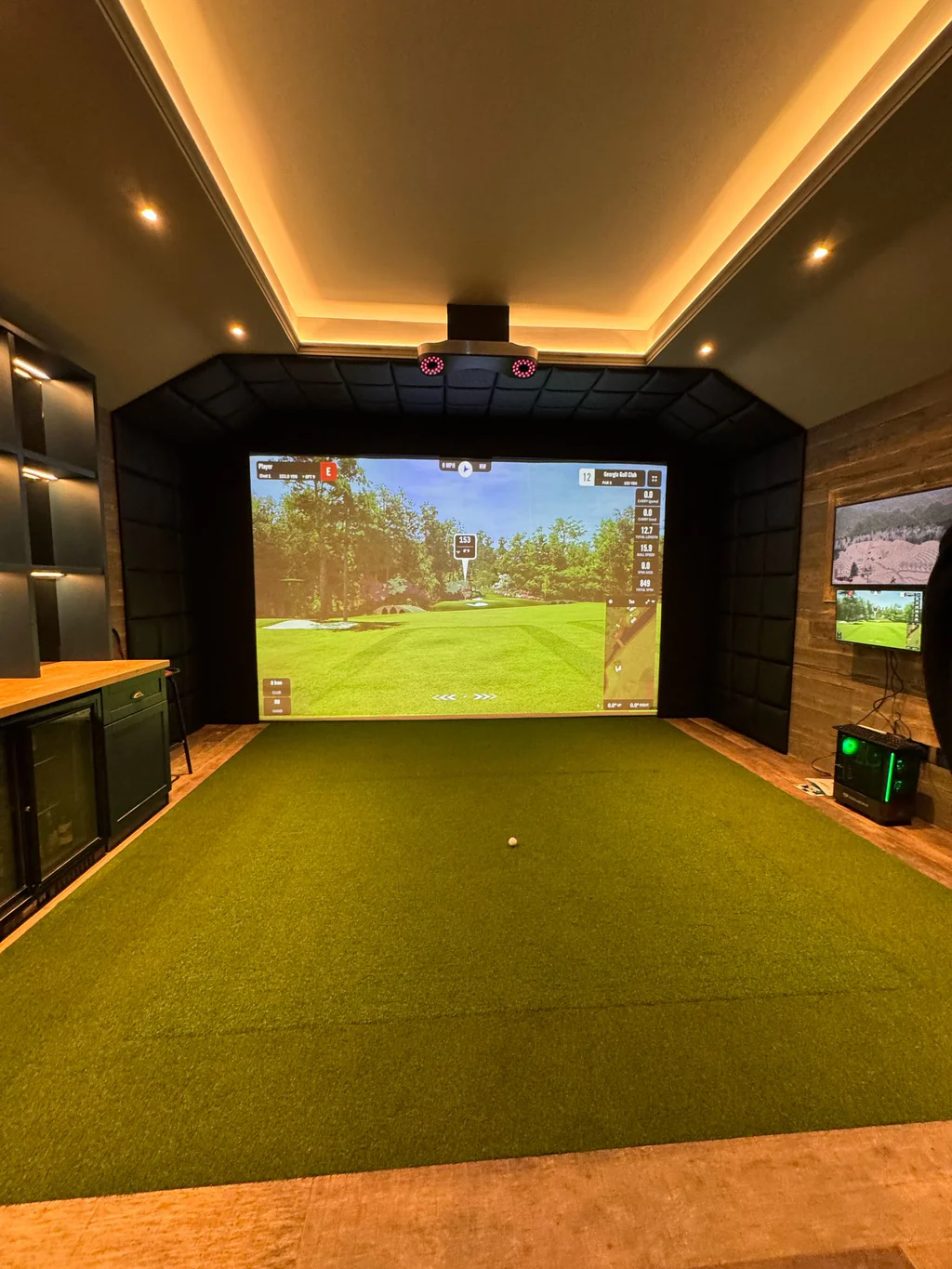
This principle applies across all sports, and golf is no exception. The challenge has always been creating an environment where this type of optimal practice is possible. A golf simulator provides exactly that environment, offering unlimited access to practice with comprehensive data on every swing.
The ability to hit hundreds of balls while focusing on a specific technical element, receive instant feedback on the results, and make adjustments in real-time creates a learning environment that simply cannot be replicated through traditional methods.
This is not about replacing on-course experience, but rather about maximizing the efficiency of your practice time to ensure that when you do step onto the course, you are performing at your highest level.
Transforming Unused Space Into Your Personal Practice Facility
One of the most appealing aspects of modern indoor golf technology is its adaptability to different spaces and budgets. The image many people have of a golf simulator is a massive, expensive installation that requires a dedicated room and professional setup.
While high-end systems certainly exist, the market has evolved to include options for virtually every situation. A spare garage bay, a basement corner, or even a section of a larger room can be transformed into an effective practice space.
The key is understanding the minimum requirements for ceiling height and width, then selecting components that fit within those constraints. A home golf simulator can range from basic setups focused on swing analysis to complete systems that recreate the full golf experience with stunning visual realism.
The investment scales with your goals and available space, making this technology accessible to a much broader range of golfers than many realize.
Data-Driven Improvement: Moving Beyond Guesswork
Perhaps the most transformative aspect of practicing with indoor golf technology is the shift from subjective feel to objective data.
On a traditional driving range, you hit a shot, watch where it goes, and form an opinion about what happened. Was your swing path correct? Was the clubface square at impact? How much spin did you generate? These questions are answered through estimation and guesswork.
With modern tracking technology, every one of these questions is answered with precision. You see exactly what your club was doing at impact, how the ball responded, and what the resulting flight characteristics were. This level of detail allows you to identify patterns in your swing that would be invisible otherwise.
Maybe you consistently come over the top on your driver but not your irons. Perhaps your spin rates are too high with your wedges, costing you distance. These insights enable targeted practice that addresses actual problems rather than perceived ones, making every session more productive.
The Mental Game and Course Management
While the physical benefits of consistent practice are obvious, the mental advantages are equally significant. Golf is as much a mental game as a physical one, and confidence comes from preparation and familiarity.
When you can practice the same challenging shot repeatedly until it becomes routine, you build a mental database of successful executions that you can draw upon during actual rounds. Indoor systems also allow you to practice course management in ways that are impossible on a driving range.
You can play virtual rounds on courses you will be visiting, learning the layout and developing strategies for specific holes. You can practice from difficult lies and situations that you might encounter once or twice per round but never get to practice on a flat range mat.
This mental preparation and strategic planning translates directly to better decision-making and lower scores when you play for real.
The Long-Term Value Proposition
When evaluating whether to invest in indoor golf technology, it is helpful to consider the total cost of your current golf activities. Green fees, range balls, travel to courses, and golf vacations add up quickly over the course of a year.
For many dedicated golfers, the annual expenditure on these activities exceeds the cost of a quality home setup. The difference is that traditional expenses are ongoing and recurring, while an indoor system is a one-time investment that provides years of use.
Beyond the financial calculation, there is the value of convenience and time savings. No driving to the range, no waiting for tee times, no weather cancellations. You practice when you want, for as long as you want, with complete control over the environment and focus of each session.
For golfers who are serious about improvement and who value the ability to practice on their own terms, the investment makes compelling sense.
Taking the Next Step
The decision to bring golf practice into your home represents a shift in how you approach the game. It is a commitment to consistent improvement, a recognition that technology can enhance traditional methods, and an investment in your long-term enjoyment of golf.
The options available today are more diverse and accessible than ever before, with solutions for different skill levels, budgets, and space constraints.
Whether your goal is to lower your handicap, maintain your skills year-round, or simply enjoy the game more frequently, indoor golf technology offers a path forward that was not available to previous generations of golfers.
The question is not whether this technology can help your game, but rather which system best aligns with your specific goals and circumstances.