KSW is a Poland-based mixed martial arts promotion that has grown from a small Warsaw tournament into one of Europe’s best-known MMA organizations. Its name comes from Konfrontacja Sztuk Walki, which translates roughly as “Martial Arts Confrontation.”
Founded by Martin Lewandowski and Maciej Kawulski, KSW debuted in 2004 and built its identity around high-production events, major Polish stars, international talent and championship fights across multiple weight classes. This guide covers KSW’s history, current champions, rules, weight divisions, major fighters, landmark events and how the promotion fits into global MMA.
KSW at a Glance
| Topic | Details |
|---|---|
| Full name | Konfrontacja Sztuk Walki |
| Sport | Mixed martial arts (MMA) |
| Founded | 2004 |
| Founders | Martin Lewandowski and Maciej Kawulski |
| First event | February 27, 2004, Warsaw |
| Home market | Poland |
| Major milestone | KSW 39: Colosseum — 57,766 tickets sold |
| 100th numbered event | XTB KSW 100 — November 16, 2024 |
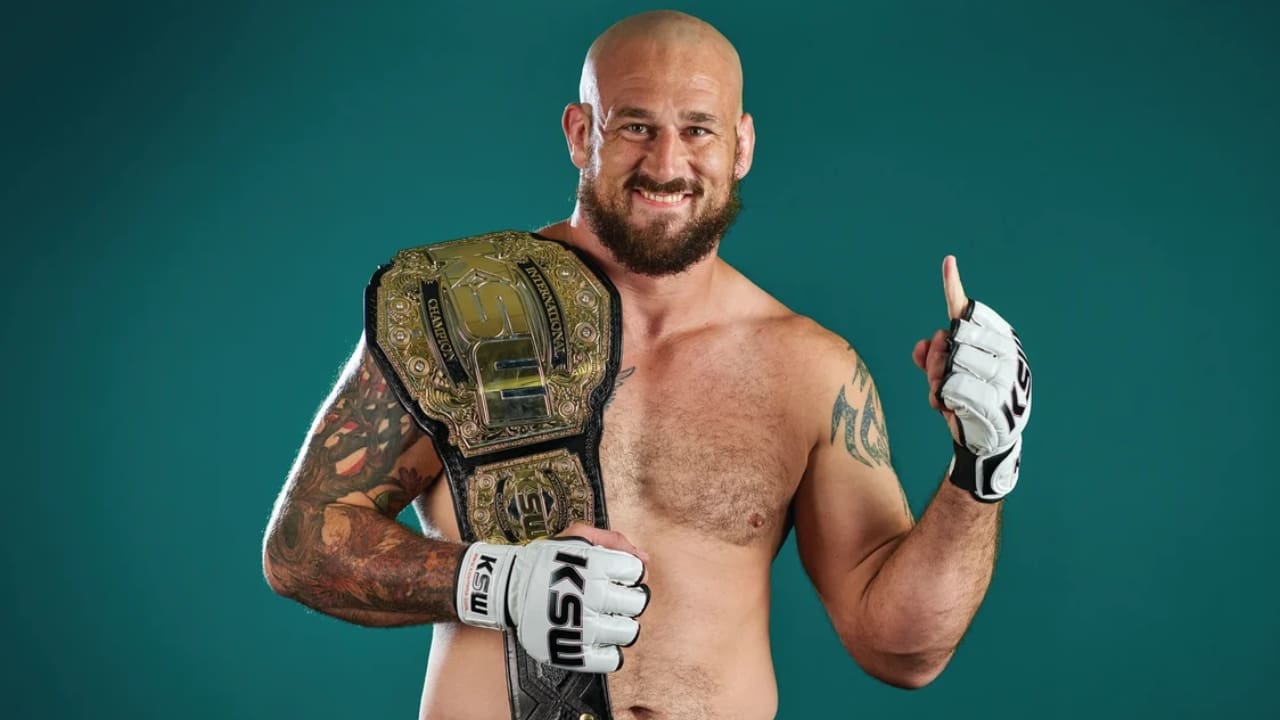
| Current heavyweight champion | Phil De Fries |
| Official streaming/media partners | KSW TV and Canal+ |
What Does KSW Stand For?
KSW stands for Konfrontacja Sztuk Walki. The Polish name reflects the promotion’s original concept: athletes from different combat-sport backgrounds testing their skills under an MMA ruleset.
The early KSW events leaned heavily into tournament competition and the idea of style-versus-style matchups. Over time, KSW developed into a conventional modern MMA promotion with divisional rankings, championship belts, international recruiting and a regular event calendar.
Who Founded KSW?
KSW was created by Martin Lewandowski and Maciej Kawulski. The promotion’s own history records that its first event took place on February 27, 2004, at the Champions restaurant inside the Warsaw Marriott Hotel.
Lewandowski was working at the Marriott in promotion and sports when the first event was organized. KSW’s official account of the first KSW event describes the promotion as a project created by Lewandowski and Kawulski at a time when MMA was still a developing sport in Poland.
KSW History: From a Warsaw Tournament to a Major European Promotion
The first KSW show was built around a one-night tournament. Łukasz “Juras” Jurkowski won that inaugural competition after defeating three opponents in one evening, becoming the first historic KSW tournament champion.
Early events were staged in small Warsaw venues, but attendance grew quickly. KSW expanded outside Warsaw in 2007 and gradually moved into larger arenas as MMA gained mainstream attention in Poland.
Stars such as Mamed Khalidov, Mariusz Pudzianowski, Michał Materla and Jan Błachowicz helped turn KSW into a major domestic sports property. The promotion also became a platform for fighters who later moved to other international organizations.
KSW 39: Colosseum and the Attendance Record
KSW’s biggest attendance milestone came at KSW 39: Colosseum in Warsaw in 2017. The event was staged at PGE Narodowy and featured Mamed Khalidov vs. Borys Mańkowski in the main event.
KSW reported 57,766 tickets sold and described the show as the second-largest attended MMA event in history at the time, behind PRIDE Shockwave 2002. The promotion’s official KSW 39 attendance report remains one of the clearest markers of how far the organization had grown from its small 2004 debut.
KSW 100 and the Promotion’s Modern Era
KSW reached another major milestone on November 16, 2024, when it staged XTB KSW 100 at PreZero Arena in Gliwice. The card was headlined by KSW legend Mamed Khalidov against welterweight champion Adrian Bartosiński.
KSW’s official review of its 2024 events notes that KSW 100 featured ten bouts, eight finishes and a special 100,000 PLN performance bonus for Khalidov.
By 2026, KSW’s schedule had expanded well beyond its original Warsaw base, with events in cities across Poland as well as international cards in markets including France and Czechia.
Current KSW Champions
The table below reflects KSW’s official rankings as of October 22, 2026. Championship status can change after any title fight, so the promotion’s live rankings should be treated as the final source for the latest belt holders.
| Division | Champion | Notes |
|---|---|---|
| Heavyweight | Phil De Fries | Štefan Vojčák listed as interim champion |
| Light heavyweight | Bartosz Leśko | 93.0 kg / 205 lb |
| Middleweight | Paweł Pawlak | Piotr Kuberski listed as interim champion |
| Welterweight | Adrian Bartosiński | 77.1 kg / 170 lb |
| Lightweight | Vacant | No champion listed |
| Featherweight | Patryk Kaczmarczyk | 65.8 kg / 145 lb |
| Bantamweight | Vitalii Yakymenko | 61.2 kg / 135 lb |
| Women’s bantamweight | Sara Luzar-Smajić | 61.2 kg / 135 lb |
See the official KSW rankings for the latest champions and divisional contenders.
Why Is the KSW Lightweight Title Vacant?
KSW’s official rankings currently list no lightweight champion. Salahdine Parnasse had held the lightweight title before leaving the promotion in April 2026 after a highly successful KSW run.
KSW’s farewell announcement for Parnasse notes that he finished his KSW tenure with a 14–2 promotional record and had previously unified the featherweight and lightweight championships.
KSW Weight Classes
KSW’s rulebook recognizes the following professional MMA weight divisions. Not every division necessarily has an active championship or ranking at all times.
| Division | Weight limit |
|---|---|
| Strawweight | Up to 52.2 kg / 115 lb |
| Flyweight | Up to 56.7 kg / 125 lb |
| Bantamweight | Up to 61.2 kg / 135 lb |
| Featherweight | Up to 65.8 kg / 145 lb |
| Lightweight | Up to 70.3 kg / 155 lb |
| Welterweight | Up to 77.1 kg / 170 lb |
| Middleweight | Up to 83.9 kg / 185 lb |
| Light heavyweight | Up to 93.0 kg / 205 lb |
| Heavyweight | Up to 120.2 kg / 265 lb |
| Super heavyweight | Over 120.2 kg / 265 lb |
The full limits and catchweight provisions are published in the official KSW rules.
How Long Is a KSW Fight?
Under KSW’s current rules, each professional round lasts five minutes, with a one-minute rest period between rounds. A bout may contain one to five rounds, but no professional contest can exceed five rounds or 25 minutes of total fighting time.
This means the familiar three-round and five-round structures used across major MMA promotions fit comfortably within KSW’s official framework.
How Are KSW Fights Scored?
KSW uses the 10-Point Must System. At least three judges score the fight. The winner of a round normally receives 10 points, while the losing fighter receives nine or fewer; a 10-10 round is possible but rare.
The judging hierarchy gives the greatest weight to effective striking and effective grappling. If those are even, judges move to effective aggressiveness and then control of the fighting area.
- 10-9: a close but clear winning round.
- 10-8: a round won by a large margin through impact, dominance and duration.
- 10-7: an exceptionally dominant round.
How Can a Fighter Win in KSW?
Like other professional MMA organizations, a KSW fight can end through several standard outcomes:
- Knockout (KO): a fighter is unable to continue after legal strikes.
- Technical knockout (TKO): the referee, doctor or corner stops the contest.
- Submission: a fighter taps or verbally submits to a legal hold.
- Judges’ decision: the fight reaches the end of the scheduled rounds.
- Disqualification: a serious or repeated rules violation ends the bout.
- Technical decision or no contest: used in specific circumstances when a bout is stopped early.
What Techniques Are Illegal in KSW?
KSW’s professional rules prohibit standard MMA fouls including headbutts, eye gouging, biting, fish hooking, hair pulling, certain dangerous spikes or pile-drivers, strikes to prohibited areas and other conduct that creates an unfair or unsafe advantage.
The referee is the sole official authorized to stop the fight. KSW’s rules also allow instant replay for a fight-ending sequence under the procedures of the applicable regulatory authority.
What Makes KSW Different?
KSW uses a familiar modern MMA ruleset, but its identity has historically been shaped by a strong event-production focus and a willingness to build cards around personalities as well as rankings.
The promotion became especially successful by mixing accomplished martial artists with recognizable crossover stars. Five-time World’s Strongest Man winner Mariusz Pudzianowski is the most famous example: his move into MMA helped bring a large mainstream audience to KSW.
KSW has also staged occasional special-rules attractions. XTB KSW Epic in 2024 included boxing, Muay Thai, grappling and MMA contests under several different formats, reflecting the promotion’s original style-versus-style roots.
Most Famous KSW Fighters and Alumni
Mamed Khalidov
Mamed Khalidov is one of the defining stars in KSW history. His long run at the top of the promotion, highlight-reel finishes and championship success made him a central figure in Polish MMA.
Mariusz Pudzianowski
Pudzianowski brought an enormous pre-existing fan base from strongman competition. His KSW career helped turn MMA into a mainstream attraction for many Polish sports fans.
Jan Błachowicz
Jan Błachowicz became a leading KSW light heavyweight before moving to the UFC, where he later won the UFC light heavyweight championship. His career is one of the clearest examples of KSW serving as a launchpad to the highest levels of international MMA.
Mateusz Gamrot
Mateusz Gamrot became a two-division KSW champion at lightweight and featherweight before moving to the UFC. His technical grappling and unbeaten KSW run established him as one of the promotion’s strongest sporting exports.
Roberto Soldić
Roberto Soldić became a major KSW star and held titles in two divisions. His finishing ability and championship run helped expand KSW’s audience beyond Poland.
Salahdine Parnasse
Parnasse arrived in KSW as a young French prospect and developed into a two-division champion. He left the organization in 2026 after nearly a decade with the promotion.
Karolina Kowalkiewicz and Ariane Lipski
Women’s MMA has also been part of KSW’s history. Karolina Kowalkiewicz and Ariane Lipski both became KSW champions before competing internationally.
KSW vs. UFC
KSW and the UFC use broadly similar MMA fundamentals, but the organizations operate on very different scales and business models. The UFC is the largest global MMA promotion, while KSW built its strongest base in Poland and Central Europe before expanding internationally.
KSW is also more closely associated with large arena shows, Polish sports culture and crossover attractions, while the UFC operates a much larger worldwide roster and event schedule.
For a direct comparison, read our UFC vs. KSW guide.
Where Does KSW Hold Events?
Poland remains KSW’s core market, with Warsaw, Gliwice, Łódź, Gdańsk, Wrocław and other cities regularly appearing in its event history. The promotion has also staged international events as part of its European expansion.
Recent examples include Paris in France and Liberec in Czechia. KSW’s official event archive lists past and upcoming cards.
How to Watch KSW
KSW’s official website currently identifies KSW TV and Canal+ among its media partners. Availability can vary by country and by event, so viewers should check the promotion’s event-specific “where to watch” announcement before purchasing or subscribing.
The official KSW website publishes current cards, broadcast information, rankings and event dates.
FAQs
What is KSW in MMA?
KSW is a Polish mixed martial arts promotion founded in 2004. Its full name is Konfrontacja Sztuk Walki.
Who owns or runs KSW?
KSW was founded by Martin Lewandowski and Maciej Kawulski. Lewandowski is publicly identified by KSW as its president and co-founder.
When was the first KSW event?
The first KSW event took place on February 27, 2004, at the Champions restaurant in the Warsaw Marriott Hotel.
Who was the first KSW tournament champion?
Łukasz Jurkowski won the tournament at the first KSW event, defeating three opponents in one night.
Who is the KSW heavyweight champion?
As of October 22, 2026, Phil De Fries is the official KSW heavyweight champion. Štefan Vojčák is listed as interim champion.
Who has the KSW welterweight title?
Adrian Bartosiński is the KSW welterweight champion as of October 2026.
Is KSW lightweight champion vacant?
Yes. KSW’s official rankings currently list the lightweight championship as vacant following Salahdine Parnasse’s departure in April 2026.
How long are KSW rounds?
Each professional KSW round lasts five minutes, with one minute of rest between rounds.
Does KSW use the 10-Point Must System?
Yes. KSW’s official rules use the 10-Point Must System with effective striking and grappling as the primary judging criteria.
What was KSW’s biggest event?
KSW 39: Colosseum is the promotion’s landmark attendance event. KSW reported 57,766 tickets sold for the 2017 stadium show in Warsaw.
Is KSW the same as UFC?
No. KSW and UFC are separate MMA promotions. KSW is based in Poland and has its strongest historical presence in Europe, while the UFC operates globally on a larger scale.
Where can I watch KSW?
Broadcast availability varies by territory. KSW currently promotes KSW TV and Canal+ as media partners, with event-specific viewing details posted on KSW’s official website.