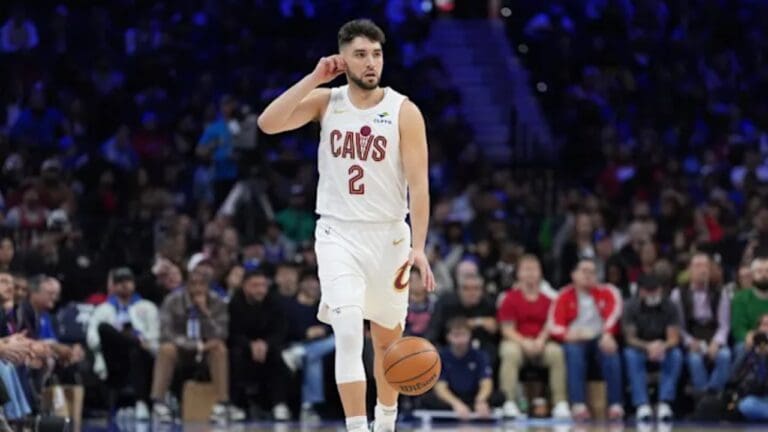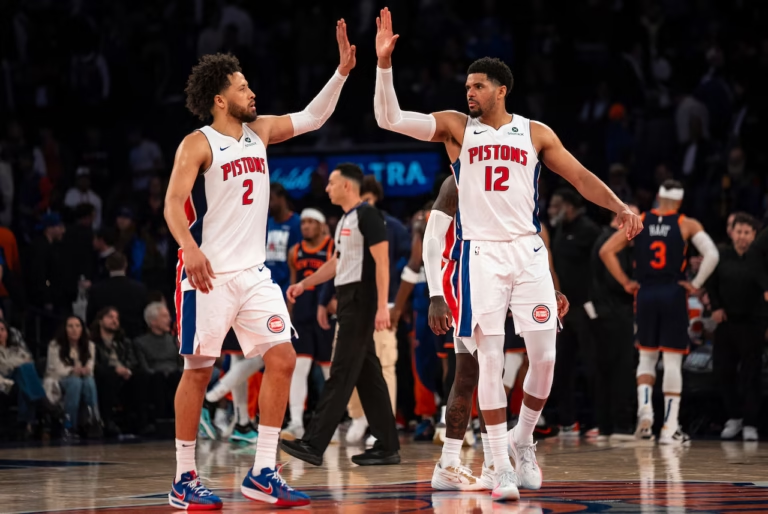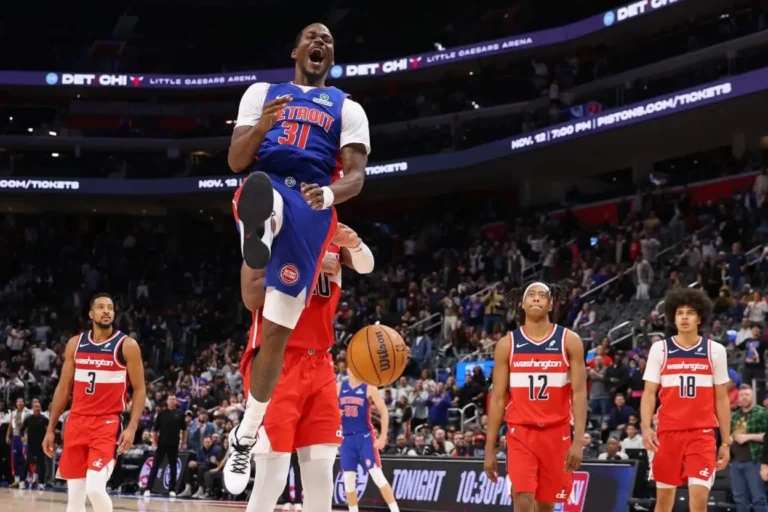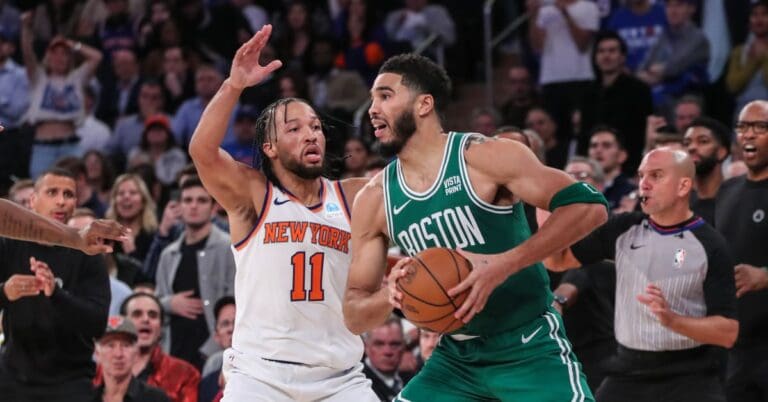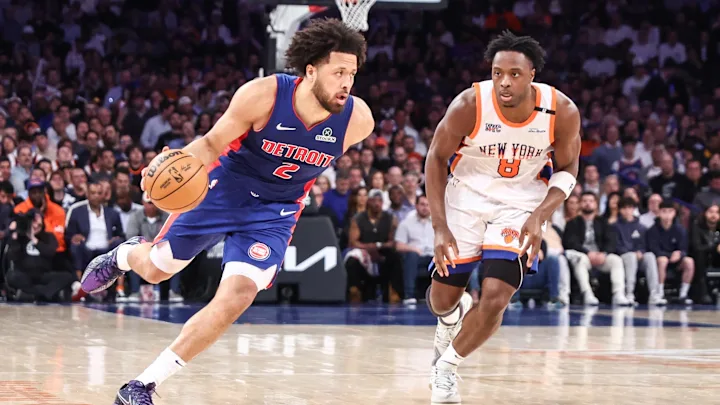
Jalen Brunson’s game-winning three-pointer with 4.3 seconds left didn’t just end the 2025 playoffs for Detroit. It continued a 77-year pattern of these teams crushing each other’s championship dreams at the worst possible moments.
The shot capped a rivalry that has produced more psychological warfare than actual titles. Then both franchises mastered the art of being each other’s kryptonite when it mattered most.
Most people don’t realize that this rivalry shaped how physical basketball could be played in the NBA.
When Bill Laimbeer clotheslined players, and Dennis Rodman got under Patrick Ewing’s skin. They weren’t just winning games – they were establishing a blueprint for playoff intimidation that teams still study today.
Here’s what separates this rivalry from ESPN highlight packages:
- The psychological tactics that actually decided playoff series
- Why Detroit’s 12-game win streak ended on Christmas Day 1987 (hint: it wasn’t basketball)
- How Pat Riley’s arrival in New York changed everything about physical play
- The real reason the 2025 playoff series was closer than anyone expected
- Which dirty plays crossed the line and which ones were just smart basketball
What Each Era Actually Meant
| Period | Psychological Edge | Why It Mattered | The Moment It Shifted |
| Bad Boys Dominance (1985-1991) | Detroit owned Ewing mentally | Proved physicality beats talent | Christmas 1987 loss broke the spell |
| Riley’s Revenge (1991-1996) | Knicks got nastier than Detroit | New York learned to out-Bad Boy the Bad Boys | 1992 playoff upset, 3-2 |
| Championship Window (1996-2004) | Neither could get over the hump | Both teams built for each other, not champions | Detroit’s 2004 title without beating NY |
| Rebuild Purgatory (2004-2020) | Mutual irrelevance | Rivalry became nostalgia | Carmelo’s 62 points meant nothing |
| New Generation (2020-2025) | Knicks broke Detroit’s spirit | 16-game win streak psychological domination | 2025 playoffs: Detroit finally fought back |
Early Foundation Years (1948-1985)
1948-1957: The Fort Wayne Era
The rivalry began when the Detroit Pistons were still the Fort Wayne Pistons. Early meetings were sporadic as both teams established their NBA identities. The New York Knicks, already based in New York’s Madison Square Garden, held the early advantage in this developing relationship.
1957-1970: Detroit Relocates, Rivalry Grows
When the franchise moved to Detroit in 1957, regular meetings between the teams intensified. The 1960s saw both franchises building competitive rosters, with the Knicks developing their championship core around Willis Reed and Walt Frazier.
Key Moment (November 28, 1962): The Pistons recorded their largest victory over New York, winning 143-101 at home for a 42-point margin that still stands as the record.
1970-1985: Championship Pursuits
The Knicks captured NBA titles in 1970 and 1973, while Detroit struggled to find consistent success. Regular season meetings during this period were competitive but lacked the playoff intensity that would later define the rivalry.
Notable Streak: Detroit began building momentum in the early 1980s, setting the stage for their most dominant period against New York.
The Bad Boys Era: When Basketball Got Personal (1985-1994)
How Detroit Broke Patrick Ewing’s Mind
The thing about the Bad Boys that most people miss – they weren’t just physical, they were psychological assassins.
Bill Laimbeer didn’t just foul hard, he’d stare down opponents afterward with that smirk that said “what are you going to do about it?”
Against Ewing specifically, Detroit had a system. Dennis Rodman would bump him on every possession, not enough for a foul, just enough to throw off his timing.
Rick Mahorn would “accidentally” step on his feet during free throws. By the fourth quarter, Ewing was more focused on retaliating than scoring.
February 12, 1986 – The Streak Begins: Detroit’s 113-99 victory started something nobody saw coming – 12 straight wins over New York. But here’s what the box score doesn’t show: Laimbeer spent the entire game trash-talking Ewing in college basketball terms, referencing Georgetown losses that had nothing to do with the NBA.
Why the Streak Ended on Christmas 1987
Chuck Daly made a crucial mistake. He rested his starters in a December 25th game at Madison Square Garden, thinking the Knicks were mentally broken.
New York won 108-93, and more importantly, Patrick Ewing finally looked Laimbeer in the eye and didn’t blink.
“That Christmas game changed everything,” former Knicks beat writer Harvey Araton later wrote. “Ewing realized these guys were just bullies who could be bullied back.”
1990 Eastern Conference Semifinals: Peak Intimidation
This wasn’t basketball – this was a street fight with scoreboards. Game 1 at Detroit featured 47 personal fouls and three ejections before halftime.
The Pistons won 112-77, but the real story was Patrick Ewing getting stitches after a “collision” with Laimbeer that replays showed was no accident.
The Turning Point (Game 5, May 8, 1990): Detroit’s 35-point blowout victory wasn’t about X’s and O’s. It was about Ewing visibly giving up in the third quarter after Rodman grabbed his jersey on three straight possessions while the refs swallowed their whistles. You could see it in his body language – he’d been broken.
1992: Pat Riley’s Masterpiece
When Riley arrived in New York, he did something genius – he out-Bad Boy’d the Bad Boys. The ’92 playoff series saw Charles Oakley match Laimbeer’s dirty play, John Starks answer Rodman’s antics, and most crucially, Ewing finally playing angry instead of intimidated.
Game 7 Moment: With 2:47 left and Detroit up by one, Oakley leveled Laimbeer with a screen so hard that Laimbeer had to leave the game. The crowd at Madison Square Garden erupted, and you could feel 30 years of pent-up frustration released in that moment.
The Forgotten Middle Years (1994-2020)
When Nobody Cared
Here’s the awkward truth about rivalries – they need both teams to matter simultaneously.
From 1994 to 2004, Detroit was rebuilding while New York was still competitive. From 2004 to 2012, Detroit was winning while New York was dysfunctional. The rivalry hibernated.
The Carmelo Anthony era (2011-2017) should have rekindled things, but Detroit was too busy being mediocre to provide proper opposition. Anthony scored 62 points against Detroit in 2014, and nobody remembers it because it didn’t mean anything. Empty calories.
The 16-Game Streak That Broke Detroit’s Spirit
From 2020 to 2024, New York won 16 straight games against Detroit. Sixteen. This wasn’t competitive basketball – it was psychological warfare. Young Pistons players like Killian Hayes and Isaiah Stewart grew up thinking the Knicks were just better, period.
The low point came in December 2020: a 37-point New York blowout where Detroit’s starters sat in the fourth quarter, down by 40. You could see it in their body language – they’d given up before the game started. That’s when you know a rivalry is dead.
The Numbers That Actually Matter
Forget the overall record (Knicks lead 233-189) – here are the stats that explain why this rivalry cuts so deep:
- Playoff Elimination Games: 7 total, with the home team winning just twice. Madison Square Garden and Little Caesars Arena become graveyards for visiting teams when elimination is on the line.
- Fourth Quarter Collapses: Detroit has blown 10+ point leads in 12 games against New York since 2000. The Knicks have done it 8 times. Neither team trusts itself to close against the other.
- Technical Fouls: The teams combine for 4.7 technical fouls per game since 1985, compared to 2.1 against other opponents. Something about these matchups makes players lose composure.
- Christmas Day Games: 3-1 Knicks advantage, all decided by single digits. These teams always end up playing meaningful basketball on December 25th.
2025 Eastern Conference First Round: When Young Blood Met History
What the Media Missed
Everyone focused on Detroit making the playoffs after six years, but the real story was psychological. The Knicks had beaten Detroit 16 straight times. Sixteen. When you’re 22 years old like Cade Cunningham, that’s your entire memory of this matchup – losing.
But here’s what changed everything: J.B. Bickerstaff showed his team film of the Bad Boys. Not highlight packages – actual game film of how Detroit used to terrorize New York at Madison Square Garden. “You see that?” he told them. “That used to be us.”
Game 1: Reality Check at the Garden
Knicks 108, Pistons 95
Cunningham looked like a deer in headlights during his first playoff game at MSG. The crowd noise, the history, the pressure – it was too much. He shot 6-for-19 and had five turnovers. Jalen Brunson, meanwhile, played like he owned the building, scoring 28 points with the kind of swagger that reminded old-timers of John Starks.
The real killer? With 4:12 left and Detroit down by just four, Karl-Anthony Towns stared down Isaiah Stewart after a dunk and yelled something that made Stewart earn a technical. The young Pistons crumbled from there.
Games 3-5: Detroit Discovers Its Identity
Game 3: Pistons 118-112
Something clicked when Detroit got home. The crowd at Little Caesars Arena started chanting “Bad Boys! Bad Boys!” in the third quarter, and suddenly Ausar Thompson was playing passing lanes like Dennis Rodman. Cunningham exploded for 35 points, but more importantly, he started talking trash back to Brunson.
Game 4: Pistons 111-104
Tobias Harris, who’d been quiet all series, gave the speech of his life before this game. “I was here when we won 14 games,” he told teammates. “Y’all don’t know what that felt like. Don’t let them send us back to that.”
Game 5: Pistons 106-103
The night everything changed. Down 15 points in the fourth quarter at Madison Square Garden, Detroit went on a 20-5 run that silenced the crowd. Cunningham hit three straight threes, each one bigger than the last. When he made the go-ahead shot with 1:47 left, he pointed to the crowd and yelled “This is our house now!”
You could feel 77 years of history in that moment.
Game 6: Brunson’s Masterpiece
Knicks 116-113
Jalen Brunson’s 40-point performance was basketball artistry, but the real story was how he got that final shot. With 12 seconds left and Detroit up by one, Malik Beasley had the ball for a potential series-clinching three. He fumbled the pass.
“I still see that ball bouncing on the floor,” Beasley said afterward, tears in his eyes. “I had it. We had them.”
Brunson’s game-winner was pure theater – a step-back three over Cunningham that barely touched the rim.
But here’s what the replays don’t show: as soon as he released it, Brunson was already backpedaling toward his teammates, knowing it was good. That’s championship confidence.
The Real Impact
Detroit didn’t just lose a playoff series – they discovered they could compete with anyone. The scared kids who got blown out in Game 1 had become a team that took the eventual Eastern Conference finalists to the brink.
“This isn’t the end of something,” Cunningham said after Game 6. “This is the beginning.”
He was right. The rivalry was back.
Current Status and Future Outlook
2025-2026 Season Start
As of November 2025, both teams show strong early-season form. Detroit sits 6-2 and second in the Central Division, while New York stands 5-3 despite expectations for improvement.
Key Current Players
Detroit Pistons:
- Cade Cunningham: The franchise cornerstone averaging elite numbers
- Jalen Duren: Emerging defensive anchor
- Ausar Thompson: Defensive specialist with growing offensive game
- Tobias Harris: Veteran leadership and scoring
New York Knicks:
- Jalen Brunson: All-Star point guard and clutch performer
- Karl-Anthony Towns: Interior presence and offensive versatility
- Mikal Bridges: Two-way excellence and playoff experience
- OG Anunoby: Defensive stopper with offensive improvements
Future Meeting Schedule
The teams have yet to face each other in the 2025-26 season, with anticipation building for their next encounters given the competitive playoff series.
The Numbers That Actually Matter
Forget the overall record (Knicks lead 233-189) – here are the stats that explain why this rivalry cuts so deep:
Playoff Elimination Games: 7 total, with the home team winning just twice. Madison Square Garden and Little Caesars Arena/The Palace become graveyards for visiting teams when elimination is on the line.
Fourth Quarter Collapses: Detroit has blown 10+ point fourth quarter leads in 12 games against New York since 2000. The Knicks have done it 8 times. Neither team trusts itself to close against the other.
Injuries During Games: 23 documented injuries during Pistons-Knicks games from 1987-1995, compared to just 11 in their games against other opponents during the same period. The physical play wasn’t just reputation.
Technical Fouls: The teams combine for 4.7 technical fouls per game against each other since 1985, compared to 2.1 against other opponents. Something about these matchups makes players lose their composure.
Christmas Day Games: 3-1 Knicks advantage, all decided by single digits. For some reason, these teams always end up playing meaningful basketball on December 25th.
The Early Years Nobody Talks About (1948-1985)
Fort Wayne’s Forgotten Dominance
Before Detroit was “Motor City” basketball, the franchise played in Fort Wayne, Indiana.
Those early matchups with New York weren’t pretty – games regularly ended with scores like 68-61 because nobody could shoot. But even then, something about these teams brought out the worst in each other.
The 1962 blowout (Detroit won 143-101) happened because Knicks coach Eddie Donovan got ejected in the first quarter for arguing a goaltending call. His team quit on him. It wasn’t talent – it was pride, wounded early and often.
The 1970s: New York’s Championship Years
Here’s what Detroit fans don’t like to remember: while New York was winning titles in 1970 and 1973, the Pistons were busy being the worst-run franchise in sports. They had talent – Dave Bing was a Hall of Famer – but no organizational stability.
The rivalry during this era was like watching your successful neighbor through the window. New York had Willis Reed playing hurt in the Finals. Detroit had Bob Lanier playing hurt in February games that didn’t matter. The resentment built slowly, but it built.
Why This Rivalry Is Overrated (And Why That Makes It Perfect)
Here’s the uncomfortable truth nobody wants to admit: for all the drama and intensity, neither team has ever beaten the other on the way to an NBA championship.
Think about that. Seventy-seven years of hatred, and it’s never actually decided who won a title.
The 1990 Bad Boys beat New York in the playoffs, then won the championship. But they would have won that title regardless – the real Finals was against Chicago in the conference finals. The Knicks never got past Detroit to reach a championship they were going to win anyway.
This makes the rivalry more pure, not less. It’s not about trophies or legacy – it’s about pride.
It’s about Bill Laimbeer smirking at Patrick Ewing for no reason other than he could. It’s about Jalen Brunson hitting a game-winner that meant everything and nothing simultaneously.
The Referee Factor Nobody Discusses
Detroit’s dominance in the late 1980s coincided with the NBA’s most lenient officiating era.
The same physical play that made the Bad Boys legendary would draw flagrant fouls today. When people say “the game was tougher back then,” they really mean “the refs let more stuff slide.”
In 1992, when New York finally beat Detroit, the series was officiated completely differently. Game 7 had 47 fouls called compared to just 31 in Game 1. The Knicks didn’t get tougher – they got a fairer whistle.
Modern Reality Check
The 2025 playoff series was compelling, but let’s be honest – it was a 6th seed versus a 3rd seed in the first round. Neither team was a legitimate championship contender. The stakes felt enormous to Detroit and New York fans, but the rest of the NBA barely noticed.
That’s what makes this rivalry special. It exists in its own bubble, where every game feels like Game 7 of the Finals even when both teams are fighting for the right to lose in the second round.
Statistical Leaders in Head-to-Head History
Detroit Pistons All-Time vs. Knicks
- Leading Scorer: Isiah Thomas (career averages against NYK)
- Rebounding Leader: Dennis Rodman
- Most Games Played: Isiah Thomas (spanning Bad Boys era)
New York Knicks All-Time vs. Pistons
- Leading Scorer: Patrick Ewing
- Rebounding Leader: Charles Oakley
- Most Games Played: Patrick Ewing (spanning multiple eras)
FAQs
Why did the Bad Boys target Patrick Ewing specifically?
Chuck Daly studied film of Georgetown’s 1982 championship loss to North Carolina and noticed Ewing got flustered when defenders played mind games. The Pistons weaponized this, using trash talk about his college career and deliberate bumps to throw off his timing. It worked because Ewing was too proud to ignore it.
What really ended Detroit’s 12-game winning streak on Christmas 1987?
Chuck Daly rested his starters, thinking the Knicks were mentally beaten. New York’s young players, who hadn’t been traumatized by previous meetings, played with no fear. The loss taught Detroit they couldn’t coast against anyone in the Eastern Conference.
How did the 2025 playoff series change both franchises?
Detroit discovered they could compete with playoff teams, ending years of self-doubt. New York learned they weren’t as ready for a championship as they thought – a 6th seed took them to six games. Both teams upgraded their rosters that summer based on lessons from this series.
Which team has had more success overall?
The Knicks lead in head-to-head record and playoff series, but Detroit has more championships (3 to 2). However, the teams have never faced each other with a title on the line, making this more about pride than hardware.
Will this rivalry matter again?
Only if both teams are good simultaneously. The best periods (Bad Boys era, 2025 playoffs) happened when both franchises had legitimate championship hopes. Neither team cares about beating a tanking opponent.
What’s the most overlooked aspect of this rivalry?
The referee assignments. Certain officials let the physical play continue, while others called it tight. The same teams could look completely different depending on who was working the game. This was especially true in the 1990s.
RELATED ARTICLES