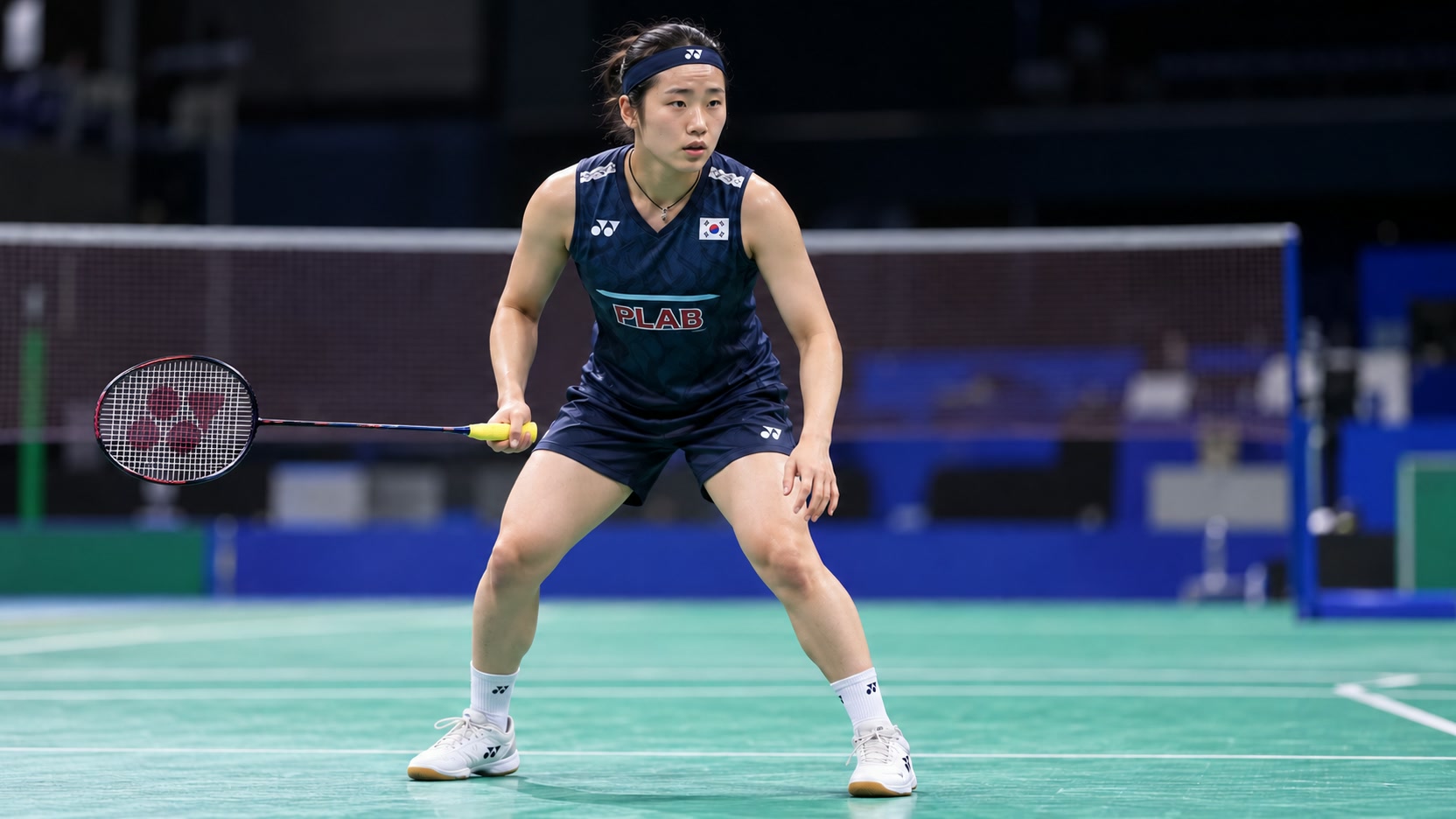
An Se-young has raised concerns about how court-cleaning requests are handled, even as the South Korean world No. 1 continued her campaign with an opening victory.
The issue concerns her Denmark Open final rather than a new incident in France, adding a player-safety question to a successful stretch for the women’s singles leader.
In a report published Thursday by SBS, An said she respected the umpire’s decision but wanted greater flexibility when court conditions could affect an athlete’s safety.
SBS reported that An slipped during the Denmark final, felt pain around her right Achilles tendon and requested court cleaning, but the request was not accepted by officials.
Her comments followed a French Open first-round victory that put her into the last 16, keeping her tournament moving while attention returned to the earlier episode in Denmark.
A safety concern beyond the scoreline
The distinction matters: An’s account raises a concern about responding to slippery conditions. It does not establish a medical diagnosis or, prove that an official acted improperly.
Badminton places unusual demands on footing. Players brake sharply, push sideways and recover from deep lunges, making confidence in the surface part of how they approach each rally.
A cleaning request therefore carries different stakes from an ordinary pause between points. The difficult judgment is deciding when a safety concern requires action while maintaining competitive continuity.
Denmark comeback frames the discussion
An still won the Denmark final. Yonhap’s match report recorded a 21-23, 21-14, 21-18 victory over Japan’s Akane Yamaguchi at SJF Bank Arena in Odense on Sunday.
The Korean recovered from 11-5 down in the deciding game after having her right foot checked, turning that deficit into a 16-12 advantage before closing out the title.
That comeback explains why the safety discussion deserves attention alongside the result. Winning a match does not answer every question raised about the conditions encountered during it.
Equally, discomfort during competition should not be stretched into unsupported claims about lasting damage. Her appearance in France provides context, rather than a substitute for medical information.
The Denmark victory was her ninth international title of the season, according to Yonhap. Reuters also reported that it brought her career international singles total to 47 titles.
Yonhap placed her season record at 61 wins and one defeat after that final, with her only loss coming in March’s All England Open championship match in Birmingham.
Those figures underline the consistency behind her prominence. They also explain why a comment about court management from the top-ranked player can resonate beyond a single tournament result.
French Open campaign continues
The BWF tournament listing places this week’s French Open at Arena Grand Paris in Tremblay-en-France, running October 20-25 with a $950,000 prize fund across five disciplines.
For An, advancing without an extended opening battle offers a different immediate task: prepare for her opponent while managing consecutive weeks on the European circuit.
For the wider sport, her concern highlights the importance of players and officials communicating clearly about surfaces, when an athlete links a request to physical risk.
The available reports establish her concern and her continued participation. They do not confirm a formal complaint, disciplinary process or change to policy following the Denmark final.
An’s next French Open match will return the focus to results. Her message remains straightforward: court-management decisions deserve careful judgment when players believe their safety could be affected.