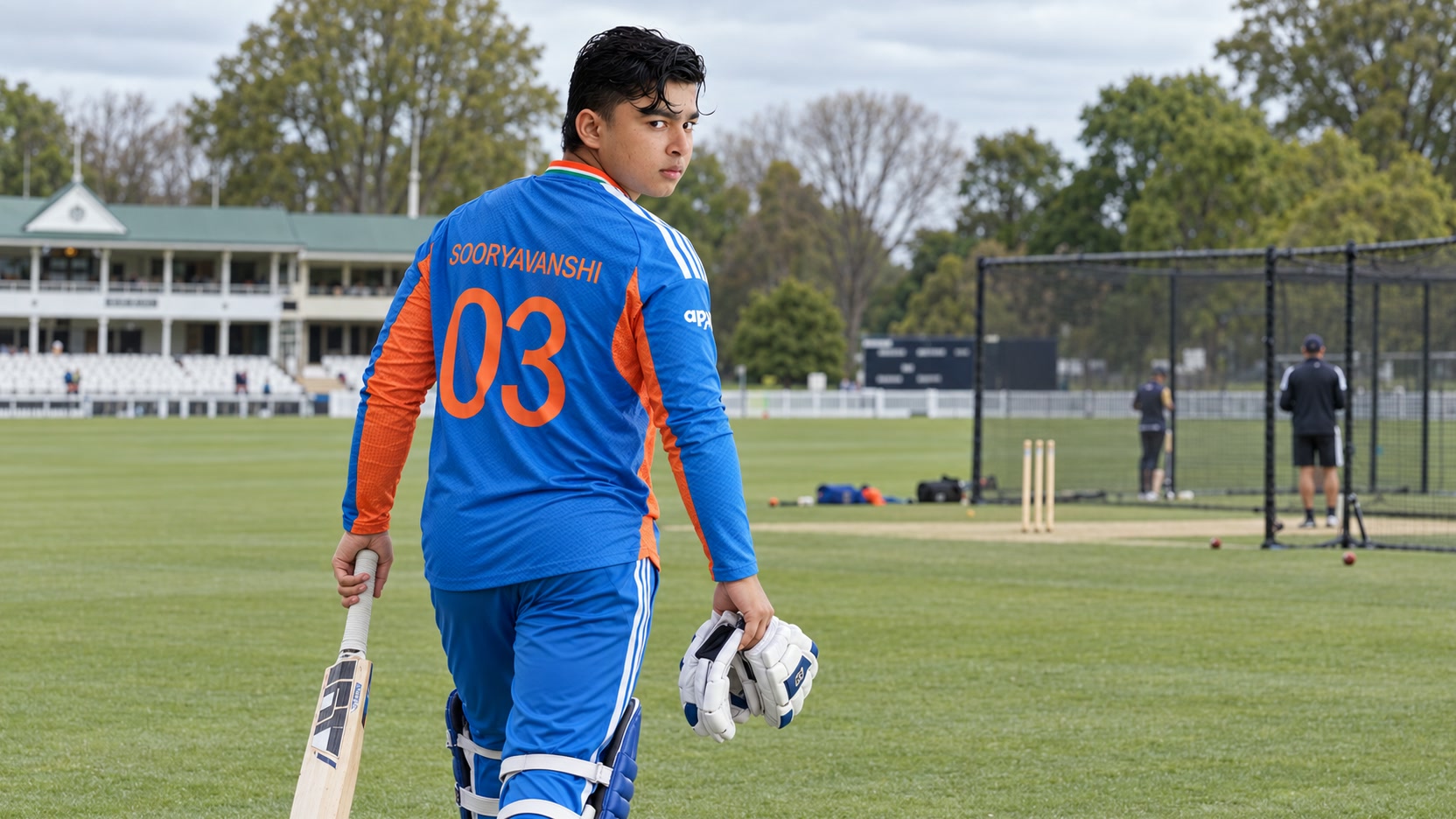
New Zealand has studied Vaibhav Sooryavanshi ahead of Thursday’s Twenty20 opener, with paceman Jacob Duffy expecting home conditions to test India’s teenage batter in the five-match series.
The teams begin at Hagley Oval in Christchurch on October 22. The 15-year-old left-hander arrives with a growing reputation following an eventful start to his international career.
According to Reuters’ report Tuesday, Duffy praised his powerful, consistent hitting and confirmed New Zealand had held a scouting session to develop plans against him.
The immediate question is how attacking intent translates when conditions change. Early success gives a young batter confidence, but a new opponent offers another test of adjustment.
Sooryavanshi’s progress has already included contrasting experiences. His first three T20 international innings against England produced scores of 14, 13 and 15 before stronger returns against Zimbabwe.
The ICC’s earlier account of his development recorded 151 runs across the Zimbabwe series, including 81 from 49 deliveries in the final match, earning him Player of the Series.
That followed a standout Under-19 World Cup campaign in which he amassed 439 runs. His 175 from 80 deliveries in the final underlined his ability to dominate.
Yet India’s coaches have identified development priorities alongside the highlights. VVS Laxman previously called for improvement in his overall fitness while praising his willingness to contribute on the field.
That combination of encouragement and practical demands offers useful context. A teenager can possess exceptional stroke-making ability while still needing time to strengthen other parts of his game.
The upcoming contest should therefore be viewed as another stage of development. One productive innings would be encouraging, while a difficult outing would provide limited evidence about his ceiling.
New Zealand’s preparations also extend beyond one batter. Its previously announced 16-man squad included returning fast bowler Adam Milne and a range of pace options alongside captain Mitchell Santner.
At the squad announcement, coach Rob Walter said New Zealand intended to use all 16 players to manage workloads, emphasizing the depth available for the home series.
Rachin Ravindra was absent from that announced squad because of a shoulder injury. Walter said the team hoped he could return for the subsequent one-day international series.
For India’s young batter, that broader selection picture matters because the challenge can change across matches. Different bowlers and combinations demand more than a single predetermined attacking approach.
New Zealand’s planning acknowledges the threat without deciding the contest in advance. The practical examination will come through execution, as bowlers seek control and batters choose when to attack.
Thursday’s opener will begin providing those answers. The most useful measure for Sooryavanshi is how he responds to the contest in front of him as the series unfolds.
RELATED ARTICLES