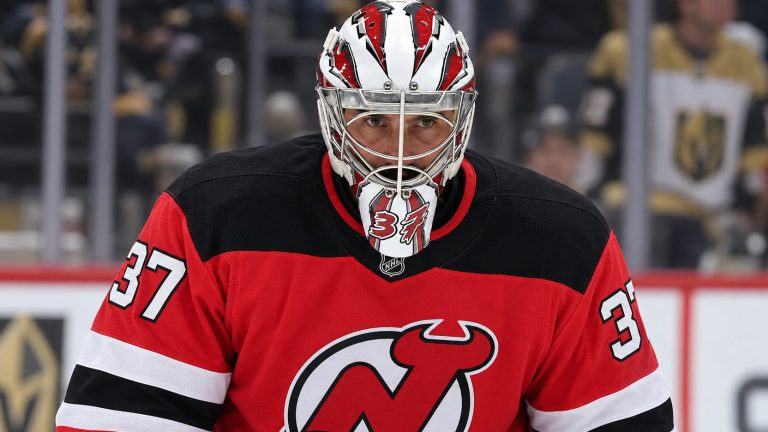
The NHL will put every team on the ice Tuesday as Frozen Frenzy returns for its fourth season, creating a 16-game slate designed to keep games starting throughout the evening.
All 32 clubs are scheduled to play on October 13, with the first puck drop at 6 p.m. ET and the final game beginning at 11 p.m. ET. It is one of only two dates during the 2026-27 regular season when every NHL team is scheduled to play on the same day.
The format gives hockey fans a rare league-wide snapshot early in the season. Instead of several games beginning at the same traditional start time, the schedule spreads the 16 matchups across distinct windows, creating a steady sequence of puck drops and making it easier to follow developments around the league.
Frozen Frenzy starts with Devils vs. Red Wings
The night opens with the New Jersey Devils visiting the Detroit Red Wings at 6 p.m. ET. From there, games continue to begin at staggered times across the schedule before the Boston Bruins visit the San Jose Sharks at 11 p.m. ET in the final start of the night.
ESPN’s national coverage is built around a three-game lineup. The Devils-Red Wings matchup opens the national window, followed by the Colorado Avalanche at the Dallas Stars at 8:30 p.m. ET and the Bruins at the Sharks at 11 p.m. ET. ESPN2 is also scheduled to provide whip-around coverage with live looks at games across the league.
The NHL’s official schedule shows 16 different start times Tuesday, meaning the league is effectively handing off from one opening faceoff to the next for much of the evening.
Why the October 13 schedule is unusual
Most NHL nights group multiple games into a handful of common start times. Frozen Frenzy is deliberately different.
The league’s 2026-27 schedule includes two days when all 32 teams are in action: October 13 and April 10, the final day of the regular season. Tuesday is therefore the first chance this season to see every club play on the same date.
That makes the event useful for more than television presentation. It provides an early-season comparison point across the entire league, with contenders, rebuilding teams, rookies and established stars all playing within the same five-hour span.
For fans tracking standings or fantasy hockey, the compressed league-wide schedule also creates an unusually dense night of results, lineup decisions and individual performances.
Several marquee players are part of the 16-game slate
Colorado enters its nationally televised matchup with Dallas with two of the league’s most productive early-season players. Nathan MacKinnon had 10 points and Cale Makar had seven entering the week, according to NHL.com.
The Toronto Maple Leafs also play the Utah Mammoth at 9 p.m. ET, giving fans another look at Gavin McKenna during his first NHL season. McKenna had recorded four points through his first six games, including his first NHL goal, before Tuesday’s matchup.
Those individual storylines are part of what makes Frozen Frenzy different from a normal national doubleheader or tripleheader. The event is structured around the entire league rather than a small group of featured teams.
How to follow NHL Frozen Frenzy
ESPN is scheduled to carry the three-game national lineup in the United States, while additional games are available through the NHL’s regional and streaming distribution partners. Availability can vary by market and subscription.
ESPN2’s whip-around presentation is designed for viewers who want to follow multiple games rather than stay with one matchup. The format allows the broadcast to move between goals, key situations and developing storylines as the 16 games overlap.
The first game begins at 6 p.m. ET, and the final scheduled start is Boston at San Jose at 11 p.m. ET.
Frozen Frenzy has become an early-season NHL showcase
This is the fourth consecutive season in which the NHL has used the all-team format. The event has become an early-season showcase built around volume, staggered starts and league-wide coverage.
With every franchise playing, Tuesday’s schedule offers something a conventional national broadcast window cannot: a single night that touches every NHL market.
The league will repeat the all-32-team concept on April 10, when every team is again scheduled to play as the regular season concludes.