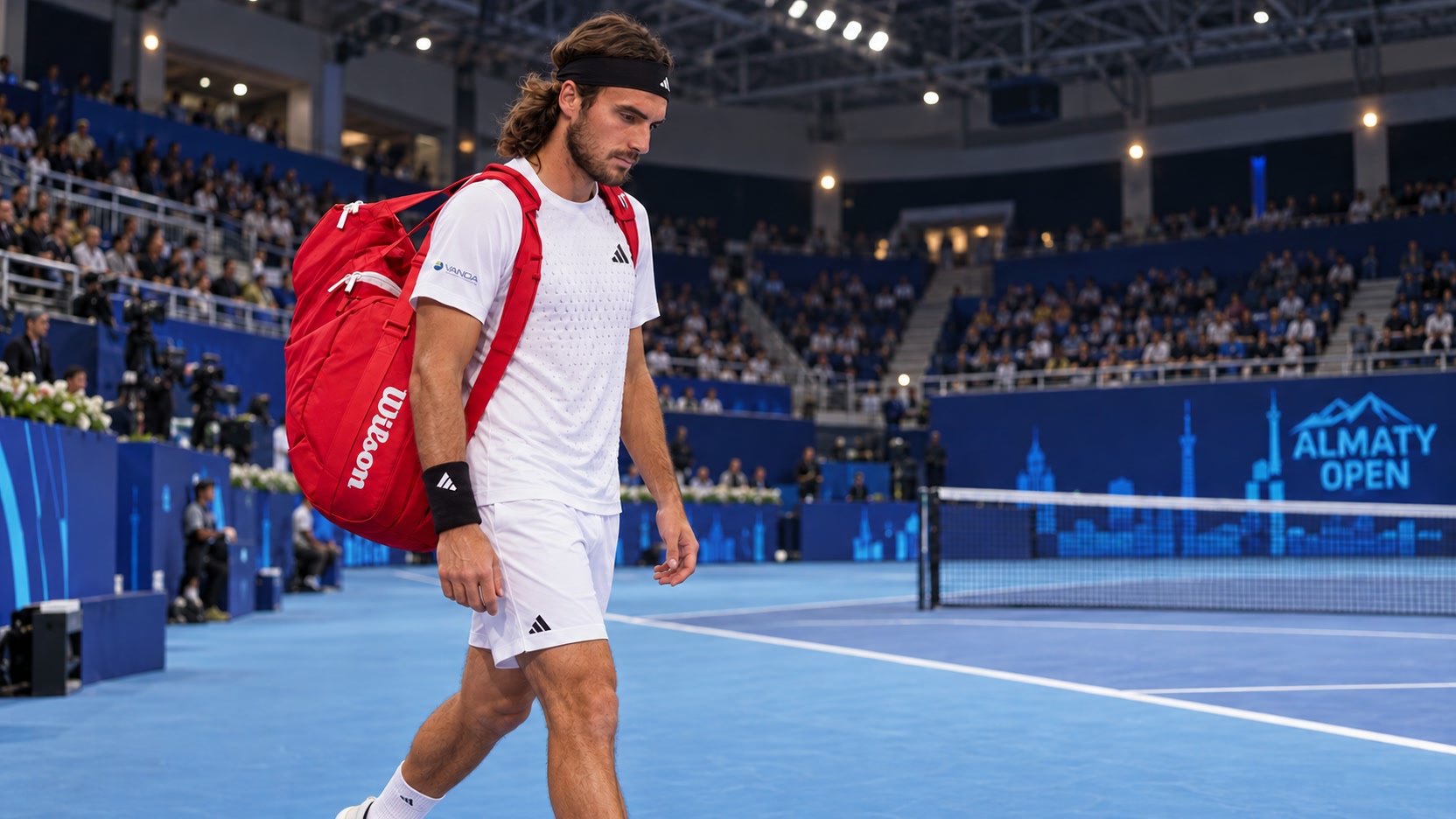
Stefanos Tsitsipas is using the ongoing Almaty Open to advance a broader comeback, describing improved confidence and a healthier outlook as he seeks to rebuild his standing.
The Greek’s immediate opportunity comes at an indoor ATP 250 event in Kazakhstan. His longer-term objective is to improve his ranking sufficiently for Grand Slam seeding next season.
In a Times of India interview published Tuesday, Tsitsipas linked his improved outlook to changes in his coaching relationship with his father, Apostolos, and reduced pressure around his tennis.
The comments add a personal dimension to his return to form. He described renewed enjoyment and confidence, rather than presenting his progress solely through the results column.
Separately, Tennis Majors reported from Almaty that Tsitsipas felt free of the physical limitations that damaged his ranking and confidence last year, allowing a busier finish to this season.
He explained that accumulating ranking points was a priority because he wanted to enter next year’s majors as a seed and avoid leading opponents in the opening rounds.
That gives his autumn schedule a clear purpose. Extra tournament appearances are intended to improve his starting position for 2027, rather than simply extend an already demanding season.
Tsitsipas also credited Thomas Perrin, who joined his team from the Mouratoglou Academy, with bringing calmness and a collaborative approach to decisions made around his game.
His account distinguished the personal relationship with his father from the professional coaching role. Keeping those responsibilities apart, he said, had benefited their relationship away from tennis.
The Greek won the Gstaad title earlier this season. His history at this event also includes reaching the 2022 final, when the tournament was held in Astana.
The official Almaty Open schedule places this year’s main draw from October 19 at Almaty Arena, with the title matches scheduled for Sunday, October 25.
The event offers 250 ranking points to its singles champion and a prize fund exceeding $1 million. Those rewards provide a tangible incentive for players rebuilding momentum.
Quarterfinals are scheduled for Friday, followed by Saturday’s semifinals. The compact format leaves little recovery time between the closing rounds for anyone hoping to reach the final.
For Tsitsipas, the important distinction is between feeling ready to compete regularly and sustaining that readiness through repeated matches. The tournament provides an opportunity to test that progression.
His emphasis on seeding also explains why these smaller events matter. Strong results can influence the ranking position a player carries into the sport’s most demanding draws.
Almaty therefore sits within a larger rebuilding project. Tsitsipas has outlined the physical confidence and support structure he believes can help him translate a better outlook into consistent results.